 Skip to content
If you’ve just heard the terms “PANS” or “PANDAS” for the first time, you’re not alone. These conditions are under-recognized and often misunderstood. Most families describe the onset the same way: a child who was thriving suddenly develops debilitating anxiety, obsessive-compulsive behaviors, rage, tics, or severe behavioral changes almost overnight.
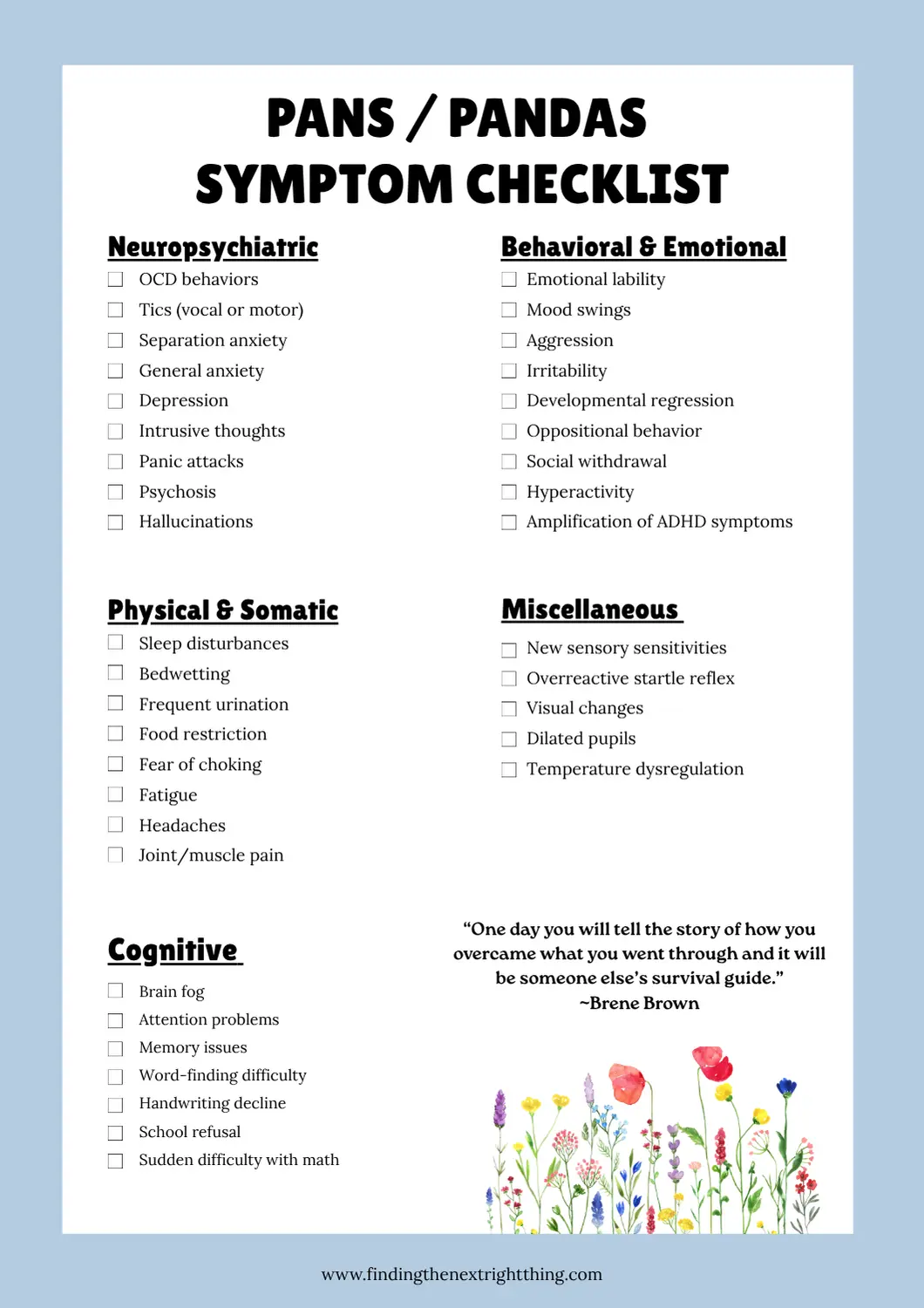
This guide explains what PANS and PANDAS are, what triggers them, how to recognize the symptoms, and why the course can be relapsing and unpredictable. You’ll also find a downloadable PANS/PANDAS Symptoms Checklist to review with your child’s provider.
What is PANS?
Breaking Down the Basics
PANS stands for Pediatric Acute-onset Neuropsychiatric Syndrome. PANS is a condition in which a child suddenly develops intense neuropsychiatric symptoms in response to an immune assault. Some of the hallmark symptoms that develop are:
OCD (obsessive-compulsive behaviors)
Severe anxiety, including separation anxiety
Rage or aggression
Motor or vocal tics
Food restriction
Bedwetting/Urinary Frequency
Sleep disturbances
- Developmental regression
- Sensory issues
What is PANDAS?
PANDAS is a specific type of PANS. It stands for Pediatric Autoimmune Neuropsychiatric Disorder Associated with Streptococcal Infections. In PANDAS, the symptoms are triggered by a strep infection. The child’s immune system mounts a defense against the strep bacteria, but it mistakenly attacks the basal ganglia.
PANS is the umbrella term. It covers any case of sudden-onset neuropsychiatric symptoms caused by an immune response to various triggers. Triggers can include infections such as strep, mycoplasma, COVID, influenza, and other viruses. They may also involve exposure to mold, toxins, or metabolic issues. PANDAS falls under this umbrella, but strep infections are the specific trigger. But, even in children with PANDAS, once the immune system gets completely dysregulated a child can start to have additional triggers beyond strep. That’s what happened with my kids.

Common Triggers of PANS
While PANDAS is linked specifically to strep, PANS can be triggered by a broader range of immune activators, including:
Mycoplasma pneumoniae
Epstein–Barr virus
Influenza
COVID-19
Other viral infections
Lyme disease and co-infections
Mold and mycotoxin exposure
Significant metabolic or inflammatory stress
Most children experience an abrupt behavioral shift. However in some cases, symptoms develop more gradually over weeks to months. This slower onset is sometimes seen in cases associated with Lyme disease, vector-borne infections, or chronic mold exposure, which can make recognition more difficult.
What's Actually Happening in the Brain?
PANS and PANDAS are immune-mediated neuroinflammatory conditions. They both cause brain inflammation in the basal ganglia.
The basal ganglia is an area of the brain responsible for:
- Movement coordination and motor control
- Emotional responses and regulation
- Executive functions like focus and decision-making
- Habit formation and behavioral patterns
In PANS and PANDAS the current understanding involves a process called molecular mimicry.
The immune system produces antibodies in response to an infection. But in children with PANS or PANDAS, the immune system misfires. Instead of targeting just the infection, those antibodies also attack the child’s own brain tissue, specifically the basal ganglia.
This immune cross-reactivity leads to:
Neuroinflammation
Disruption of neural signaling
Sudden-onset neuropsychiatric symptoms
For this reason, PANS/PANDAS is not purely psychiatric. It is an immunological and neurological disorder with psychiatric manifestations.
Some clinicians refer to this process as basal ganglia encephalopathy, reflecting inflammation-driven dysfunction within this critical brain region.

Neuroinflammation and the Brain’s Chemical Storm
As the immune system attack continues, the body releases pro-inflammatory cytokines. These chemical messengers include IL-6, TNF-alpha, and IL-1β, which flood the brain tissue. These inflammatory signals disrupt the delicate balance of neurotransmitters.
This disruption alters several critical brain chemicals:
- Dopamine: It can become dysregulated. This affects a child’s mood, motivation, ability to pay attention, and movement control.
- Serotonin: Imbalances impact mood regulation, sleep patterns, digestive function, and impulse control
- Glutamate: Levels may increase excessively, which can be neurotoxic despite its normal role in learning and memory.
- GABA: This is the brain’s main calming neurotransmitter. It becomes less effective at providing balance to the excitatory signals.
The result is a child who may appear:
- Overwhelmed by anxiety
- Unusually agitated or hyperactive
- Unexpectedly aggressive or irritable
- Consumed by obsessive thoughts or compulsive behaviors
- Physically uncoordinated or experiencing unusual movements
- Confused or exhibiting cognitive difficulties
- Unable to sleep well or regulate their emotions
These changes reflect inflammatory disruption of brain circuits, not behavioral defiance or primary psychiatric disease.

PANS and PANDAS Symptoms Checklist
How these symptoms manifest in children with PANS and PANDAS can vary greatly, but they generally fall into a few categories.
1. Obsessive-Compulsive Behaviors (OCD)
Children might suddenly start washing their hands excessively. They might fear germs or engage in strange rituals. These actions may not make sense to them or to others. A child who previously loved playing in the dirt might now be terrified of touching anything “dirty”.
Our oldest son’s hands were raw and red from over-washing. He had to wear moisturizing gloves to bed for months.
But OCD also manifests in many ways that most people may not recognize as OCD.
Two of my boys had “repeated reassurances” where they would ask the same questions over and over, and over. “Mommy, how old are you? Mommy, what’s your favorite color?” (repeated 25 times in an hour)
Other common examples of OCD are:
Compulsive confessing (“I think I lied” or “I had a bad thought”)
Extreme distress if someone touches their belongings
Insisting others follow specific, rigid rules
Refusing to eat foods that are “contaminated” by touch or placement. One of mine wouldn’t drink water that had been on the table for an hour because it was “old.”
Fear of accidentally hurting someone or doing something wrong
Avoiding certain colors, numbers, or people. One of my sons preferred left to right and odd numbers to even numbers.
Needing reassurance repeatedly (“Are you sure I’m okay?” or “Am I going to wake up tomorrow?”)
Repeating movements or phrases silently or aloud
Intrusive, distressing thoughts they can’t explain
Checking and rechecking (doors, school bags, homework)
Compulsively touching, tapping, or blinking
Needing to align objects or toys “just right”
Refusing to use certain utensils, bathrooms, or items
Difficulty completing tasks due to perfectionism
Indecision due to obsessive thoughts
- Fear of choking or vomiting on certain foods or textures
2. Severe Anxiety and Separation Anxiety
Extreme separation anxiety, irrational fears, meltdowns, panic attacks, and rage episodes.
Two of my kids slept with me for close to a year because it was the only way they would sleep through the night.
One of my kids became suddenly terrified (like he climbed up my body) of crabs after he caught COVID while on vacation at the beach.
Another locked himself in the closet when there was a thunderstorm.
3. Tics or Motor Abnormalities
Blinking, grunting, neck jerks, repetitive sounds or words.
One of my kids started making nonstop monkey noises in class after a strep infection and would grunt when in a flare.
4. Sleep Disturbances
Night terrors, frequent wakeups, insomnia, or early waking for the day.
For us that looked like nightly wake ups around 230 to 330 am, where he’d be up for the day! I started treating wakeups like newborn feeds: quiet snack, dark room, snuggle, then back to sleep. It didn’t always work, but it bought me a lot of extra sleep.
5. Emotional Lability, Irritability, Oppositional Defiance and Mood Changes
A hallmark symptom of PANS/PANDAS is the emotional lability. They might have dramatic mood swings and episodes of extreme rage and aggression. Another hallmark sign is dilated pupils. This is a visual sign that their nervous system is stuck in a constant fight-or-flight state. Their sympathetic nervous system is on high alert, as if they’re being chased by a bear… all the time. It’s explains why their reactions can feel so intense, unpredictable, or out of proportion to the situation.
We’ve had holes in walls, flipped furniture, and had to remove anything that could become a projectile. We kept siblings separated when needed for safety.
6. Changes in Handwriting and Involuntary Movements
Handwriting changes, referred to as “dysgraphia,” can be a major clue of the neurological impact. Handwriting could become unusually small, extremely exaggerated, or significantly regressed. Writing requires complex coordination between the brain, nervous system, and muscles. And, the basal ganglia is involved with fine motor movements, and coordination.
Days Before Strep Infection.

Day of Strep Infection.

7. Decline in School Performance
A sudden or unexplained decline in academics. This is because the immune response directly impacts both the basal ganglia and the prefrontal cortex. These areas both impact learning and focus.
This can show up as:
Difficulty with math or reading (especially math)
Poor memory recall or confusion with simple instructions
Inability to focus on tasks or follow classroom routines
My son was advanced in math as a 7 year old, and all of a sudden he forgot the number in between 4 and 6.
8. Behavioral or Developmental Regression
A child with PANS or PANDAS may suddenly regress in previously mastered developmental skills. This regression can be subtle or dramatic, and it can affect speech, behavior, motor coordination, or even potty training.
Reverting to baby talk or using simplified speech
Needing help with dressing or self-care skills they had mastered
Loss of interest in social interaction or play
Temporary loss of toileting skills
9. Other Somatic Symptoms
Somatic symptoms are physical symptoms that stem from neurological inflammation. This could look like frequent urination, bedwetting, joint pain, headaches, sensory issues or sudden changes in appetite.
Bedwetting was always a tell-tale sign for us that a flare was coming.

What Triggers PANS/PANDAS?
It’s rarely a single factor that triggers PANS and PANDAS. Instead, it’s often a “perfect storm” of infections, toxins, environmental stressors, gut health and genetic vulnerabilities that can initiate the disorder, cause ongoing flares, or even prevent recovery.
1. Infections
Infectious triggers are the most commonly recognized cause of PANS/PANDAS.
Common Infectious Triggers:
Streptococcus pyogenes (strep) – the hallmark trigger in PANDAS
Mycoplasma pneumoniae – Mycoplasma causes walking pneumonia. But it is also strongly linked to neuroinflammation and psychiatric flares
Epstein-Barr virus (EBV) – the virus behind mono, it can trigger post-viral autoimmune flare
Influenza, COVID-19, RSV, enteroviruses – even mild cases can result in neuroinflammatory flares in susceptible children
Lyme disease and coinfections – particularly Bartonella and Babesia, which are associated with rage, OCD, sensory issues, and cognitive decline
Infections don’t need to be severe to trigger symptoms. For some children with PANS, even a mild illness, such as a common cold can trigger a strong immune response. In our house, minor colds can cause flares, but the flares tend to be easier to recover from.
And, some kids, including one of mine, will have behavioral symptoms just by being around someone who is sick with strep, COVID, the flu or some other illness. If Camden starts to show PANDAS flare symptoms but isn’t sick, we know someone else he comes into contact with is sick.
2. Environmental Triggers: Mold, Toxins, and Hidden Inflammatory Stressors
Many kids with PANS/PANDAS have also experienced toxic environmental exposures. These can worsen or prolong symptoms by keeping the immune system in a constant state of high alert.
Mold is one of the most underestimated drivers of chronic inflammation in kids with PANS. Mold doesn’t just affect the lungs, it affects the brain, the immune system, and the gut.
Children living in water-damaged homes (even without visible mold) can be exposed to:
Mycotoxins – microscopic, fat-soluble toxins that cross the blood-brain barrier
Actinomycetes – inflammatory bacteria found in long-standing water damage
Volatile organic compounds (VOCs) – mold’s toxic “exhaust”
Symptoms of mold exposure often mimic PANS symptoms:
Rage or aggression
Sound or light sensitivity
Bedwetting
Brain fog
Headaches
Histamine intolerance
Tics and OCD
Other environmental exposures may not trigger an acute flare, but they increase the body’s total toxic load, making recovery harder:
Heavy metals (lead, mercury, arsenic, aluminum)
Pesticide and herbicide exposure (glyphosate)
Plastics
- Chemicals like those found in household cleaning products and personal care products
Learn more about toxins and mold play into the PANS/PANDAS puzzle read the Root Causes Guide | Detox and Mold.
3. Genetic and Biological Susceptibility
Not every child who has strep or Lyme develops PANS or PANDAS. That’s where genetics and epigenetics come in.
Some children are born with gene variants that affect:
-
Detoxification (MTHFR, COMT, GST)
-
Immune system regulation
-
Inflammatory cytokine balance
-
Gut lining integrity and microbiome diversity
These genetic predispositions don’t mean a person will develop an autoimmune condition, but they mean the child is more vulnerable and the threshold to tip the scale is much lower.
This is where epigenetics comes in. Epigenetics is how the environment influences gene expression. Genetics loads the gun, but the environment pulls the trigger.
Read more about the root causes and triggers for PANDAS and PANS on the Root Causes Guide.
PANS/PANDAS is Relapsing and Remitting
As our immunologist explained to us, PANS/PANDAS follows a relapsing and remitting pattern, meaning there are periods of stability and periods of intense flares. A child may seem completely fine for weeks, months, or even years, and then suddenly plunge back into anxiety, OCD and tics. Sometimes these flares are minor and resolve as quickly as they started, and others can last weeks or months.
And, what makes it even more complicated, is that sometimes a child flares and there was no obvious trigger. A child may be triggered by:
- Being near someone with strep
- Stress
- Exposure to chemicals, toxins, pesticides
- Visiting a moldy building
PANDAS is unpredictable, which adds to the emotional weight for the child and parents. Not only are the triggers unpredictable, but the duration and severity can vary greatly depending on the trigger and the child’s total inflammatory load.
Lingering Symptoms
In between the relapsing and remitting, it’s not uncommon for the child to have milder residual symptoms, like anxiety, OCD and emotional lability. Brain inflammation may not resolve as quickly as the dramatic symptoms. And, their nervous system may be stuck in fight or flight mode, especially if not all the root causes have been addressed. But, when all root causes are identified and treated, the hope is that the child can fully return to baseline.
A Perfect Storm | It's Rarely Just One Thing
Most children with PANS or PANDAS aren’t reacting to just strep. Or just mold. Or just Lyme. It’s usually a cumulative stack of stressors that, together, overwhelm an already genetically susceptible system.
One trigger primes the immune response. Another fans the flames. And yet another keeps the fire burning, making it difficult to extinguish.
This is why PANS and PANDAS are best understood not as a single disease, but as a syndrome, a set of symptoms caused by multiple, overlapping dysfunctions in the immune system, gut, brain, and detox pathways.
And this is why healing usually doesn’t come from one medication, one lab test, or one specialist. It requires a whole-child approach that addresses the body where it’s inflamed, overwhelmed, and stuck.
The Wildfire
Most people describe PANS and PANDAS as a “perfect storm” but given the inflammation I like to think of PANS and PANDAS like a wildfire.
The Dry Forest Floor
Genetic susceptibility and Biological Terrain
Some children are born with a more reactive immune terrain. Children with PANS/PANDAS may carry specific gene variants that impact critical systems. For example, variations in genes like MTHFR, GST and COMT can affect detoxification processes. Certain HLA (Human Leukocyte Antigen) genes can increase the risk of autoimmunity, while other genetic factors might influence gut barrier function and inflammation regulation.
These variants do not cause PANS on their own. They create vulnerability.
You can think of it as the terrain, a dry, flammable forest floor just waiting for a spark. It does not ignite without a spark, but once ignited, it burns more easily.
Epigenetics adds another layer. Environmental exposures influence how genes are expressed. Over time, infections, toxins, stress, and microbiome disruption can increase inflammatory tone and reduce resilience.
This biological terrain matters.
The Spark
A triggering infection
Infections like strep (PANDAS), Mycoplasma, Epstein-Barr (mono), Lyme, or COVID-19 (PANS) act as the ignition that sets the wildfire in motion. In a healthy immune system, these pathogens are cleared and the body moves on. But in a PANS-susceptible child, the immune system overreacts, making antibodies that wrongly attack the brain. This leads to the sudden-onset of symptoms like OCD, rage, anxiety, or tics.
The Wind and Weather
Environmental triggers that fan the flames
Once ignited, various environmental triggers act to fan the flames of immune dysfunction, making the wildfire burn hotter, longer, and wider.
Mold and mycotoxins from water-damaged buildings, pesticide exposure, heavy metals, plastics, and synthetic chemicals all fan the flames of immune dysfunction. They make it burn hotter, longer, and wider. These stressors keep the immune system inflamed, making it difficult for the brain and body to recover.
The Fuel
What keeps the inflammation burning?
Even after the initial spark (infection) is gone, the “fire” often continues to smolder and flare because the body is struggling under the weight of things like:
Leaky gut or gut dysbiosis: allowing inflammatory substances into the bloodstream
Mitochondrial dysfunction: impairing the body’s energy production and ability to heal
Nutrient depletion: lacking the vitamins and minerals it needs to function optimally
Poor lymphatic drainage or sluggish detox pathways: leading to toxin build-up, driving inflammation
When these factors are present, the fire doesn’t simply go out; it smolders, flares, and spreads more dysfunction. The child stays stuck in a cycle of immune dysregulation and neuroinflammation, even after the initial infection is gone.
This perfectly describes my oldest child and a lot of other PANS/PANDAS children. The longer a child goes without a diagnosis and treatment, the worse the inflammation gets, the dysfunction spreads, and healing will usually take longer. Early recognition and a whole-body approach are critical to put out the fire before it causes more widespread damage.
Educate Yourself & Trust Your Instincts
If you’re reading the PANDAS Symptoms Checklist and it feels familiar, whether in your child, a student, or even yourself, trust your instinct. PANS and PANDAS are still under-recognized. As a result, some families spend years searching for answers. But those answers are out there.
Start by diving into books, podcasts, and reputable sites (like this one) that explore the science, lived experiences, and evolving treatment landscape. Trust your observations. Don’t be afraid to keep asking “What if there’s more to this?” And, don’t let a denial from one provider dissuade you. Many families have to see three to seven providers before receiving a diagnosis.
📚 Book Recommendations
Demystifying PANS/PANDAS by Dr. Nancy O’Hara – a must-read for families pursuing integrative or functional approaches.
A Light in the Dark for PANDAS & PANS by Dr. Jill Crista– Dr. Crista has a great way of explaining complex medical issues in terms parents can understand. This book is about healing PANS/PANDAS holistically with herbal medicine.
Break the Mold by Dr. Jill Crista – another great book by Dr. Crista, but this time specifically on healing from mold illness with herbal medicine.
Toxic: Heal Your Body from Mold Toxicity, Lyme Disease, Multiple Chemical Sensitivities, and Chronic Environmental Illness by Dr. Neil Nathan. A great book if you’re dealing with multiple issues, like mold, Lyme, and histamine.
🎧 Podcast Recommendations
Demystifying PANS/PANDAS Podcast by Nancy O’Hara, MD, Could it Be PANS/PANDAS? A Pediatrician Explains the Signs & Solutions
BetterHealthGuy Blogcasts, PANDAS and PANS with Dr. Jill Crista, ND
Frequently Asked Questions
PANS (Pediatric Acute-onset Neuropsychiatric Syndrome) and PANDAS (Pediatric Autoimmune Neuropsychiatric Disorders Associated with Streptococcal Infections) are conditions that cause sudden, dramatic changes in a child’s behavior and neurological function.
These changes are not psychiatric in origin, but rather the result of autoimmune brain inflammation, a type of encephalitis triggered by an inappropriate immune response.
In PANDAS, this immune reaction is specifically associated with a strep infection, while PANS can be triggered by a broader range of factors, such as viruses, Lyme disease, mold exposure, or other environmental triggers. The immune system becomes confused and mistakenly targets healthy brain tissue, particularly the basal ganglia, a region involved in movement, emotion regulation, decision-making, and behavior.
This autoimmune attack can cause sudden-onset symptoms, including OCD, severe anxiety, tics, rage, regression, and sleep disturbances. PANS and PANDAS are considered types of autoimmune encephalitis. Timely treatment is critical to reduce inflammation and restore brain function.
Children with PANS or PANDAS often experience a sudden and dramatic shift in behavior or mental health. Common symptoms of PANS and PANDAS include severe anxiety, obsessive-compulsive behaviors, tics, aggression, emotional outbursts, depression, sensory sensitivities, urinary frequency, and sleep disturbances. These symptoms of PANS/PANDAS often show up quickly, sometimes overnight. And, they can worsen following infections, stress, or environmental exposures. Since the symptoms of PANS/PANDAS can be mistaken for psychiatric disorders but are rooted in neuroinflammation, identifying these flare patterns is key to getting the correct diagnosis and treatment.
Probably more common than most doctors realize. At least 1 in 200 children. Given how often it’s often misdiagnosed as anxiety, OCD, ADHD, or oppositional behavior, it’s likely underreported. In my opinion, many kids, and adults, are slipping through the cracks.
Yes, PANS in adults is real. While the condition is typically diagnosed in children, many adults are now being identified with previously unrecognized cases. Some adults may have carried mild or undiagnosed symptoms since childhood. Others may develop PANS symptoms suddenly after an infection, mold exposure, or other immune trigger. As awareness of PANS increases, it’s important that adults who suspect PANS, find a practitioner open to evaluating through a PANS-informed lens.
Not without treatment. A lot of children improve with age after appropriate treatment. But true remission usually requires healing the gut, supporting detox pathways, addressing latent infections, active detox, correcting nutrient deficiencies and supporting genetic mutations. Even in remission, these kids tend to remain more vulnerable to immune dysregulation. As children grow, the blood-brain barrier becomes less permeable, which can offer some protection, but it’s not a cure on its own. I suspect many adults with severe, treatment-resistant mental health struggles are walking around with undiagnosed/untreated PANS/PANDAS.

No comment yet, add your voice below!