When parents first hear about PANDAS, it’s usually in connection with strep throat. But for many kids, strep throat is just one piece of a much bigger puzzle. That’s because the real story behind PANS and PANDAS is much more complex.
PANS/PANDAS isn’t any single disease. It’s a syndrome, a set of symptoms caused by multiple, overlapping dysfunctions in the immune system, gut, brain, and detox pathways.
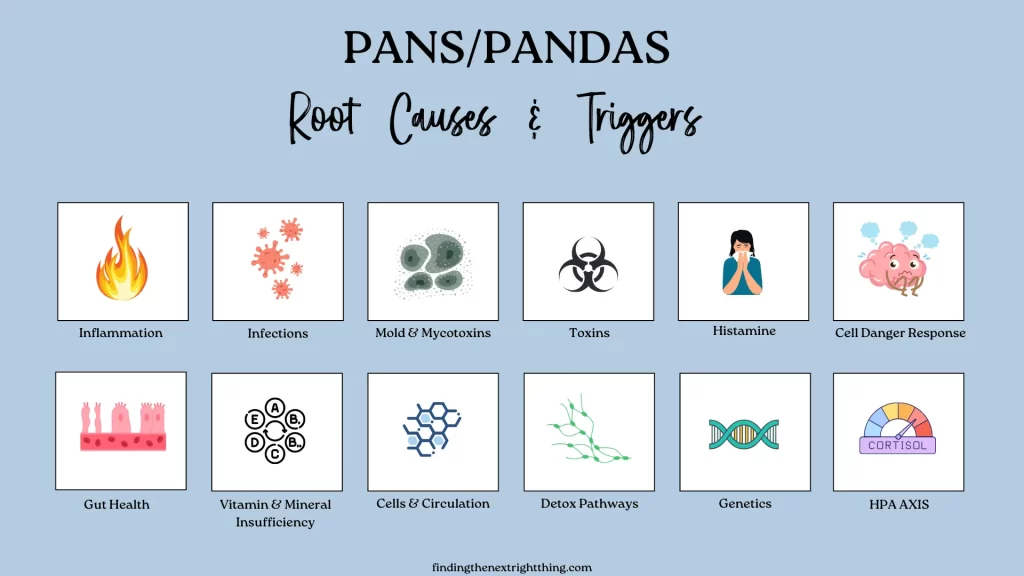
It’s usually a stack of stressors, that all together overwhelm a genetically susceptible child. Stressors like chronic infections, mold, toxins, and gut imbalances are usually at play. These factors create a perfect storm in a child’s developing brain and immune system.
And, most children will not get to baseline without finding and treating the root causes. As you will often hear, you have to pull back the onion layers.
Chronic Infections
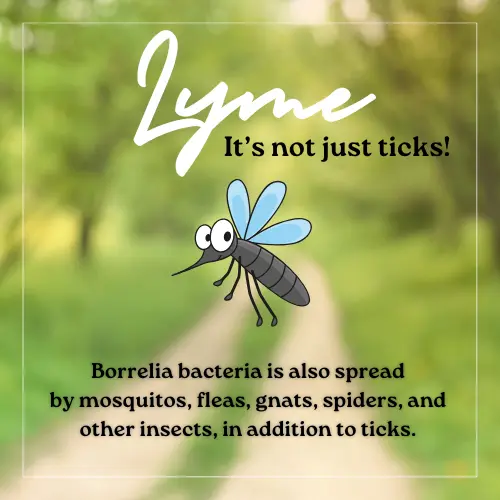
Many children with PANS and PANDAS have a hidden burden of chronic infections, without any obvious symptoms. Chronic tick-borne infections, like Lyme and Bartonella, are very often in the picture. These infections are transmitted by ticks, fleas, lice, spiders, mosquitos and other insects. A Lyme positive insect is frequently also carrying Bartonella, Babesia, Mycoplasma, and more. That’s why they are often referred to as “co-infections” because they are transmitted at the same time.
There are also persistent viruses like Epstein-Barr Virus (EBV), Cytomegalovirus (CMV), Herpes Simplex Virus (HSV), and Human Herpesvirus 6 (HHV-6).
Over time, these chronic infections can wear down the immune system. They fuel inflammation, mess with mitochondria, cross the blood-brain barrier, and cause symptoms that get misdiagnosed as anxiety, OCD, ADHD, or mood disorders.
Standard labs often miss these dormant infections. Many parents end up seeking out functional practitioners who understand how to screen for these latent infections through clinical history, symptoms, and specialty labs. And, it takes more than one dose of antibiotics to treat these chronic infections.
Treating these infections is a long game.
Lyme
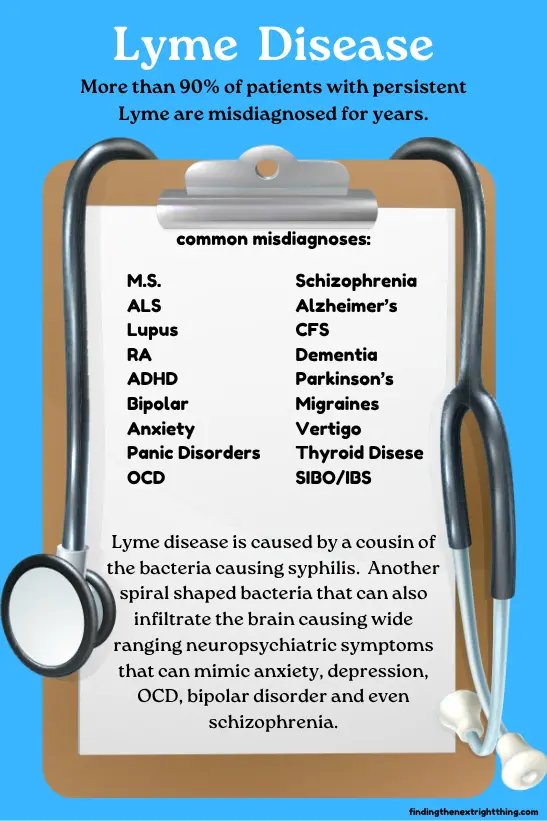
Lyme disease is a bacterial infection caused by Borrelia burgdorferi, most often transmitted through ticks and other insect bites. It’s often called “the great imitator” because it can mimic dozens of other conditions, from autoimmune disease to psychiatric disorders. In children with PANS/PANDAS, it manifests as anxiety, OCD, rage episodes, or regression, rather than joint pain or fatigue like it does in adults.
Borrelia uses several strategies to evade the immune system:
Shape-shifting between spirochete, cyst, and cell-wall-deficient forms
Forming biofilms, which hide it from antibiotics and immune system
Suppressing immune signaling, allowing it to persist long-term
It also cycles, alternating between dormant and active phases, meaning symptoms can wax and wane, making diagnosis even more difficult.
Its survival tactics allow it to burrow deep in our tissues and evade detection for years or decades.
Most people have heard of syphilis and its neuropsychiatric symptoms. Lyme and syphilis are both spirochetes, a class of spiral shaped bacteria that cross the blood brain barrier, invade the central nervous system and cause symptoms that are mistakenly thought to be psychiatric disorders. When instead a person is experiencing the neurological impacts of a persistent infection.
Neuroborreliosis (Lyme affecting the brain) can present as mood swings, rage, OCD, cognitive decline, dissociation, or panic. In fact, some researchers refer to Lyme as the “modern-day syphilis” because of the similarities.
Read more about the Lyme Epidemic here.
Bartonella
Bartonella is frequently referred to as “cat scratch disease;” however, most people who are diagnosed with Bartonella, don’t have a cat and/or have never been scratched by a cat. That’s because Bartonella is not just transmitted by cats, but by ticks, fleas, lice, and biting flies. And, often those insects are carrying more than just one disease, so one insect bite can transmit Lyme, Bartonella, and Mycoplasma.
Like Lyme, Bartonella is a stealth pathogen. It hides inside cells (particularly endothelial cells and red blood cells), evades the immune system, and creates long-term inflammation in blood vessels, nerves, and brain tissue.
Symptoms include:
- sudden rage, mood swings, aggression, depression, suicidal ideation, paranoia, panic attacks
frequent headaches, heel or shin pain, stomach pain without explanation
striae (stretch mark–like lesions) not explained by growth or weight gain
A study from North Carolina State University found Bartonella DNA in a much higher percentage of patients with psychosis. Case reports have also shown resolution of autism-like symptoms after Bartonella treatment.
Mycoplasma
Mycoplasma is traditionally thought of as a respiratory infection, but research has increasingly shown links between this bacteria and neurological and psychiatric symptoms, particularly in children.
Mycoplasma has a unique ability to trigger molecular mimicry, where the immune system starts attacking the body’s own tissues, especially the brain. Several studies have identified Mycoplasma pneumoniae as a trigger for acute-onset OCD, tics, encephalopathy, and neuroinflammation.
Unlike other bacteria, mycoplasma lacks a cell wall, making it harder to target with standard antibiotics and more adept at evading immune detection. It can embed itself in tissues and persist long after acute symptoms have resolved, silently driving immune activation and inflammation.
Babesia
Babesia is a malaria-like parasite transmitted by the same ticks that carry Lyme disease, often co-infecting at the same time. Babesia can cause significant issues:
Blood cell destruction & fatigue
The parasite invades red blood cells, causing hemolytic anemia, unexplained fatigue, night sweats, and intermittent fevers.Neurological and autonomic effects
Chronic babesiosis can impair the autonomic nervous system, leading to headaches, brain fog, anxiety, “air hunger,” and dysautonomia symptoms like POTS. (source).Mood and cognitive disturbances
Patients may experience confusion, emotional lability, memory lapses, depression, and panic.
Babesia’s effects on oxygen transport, mitochondrial energy, and the nervous system can worsen PANS/PANDAS symptoms, intensifying anxiety, cognitive decline, and neuroimmune dysregulation.
Chronic Infections & the PANS/PANDAS puzzle
Chronic infections like Lyme, Bartonella, Mycoplasma, Babesia, and persistent viral reactivations, can slowly weaken the immune system and trigger neuroinflammation. And, in sensitive children, tip the balance toward autoimmune dysfunction.
Standard labs often miss them. Symptoms often overlap with multiple other conditions and can go away and then suddenly return. And when more than one pathogen is involved (which is common), they interact in ways that amplify immune dysfunction.
Mold & Mycotoxins
Mold exposure is much more than a respiratory or allergy problem. Mold and mycotoxins are one of the biggest drivers of PANS and PANDAS. And, when there are multiple kids in one family with PANS and PANDAS, mold is often involved.
Mold often hides in plain sight, behind walls, behind dishwashers, under flooring and tile, or in HVAC systems, meaning you could have a mold problem and not know it unless you go looking for it. Even when mold isn’t visible, its byproducts, called mycotoxins, can linger in the environment for months or years. These microscopic toxins attach to dust and enter the body through inhalation, triggering systemic effects throughout the body.
Mycotoxins are fat-soluble, meaning they can cross the blood-brain barrier and directly inflame brain tissue. They also suppress immune function, burden detox pathways, and disrupt the delicate balance of the gut-brain axis. This sets the stage for worsening neuropsychiatric symptoms, like brain fog, anxiety, mood swings, rage, regression, and OCD. For many families, mold is the hidden piece that explains why nothing else seems to be working.
For a much deeper dive into mold, mycotoxins, testing recommendations, and protocols, please visit the Root Causes | Mold Guide. That guide breaks down exactly how mold impacts the brain-immune axis and what to do about it. And, the Mold Herbal Guide provides insight into detoxing from mold.
Toxins & Environmental
Every day, our children face a relentless influx of toxins—from heavy metals and endocrine disruptors to agricultural chemicals and microplastics. These substances quietly chip away at immune resilience, impair detox pathways, and inflame neural and bodily systems. All of which create fertile ground for PANS/PANDAS flares and chronic neuroimmune symptoms.
Heavy metals like mercury, aluminum, and lead accumulate in the body and interfere with brain development, detox function, and immune balance. Glyphosate and other pesticides can weaken the gut barrier and contribute to mitochondrial dysfunction. Endocrine disruptors, found in plastics, food packaging, and personal care products, alter hormone signaling and further strain the gut-brain axis. Microplastics, absorbed through air, water, and food, act as carriers for other toxins, and children absorb more per pound than adults.
How Toxins Interact & Amplify Problems
These toxins don’t act alone. Heavy metals, pesticides, and plastics combined with infections and mold, create a toxic synergy that overwhelms a child’s small body and developing systems. For instance, glyphosate can act as a chelator, binding heavy metals and making them harder to excrete. PFAS chemicals can suppress immune responses, making children more susceptible to infections or mold-related illness. As the body’s total toxic burden builds, it fuels inflammation, disrupts mitochondrial energy, and inflames the brain.
Toxins + PANS/PANDAS = A Perfect Storm
Add these environmental stressors to an already hyperactive immune system, and you get more triggers, longer flares, and skyrocketing symptoms. That’s why digging into detox and limiting environmental exposures is a must with PANS/PANDAS.
To learn more about toxins and their impact on our health and interaction with PANS and PANDAS read the Root Causes Guide | Detox.
Impaired Detox Pathways
Even when exposures are reduced, impaired detoxification can keep children with PANS/PANDAS stuck in a cycle of inflammation. Genetics, chronic infections, and mitochondrial dysfunction often interfere with the body’s ability to eliminate toxins efficiently.
The liver processes most toxins in two phases:
Phase I modifies toxins into intermediate forms.
Phase II packages them for safe removal through bile or urine.
If Phase I is overactive but Phase II can’t keep up, reactive intermediates build up, doing more damage than the original toxin. This imbalance is common in kids with chronic illness, especially when glutathione levels are low.
Genes that interfere or inhibit methylation, like MTHFR variants, are common in these kids and reduce glutathione production, weakening their ability to neutralize toxins. Bile flow matters, too, if bile is thick or bowel movements are infrequent, toxins get reabsorbed through the gut, a process called enterohepatic recirculation. Mold exposure often worsens this by thickening bile. The lymphatic system is also crucial, but unlike the circulatory system, it has no pump. Without movement and hydration, toxins linger in tissues and fuel neuroinflammation.
You can find a breakdown of the importance of our detox pathways in the Root Causes | Detox Pathways Guide.
And, a full breakdown of how to open the detox pathways in the Herbal Guide | Detox Pathways.
Gut Health
When most people think about their gut, they think of food and digestion. But the gut does way more than digestion. The gut is actually at the center of immune regulation, inflammation, and brain function.
Roughly 70% of the immune system lives in our gut. When the gut barrier is damaged, due to chronic stress, antibiotics, mold exposure or a processed diet, it can become “leaky.” A leaky gut allows undigested food, toxins and microbes to slip into the bloodstream. This triggers systemic inflammation and can trigger molecular mimicry. That’s where the immune system, starts attacking brain tissue.
Kids with PANS/PANDAS often have gut imbalances (dysbiosis). The overgrowth of pathogenic bacteria, yeast (like Candida), or loss of beneficial bacteria can push the immune system into a pro-inflammatory state. This shift can worsen mood swings, behavior and neurological symptoms. The gut delivers messages to the brain via the vagus nerve, the bidirectional communication system between the gut and brain.
Many kids also kids also have poor digestion and nutrient absorption. And, when nutrient absorption suffers, the rest of the bodily systems do too.
In short: a leaky, inflamed gut keeps the immune system on edge and drives neuroinflammation. That’s why repairing the gut and restoring microbial balance is at the top of the priority list. Good gut health is foundational to calming the brain-immune storm.
Read more about the importance of gut health, especially with autoimmune disease on the Root Causes | Gut Health Guide.
Chronic Stress & Trauma
Chronic stress and unresolved trauma are often overlooked contributors to PANS and PANDAS. But they can profoundly impact how the immune and nervous systems function, especially in children already dealing with infections, toxins, or gut issues.
When the brain detects ongoing stress, it shifts into a protective mode. Cortisol and adrenaline surge, keeping the body alert and primed for danger. Over time, this stress chemistry rewires the brain’s signaling, disrupts immune regulation, and exhausts the vagus nerve. The vagus nerve is the body’s main anti-inflammatory brake.
This can activate what researchers call the Cell Danger Response (CDR) the CDR is a survival mechanism at the cellular level. Instead of focusing on repair or detox, the body freezes in defense and ramps up inflammation, both of which make it harder to heal. Read more in depth in the Root Causes | CDR Guide.
For sensitive children, this kind of dysregulation doesn’t always come from big trauma. A lot of little “t” trauma like medical trauma, sensory overload, family stress, or repeated disruptions can all be enough to keep the system on high alert.
This isn’t just psychological, it’s a biological response. And in many kids with PANS/PANDAS, their nervous system must relearn how to read safety cues before the immune system can stabilize.
The Onion Layers
PANS and PANDAS are rarely caused by just one trigger. They’re the result of multiple interrelated root causes that overwhelm a child’s developing body. From chronic infections and mold to toxins, gut imbalance, and unresolved stress, true healing requires peeling back the onion layers and addressing what’s below the surface.
Visit the Root Causes Guide to learn more about the root causes & triggers for PANS and PANDAS.
📚 Book Recommendations
Demystifying PANS/PANDAS by Dr. Nancy O’Hara – a must-read for families pursuing integrative or functional approaches.
A Light in the Dark for PANDAS & PANS by Dr. Jill Crista– Dr. Crista has a great way of explaining complex medical issues in terms parents can understand. This book is about healing PANS/PANDAS holistically with herbal medicine.
Break the Mold by Dr. Jill Crista – another great book by Dr. Crista, but this time specifically on treating mold illness with herbal medicine.
🎧 Podcast Recommendations
Demystifying PANS/PANDAS Podcast by Nancy O’Hara, MD, Could it Be PANS/PANDAS? A Pediatrician Explains the Signs & Solutions
BetterHealthGuy Blogcasts, PANDAS and PANS with Dr. Jill Crista, ND
No comment yet, add your voice below!