Antimicrobial Herbs

Antimicrobial Herbs

Why Use Antimicrobial Herbs and Other Natural Antibiotics?

Antimicrobial herbs don’t just kill microbes, they support the body’s terrain, reduce inflammation, break down biofilms, and modulate immune function. When you’re dealing with persistent infections like Lyme, Bartonella, Mycoplasma, or recurring Strep, it becomes clear that conventional antibiotics aren’t always enough, and sometimes they’re not even tolerated. 

Unlike pharmaceuticals that focus solely on killing pathogens, herbal antimicrobials offer broader support. They target bacteria, disrupt biofilms, modulate inflammation, and strengthen the immune system without completely wiping out the microbiome. Many also soothe the gut, support detox pathways, and calm the nervous system, all essential in a PANS/PANDAS protocol.

These natural antibiotics can be used during active infection or as part of a long-term maintenance plan to reduce flare frequency, especially when dealing with hard-to-treat microbes or post-infectious immune activation. Many of them work synergistically, and most need to be taken consistently to see results.

Disclaimer: I’m not a doctor, and I don’t pretend to be one online. This isn’t medical advice, just a mom sharing what’s helped on our own healing path. Always check with your medical provider before starting any new supplement, treatment, or protocol.

Top Antimicrobial Herbs

Table of Contents

Chinese Skullcap

How it Works

Chinese Skullcap contains baicalin, a flavonoid that directly disrupts the ability of bacteria to grow and replicate. This antimicrobial herb targets both gram-positive and gram-negative bacteria by weakening their cell walls and interrupting DNA processes. Chinese Skullcap also helps regulate inflammation and immune response.

Why It's Helpful for PANS/PANDAS

  • Reduces neuroinflammation and cytokine storms

  • Supports liver detox

  • Calms the nervous system, improving sleep

  • Modulates immune responses during infection

  • Also one of the top herbs for Mycoplasma and viral co-infections.

Cordyceps

How it Works

Cordyceps works by interfering with bacterial RNA synthesis, essentially stopping bacteria from producing the proteins they need to survive. As a bonus, it supports mitochondrial function and acts as an adaptogen, helping the body manage both the infection and the fatigue that often comes with it.

Additional Benefits

  • Boosts mitochondrial energy—helpful for fatigue and post-infection recovery
  • Modulates the immune system without overstimulation
  • Enhances endurance and stress resilience during illness
  • Known to be effective against mycoplasma, and may be a good prophylactic against strep.
  •  

Cryptolepis

How it Works

Cryptolepis is one of the heavy hitters in antimicrobial herbs. Its alkaloids break down bacterial cell membranes and block enzymes essential for bacterial reproduction. It’s especially effective against persistent infections like Lyme and co-infections, which often evade conventional antibiotics.  Stephen Buhner, a brilliant herbalist, included cryptolepis as one of his top most effective antimicrobial herbs in his book, Herbal Antibiotics.

Additional Benefits

  • Reduces inflammation systemically and in the nervous system

  • Targets antibiotic-resistant strains

  • Helps regulate immune balance and reduce flare severity

Start low, it can be strong for sensitive kids.
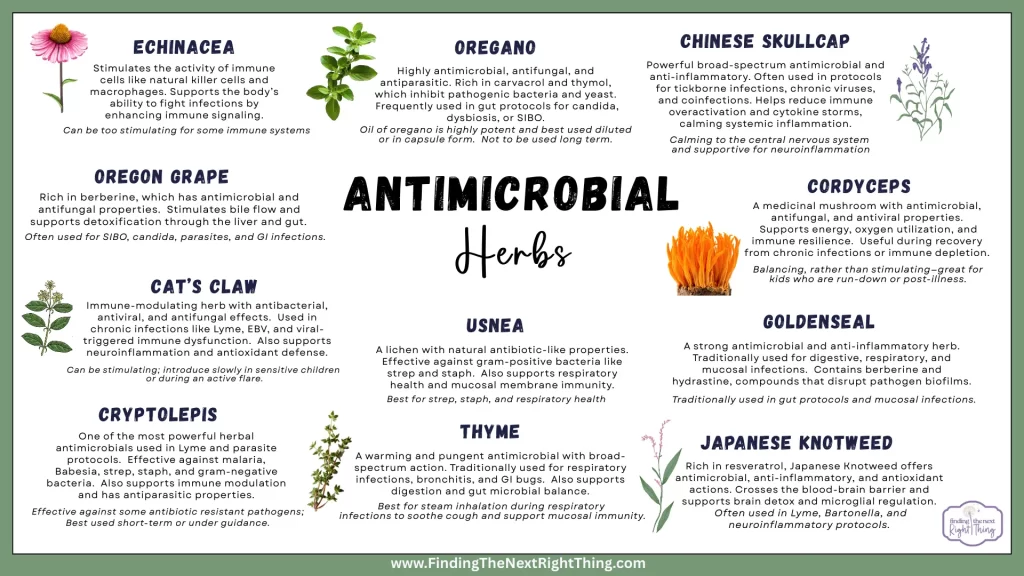
A visual guide to the top 11 antimicrobial herbs including Echinacea, Cryptolepis, Chinese Skullcap, and more. Highlights each herb’s role in fighting infections, supporting immunity, and promoting gut health.

Echinacea

How it Works

Echinacea improves and modulates the immune function, enhancing the activity of macrophages and natural killer cells to eliminate bacterial infections.

Additional Benefits

  • Modulates cytokine production (calming excessive inflammation)

  • Shortens the duration of infections

  • Antiviral action, especially in early stages

  • Supports lymphatic drainage for detox

Look for Echinacea Augustifolia; another species, Echinacea purpurea is more widely sold, but Angustifolia is a much more potent antimicrobial herb.

Goldenseal

How it Works

Goldenseal contains berberine, a powerful antimicrobial compound that targets bacterial metabolism and stops biofilm formation, the protective “shield” bacteria builds to hide from antibiotics.  Goldenseal is a very powerful antimicrobial herb and should not be taken long-term.

Additional Benefits

  • Gut Health:  Goldenseal selectively targets harmful bacteria while preserving beneficial gut flora, promoting a balanced microbiome.
  • Anti-inflammatory Effects: It soothes inflamed tissues, particularly in the digestive and respiratory systems.

Thyme
How it Works

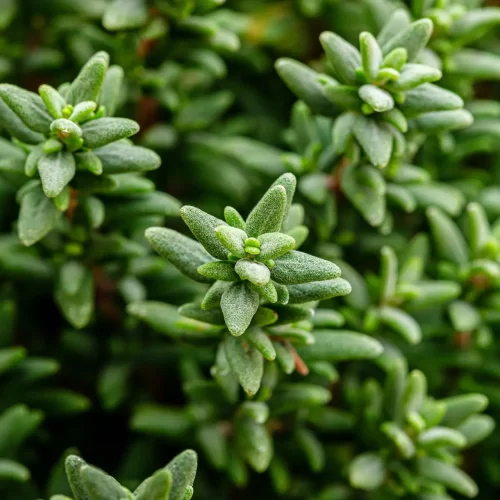
Thyme’s essential oils, primarily thymol and carvacrol, break down bacterial membranes and interfere with the cellular processes bacteria need to survive. It’s particularly good at clearing the lungs and sinuses, and it also helps combat molds and mycotoxins in the gut and respiratory tract.

Additional Benefits

  • Respiratory Support: Known for its effectiveness in addressing respiratory infections, Thyme clears mucus, improves breathing and reduces congestion.  I like to use fresh or dried Thyme for steam inhalation to break up or clear out mucus.
  • Antifungal Activity: Its antifungal properties disrupt the integrity of fungal cell membranes. This action not only inhibits the growth of molds but also neutralizes the toxins (mycotoxins) they produce.

Oregano

How it works

Oregano oil is rich in compounds like carvacrol and thymol.  These compounds work by punching holes in the cell membranes of bacteria, fungi and biofilms. 

Additional Benefits

  • Gut Health: Oregano soothes the gut lining, reducing inflammation and promoting a balanced microbiome.
  • Antifungal: Oregano inhibits fungal growth and destructs fungal cells. It can penetrate and disrupt biofilms. Keep in mind, oregano oil is very powerful, but may be too much for some people.  It’s best used after other less potent herbs have been tried.
  • Detoxification: It helps the body in cleansing the body of toxins and supports recovery.

Japanese Knotweed

How it Works

Due to the resveratrol content in Japanese Knotweed, this antimicrobial herb goes after bacteria that hide deep in tissues or cross into the nervous system. It penetrates biofilms and suppresses inflammation while actively stopping bacteria from reproducing. It’s especially valuable for neuroinflammatory infections like Lyme and Bartonella.

Additional Benefits

  • Crosses the blood-brain barrier to reduce neuroinflammation

  • Supports vascular health, detox, and microcirculation

  • Protects neurons from inflammatory damage

Oregon Grape

How it Works

Like goldenseal, Oregon Grape contains berberine, which disrupts the energy metabolism of bacteria and prevents them from forming biofilms. It’s particularly gentle on the gut, helping to fight infection without wiping out beneficial flora. It also supports detox through the liver and bile pathways.

Additional Benefits

  • Supports gut and liver detox

  • Calms inflamed digestive tissue

  • Balances microbiome without wiping it out

Gentler than goldenseal and often better tolerated for longer use.

Usnea

How it Works

Usnea’s active compound, usnic acid, disrupts bacterial energy production and damages the structure of bacterial cell walls. It’s known to be effective against gram-positive bacteria like Staph and Strep. It’s also a strong antifungal and soothing to mucous membranes.

Additional Benefits

  • Strong antifungal for Candida and mold-related illness

  • Natural respiratory remedy, soothes irritated mucous membranes

  • Helpful during strep outbreaks or for persistent sore throats

Building Your Own Home Apothecary

Chronic infections are rarely just about the microbe. They’re about immune dysregulation, inflammation, detox overload, and terrain imbalance. That’s why herbal antibiotics can be a good fit for long-term support, especially in sensitive kids.

Antimicrobial herbs not only go after pathogens, they help restore the balance the body needs to recover. They’re adaptable, multi-functional, and often better tolerated than pharmaceuticals over time. But they’re not magic bullets. They work best when used alongside binders, detox support, lymph movers, and nervous system regulation.

If you’re building your child’s PANDAS flare protocol or looking for ways to reduce the microbial load between flares, this page is a great place to start. For more herbal support across different systems, head to the Herbal Guide, where you’ll find detailed protocols for:

Take your time and remember, what works well in one season might need adjusting in another.  The goal isn’t just to kill the bug. It’s to help your child feel better, stay more stable, and begin to heal from the inside out.
Antiviral

Antiviral Herbs

Why Use Herbal Antivirals and other Natural Remedies?

When your child is dealing with a sudden virus or chronic viral infection, supporting the immune system needs to go deeper than just killing the virus. Antiviral herbs support the immune system’s intelligence, helping the body:

  • Disrupt viral replication

  • Prevent viruses from attaching to cells

  • Modulate overactive inflammation

  • Clear viral debris and restore balance

Many of these herbs also come with additional helpful side benefits: they soothe the gut, support the brain, calm cytokine storms, and help move lymph.

Because herbal compounds are metabolized quickly, they need to be taken multiple times per day for best results.

Don’t Forget to Move the Lymph

As these antiviral herbs help the body break down viruses and clear infected cells, your lymphatic system has to carry out the waste. But many kids with PANS/PANDAS or chronic illness have sluggish lymph flow. That’s why it’s important to pair antiviral herbs with strategies that keep the lymph system moving:

  • Add an herbal lymph mover like Cleavers or Red Root

  • Gentle exercise or rebounding 

  • Dry brushing, castor oil packs, or Epsom salt baths

To read more about the lymphatic system, read my post Drain.Detox.Heal. Why the Lymphatic System Matters More than You Think.

In short, using herbal antivirals, isn’t just about reducing the viral load, these herbs help repair the terrain, supporting the body’s ability to bounce back and build long-term resilience.

Disclaimer: I’m not a doctor and this is not medical advice. This information is about my own personal experience and is meant for educational purposes only and is not intended to diagnose, treat, or replace medical care. Always consult with your healthcare provider before starting any new supplement, protocol, or treatment.

Top Antiviral Herbs

Table of Contents

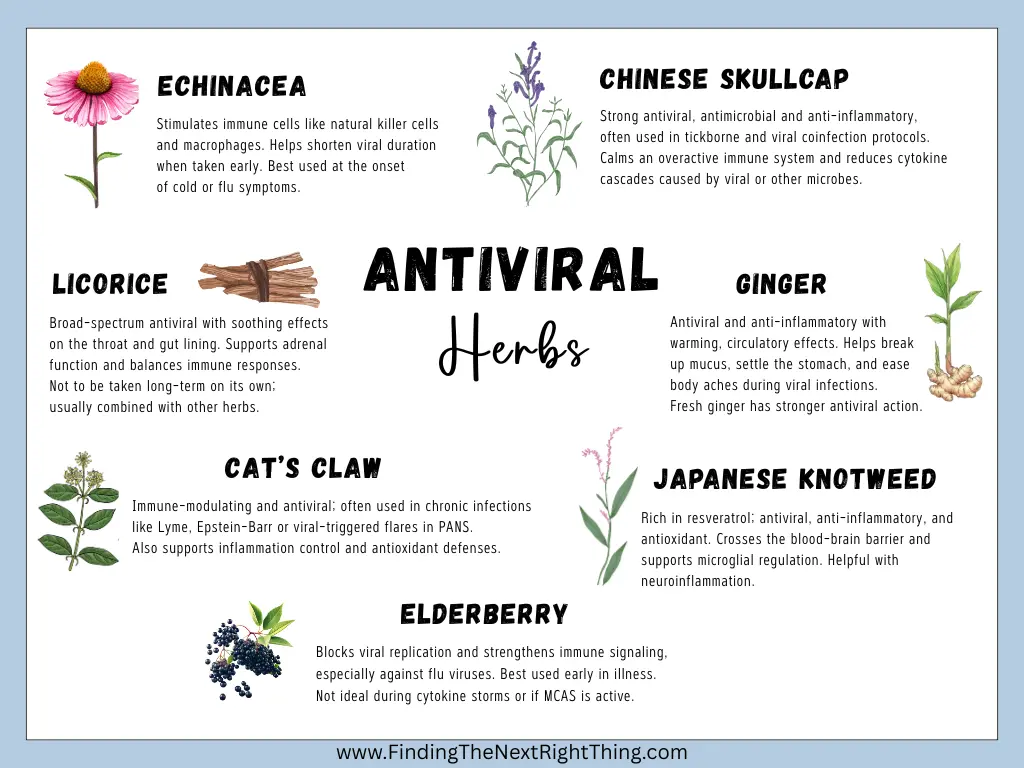
Illustrated chart showing eight antiviral herbs for kids—Echinacea, Chinese Skullcap, Licorice, Ginger, Cat’s Claw, Japanese Knotweed, Elderberry, and Gotu Kola—with brief notes on immune support, inflammation, and viral protection, especially for children with chronic illness or PANS/PANDAS.

Cat’s Claw

Cat’s Claw is an herbal antiviral multi-tasker. It doesn’t just go after viruses, it also helps regulate the immune response, calm inflammation, and support tissue healing. It’s particularly helpful for chronic viral infections like Epstein-Barr (EBV), cytomegalovirus (CMV), and herpesviruses that tend to linger.  Cat’s claw is a favorite of Dr. Rawls for Lyme treatment.

How It Works

  • Antiviral: Inhibits viral replication and blocks attachment to host cells

  • Immune-boosting: Increases white blood cell activity (T-cells, NK cells, macrophages)

  • Anti-inflammatory: Reduces cytokine overproduction and supports oxidative balance

  • Gut support: Helps restore gut lining, often compromised in chronic illness

For this reason, Cat’s Claw can be used in both flare protocols and long-term immune support. It’s especially useful when you’re addressing multiple root causes at once, like viral load, gut dysfunction, and neuroinflammation.

Chinese Skullcap

This is one of the most widely used herbs in Traditional Chinese Medicine for a reason. Chinese Skullcap is an herbal antiviral, antibacterial, anti-inflammatory, and neuroprotective. It’s specifically indicated when the infection affects both the brain and the immune system, especially when dealing with neuroinflammation, brain fog, or chronic infections like Mycoplasma, Lyme, or EBV.

In his book, Stephen Buhner says Chinese Skullcap “is extremely specific for reducing inflammation in the brain, reducing the cytokine cascades initiated by viral or other microbial agents in the CNS, and alleviating CNS impacts of those microbes.”  Chinese Skullcap is also featured in Dr. Crista’s book on treating PANS/PANDAS, and I’ve heard Dr. O’Hara say it’s a favorite of hers for treatment as well.

It crosses the blood-brain barrier, helping to calm microglial activation and protect neurons. Very few herbs can do that so effectively.

📌 Chinese Skullcap’s botanical name is Scutellaria baicalensis, not to be confused with Scutellaria lateriflora, a completely different herb.

How It Works:

  • Blocks viral entry and replication

  • Reduces cytokine storms in the brain and body

  • Modulates immune response without overstimulation

Echinacea

Echinacea is your front-line defense herb. It helps activate the immune system during early viral exposure and shortens the duration of illness. But it’s also lymphatic supporting, antimicrobial, and anti-inflammatory. Echinacea is helpful for early signs of a virus.  It is not as effective once a virus has already taken hold.

How it works

  • Stimulates immune cells (NK cells, macrophages)

  • Inhibits viral replication and supports early immune recognition

  • Supports lymphatic drainage and detox

  • Mild antimicrobial properties

Different species of Echinacea

There are multiple species of Echinacea but you will usually see Echinacea angustifolia and Echinacea purpurea. Echinacea angustifolia is not as widely available but is far more potent than purpurea. Look for those containing E. angustifolia, but E. purpurea remains a good option if angustifolia is unavailable.

Elderberry

Elderberry is a natural antiviral primarily used to prevent and treat influenza, and other respiratory infections. If you use it right at the beginning of a flu infection, it will usually greatly reduce the severity of symptoms or the duration of illness.  

It inhibits viral replication, binds influenza viruses thus inhibiting them from infecting host cells, directly virucidal, inhibits viruses from maturing.

Very effective for influenza but must be taken at the onset of symptoms or prophylactically. If you take elderberry several days into the flu for the first time, it can cause a cytokine storm and exacerbate symptoms.  I’ve made this mistake.

Ginger

Ginger is  a powerful herbal antiviral, anti-inflammatory, and gut-soothing herb. It supports circulation, helps move lymph, calms histamine reactions, and supports detoxification. It’s especially great for viral GI bugs and respiratory infections, but it also helps with post-viral symptoms, nausea, and immune burnout.

How It Works

  • Blocks viral replication and attachment

  • Regulates cytokines to reduce inflammation

  • Supports gut-lung-brain axis through its calming and circulatory effects

  • Helps move lymph and supports detox

Especially helpful for:

  • GI-based flares

  • Viral respiratory symptoms

  • Histamine flares (combine with perilla!)

  • Detox sluggishness after illness

Licorice

Licorice root has been used in Traditional Chinese Medicine for centuries and for good reason. It’s a broad-spectrum herbal antiviral, anti-inflammatory, immune-modulating, and deeply soothing to the mucous membranes of the gut, lungs, and throat. Licorice is also a powerful synergist, meaning it boosts the effects of other herbs it’s paired with.

How It Works

  • Antiviral: Inhibits replication and blocks viruses from attaching to cells

  • Soothes mucosal membranes: Great for sore throats, gut irritation, and lung inflammation

  • Regulates cortisol: Helps support the HPA axis and stress resilience

  • Anti-inflammatory + antioxidant: Calms cytokine storms and oxidative stress

Especially helpful for:

  • Influenza and upper respiratory infections

  • Viral flares with GI or respiratory symptoms

  • Sore throats, ulcers, gut inflammation

  • Weak adrenals or stress-related crashes during illness

Licorice should not be taken long-term, and is usually used alongside other herbs, not alone.

Japanese Knotweed

Japanese Knotweed is a foundational herb in protocols for Lyme, chronic EBV, viral PANS, and mold illness. It’s an herbal antiviral, antibacterial, neuroprotective, and anti-inflammatory.  It also crosses the blood-brain barrier, addressing both systemic and brain-based symptoms.

How It Works

  • Blocks viral replication

  • Reduces cytokine storms and inflammation

  • Strengthens blood-brain barrier and reduces neuroinflammation

  • Antioxidant and detox supportive

  • Modulates immune response (not too much, not too little)

Especially helpful for:

  • Chronic EBV, CMV, and herpesvirus

  • Neurological inflammation: OCD, tics, anxiety, sensory sensitivity

  • Post-viral fatigue or flares with cognitive symptoms

  • Infections that have crossed into the CNS

  • Contains resveratrol—excellent for reducing vascular inflammation and oxidative stress.

Antiviral Supplements

While antiviral herbs do much of the heavy lifting when it comes to managing viruses, certain nutraceuticals and vitamins are also powerful natural antivirals. 

Zinc

Zinc is one of the most well-studied antiviral nutrients. It helps block viral replication (including influenza and COVID) and supports the production and activity of white blood cells, including T cells and natural killer cells.  Zinc can significantly reduce the duration and severity of colds, and it’s especially helpful during the early stages of infection. Zinc is part of our acute protocol.

*Long-term use of zinc should be balanced with copper.  Too much zinc depletes copper.  You can find them combined.

Vitamin D

Vitamin D is also a strong natural antiviral.  It helps regulate both innate and adaptive immune responses.  Adequate levels of vitamin D have been shown to reduce the risk and severity of respiratory infections, including influenza and COVID-19.

Vitamin D works synergistically with K2, so look for a D3/K2 combo.

Monolaurin

Derived from lauric acid (found in coconut oil), monolaurin is a natural antiviral that targets enveloped viruses, those surrounded by a lipid membrane, including influenza, herpes, Epstein-Barr, and coronaviruses. It disrupts that lipid envelope, essentially “disarming” the virus and preventing it from infecting host cells. Monolaurin also supports gut health and helps reduce viral load in chronic infections.  It’s a great stand-alone option in place of herbal antivirals.  Monolaurin is highlighted in Dr. O’Hara’s book, Demystifying PANS/PANDAS.   Lauricidin is my preferred brand for my kids.  It’s also a biofilm buster and comes as pellets so it’s easy to swallow for young kids or those with difficulty swallowing pills.

Building your Own Antiviral Toolkit

Herbal antivirals compounds help retrain the immune system, calm inflammation, and support recovery across multiple systems.

But, there’s no one-size-fits-all solution. The key is to start slow, observe, and adjust. Pairing antiviral herbs with lymphatic support, proper detox pathways, and foundational care (like sleep, hydration, and nutrient status) gives the body the tools it needs to fight smarter, not harder.

If you’re working on your child’s PANDAS flare protocol, this page is just one piece of the puzzle. Be sure to check out the Herbal Guide for additional layers of support, including:

You don’t need to do it all at once, but having a strategy in place helps you act quickly when symptoms spike. Natural antivirals can be a powerful part of that strategy, when used with intention and alongside other supports.

📘 Book Recommendation:  Stephen Buhner, Herbal Antivirals: Natural Remedies for Emerging & Resistant Viral Infections

If you want more than surface-level info and really want a deep dive about antiviral herbs—this is THE book. Stephen Buhner explains the science behind each herb, viral life cycles, and how specific plant constituents work. It is very technical but readable, and it’s one of the most well-researched, practical guides for using herbs to treat viruses. 

Antifungal

Antifungal Herbs

Disclaimer: I’m not a doctor and this is not medical advice. This information is about my own personal experience with antifungal herbs and is meant for educational purposes only and is not intended to diagnose, treat, or replace medical care. Always consult with your healthcare provider before starting any new supplement, protocol, or treatment.

Antifungal Herbs

If you’ve ever dealt with persistent fatigue, brain fog, or strange gut symptoms that never quite go away, you might already know how sneaky fungal overgrowth can be. Fungal imbalance can quietly wear down the body’s energy, immunity, and even mood.

Prescription antifungals can help, but they’re not always gentle. For many of us with autoimmune conditions or sensitive systems, they can feel like too much for the liver or microbiome to handle. That’s where antifungal herbs come in, natural plant-based options that work with the body instead of against it.

These herbs don’t just kill fungus. They help calm inflammation, support detoxification, and rebuild microbial balance, which makes them especially valuable when fungal overgrowth is part of a bigger picture: gut issues, mold exposure, chronic fatigue, or immune dysfunction.

Below are some of the most effective natural, whole-body antifungal herbs I’ve found helpful for myself, my family, and many others looking for safer, sustainable ways to bring the body back into balance.

📌 A quick note before we dive in:
The herbs listed below are primarily used to address Candida and systemic fungal colonization, especially when fungal imbalance shows up in the gut, skin, sinuses, or energy levels. If you’re looking for a mold-focused approach, targeting mycotoxins or environmental mold illness, head over to the Herbal Guide to Mold Detox for more specific support. Both types of fungal load matter, but they require slightly different strategies.

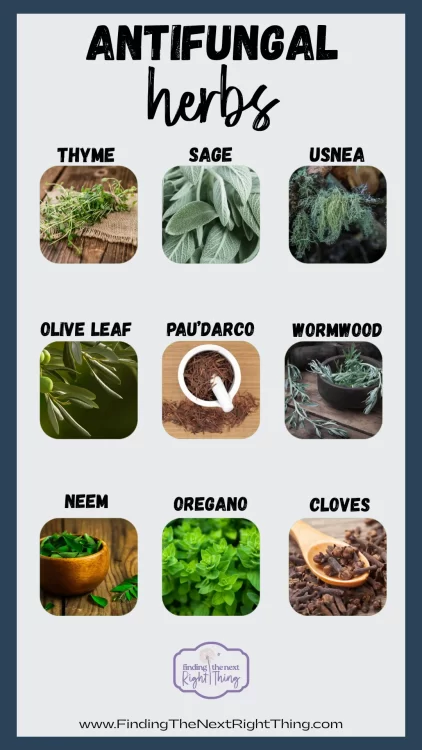
Antifungal herbs chart showing thyme, sage, usnea, olive leaf, pau d’arco, wormwood, neem, oregano, and cloves — natural herbal antifungals that support gut, immune, and whole-body balance.

Thyme

Thyme is one of my favorite antifungal herbs for fungal and respiratory support. Its essential oils, especially thymol and carvacrol, help break down fungal cell walls, making it a powerful yet gentle antifungal herb. It’s especially helpful for people who’ve lived in damp or moldy homes and now deal with lingering sinus or lung issues. I like using thyme in capsule or glycerite form for internal support, but when the lungs need extra help, steam inhalation is wonderful. A bowl of hot water with a few sprigs of fresh thyme (or a drop of thyme essential oil) can help open airways and clear fungal buildup naturally.

Sage

Sage is one of those herbs that quietly does it all, antifungal, anti-inflammatory, and deeply restorative to the sinuses and lungs.  Compounds like rosmarinic acid and carnosol help calm irritation, fight fungal growth, and support tissue repair. I often reach for sage when the sinuses or throat feel congested or inflamed, especially after mold exposure. It pairs well with thyme for steam inhalation. Sage can also be taken as a capsule, tincture, or glycerite to support the immune system from the inside out.

Olive Leaf

Olive leaf is one of the most well-rounded antifungal herbs. It targets yeast and fungal overgrowth but also supports immune balance and blood sugar regulation. The active compound oleuropein helps strengthen the body’s defenses while calming inflammation. Olive leaf can be used short or long term, and it’s especially helpful for those who feel drained, puffy, or have recurrent fungal flare-ups after antibiotics.

Usnea

Usnea, often called “old man’s beard,” is a lichen with a strong affinity for the respiratory tract. It helps combat fungal and bacterial infections of the sinuses and throat, and it also supports immune modulation, meaning it can help recalibrate an overactive immune system. Usnea is best used for short periods or as part of a rotation with other herbs.

Pau D’Arco

Pau D’Arco bark has been used for centuries in South America to combat yeast and fungal infections. It’s naturally rich in naphthoquinones, compounds that inhibit fungal growth and support liver detox pathways. I often think of Pau D’Arco as a “clean-up crew” herb.  It helps clear yeast from the gut and skin while supporting the immune system’s balance. It can be taken as tea, tincture, or capsule.

Oil of Oregano

Oregano oil is one of the strongest natural antifungals available. It’s incredibly effective for stubborn fungal infections and can even penetrate biofilms. However, it’s powerful enough that it should be used carefully, especially in children. It should be used for short periods (or pulsed).

Nasal Antifungal Herbs

The sinuses are an often-overlooked reservoir for mold and yeast, especially after long-term exposure to mold and mycotoxins. Clearing them can make a big difference in energy and inflammation levels.

If you’ve spent time researching mold toxicity or mold illness, you’ve probably heard of Dr. Jill Crista and Dr. Neil Nathan.  In their books and speaking engagements, they’ve both stated that treating the nasal passages is often necessary for full recovery!

Hydrosol Silver (Argentyn 23)

This form of silver contains ultrafine particles that can penetrate biofilms and neutralize both bacteria and fungi. A few sprays into each nostril can help reduce sinus fungal load and support healing.

Xylitol

Often used in nasal sprays, xylitol helps prevent fungal adhesion and biofilm formation. It’s particularly useful for ongoing sinus congestion or recurrent sinus infections linked to mold exposure.

Steam Inhalation

Sometimes the simplest tools are the best. Steam inhalation with antifungal herbs like thyme, sage, rosemary, or eucalyptus helps open airways, clear mucus, and deliver antifungal compounds directly where they’re needed. Inhale gently over a bowl of hot water for 5–10 minutes, using a towel to trap the steam. It’s soothing, inexpensive, and surprisingly effective. 

Antifungal Herbs work!

What I love most about antifungal herbs is that they don’t just kill fungus; they help the body remember how to find its own equilibrium. As the gut and immune system start to rebalance, it’s common to notice shifts in energy, digestion, and even mood. That’s your system recalibrating.

If you’re just starting out, begin with one or two natural antifungal herbs and see how your body responds. Sometimes less is more, especially if there’s been mold exposure or chronic inflammation. Rest, nourishment, and gentle detox support make the process smoother.

Beware of Biofilms

One reason fungal overgrowth can be so persistent is biofilm formation. Biofilms are protective layers that microbes, like Candida or mold-related fungi, create to shield themselves from immune responses and treatment. If you’ve tried antifungal herbs or prescriptions in the past without lasting results, biofilms may be part of the issue. Breaking through these barriers often requires specific herbs or nutrients that disrupt the biofilm structure and allow antifungals to work more effectively.  To learn more about Biofilms read our Herbal Guide to Biofilm Busting.

🎧 Podcast Recommendation

Demystifying PANS/PANDAS Podcast with Dr. O’Hara, Is Mold Making You Sick?  The Overlooked Trigger Behind PANS/PANDAS.  Listen to Dr. O’Hara and Dr. Crista (two of the top PANS/PANDAs doctors) discuss the role mold plays in PANS/PANDAS and actionable steps with herbal therapies.

Parasites

Parasites

Parasites are sneaky. They hide behind vague symptoms, cause flares unpredictably, and thrive in dysregulated systems.  Some cases of chronic illnesses including autoimmune diseases, PANS/PANDAS, Lyme disease, and mold toxicity, have an underlying parasitic infection that needs to be addressed for full healing, often with targeted herbal remedies for parasites.

These organisms thrive in weak immune systems and inflamed environments. They create biofilms, suppress detox pathways, and inflame the gut-brain axis. This is where well-chosen herbal remedies for parasites can begin to shift the terrain. A well-designed parasite protocol can help uncover hidden infections, reduce inflammation, and improve the overall terrain.

So, what herbs are good for parasites? It depends! Different herbs target different life stages or mechanisms. Some herbs kill adult parasites. Others prevent reproduction, break down protective biofilms, or neutralize eggs and larvae.

Unlike pharmaceuticals, herbal remedies for parasites work with the body. They often have antimicrobial, antifungal, and anti-inflammatory benefits too.  Read more below to discover how a natural parasite cleanse can help clear the path to whole body healing.

Disclaimer: I’m not a doctor and this is not medical advice. This information is about my own personal experience and is meant for educational purposes only and is not intended to diagnose, treat, or replace medical care. Always consult with your healthcare provider before starting any new supplement, protocol, or treatment.

What Herbs are Good for Parasites?

Modern medicine often reserves antiparasitic treatment for confirmed infections (they’re not easily detected) and uses single pharmaceutical agents. But traditional systems, Ayurveda, Traditional Chinese Medicine, Western herbalism, have long used herbal remedies for parasites in a more layered, ecosystem-based approach.

The goal isn’t just to kill parasites.  It’s to rebalance the terrain. Herbs can modulate the immune system, repair the gut, reduce inflammation, and address co-infections. Unlike pharmaceuticals, many herbs work across life stages, targeting eggs, larvae, and adult organisms. 

Some herbs are directly toxic to parasites (like wormwood or black walnut). Others block reproduction, break down biofilms, or help flush dead organisms and waste. Many also have broad-spectrum antimicrobial activity, tackling viruses, bacteria, fungi, and protozoa simultaneously.

Emerging research supports what herbalists have always known:

  • Artemisia annua (wormwood) has shown strong activity against malaria and other protozoan infections in multiple studies.

  • Berberine demonstrates antiparasitic effects against Giardia and Blastocystis.

  • Clove oil has been proven to inhibit the development of parasite eggs and larvae.

  • Neem and mimosa pudica have documented antiparasitic, antifungal, and anti-inflammatory effects.

Herbs work best as a team. A successful parasite protocol usually combines several herbs with complementary actions, plus support for detox and immune function. This is where herbal medicine shines—working with the body, not just against the infection.

Recognizing a Parasite Infection

Because symptoms mimic so many other conditions, parasite infections often go undiagnosed. Common signs include:

  • Digestive issues: bloating, gas, constipation, or diarrhea

  • Teeth grinding, especially at night

  • Sugar or carb cravings

  • Skin issues: eczema, hives, rashes

  • Mood symptoms: anxiety, mood swings, irritability, brain fog

  • Sleep disturbances—parasites are most active at night

  • Chronic sinus congestion or respiratory issues

  • Muscle or joint pain

  • Worsening symptoms around the full moon 🌕 (a hallmark sign of parasitic activity)

If this list is ringing any bells, you may benefit from antiparasitic herbs.

Top Herbal Remedies for Parasites

Choosing the right herbal remedies for parasites depends on the type of organism, location in the body, and your child’s overall health. No single herb does it all. That’s why most functional protocols use combinations—with herbs that kill parasites, break down biofilms, reduce inflammation, and support detox pathways.

This section outlines the most effective plants used in a natural parasite cleanse. Some target intestinal worms. Others work better for protozoa or bloodborne parasites. Many have overlapping antimicrobial and antifungal benefits, making them useful in complex cases like PANS/PANDAS, Lyme, and mold toxicity.

If you’re building a parasite protocol, this list can help you choose the right tools, whether you’re working with an herbalist or doing your own research.

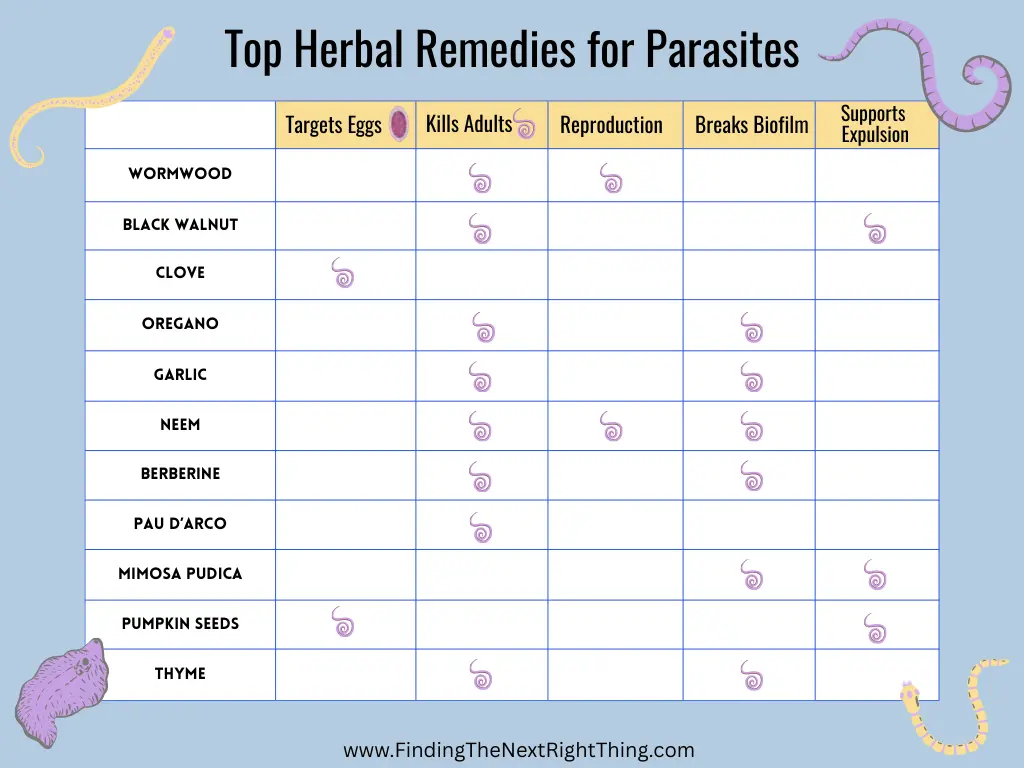
This side-by-side comparison chart comparing 11 herbal remedies for parasites, including wormwood, clove, black walnut, garlic, neem, and pumpkin seed. Columns show which herbs target eggs, kill adults, inhibit reproduction, break biofilms, or support parasite expulsion.

This side-by-side comparison helps you see how different herbal remedies for parasites work, whether you’re choosing a single herb or building a rotation.

Wormwood

A powerful, broad-spectrum antiparasitic that works against both intestinal and bloodborne organisms.

  • Disrupts parasite nervous systems and metabolic processes
  • Active against adult parasites, with some activity against larvae
  • Commonly used in protocols for malaria, Babesia, and protozoa
  • Best used in combination with black walnut and clove

Black Walnut

Targets and kills adult parasites, especially in the gut.

  • Also antifungal and antibacterial, making it useful in co-infection protocols
  • Promotes bile flow and supports liver detox
  • Often combined with wormwood and clove for full life cycle coverage

Clove

 One of the few herbs proven to target parasite eggs and larvae.

  • Eugenol has been shown to inhibit egg hatching and larval development

  • Strong antifungal and antibacterial properties

  • Supports digestion and mucosal healing

  • Works synergistically with wormwood and black walnut

Chinese Skullcap

  • Targets bloodborne parasites and protozoa

  • Anti-inflammatory and neuroprotective (great during die-off)

  • Supports liver detox and histamine balance

Neem

Broad-spectrum antiparasitic, antifungal, and antibacterial used widely in Ayurvedic medicine.

  • Inhibits parasite reproduction and disrupts biofilm formation
  • Helps balance the immune system and reduce inflammation
  • Supports liver detox and skin clearance

Berberine

Effective against protozoa such as Giardia and Blastocystis.

  • Reinforces gut lining integrity and balances the microbiome

  • Has antibacterial, antifungal, and anti-inflammatory properties

  • Supports metabolic balance (blood sugar, insulin sensitivity)

Pau D’Arco

Traditional South American herb with broad antimicrobial and anti-inflammatory properties.

  • Targets parasites, yeast, mold, and some viruses

  • Supports gut microbial balance

  • Helps lower systemic inflammation, particularly in the GI tract

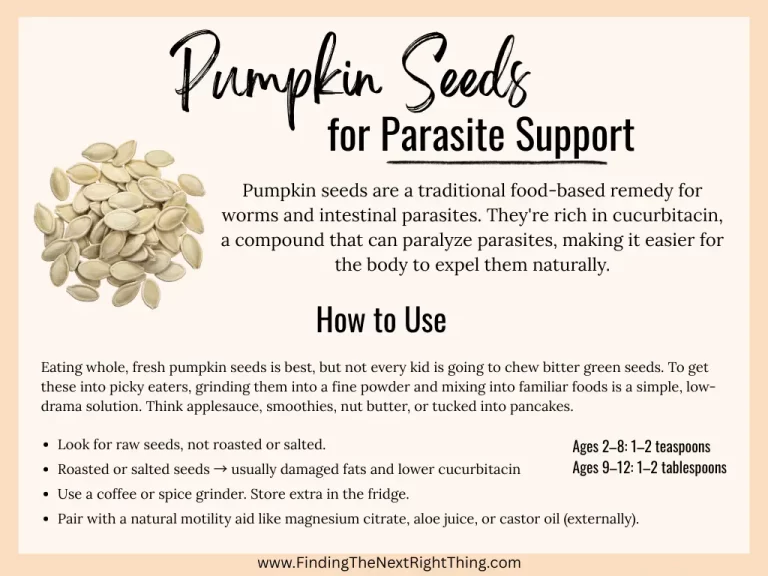
Pumpkin Seeds

A traditional antiparasitic used for paralyzing and expelling worms and larvae.

  • Contains cucurbitacin, which interferes with parasite nervous systems

  • Often paired with magnesium or castor oil for better elimination

  • Gentle, food-grade, and useful for kids or maintenance protocols

Mimosa Pudica

A unique herb that acts as a mechanical binder in the gut.

  • Becomes sticky and fibrous, helping to trap and eliminate parasites, eggs, biofilm, and toxins

  • Supports repair of the intestinal lining

  • Can be used long-term as part of gut restoration

Thyme

Contains thymol, which may disrupt early-stage parasites and biofilms.

  • Antimicrobial against fungi, bacteria, and protozoa

  • Helps reduce inflammation and support respiratory health

  • Synergistic with oregano and garlic in layered protocols

Infographic showing how to use pumpkin seeds for herbal remedies for parasites. Includes benefits, daily dosage, food ideas, and why raw, unsalted seeds are best for natural parasite support.

Full Natural Parasite Protocol

A successful parasite protocol isn’t just about killing parasites.  It’s about clearing terrain, supporting detox, and avoiding re-infection. Here’s how to structure a natural parasite cleanse. Start slow, layer in supports, and watch closely for how the body responds.

Step 1:  Take an Antiparasitic Herb (1–2 times daily)

  • Start with just one herb. Go low and slow.
  • Increase gradually as tolerated
  • Combine 2–3 herbs with different actions once you know what’s tolerated
  • Watch for die-off symptoms (fatigue, rashes, irritability, GI changes)

Step 2: Binders

When parasites die, they release toxic waste like biofilm, metals, ammonia, and inflammatory debris. Binders help mop up this mess and keep die-off symptoms manageable.  Start with one binder, then rotate or combine as needed.

Take 1-2 hours after herbs.

Common binders:

  • Activated charcoal

  • Zeolitte
  • Bentonite clay

  • Chlorella

  • Modified citrus pectin (for mold/metals)

You can read more about binders in the Detox Herbal Guide.

Step 3:  Break Down Biofilms (Learn more about “Biofilm Busting” in the Biofilm Busting Herbal Guide)

If handling the herbal remedies for parasites and binders well, consider layering in biofilm busters after 2–4 weeks. These can stir up hidden infections and toxins, so timing matters.  Take 1 hour before antiparasitic herbs.

  • Enzymes: Serrapeptase, Nattokinase, Lumbrokinase

  • Botanicals: Garlic, Oregano Oil, Biocidin, InterFase

This parasite protocol can be adapted based on symptoms, lab data, and practitioner guidance. The key is to go slow, rotate wisely, and always support the body as you clear the infection.

Tips for Success with Herbal Remedies for Parasites!

Rotate Antiparasitic Herbs Every 4–6 Weeks

Parasites are masters of adaptation. Rotate herbs to keep them from becoming resistant.

Example herbal rotation schedule:

  • Phase 1 (4 weeks):Wormwood, Black Walnut, Clove
  • Phase 2 (4 weeks):Neem, Chinese Skullcap, Berberine
  • Phase 3 (4 weeks):Mimosa Pudica, Pau D’Arco, Oregano

Consider a Full Moon Cleanse 🌕

Parasites are most active and reproductive during the full moon (likely due to melatonin-serotonin shifts).

Increase wormwood, black walnut, clove, and mimosa pudica for 5–7 days around the time of the full moon.

Support Detox Pathways (Learn more about detox pathways here)

When using herbal medicine for parasites be sure to support your liver, with herbs like milk thistle or dandelion root.

And, support your lymphatic system with dry brushing, rebounding, castor oil packs, sauna, or vibration plate.

What the Experts Use

Stephen Buhner

Buhner was a master herbalist and author known for his work on Lyme disease and co-infections.  He focused specifically on Babesia, a parasitic Lyme co-infection.  Buhner believed in using a variety of herbs, not just relying on one.

  • Cryptolepis sanguinolenta – potent against protozoa, Lyme, and Babesia

  • Artemisia annua (Sweet Wormwood) – antiparasitic and antimalarial

  • Sida acuta and Bidens pilosa – target blood-borne organisms

  • Berberine, Japanese knotweed, Chinese skullcap – support gut, inflammation, and detox

Buhner emphasized rotating herbs, starting low, and always supporting the body’s detox and repair systems alongside antimicrobial action.  Many apothecaries carry a “Buhner Protocol” formulation.

Dr. Dietrich Klinghardt | Parasites, Biofilms & Heavy Metals

Dr. Klinghardt is known for treating chronic Lyme, autism, and chronic illnesses. He considers parasites central players in immune dysfunction and often hidden reservoirs for heavy metals and mold toxins.

His antiparasitic approach includes:

  • Broad-spectrum herbals like wormwood, black walnut, mimosa pudica, neem, and clove

  • Biofilm disruptors and binders (zeolite, bentonite clay, chlorella)

  • Heavy metal detoxification, often in tandem with parasite cleansing

  • Energetic testing (ART) and custom protocols based on individual needs

Klinghardt recommends long-term rotation of herbal remedies for parasites and layered protocols that address terrain, not just the infection.

Formulations

If you prefer pre-formulated herbal remedies for parasites, there are several reputable options that combine multiple herbs into a single protocol, often with built-in binders or drainage support. These blends can be helpful if you’re short on time, unsure where to start, or want a simplified approach that still covers multiple life stages.

Popular brands include:

  • Earthley – Offers a simple, kid-friendly herbal tincture with gentle antiparasitics

  • ParaFy Kit (“Worm Queen”) – A multi-phase herbal protocol featuring mimosa pudica, clove, black walnut, and more; includes a full moon calendar

  • Herbal Energetics – Offers tincture formulas based on Traditional Western Herbalism principles

  • DesBio – Homeopathic and low-dose botanical blends, often used by practitioners

  • CellCore – Practitioner-formulated line known for deeper detox work; often includes binders, drainage, and parasite support in a phased protocol

These products vary in strength, complexity, and cost. Some are better for maintenance or prevention, while others are more suited for long-term, layered protocols (especially in chronic illness cases). Always review ingredients, dosing, and contraindications.

Using Herbal Remedies for Parasites requires Patience and Persistence

Progress isn’t always linear. Parasites are adaptive. They can hide, shift, and trigger inflammation as they die. That’s why a layered, flexible parasite protocol with herbal remedies for parasites, binders, detox support, and rotations, is more effective than quick cleanses.

Stick with it. Go slow. Adjust based on symptoms and resilience. And make sure to rebuild gut and immune health along the way.

For help choosing herbs by system or symptom, head back to the Herbal Guide to explore options for detox, gut repair, inflammation, and more.

🎧 Podcast Recommendation

The Dr. Axe Show: Signs That You Have a Parasite (How to Cleanse Naturally).   Listen to Dr. Axe explain how to spot the signs of parasites, and how to cleanse the body with herbs. 

Biofilm

Biofilm hides infections from treatments. Learn how natural biofilm busters break it down so herbs and detox can do their job. Start slow, go safe.

Continue reading