Antiviral Herbs
Why Use Herbal Antivirals and other Natural Remedies?
When your child is dealing with a sudden virus or chronic viral infection, supporting the immune system needs to go deeper than just killing the virus. Antiviral herbs support the immune system’s intelligence, helping the body:
Disrupt viral replication
Prevent viruses from attaching to cells
Modulate overactive inflammation
Clear viral debris and restore balance
Many of these herbs also come with additional helpful side benefits: they soothe the gut, support the brain, calm cytokine storms, and help move lymph.
Because herbal compounds are metabolized quickly, they need to be taken multiple times per day for best results.
Don’t Forget to Move the Lymph
As these antiviral herbs help the body break down viruses and clear infected cells, your lymphatic system has to carry out the waste. But many kids with PANS/PANDAS or chronic illness have sluggish lymph flow. That’s why it’s important to pair antiviral herbs with strategies that keep the lymph system moving:
Add an herbal lymph mover like Cleavers or Red Root
Gentle exercise or rebounding
Dry brushing, castor oil packs, or Epsom salt baths
To read more about the lymphatic system, read my post Drain.Detox.Heal. Why the Lymphatic System Matters More than You Think.
In short, using herbal antivirals, isn’t just about reducing the viral load, these herbs help repair the terrain, supporting the body’s ability to bounce back and build long-term resilience.
Disclaimer: I’m not a doctor and this is not medical advice. This information is about my own personal experience and is meant for educational purposes only and is not intended to diagnose, treat, or replace medical care. Always consult with your healthcare provider before starting any new supplement, protocol, or treatment.
Top Antiviral Herbs
Table of Contents
Cat’s Claw
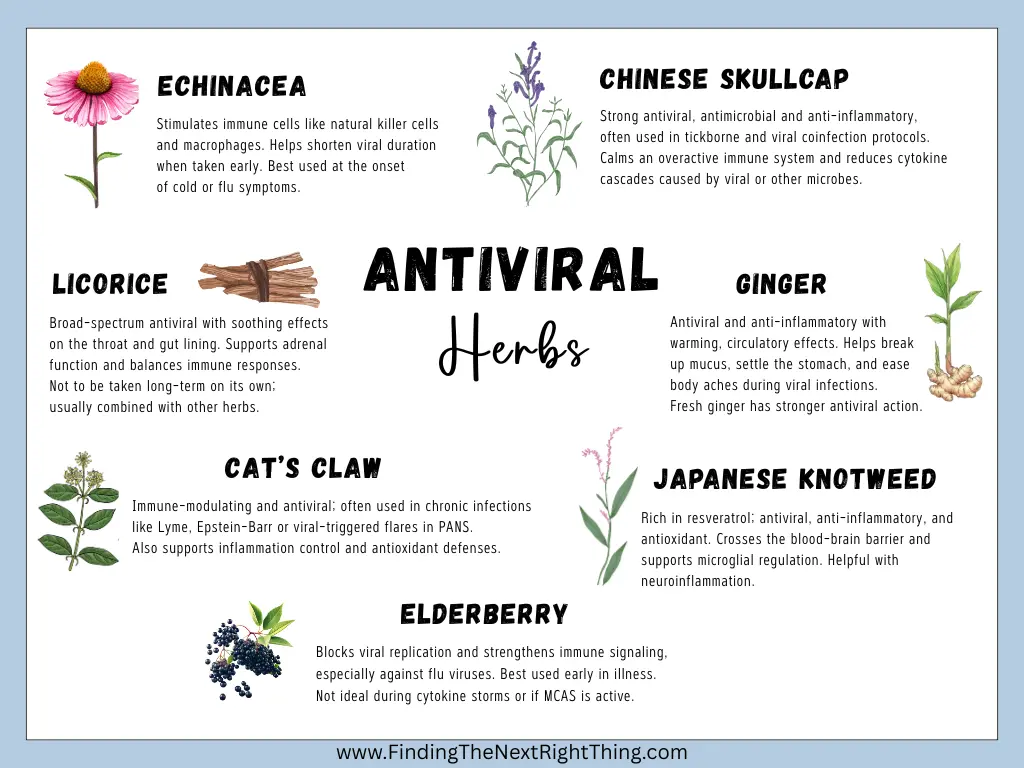
Cat’s Claw is an herbal antiviral multi-tasker. It doesn’t just go after viruses, it also helps regulate the immune response, calm inflammation, and support tissue healing. It’s particularly helpful for chronic viral infections like Epstein-Barr (EBV), cytomegalovirus (CMV), and herpesviruses that tend to linger. Cat’s claw is a favorite of Dr. Rawls for Lyme treatment.
How It Works
Antiviral: Inhibits viral replication and blocks attachment to host cells
Immune-boosting: Increases white blood cell activity (T-cells, NK cells, macrophages)
Anti-inflammatory: Reduces cytokine overproduction and supports oxidative balance
Gut support: Helps restore gut lining, often compromised in chronic illness
For this reason, Cat’s Claw can be used in both flare protocols and long-term immune support. It’s especially useful when you’re addressing multiple root causes at once, like viral load, gut dysfunction, and neuroinflammation.
Chinese Skullcap
This is one of the most widely used herbs in Traditional Chinese Medicine for a reason. Chinese Skullcap is an herbal antiviral, antibacterial, anti-inflammatory, and neuroprotective. It’s specifically indicated when the infection affects both the brain and the immune system, especially when dealing with neuroinflammation, brain fog, or chronic infections like Mycoplasma, Lyme, or EBV.
In his book, Stephen Buhner says Chinese Skullcap “is extremely specific for reducing inflammation in the brain, reducing the cytokine cascades initiated by viral or other microbial agents in the CNS, and alleviating CNS impacts of those microbes.” Chinese Skullcap is also featured in Dr. Crista’s book on treating PANS/PANDAS, and I’ve heard Dr. O’Hara say it’s a favorite of hers for treatment as well.
It crosses the blood-brain barrier, helping to calm microglial activation and protect neurons. Very few herbs can do that so effectively.
📌 Chinese Skullcap’s botanical name is Scutellaria baicalensis, not to be confused with Scutellaria lateriflora, a completely different herb.
How It Works:
Blocks viral entry and replication
Reduces cytokine storms in the brain and body
Modulates immune response without overstimulation
Echinacea
Echinacea is your front-line defense herb. It helps activate the immune system during early viral exposure and shortens the duration of illness. But it’s also lymphatic supporting, antimicrobial, and anti-inflammatory. Echinacea is helpful for early signs of a virus. It is not as effective once a virus has already taken hold.
How it works
Stimulates immune cells (NK cells, macrophages)
Inhibits viral replication and supports early immune recognition
Supports lymphatic drainage and detox
Mild antimicrobial properties
Different species of Echinacea
There are multiple species of Echinacea but you will usually see Echinacea angustifolia and Echinacea purpurea. Echinacea angustifolia is not as widely available but is far more potent than purpurea. Look for those containing E. angustifolia, but E. purpurea remains a good option if angustifolia is unavailable.
Elderberry
Elderberry is a natural antiviral primarily used to prevent and treat influenza, and other respiratory infections. If you use it right at the beginning of a flu infection, it will usually greatly reduce the severity of symptoms or the duration of illness.
It inhibits viral replication, binds influenza viruses thus inhibiting them from infecting host cells, directly virucidal, inhibits viruses from maturing.
Very effective for influenza but must be taken at the onset of symptoms or prophylactically. If you take elderberry several days into the flu for the first time, it can cause a cytokine storm and exacerbate symptoms. I’ve made this mistake.
Ginger
Ginger is a powerful herbal antiviral, anti-inflammatory, and gut-soothing herb. It supports circulation, helps move lymph, calms histamine reactions, and supports detoxification. It’s especially great for viral GI bugs and respiratory infections, but it also helps with post-viral symptoms, nausea, and immune burnout.
How It Works
Blocks viral replication and attachment
Regulates cytokines to reduce inflammation
Supports gut-lung-brain axis through its calming and circulatory effects
Helps move lymph and supports detox
Especially helpful for:
GI-based flares
Viral respiratory symptoms
Histamine flares (combine with perilla!)
Detox sluggishness after illness
Licorice
Licorice root has been used in Traditional Chinese Medicine for centuries and for good reason. It’s a broad-spectrum herbal antiviral, anti-inflammatory, immune-modulating, and deeply soothing to the mucous membranes of the gut, lungs, and throat. Licorice is also a powerful synergist, meaning it boosts the effects of other herbs it’s paired with.
How It Works
Antiviral: Inhibits replication and blocks viruses from attaching to cells
Soothes mucosal membranes: Great for sore throats, gut irritation, and lung inflammation
Regulates cortisol: Helps support the HPA axis and stress resilience
Anti-inflammatory + antioxidant: Calms cytokine storms and oxidative stress
Especially helpful for:
Influenza and upper respiratory infections
Viral flares with GI or respiratory symptoms
Sore throats, ulcers, gut inflammation
Weak adrenals or stress-related crashes during illness
Licorice should not be taken long-term, and is usually used alongside other herbs, not alone.
Japanese Knotweed
Japanese Knotweed is a foundational herb in protocols for Lyme, chronic EBV, viral PANS, and mold illness. It’s an herbal antiviral, antibacterial, neuroprotective, and anti-inflammatory. It also crosses the blood-brain barrier, addressing both systemic and brain-based symptoms.
How It Works
Blocks viral replication
Reduces cytokine storms and inflammation
Strengthens blood-brain barrier and reduces neuroinflammation
Antioxidant and detox supportive
Modulates immune response (not too much, not too little)
Especially helpful for:
Chronic EBV, CMV, and herpesvirus
Neurological inflammation: OCD, tics, anxiety, sensory sensitivity
Post-viral fatigue or flares with cognitive symptoms
Infections that have crossed into the CNS
- Contains resveratrol—excellent for reducing vascular inflammation and oxidative stress.
Antiviral Supplements
While antiviral herbs do much of the heavy lifting when it comes to managing viruses, certain nutraceuticals and vitamins are also powerful natural antivirals.
Zinc
Zinc is one of the most well-studied antiviral nutrients. It helps block viral replication (including influenza and COVID) and supports the production and activity of white blood cells, including T cells and natural killer cells. Zinc can significantly reduce the duration and severity of colds, and it’s especially helpful during the early stages of infection. Zinc is part of our acute protocol.
*Long-term use of zinc should be balanced with copper. Too much zinc depletes copper. You can find them combined.
Vitamin D
Vitamin D is also a strong natural antiviral. It helps regulate both innate and adaptive immune responses. Adequate levels of vitamin D have been shown to reduce the risk and severity of respiratory infections, including influenza and COVID-19.
Vitamin D works synergistically with K2, so look for a D3/K2 combo.
Monolaurin
Derived from lauric acid (found in coconut oil), monolaurin is a natural antiviral that targets enveloped viruses, those surrounded by a lipid membrane, including influenza, herpes, Epstein-Barr, and coronaviruses. It disrupts that lipid envelope, essentially “disarming” the virus and preventing it from infecting host cells. Monolaurin also supports gut health and helps reduce viral load in chronic infections. It’s a great stand-alone option in place of herbal antivirals. Monolaurin is highlighted in Dr. O’Hara’s book, Demystifying PANS/PANDAS. Lauricidin is my preferred brand for my kids. It’s also a biofilm buster and comes as pellets so it’s easy to swallow for young kids or those with difficulty swallowing pills.
Building your Own Antiviral Toolkit
Herbal antivirals compounds help retrain the immune system, calm inflammation, and support recovery across multiple systems.
But, there’s no one-size-fits-all solution. The key is to start slow, observe, and adjust. Pairing antiviral herbs with lymphatic support, proper detox pathways, and foundational care (like sleep, hydration, and nutrient status) gives the body the tools it needs to fight smarter, not harder.
If you’re working on your child’s PANDAS flare protocol, this page is just one piece of the puzzle. Be sure to check out the Herbal Guide for additional layers of support, including:
How to open detox pathways (essential during a flare)
Herbs for anxiety, OCD, and nervous system regulation
Gut health and immune balance
Antimicrobial and antifungal support
You don’t need to do it all at once, but having a strategy in place helps you act quickly when symptoms spike. Natural antivirals can be a powerful part of that strategy, when used with intention and alongside other supports.
📘 Book Recommendation: Stephen Buhner, Herbal Antivirals: Natural Remedies for Emerging & Resistant Viral Infections
If you want more than surface-level info and really want a deep dive about antiviral herbs—this is THE book. Stephen Buhner explains the science behind each herb, viral life cycles, and how specific plant constituents work. It is very technical but readable, and it’s one of the most well-researched, practical guides for using herbs to treat viruses.