You won’t always see a bull’s-eye rash. Your child might not even remember a tick bite. But that doesn’t mean Lyme isn’t quietly wreaking havoc in their body.
Lyme disease is no longer rare. What’s rare is a proper diagnosis, especially when the symptoms don’t match the outdated textbook version.
That’s not because Lyme is too new or too rare, it’s because this bacteria has evolved to outsmart our testing, our protocols, and far too often, our doctors.
If you’ve been chasing diagnoses that don’t quite fit, if your child’s symptoms flare unpredictably, or if you’ve been told “all the labs look normal” while your gut says otherwise, this is information you need. Because Lyme isn’t usually where doctors look. But it’s often where parents of children with PANS and PANDAS finally find answers.
Lyme Is Not Rare. It's Just Rarely Diagnosed.
Lyme disease is a bacterial infection caused by Borrelia burgdorferi, most often transmitted through ticks and other insect bites. It’s often called “the great imitator” because it can mimic dozens of other conditions, from autoimmune disease to psychiatric disorders. In children it can manifest as anxiety, OCD, rage episodes, or regression, rather than joint pain or fatigue like it does in adults.
Borrelia uses several strategies to evade the immune system:
Shape-shifting between spirochete, cyst, and cell-wall-deficient forms
Forming biofilms, which hide it from antibiotics and immune system
Suppressing immune signaling, allowing it to persist long-term
It also cycles, alternating between dormant and active phases, meaning symptoms can wax and wane, making diagnosis difficult.
Contrary to what many people still believe, Lyme is not a northeastern summer illness with a bull’s-eye rash. Many children with persistent Lyme never had a rash or recall a tick bite at all. The bacteria can lay low for years, cycling through dormancy and activity. Symptoms can flare unpredictably and shift over time, from gut issues to fatigue to anxiety to rage, leading parents down the wrong path.
Its survival tactics allow it to burrow deep in our tissues and evade detection for years or decades.
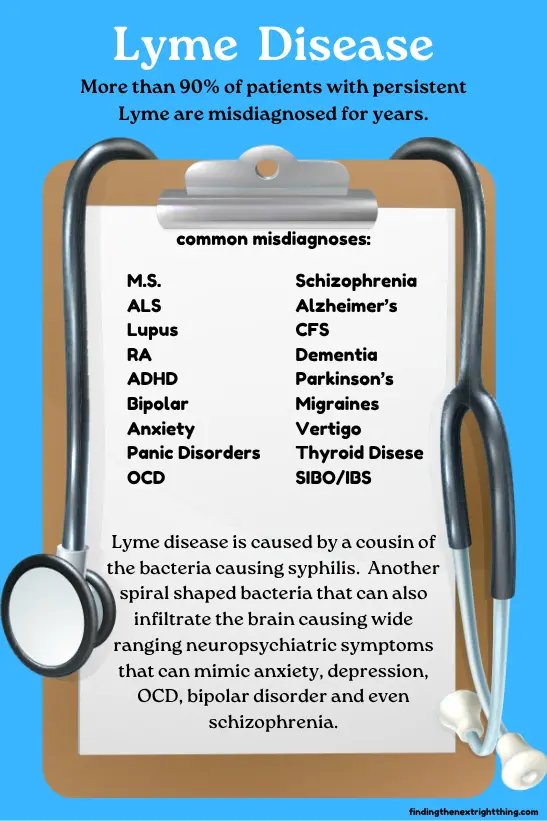
Neuropsychiatric Lyme | The Modern-Day Syphilis
Lyme can attack many different systems in the body, when it invades the brain it’s neuroborreliosis.
Most people have heard of syphilis and its neuropsychiatric symptoms. Lyme and syphilis are both spirochetes, a class of spiral shaped bacteria that cross the blood brain barrier, invade the central nervous system, and use their spiral shape to drill themselves into our fatty tissues. Syphilis is well-known for causing neuropsychiatric symptoms in its late stages. Lyme behaves similarly but is far less recognized for it. Many kids with neuroborreliosis get misdiagnosed with psychiatric disorders and treated with SSRIs and anti-psychotics, while the root infection continues to inflame the brain.
And in children, the signs are rarely joint pain or fevers. Instead, you’ll see:
Panic attacks or sudden separation anxiety
Intrusive thoughts and compulsive behaviors
Emotional volatility or aggression
Cognitive slowing, forgetfulness, or regression
Social withdrawal or disconnection
These are not “mood issues.” They’re the neurological effects of a persistent infection.
Standard Testing is Inadequate (and the CDC Criteria Make It Worse)
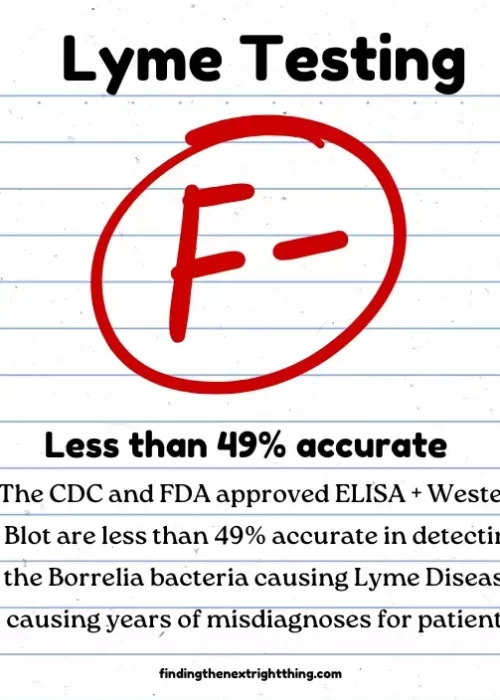
Standard Lyme testing follows a two-tiered system recommended by the CDC: first an ELISA, and if that’s positive or borderline, a Western Blot. Most doctors stop here, but these tests were never meant to diagnose chronic or late-stage Lyme. They were developed for epidemiological surveillance, not individual patient care.
Together, these tests miss more than half of true cases. Their combined accuracy is often cited at less than 49%.
Why? Because these tests don’t look for the Borrelia bacteria itself. Instead, they look for antibodies the immune system produces in response to Borrelia. But Lyme is a shape-shifter, changing forms from spirochete, cyst, and L-form. It hides in connective tissues and joints where its harder for the immune system to detect. It can also block or interfere with antibody production. And, if the body doesn’t mount a robust antibody response (because the immune system is deficient or immune responses are suppressed) then the tests come back negative, even though the bacteria is present.
The Western Blot looks for antibodies to different proteins (called “bands”) on the Borrelia bacteria. But the CDC only recognizes a select few of these bands as “significant.” To count as a “positive” result under CDC rules, a patient must have a specific combination of bands on either the IgM (early immune response) or IgG (longer-term response) panels.
Here’s the problem: some of the most Lyme-specific bands aren’t even counted in the CDC criteria. For example:
Band 31 (OspA) and Band 34 (OspB) are highly specific to Borrelia, but they were excluded from the CDC’s surveillance protocol because they were once used in vaccine development.
Band 39 is another highly specific band. Early research has identified Band 39 as the most significant marker for Lyme borreliosis.
Band 41, which shows up most frequently, reflects a flagella protein found in spirochetes. Not Lyme-specific on its own, but it’s often one of the first bands to appear.
Many Lyme-literate practitioners consider a single specific band (like 31 or 39) of more weight, especially in the context of clinical symptoms. A child who tests “CDC negative” but has Band 39 and a history of tick exposure plus psychiatric or neurological symptoms? That child should not be ruled out.
In fact, some studies have shown that certain bands (particularly 31 and 39) are so specific to Borrelia that their presence alone should prompt clinical consideration, even if the CDC thresholds aren’t met.
This is why the CDC itself clarifies on its website that its criteria are not intended to guide clinical decisions. But many doctors still treat them as definitive.
Hidden Epidemic?
Many experts believe that chronic Lyme is extremely under-diagnosed. Its symptoms mimic everything from fibromyalgia to autoimmune disease to psychiatric conditions, and mainstream medicine is not trained in detecting and diagnosing chronic Lyme.
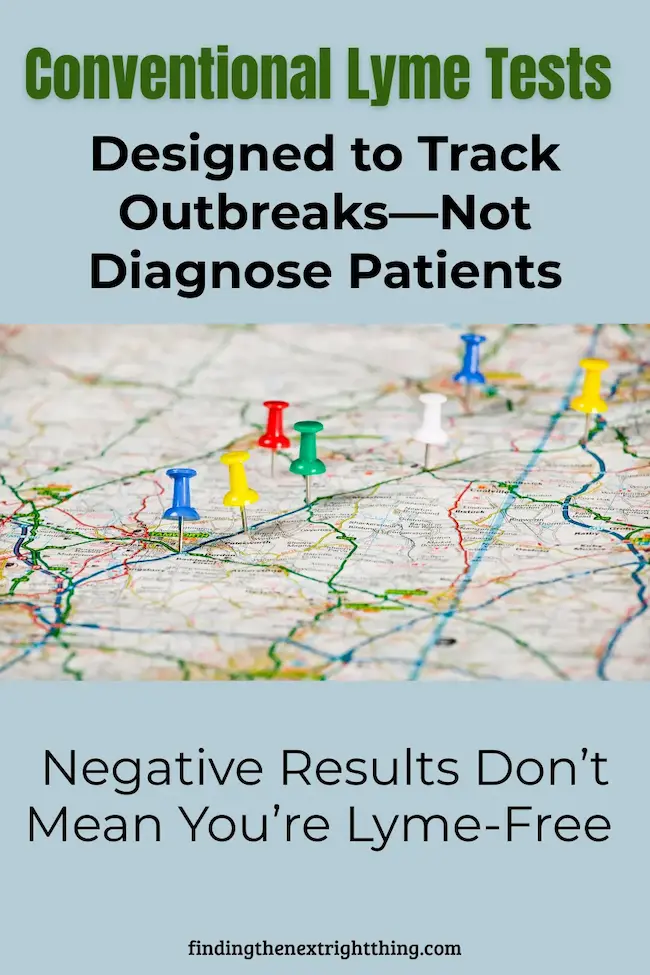
Most conventional doctors rely on CDC surveillance criteria, which require a certain number of specific antibody “bands” to count as a positive. But the CDC criteria was designed for tracking outbreaks, not diagnosing individual patients. Chronic Lyme, like PANS and PANDAS is a clinical diagnosis.
No one should accept a negative LabCorp or Quest Lyme test, as conclusive proof that they don’t have Lyme.
It raises serious questions about how many neurological or psychiatric conditions may have an infectious root that’s being missed.
Specialty Labs That Go Deeper
If Lyme is suspected, and standard tests come back negative, you can use a Lyme specialty lab. Specialty labs use more sensitive tools, including:
Immunoblot and updated Western Blots (IGenex, Vibrant Wellness). These use enhanced antigen panels that detect a broader range of antibody responses, including bands omitted from the CDC surveillance criteria, and have increased sensitivity to the antibodies.
ELISpot and T-cell activation assays (ArminLabs, InfectoLab). These tests assess cellular immunity, specifically T-cell responses to Borrelia. They can detect an active, ongoing immune response even when antibodies are low to undetectable.
PCR and DNA-based tests. These tests look directly for Borrelia DNA fragments. But PCR can miss low-level infections (since it requires the organism to be present in the sampled tissue or blood).
FISH testing. Fluorescent in situ hybridization (FISH) doesn’t rely on antibody or immune response at all. It can directly visualize the genetic material of organisms like Babesia within blood cells.
These tests can provide the confirmation families want, but too often these tests also miss positive cases because of how skilled Lyme is in evading detection. Again, this is why chronic or persistent Lyme is a clinical diagnosis.
Does Lyme cause PANDAS? The PANS/PANDAS puzzle
Chronic infections like Lyme, and co-infections like Bartonella, Mycoplasma, and Babesia act as immune stressors. Over time, they wear down the immune system and create an environment where inflammation becomes chronic.
In some children, this immune dysregulation tips the scale into autoimmunity. Instead of just fighting off infections, the immune system starts to misfire, attacking healthy brain tissue, particularly in areas that regulate mood, behavior, and cognition. This is the foundation of PANS and PANDAS.
PANDAS (Pediatric Autoimmune Neuropsychiatric Disorder Associated with Streptococcus) was the first version to gain recognition causing sudden onset OCD, anxiety, or tics after strep. But many children don’t fit neatly into that strep-only picture. That’s where PANS (Pediatric Acute-onset Neuropsychiatric Syndrome) comes in. It accounts for other triggers: tick-borne infections, viruses, mold toxins, immune activation from chronic inflammation.
Lyme and Bartonella are especially common in PANS kids. They inflame the brain, disrupt mitochondria, impair detoxification, and interfere with immune signaling. This is why many families only see partial recovery until those chronic infections are treated directly.
These symptoms can be misdiagnosed as anxiety, ADHD, or even early-onset bipolar disorder.
Lyme is a Clinical Diagnosis
No single lab test can diagnose PANS or chronic Lyme with certainty. That’s why clinical evaluation matters.
Lyme-literate and PANS-aware providers rely on a clinical diagnosis.
A good clinician will piece together the puzzle using:
Symptoms
Exposure history
Immune patterns
Specialty lab results (as supporting—not defining—evidence)
Most of the time, Lyme and PANS are not one-lab diagnoses. They are patterns. And recognizing that pattern is the first real step toward treatment that works.
You can’t detox a child back to baseline if there’s an active infection fueling inflammation. You have to go after what’s keeping the brain inflamed. That starts with seeing what’s really underneath the behavior.
Lyme-Literate Medical Doctors (LLMD)
Lyme-literate doctors (LLMDs) and PANS-aware clinicians are trained to recognize the clinical patterns missed by standard protocols. They can assess:
Full infectious burden, not just Borrelia but co-infections like Bartonella or Babesia
Immune system regulation (and dysregulation)
Detox capacity and mitochondrial health
Environmental and toxicant load (mold, metals, EMFs)
These practitioners won’t rely solely on CDC reporting criteria or dismiss symptoms just because standard labs are inconclusive. They consider history, trajectory, and how symptoms interconnect, something most conventional doctors aren’t trained to do.
Lyme Resource Sites
International Lyme and Associated Diseases Society (ILADS)
Provides an online Provider Search to find LLMDs near you. While ILADS doesn’t vouch for or certify individual providers, it’s a widely used directory for locating knowledgeable Lyme clinicians. ilads.orgLymeDisease.org
Offers a Physician Referral tool that connects you with Lyme-literate practitioners. Has been facilitating matches for over 25 years, though it doesn’t list insurance or availability details.
LymeDisease.orgProject Lyme
Features a Provider Search covering hundreds of practitioners experienced with Lyme and tick-borne illnesses.
Projectlyme.org
📚 Book Recommendations
Healing Lyme: Natural Healing of Lyme Borreliosis and the Coinfections, by Stephen Buhner. Healing Lyme examines the scientific research on Lyme infection and its tests and treatments, and outlines the most potent natural medicines that offer help in preventing and treating.
Unlocking Lyme: Myths, Truths, and Practical Solutions for Chronic Lyme Disease, by William Rawls, MD. Written by a physician who overcame Chronic Lyme disease himself, this book is a comprehensive, practical resource full of natural healing solutions.
🎧 Podcast Recommendations
Demystifying PANS/PANDAS Podcast by Nancy O’Hara, MD, Lyme, Loss, and the Diagnostic Failure that Changed Everything
Stay in the know
No Spam, no nonsense— just the things I wish I’d known earlier,
sent with a big virtual hug.
Hi, I’m Brooke. I’m an herbalist and mom to three kids with PANS/PANDAS. Everything on this site comes from years of research, lived experience, and talking with other families walking a similar road.
If you’re just getting started, begin with What is PANDAS? to get familiar with symptoms and warning signs. Then head to So You Suspect PANDAS, Now What? for practical steps you can take right away.
You’ll also find targeted guides on things like:
Detox: how to support the body’s drainage and clearing pathways
Anti-Inflammatory Herbs: for calming flares and easing symptom intensity
Root Cause: Toxins: common environmental triggers worth addressing
The Root Causes Guide and Main Herbal Guide: to help you connect the dots and build a layered plan
You don’t have to learn everything at once. Just keep going. Keep asking questions. And, keep your hope! You’ll get there.
Brooke
No comment yet, add your voice below!