Inflammation

Inflammation

The Silent Threat of Chronic Inflammation in Children

Inflammation is at the root of countless chronic conditions today. While acute inflammation helps the body heal and fight off infections, chronic inflammation can do the opposite.  Chronic inflammation silently, slowly damages tissues and disrupts essential bodily functions. More and more children now face autoimmune diseases, PANS/PANDAS, and neuroimmune challenges like neuroinflammation in PANDAS, driven by chronic inflammation in children. 

Acute Inflammation

Acute inflammation acts as the body’s first line of defense.  When the immune system detects a threat, like an injury, bacteria, or virus, it springs into action.  Immune cells rush to the affected area, and  release signaling molecules like cytokines, triggering redness, swelling, and heat. This reaction is our body’s natural and necessary response.  It helps repair tissues, eliminate pathogens, and prevent further damage. Once the threat is gone, a healthy immune system dials back inflammation, restoring balance.

But while short-term inflammation protects us, chronic inflammation is another story. When it drags on, it becomes harmful and has significant downstream effects.
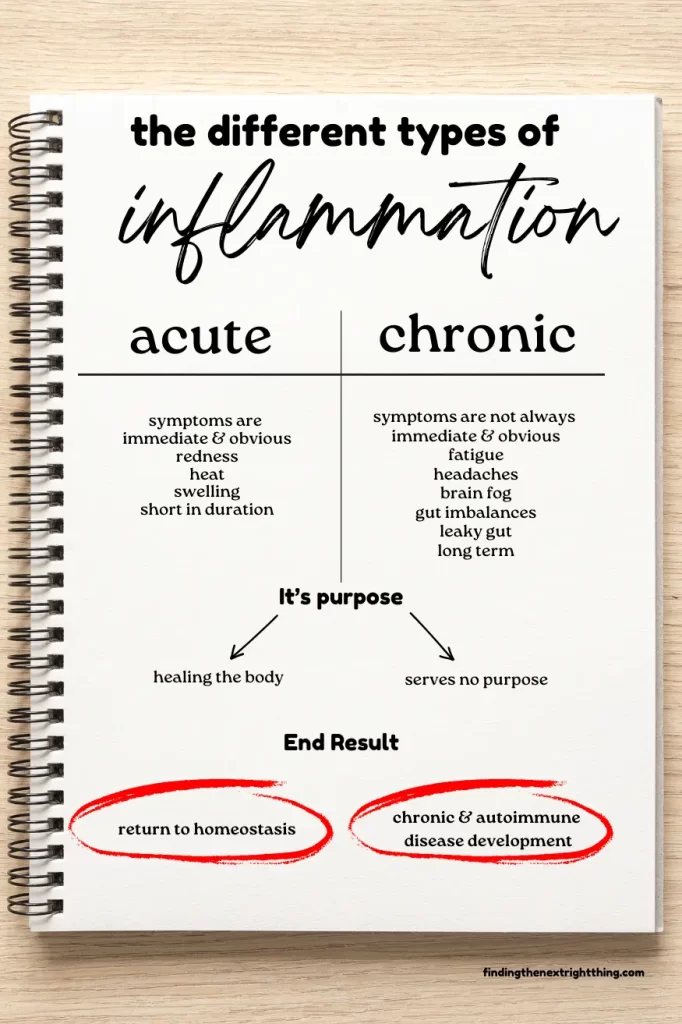
Picture of a notebook contrasting acute inflammation, a natural and helpful response, and chronic inflammation, harmful to our bodies

Chronic Low-Level Inflammation

Unlike acute inflammation, chronic low-level inflammation operates more subtly. It silently damages the body. Chronic inflammation does not produce obvious symptoms like pain or swelling.  Instead, it builds over time, often triggered by mold, leaky gut, environmental toxins, chronic stress, and low-grade persistent infections, like Lyme, Bartonella, EBV or CMV.

The danger lies in its invisibility.  Chronic inflammation can persist for years without any obvious signs. It steadily damages tissues and organs, creating the perfect environment for autoimmune diseases to develop.

The Autoimmune Connection to Chronic Inflammation in Children

Autoimmunity happens when the immune system, meant to protect the body, misfires. It attacks the body’s own healthy tissues. It loses the ability to distinguish between “self” and “non-self.” The immune system flags normal cells as dangerous. It launches inflammatory attacks on organs, joints, glands, or, in the case of PANS/PANDAS, the brain.

But autoimmune conditions don’t appear out of nowhere.  Chronic inflammation, especially low-grade, systemic inflammation can simmer below the surface for months or years. This ongoing immune activation creates the perfect storm for autoimmunity.

Inflammation, especially when unresolved, can:

  • Damage tissues, triggering the immune system to “clean up” what it perceives as abnormal

  • Alter proteins on the surface of cells, making them look like invaders

  • Promote molecular mimicry, where pathogens share molecular patterns with human tissue, confusing the immune system. 

Research supports this connection. (Study) Elevated levels of inflammatory cytokines like TNF-α, IL-6, and IL-1β show up in both chronic inflammation and autoimmune conditions. These molecules can further worsen inflammation, creating a cycle of immune overactivity that’s tough to break.

Autoimmunity isn’t just a diagnosis.  It’s the consequence of a system overwhelmed by unresolved inflammation, toxic load, and repeated immune threats. (Research)

Understanding how inflammation drives both autoimmune activity and neurological symptoms, including neuroinflammation in PANDAS, leads us to an even more important question:

So what's triggering this inflammation epidemic?

Why are more and more children being diagnosed with autoimmune and neuroimmune conditions? Why does a mild infection send some children into a psychiatric crisis while others recover uneventfully?

The answer lies in the invisible burdens of modern life, the cumulative weight of toxic exposures, chronic stress, poor nutrition, and microbial imbalances that chip away at immune resilience until the final assault that tips the scales to autoimmunity.

Let’s reflect on the numbers: the rate of autism in children is now estimated to be as high as 1 in 27. PANDAS/PANS affects 1 in 200 children. And overall, 1 in 4 American children, or roughly 40% of American children, are living with a chronic health condition or functional limitation. This is a dramatic jump from just two decades ago. 

This next section breaks down the most common and often overlooked drivers of chronic inflammation in children today.
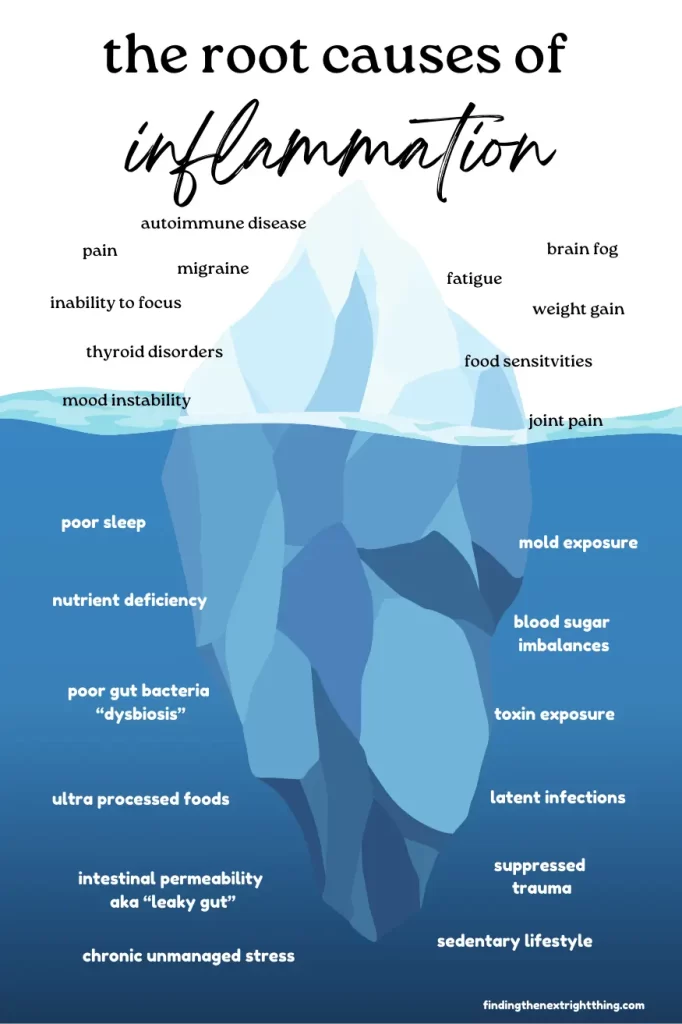
Iceberg graphic showing root causes of inflammation in children below the surface

Root Causes of Chronic Inflammation in Children

  • Dietary Factors: The Standard American Diet (SAD) is full of food high in sugar, refined starches, GMOs, and processed foods.  The SAD diet triggers inflammation. These foods promote insulin resistance and metabolic imbalances, closely linked to inflammatory pathways. For example, sugar causes glucose spikes that release pro-inflammatory cytokines, while endotoxins like lipopolysaccharides (LPS) can penetrate a leaky gut and trigger systemic inflammation.  Children are especially vulnerable to this type of metabolic inflammation, contributing to mood swings, behavioral issues, and immune dysregulation.  Read more about gut health in the Root Causes Guide – Gut Health.
  • Sedentary Lifestyle:  Exercise helps regulate insulin sensitivity, reduce oxidative stress, and maintain a healthy inflammatory response. A sedentary lifestyle, on the other hand, increases the risk of chronic inflammation. With more screen time, less outdoor play, and decreased physical education in schools, many children aren’t moving enough to support optimal lymphatic flow, brain development, or inflammation control.
  • Environmental Toxins: Pesticides, heavy metals, and household chemicals also contribute to chronic inflammation. These toxins accumulate in tissues, disrupting normal cellular function and triggering immune responses.  Heavy metals like mercury and lead can cause oxidative stress, further promoting inflammation. Children are more vulnerable to toxins due to their smaller size, developing detox systems, and frequent hand-to-mouth behaviors, which makes their exposure risk disproportionately higher.  Read more about environmental toxins and our children’s health in the Root Causes Guide – Toxins
  • Stress: Chronic stress releases cortisol, which in short bursts, helps control inflammation. However, when cortisol levels stay elevated for too long, the immune system becomes dysregulated, leading to increased inflammatory responses. Psychological stress is often linked to elevated levels of inflammatory markers, such as C-reactive protein (CRP). 
  • Latent Infections: Many people have latent infections, such as Lyme, Epstein-Barr virus (EBV) or herpes simplex virus (HSV), without being aware of it because their immune system normally keeps these bugs in check. But, these infections can reactivate during periods when our body is weakened in some way, and our immune system becomes over powered.  It could be a pregnancy, serious illness, traumatic event or chronic stress.
  • Microbiome Imbalances: Imbalances in the gut microbiome, such as dysbiosis or leaky gut syndrome, allow harmful endotoxins like LPS to enter the bloodstream. Once in the bloodstream, these endotoxins activate immune responses that promote inflammation and further disturb the immune system’s balance.
  • Mold Exposure:   Mycotoxins from mold have been shown to promote an inflammatory state that contributes to immune dysregulation and exacerbates chronic illness.  Children living in water-damaged homes, schools, or daycares may be repeatedly exposed to low levels of mycotoxins without anyone realizing it, until symptoms of immune activation, behavioral changes, or cognitive issues emerge. Read more about the impact of mold exposure on our children’s health in the Root Causes Guide – Mold.

Neuroinflammation and Mental Health

For decades, mental health conditions like depression, anxiety, and OCD were framed almost exclusively in terms of “chemical imbalances”, primarily involving neurotransmitters like serotonin or dopamine. But over the last 10–15 years, research has dramatically shifted that understanding. We now know that inflammation in the brain (neuroinflammation in PANDAS and related conditions) is a major driver of many mental health symptoms.

Inflammatory cytokines such as IL-6, IL-1β, and TNF-α can cross the blood-brain barrier (BBB) and impact brain regions involved in mood, motivation, cognition, and stress response. When these immune signals flood the brain, they interfere with neurotransmitter function, increase oxidative stress, and disrupt neuronal communication. (Source).

Studies have shown that individuals with major depression and anxiety disorders often have elevated markers of systemic and neuroinflammation, including high CRP levels and increased inflammatory cytokines (Source). These inflammatory molecules can cross the blood-brain barrier, altering brain function in areas associated with mood regulation, stress response, and cognitive function.

Anti-inflammatory treatments, ranging from omega-3s and curcumin to targeted immune therapies, are being explored as novel treatment strategies for psychiatric conditions, especially in patients who are resistant to standard medications (Source).

PANS/PANDAS and Brain Inflammation

Neuroinflammation in PANDAS and PANS becomes the driving force behind sudden and severe neuropsychiatric symptoms.  
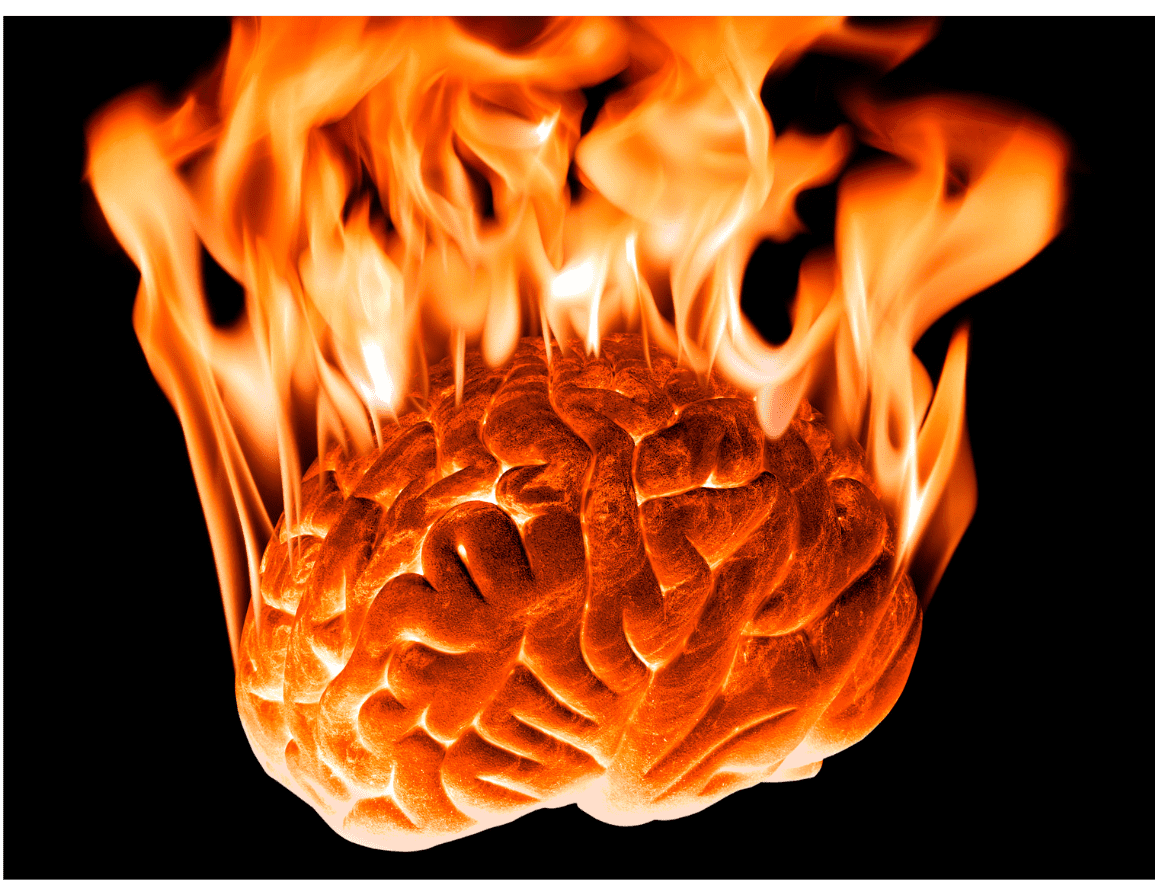
This happens when the immune system, in response to an infection or immune trigger, becomes dysregulated and mistakenly attacks the brain, particularly the basal ganglia, a region involved in motor control, behavior regulation, and emotional processing.

For children with PANDAS this occurs when the immune system, after a strep infection, mistakenly targets parts of the brain, confusing them for pathogens.

PANS can be triggered by a broader range of triggers, including infections and environmental toxins. Each of these can spark a sudden onset of neuropsychiatric symptoms for a PANS child.

Brain inflammation in PANS/PANDAS involves several immune system mechanisms:

  1. Autoantibody Production: In PANDAS (specifically triggered by strep), the immune system produces antibodies that cross-react with brain tissue, a phenomenon known as molecular mimicry. These antibodies bind to neurons in the basal ganglia, disrupting their function and triggering sudden-onset OCD, tics, and rage. This autoimmune response is similar to what we see in diseases like rheumatic fever, where strep triggers an attack on the heart valves, but here, the brain is the target.
  2. Cytokine Release & Microglial Activation: The brain’s immune cells, called microglia, become hyperactivated in response to these infections and triggers. Once activated, they release large amounts of pro-inflammatory cytokines (IL-6, TNF-α, IL-1β), which further inflame the brain. This creates a feedback loop: inflammation → symptoms → stress → more inflammation.  This is responsible for the intensity of symptoms seen during flares, OCD spirals, aggression, panic attacks, regression in language or academic ability, all classic signs of an inflamed brain.
  3. Blood Brain Barrier Breakdown: The blood-brain barrier (BBB) is a tightly regulated layer of cells that separates the brain from the rest of the bloodstream.  Normally, the BBB allows nutrients and hormones in, but keeps toxins and harmful microbes out. However, children have a more permeable blood-brain barrier (BBB) than adults because the BBB is not fully developed until around age 20.  This window leaves children more vulnerable to inflammation. 

Pediatric Acute-Onset Neuropsychiatric Syndrome (PANS) and Pediatric Autoimmune Neuropsychiatric Disorders Associated with Streptococcal Infections (PANDAS): Immunological Features Underpinning Controversial Entities

Connecting Mental Health & PANS/PANDAS Symptoms

This neuroimmune model of PANS/PANDAS helps explain why:

  • Traditional psychiatric medications sometimes fail, or even worsen, symptoms.

  • Children can be “fine” one day, and suddenly lose emotional or cognitive control the next.

  • OCD, anxiety, sensory issues, and tics wax and wane in response to infections or exposures, not just internal triggers.

In PANS/PANDAS, mental health symptoms are not psychological.  Brain inflammation in PANDAS and PANS is immunological. This doesn’t mean we ignore therapy or emotional support, but it means we understand the root cause and treat the brain as an organ affected by inflammation, not just “misfiring chemicals.”

If we want to support children with PANS/PANDAS in truly recovering, not just managing behaviors, we must target the inflammatory processes driving their symptoms. That means: identifying triggers (strep, mold, viruses, Lyme, toxins), reducing neuroinflammation, supporting detox and immune regulation, and rebuilding the gut-brain axis.

This is why many families see huge gains not just from psychiatric meds, but from:

  • Anti-inflammatory herbs and nutrients (like curcumin, quercetin, omega-3s)

  • Mold remediation and detox protocols

  • Targeted antimicrobial or antiviral treatment

Understanding PANS/PANDAS Flares

When a child is in a flare, the priority is to lower the inflammation as quickly as possible. Unchecked inflammation doesn’t just amplify symptoms; it drains the body’s energy reserves, pushing the immune system into overdrive and rapidly burning through ATP, the cellular fuel needed for repair and recovery.  Lowering inflammation helps shift the body out of crisis mode, conserving energy for healing rather than an endless inflammatory battle.

Children with PANS/PANDAS experience two inflammatory patterns.

Acute Inflammation (Flares): These are the sudden, intense symptom flare-ups triggered by infections, stress, or environmental factors. During flares, symptoms like OCD, tics, rage episodes, anxiety, and cognitive regression escalate dramatically, signs of a spike in neuroinflammation and immune system dysfunction.

Chronic Low-Level Inflammation: Even between flares, many children still continue to experience ongoing, low-grade neuroinflammation in PANDAS and PANS contributing to lingering symptoms such as brain fog, mood instability, fatigue, sensory sensitivities, and mild OCD or anxiety. This subtle but persistent immune activation can cause mood swings and irritability, brain fog, sensory sensitivities, OCD and anxiety.

What drives Chronic Inflammation?  

  • Immune System Dysregulation: The immune system remains overactive or imbalanced, struggling to return to baseline.
  • Lingering Infections: Chronic infections such as Lyme, Mycoplasma, EBV, or Streptococcus can keep the immune system on high alert.
  • Unresolved Underlying Triggers: Mold exposure, environmental toxins, gut dysbiosis, food sensitivities, or heavy metals can drive long-term inflammation.

The key to remission is not just putting out flares but addressing the root causes that keep inflammation simmering in the background.  Read about the herbs and nutraceuticals to combat inflammation in the Inflammation Herbal Guide.

Using Herbal Support to Lower Inflammation

Chronic inflammation doesn’t resolve in isolation. It’s often intertwined with infections, immune dysregulation, gut damage, and impaired detox. The anti-inflammatory herbs listed in the Herbal Guide aren’t just symptom relief, they’re tools for shifting your child’s system out of crisis and back toward regulation. Whether you’re addressing neuroinflammation, immune overactivation, or histamine storms, the right natural anti-inflammatory remedies can reduce flare intensity and support long-term healing.

For More Targeted Support, Explore:

  • Detox Herbal Guide: To safely open and support elimination pathways before and during any clearing protocol.

  • Gut Health Guide: For rebuilding the gut lining and microbiome after antimicrobials, flares, or regression.

  • Root Causes Overview: To see how infections, toxins, and immune misfires interact beneath the surface.

 

PANS, while similar to PANDAS, can be triggered by a broader range of factors, including infections and environmental influences. Each of these can spark a sudden onset of neuropsychiatric symptoms for a PANS child.

In both PANDAS and PANS, reducing this inflammation is the priority. It’s not just about alleviating symptoms; it’s about allowing the body to redirect its energy toward healing, rather than using its resources to deal with an overactive immune system.

Infections

Infections

Chronic Infections | A Root Cause of PANS/PANDAS

Most people first hear about PANDAS in connection with strep. But chronic viral and bacterial infections could actually be a larger root cause of PANS and PANDAS than an active strep infection. Infections like Lyme, Bartonella and Mycoplasma, can become dormant infections by hiding in tissues or biofilms, evading the immune system’s detection. If these infections become chronic or remain hidden, they quietly fuel inflammation and can contribute to the development of autoimmunity and neuroimmune disorders like PANS and PANDAS. Understanding these chronic infections and how they interact with the immune system, is key to unraveling the root causes of PANS/PANDAS. 

Microorganisms | Tiny Invaders with Big Impacts

Bacteria, viruses, fungi, and parasites are all types of microorganisms. These tiny organisms share a fundamental goal that’s common to all living things,  the need to survive, reproduce, and feed. Like us, they require a steady supply of nutrients to do so. 

And, these harmful microbes often turn to our bodies as their nutrient source. They break down our cells and tissues to get the nutrients they need.  This causes the symptoms and damage caused by the infections. As microbes feed and multiply, they interfere with normal bodily systems and functions, which leads to an illness.

For an infection to take hold, the microbes need to enter the bloodstream. That usually means slipping past the body’s protective barriers, like the gut lining or nasal passages. Once inside, they can reach deeper tissues, including the brain and nervous system, where they’re harder to detect and harder to clear.

Breaching our Barriers

When a pathogen first enters the body, say after a tick bite or during a cold, it tries to cross barriers like the gut lining, mucous membranes, and skin. Early signs like a runny nose or sore throat mean the immune system caught the pathogen trying to sneak in. The stronger these front-line defenses are, especially the gut lining, the harder it is for pathogens to break through and enter the bloodstream.

But Lyme (Borrelia burgdorferi) and other stealth pathogens play a longer game. Once they get past those barriers and into the bloodstream, they face white blood cells designed to neutralize threats. That’s where things get tricky.

Lyme bacteria can change their outer surface proteins, essentially swapping disguises, so immune cells don’t recognize them. They can also form protective biofilms, which are slimy layers that shield them from immune attacks and sometimes antibiotics. Some forms of Borrelia spiral into tissue and shift into a dormant or cyst-like state, making them even harder to detect.

This ability to hide and adapt is part of what makes chronic Lyme and co-infections so difficult to treat. The microbes burrow into joints, nerve tissue, and even the brain, where immune surveillance is limited. That’s why many protocols target not just the bugs themselves, but also focus on breaking down biofilms, repairing tissue barriers (like the gut lining), and modulating immune function—so the body can recognize and clear the infection more effectively.

Common Latent Infections:

  • Viral: Cytomegalovirus (CMV), Human Herpesvirus (HHV), Epstein-Barr Virus (EBV)
  • Bacterial: Lyme disease (Borrelia), Bartonella, Mycoplasma, Streptococcus
  • Fungal: Candida, Mold Colonization
  • Parasites: Babesia, Toxoplasmosis

Chronic Infections and the Role of Inflammation

Chronic infections like Lyme and Epstein-Barr Virus (EBV), don’t always cause obvious symptoms, but they can keep the immune system on alert.  This constant, low-grade immune activation can trigger systemic inflammation. However, the ongoing immune response can cause slow, ongoing systemic inflammation that quietly drains the body’s energy and resources. Over time, it wears down our resilience and makes it harder to handle new stressors or infections.

When the immune system stays stuck in defense mode, it can start to lose its ability to tell the difference between self and threat. That’s how autoimmunity begins. In PANS and PANDAS, this misfiring often targets the brain and nervous system.

These infections don’t just exist alongside autoimmunity, they feed it. The longer the cycle continues, the more entrenched it becomes. That’s why treating underlying infections and calming immune overactivation are both essential steps. It’s not just about chasing symptoms. It’s about restoring balance and giving the body the tools it needs to heal.

Viral Infections

Viruses like EBV (Epstein-Barr Virus), CMV, HHV-6, Coxsackie, and herpesviruses can linger in the body long after the initial illness has passed, continuing to stoke immune dysfunction. Many PANS kids flare with every cold or virus because their immune system struggles to regulate properly after viral exposure. Supporting immune resilience and calming inflammation is key here, especially during viral reactivations.

More details on chronic viral triggers coming soon.

Bacterial Infections

Bacterial infections like Strep, Mycoplasma, Lyme disease, and co-infections like Bartonella are well-established triggers in PANS/PANDAS. These pathogens don’t just cause acute illness; they can hijack the immune system and trigger autoimmune responses that inflame the brain and nervous system. Some infections can hide in tissues or shift into chronic, low-grade infections that go undetected by standard labs. In-depth testing and targeted antimicrobials (conventional or herbal) are often needed.
Full page on bacterial infections coming soon.

Fungal Infections

Fungal overgrowth, especially Candida, can contribute to gut dysbiosis, brain fog, mood swings, and skin issues. Mold exposure and antibiotics often tip the balance in favor of yeast, especially in kids with weakened detox pathways. Fungal byproducts (mycotoxins) can further dysregulate the immune system and inflame the brain. For some kids, clearing yeast and supporting the microbiome becomes a major turning point.
A full section on fungal overgrowth and antifungal strategies is on the way.

Parasites

Parasites are often overlooked, but they can be a significant hidden burden, especially in kids with chronic symptoms that don’t fully resolve. Parasites produce toxins, disrupt digestion, and dysregulate the immune system. Kids with a history of travel, exposure to animals, or persistent gut issues may benefit from deeper evaluation and gentle, strategic parasite cleansing protocols.
Content coming soon: how to recognize, test for, and treat parasites safely.

Biofilms | The Microbe’s Shield

Biofilms are mucous-like substances that act as a shield, hiding the microbes from the immune system. Safely behind the biofilm, these microbes can lie dormant for years, evading detection and eradication. They may resurface and trigger illness when the body is under significant stress, such as during serious illness or times of emotional strain.

When they do, they release enzymes that break down connective tissue around our barriers, making it easier for more pathogens to enter the bloodstream. This tissue damage often causes symptoms common to autoimmune diseases:  brain fog, joint pain, fatigue, headaches, anxiety, and other systemic issues.

Identifying Biofilm as an issue and ways to tackle it. Coming Soon.

Mold

Mold Toxicity

Most people think of mold as an unsightly nuisance, something you bleach off shower tiles or paint over in the basement. But mold and the toxins it produces (mycotoxins) are far more dangerous than most parents realize. In kids, mold exposure can disrupt immune function, hijack detox pathways, and inflame the brain.

The younger the child, the more vulnerable they are. For some, it looks like rashes or recurrent sinus infections. For others, it shows up as anxiety, hyperactivity, brain fog, or constant meltdowns.   

Mold hides behind walls, under sinks, in the HVAC, around windows.  And most families never see it coming until their child develops asthma, autoimmune symptoms, or a chronic illness that just won’t resolve.  

Mold was part of our story, part of our root causes. 

I want you to have the information we wish we’d had sooner. That way, you don’t have to spend months (or years) trying to figure out why your child’s symptoms don’t get better.

This guide covers everything I wish we’d known sooner:

  • How mold and mycotoxins affect the brain, immune system, and detox pathways?

  • How can mold cause PANS or PANDAS?
  • Why symptoms don’t always improve after remediation?

  • What else might be growing in water-damaged buildings, and why that matters?

If you are looking for natural solutions to mold and mycotoxins, read the Natural Guide to Mold and Mycotoxins.

To learn how to open the detox pathways read the Herbal Guide to Detox Pathways.

Table of Contents

Indoor Mold is Always Harmful | It's Nature's Undertaker

In nature, mold’s job is to break down dead organic material like leaves, trees, or compost.  By breaking material down, it returns nutrients to the soil.  It’s job is to decompose living things.  Outside, sun, wind, and microbes keep mold in check.

But mold in our homes behaves very differently.

Mold indoors has no natural checks and grows unchecked without wind or UV light. Without wind to disperse spores or UV light to kill it off, mold begins to behave competitively, like it’s fighting for dominance. In dark, damp, stagnant environments like bathrooms, basements, or behind walls, mold changes.  It goes from being a harmless decomposer to an aggressive invader.

Once mold colonizes an indoor space, it releases harmful byproducts that affect your health.  You might not see or smell it, but it can still be dangerous.

Three Ways Mold Can Harm You

Mold Spores & Spore Fragments

These are the reproductive particles mold releases to spread and colonize new areas. When inhaled, they can trigger classic allergic reactions, such as: sneezing, runny nose, itchy eyes, and asthma symptoms

Even dead mold can cause reactions.  Fragments of spores are still highly allergenic and can inflame the respiratory system.

Volatile Organic Compounds (VOCs) | Mold’s "Exhaust"

Active, living mold doesn’t just release spores.  It also “breathes out” chemical byproducts. Mold emits VOCs like alcohols and aldehydes that can harm the brain, liver, and lungs.  These toxic gases, often odorless, pollute your indoor air and strain your health.

Mycotoxins | The Real Threat

Mycotoxins are 50 times smaller than mold spores and can’t be seen or smelled. They accumulate in your tissues, especially in the brain and nervous system.
They’re classified as neurotoxins, carcinogens, and immunosuppressants. Mycotoxins stay in your body and environment long after mold is gone.

How Mycotoxins Spread

Mycotoxins cling to dust and travel through ventilation systems.  This spreads contamination throughout a home.  They reach even hidden areas, like inside walls or under tile.  Even after mold remediation, mycotoxins will still linger on surfaces, in dust, and in the air unless thorough, specialized cleaning methods are used. And, even then some people are too sensitive and will only heal after they leave the house that made them sick.  That was true for our family.

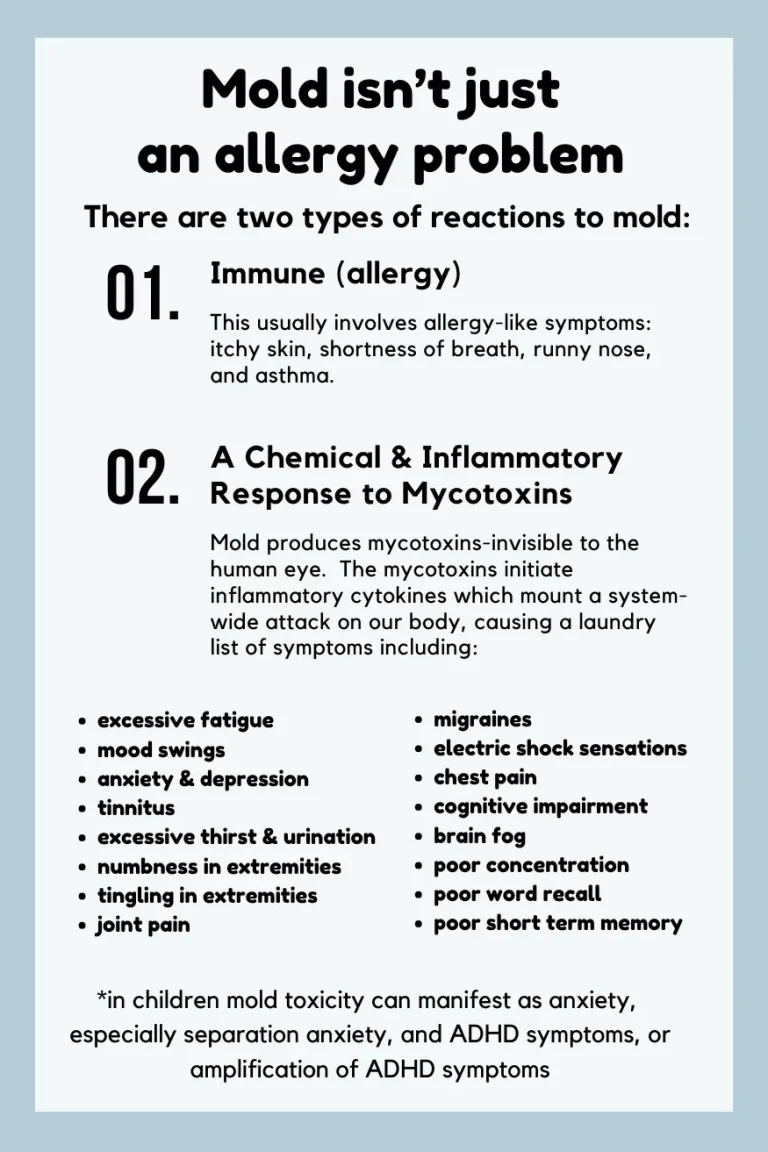
Infographic describing allergic and inflammatory responses to mold and mycotoxins. Mold and PANS and PANDAS is the inspiration.

Allergy vs. Chemical

Not all mold-related reactions are the same. Some people react to mold spores as an allergen.  Others experience a much deeper, systemic response to mycotoxins. 

Mold Allergy | Immune System Overreaction

A mold allergy is similar to other environmental allergies.  Your immune system misidentifies mold spores as a threat and launches an inflammatory response. This reaction is driven by histamine and IgE antibodies, the same culprits behind seasonal allergies.

Chemical Mycotoxin Response | A Systemic Toxicity Issue

Mycotoxins are a type of organic chemical compound produced by certain molds. They serve as a defense mechanisms against other microbes.  Mycotoxins can persist even after mold is dead. They can be inhaled, ingested (contaminated food), and absorbed through the skin.

Mycotoxins can disrupt immune function, impair detox pathways, and trigger neuroinflammation.  Mold spores cause allergic reactions, but mycotoxins lead to systemic toxicity and neurological dysfunction.

The treatment approach is different for each:

  • Mold Allergy → Focus on antihistamines, allergy relief, and avoiding airborne spores.

  • Toxic Mold & Mycotoxin Exposure → Requires detoxification support (binders, liver support, sauna therapy, etc.) and often environmental remediation.

Many children with PANS/PANDAS react to mold and mycotoxins, and it’s not just because of an allergy. The connection between mold and PANS/PANDAS lies in mold’s profound ability to disrupt the immune system, fuel inflammation, and hijack brain function in already sensitive kids.

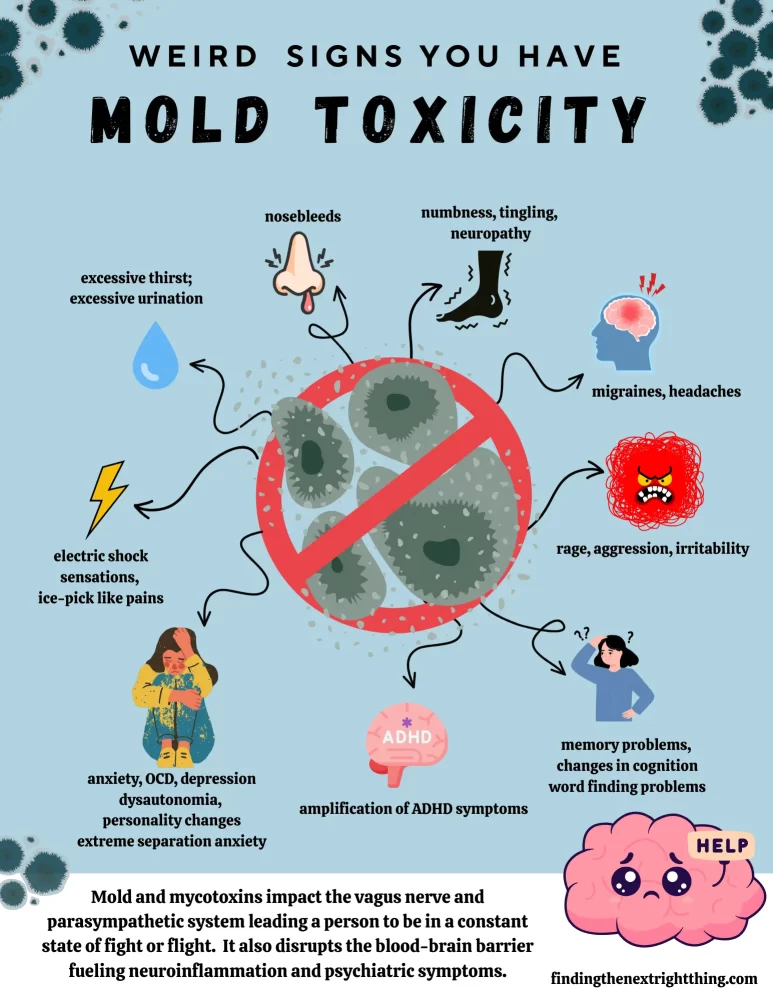
Mold & Mycotoxins Toxicity Symptoms

  • Fatigue, muscle aches, headaches
  • Sensitivity to light, unusual pains
  • Abdominal pain, nausea, constipation
  • Chronic sinus congestion, coughing, chest pain
  • Electric shock sensations, ice pick-like pains
  • Joint pain, cognitive issues, skin sensitivity
  • Numbness, tingling, neuropathy
  • Anxiety, depression, Dysautonomia 
  • Involuntary spasms or jerky movements while awake or asleep
  • Night sweats, frequent urination, excessive thirst, body temperature issues

In children, mold illness may also present as ADHD-like symptoms, such as hyperactivity, inattentiveness, learning difficultiesIt’s also more likely to produce separation anxiety.

Graphic listing unusual symptoms of mold toxicity, such as nosebleeds, rage, and neuropathy, surrounding an image of mold. Learn how mold and mycotoxins trigger OCD, rage, anxiety, and chronic flares in children with PANS/PANDAS.

How Mold Impacts the Body

Mold or biotoxin illness doesn’t confine itself to any one system or organ in the body. It attacks the whole body. Because mycotoxins are fat-soluble, they tend to accumulate in fatty tissues, including the brain and nervous system.  

Here are some of the most important ways mold harms body:

Liver Overload.

They overwhelm detox pathways, overloading the liver’s enzyme system.  The liver can no longer efficiently filter or excrete toxins. When the liver stalls, toxins recirculate, making kids with mold and PANDAS and PANS even more reactive.

A graphic of a liver, overworked from processing mold and mycotoxins.

Glutathione Depletion.

Mycotoxins burn through glutathione, the body’s master detox antioxidant, at an alarming rate. Without enough glutathione, toxins pile up. This leaves the body vulnerable and stuck in an inflamed state. Deficient Glutathione in Mycotoxin Illness.

Inflammatory Response.

Mold and mycotoxins trigger inflammation that spreads like wildfire. The inflammation makes the  blood-brain barrier more permeable, allowing more pathogens and toxins to enter the brain. (Shoemaker Neuroquant study)

Immune Suppression.

Mycotoxins first target the innate immune system by reducing natural killer cell function.  This makes the body more vulnerable to viruses and more likely to struggle to recover from viruses. Over time, long-term exposure weakens adaptive immunity, causing T&B cell deficiencies and reactivating dormant pathogens like Lyme and Epstein-Barr.

Neurotoxicity.

These toxins easily cross the blood-brain barrier.  Once inside mycotoxins disrupt neurotransmitter activity, impair cognitive function, hijack mood and motor control, and further degrade the blood-brain barrier. 

Dysbiosis & Leaky Gut.

Mycotoxins damage the intestinal lining, increasing permeability. Undigested proteins and toxins flood the bloodstream, provoking immune dysregulation. The gut microbiome shifts;  beneficial species decline and inflammation escalates. (Source

Mast Cell.

Mold exposure hyper-activates mast cells, triggering excess histamine release.  Children become hypersensitive to environmental stimuli, foods, and emotional stress. In mold and PANS, mast cell activation worsens systemic inflammation.  Understanding Mast Cell Activation Syndrome.

Nutrient & Mitochondrial Depletion.

Chronic mold exposure drains essential nutrients, zinc, magnesium, B vitamins, and antioxidants. Mitochondrial energy slows, and ATP production declines. 

Autoimmunity.

Exposures may drive or worsen autoimmune conditions.  Studies point to different mechanisms that may lead to autoimmunity including barrier disruption, immune modulation, and cytokine surges.  For those with existing immune imbalance (which includes many PANS/PANDAS kids), chronic mold exposure can act as fuel on the fire, amplifying inflammation and pushing the immune system further into overdrive. 

Nervous System Dysregulation.

Mycotoxins inflame parts of the brain responsible for fear and emotional regulation, including the amygdala and limbic system. This inflammation drives the nervous system into constant survival mode.  In this state, the body prioritizes survival over regulation. Children may become hyper-reactive, anxious, emotionally volatile, or aggressive. Others may shut down entirely, withdrawing or dissociating as the brain shifts into a freeze state. Their bodies interpret the world as unsafe, even when it isn’t.  Until you remove the toxins, the nervous system will remain stuck in dysfunction.

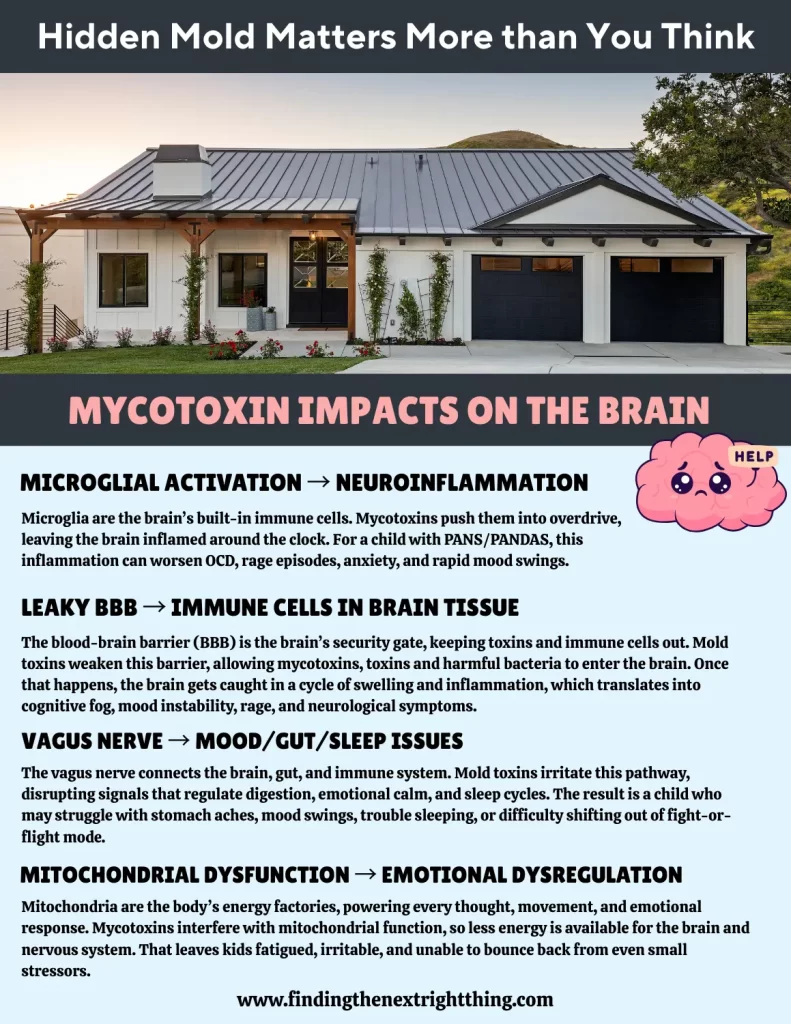
Infographic showing how mold mycotoxins impact the brain, including microglial activation causing neuroinflammation, leaky blood-brain barrier allowing immune cells into brain tissue, vagus nerve disruption affecting mood, gut, and sleep, and mitochondrial dysfunction leading to fatigue and emotional dysregulation.

Mold Always Finds the Weak Spot

Mold is an opportunist. It takes advantage of the weak, the “canaries in the coal mine.” Those with an autoimmune condition, PANS/PANDAS, or autism are the canaries.

Who does Mold pick on?

The Genetically Susceptible – People with HLA-DR gene mutations (about 25% of the population) have trouble tagging and removing mold toxins from the body. 

The Detox-Challenged – If detox pathways (liver, kidneys, lymphatic system) are sluggish due to genetics (MTHFR mutations), nutrient deficiencies, or overload from other toxins, mycotoxins get “stuck” in their bodies.

The Immunocompromised – Those with autoimmune conditions, Lyme, PANS/PANDAS, or other chronic illnesses often react more intensely to mold. Why? Because mold further dysregulates an already-overactive or confused immune system.

The Sensory-Sensitive – Many mold-exposed individuals develop Multiple Chemical Sensitivity (MCS), reacting to fragrances, cleaning products, and everyday chemicals that never used to bother them. It’s as if mold “rewires” the body to perceive the world as a chemical battlefield.

Once you identify mold as the bully it is, you can fight back with knowledge, detox strategies, and environmental changes.

Book Recommendations on the Health Impact of Mold and Mycotoxins:

📘Shoemaker, R. C. (2018). Mold Illness:  Surviving and Thriving:  A Recovery Manual for Patients & Families Impacted by CIRS.  A practical recovery manual from the pioneer in mold-rated CIRS, this book offers step-by-step guidance for those dealing with mold-triggered inflammation.

📕Crista, J. (2018). Break the Mold: 5 Tools to Conquer Mold and Take Back Your Health.   Dr. Crista breaks down the complex world or mold-illness into 5 key tools, perfect for families battling mold and PANS/PANDAS.

📗Nathan, N. E. (2018). Toxic: Heal Your Body from Mold Toxicity, Lyme Disease, Multiple Chemical Sensitivities, and Chronic Environmental Illness. Dr. Neil Nathan’s book expands the conversation between mold alone, exploring how environmental toxins, including mold and PANS/PANDAS triggers, contribute to chronic illness, and how to heal.

Can Mold Toxicity Cause PANDAS & PANS?

Mold and mycotoxins are harmful to everyone. But in a child with PANS or PANDAS, where the immune system is already on edge and the brain is stuck in survival mode, mold pours fuel on the fire. It doesn’t just trigger symptoms.  Mold keeps the whole system stuck in a loop of inflammation.

PANS/PANDAS and the Mold Toxicity Inflammatory Loop

PANS and PANDAS are fundamentally neuroimmune conditions, meaning they involve both immune dysfunction and brain inflammation. Mold disrupts both systems at once, keeping the body in a chronic state of perceived danger.  It reprograms the system to stay in fight-or-flight mode. For children already walking a fine line between stability and flare, mold pushes them over the edge, often silently, without any visible signs of mold in the environment.

This is why so many families report that true healing didn’t begin until they addressed mold. Mold exposure isn’t always the root cause, but it can be the missing piece that keeps a child stuck in chronic inflammation, no matter how many supplements or antimicrobials they’re taking.

🎧 Podcast Recommendation:

Dr. Nancy O’Hara, Is Mold Making Your Sick? The Overlooked Trigger behind PANS/PANDAS. Dr. O’Hara has a new podcast show and this episode focuses on mold and PANS/PANDAS, how it’s missed, how to identify it and heal.

Change the Air Foundation. Air Talks, PANDAS, PANS and Environmental Toxins. 

Why Most Doctors Aren't Familiar with Mold Illness

Most conventional doctors aren’t trained to recognize the full impact of mold and biotoxin illness. In medical school, mold exposure is primarily taught in the context of respiratory issues or allergic reactions, not as a cause of systemic illness affecting the brain, immune system, and detox pathways.  But that understanding is outdated.  The conventional medicine model lags behind new research.

And the deeper research into mold and its byproducts, like mycotoxins, is actually fairly new, about 20 years and it takes decades for new research to be integrated into mainstream medical practice.

Take smoking for example. Studies in the 1950’s determined that smoking caused lung cancer, but in the late 1960s and into the 1970s doctors were still regularly smoking in hospitals.  It wasn’t until 1994 (more than 40 years later) that federal laws were enacted to finally ban smoking in schools and hospitals.

Gut health and leaky gut are also still not taught in medical school…so just because your PCP doesn’t believe you have mold toxicity does not mean you should accept their opinion as fact. 

Mold research is following the same pattern as smoking, slowly making its way into the mainstream. Dr. Ritchie Shoemaker was a pioneer in biotoxin illness research in the late 90s and early 2000s.  His 2005 book, Mold Warriors, exposed the link between water-damaged buildings and biotoxin illness and its systemic inflammatory impact. 

Visual Contrast Sensitivity Test

If you suspect mold is affecting you or your child, the first step is confirming exposure. One of the simplest and most cost-effective tools available is the Visual Contrast Sensitivity (VCS) Test, found on Dr. Shoemaker’s website, SurvivingMold.com.

This test measures your ability to distinguish between shades of gray, a function that can be impaired by neurotoxic exposure, including mold and mycotoxins. Since mycotoxins affect blood flow and oxygen delivery to the optic nerve, reduced contrast sensitivity is an indicator of biotoxin illness.  The VCS test is a quick, online test that can help screen for mold toxicity before investing in expensive lab work. If you fail the VCS test, it suggests mold or other neurotoxic exposure (like Lyme, cyanobacteria, or heavy metals) is affecting your system. But if you pass that does not mean you don’t have some biotoxin illness, just that it has not impacted you neurologically yet.

Testing for Mycotoxins

Urinary Mycotoxin Tests

The process involves collecting a urine sample, which is then analyzed for various mycotoxins. This test can identify specific types of mycotoxins, such as ochratoxin, aflatoxin, and gliotoxin, and others. These toxins are linked to specific molds, like Aspergillus and Stachybotrys (black mold), and if they are detected it means that the body has been exposed to mold and is currently excreting these toxins.

Urine mycotoxin testing is particularly helpful for individuals who are experiencing symptoms consistent with mold exposure and/or suspect mold but haven’t found any in the home and school.

Knowing which mycotoxins are in your system is important for guiding the right detox protocol. Different mycotoxins bind to different detox agents, meaning a one-size-fits-all approach won’t be as effective. Using the right binder means faster toxin elimination and less risk of mycotoxins recirculating in your system.

Unlike traditional lab testing you can order your own mycotoxin tests from Vibrant Wellness

Home Mold Testing | ERMI, EMMA and HERTSMI

If you suspect mold is impacting your health, you have to figure out if your home is the problem (it usually is).  Three of the most commonly used tests are ERMI (Environmental Relative Moldiness Index), EMMA (Environmental Mold and Mycotoxin Assessment), HERSTI (Home Environmental Relative Severity of Toxin Index).  

This is an area where you’ll find different practitioners have very different opinions on the best test.  But these tests are kits that homeowners can order themselves before spending money on inspectors and remediators.

ERMI

The ERMI test is a DNA-based analysis that detects 36 different mold species commonly found in water-damaged homes. Unlike standard air tests, which only capture a snapshot of airborne spores at a single moment in time, ERMI analyzes settled dust, providing a more accurate representation of long-term mold exposure.

To perform an ERMI test, dust is collected from various surfaces in the home, including high surfaces (ceiling fans, top shelves) where mold spores naturally settle over time. The test then assigns a moldiness index score, comparing the mold levels in your home to a national database.

A higher ERMI score indicates a greater mold burden. 

EMMA

While ERMI is useful for identifying mold species, it does not detect mycotoxins. The EMMA test (Environmental Mold and Mycotoxin Assessment) goes a step further by analyzing for 10 of the most toxic mold species (including Aspergillus, Penicillium, Chaetomium, and Stachybotrys a.k.a. “black mold”) and Mycotoxins that could be actively contaminating your home.

HERSTI

HERSTI is a newer, more advanced scoring system used alongside the EMMA test to quantify environmental toxicity risk in a home, especially for those with CIRS, PANS/PANDAS, or Lyme.

It combines the presence of mold DNA and mycotoxins with scoring criteria to assess how severe and dangerous your home environment may be for sensitive individuals.

Scored from 1–10+, a higher HERSTI indicates a home that is biotoxically unsafe for individuals with known immune or neurological sensitivities.

HERSTI can be especially helpful for families deciding whether to remediate or relocate. If your child is highly sensitive (as many with PANS/PANDAS are), even a “moderate” HERSTI score may be too much to tolerate.

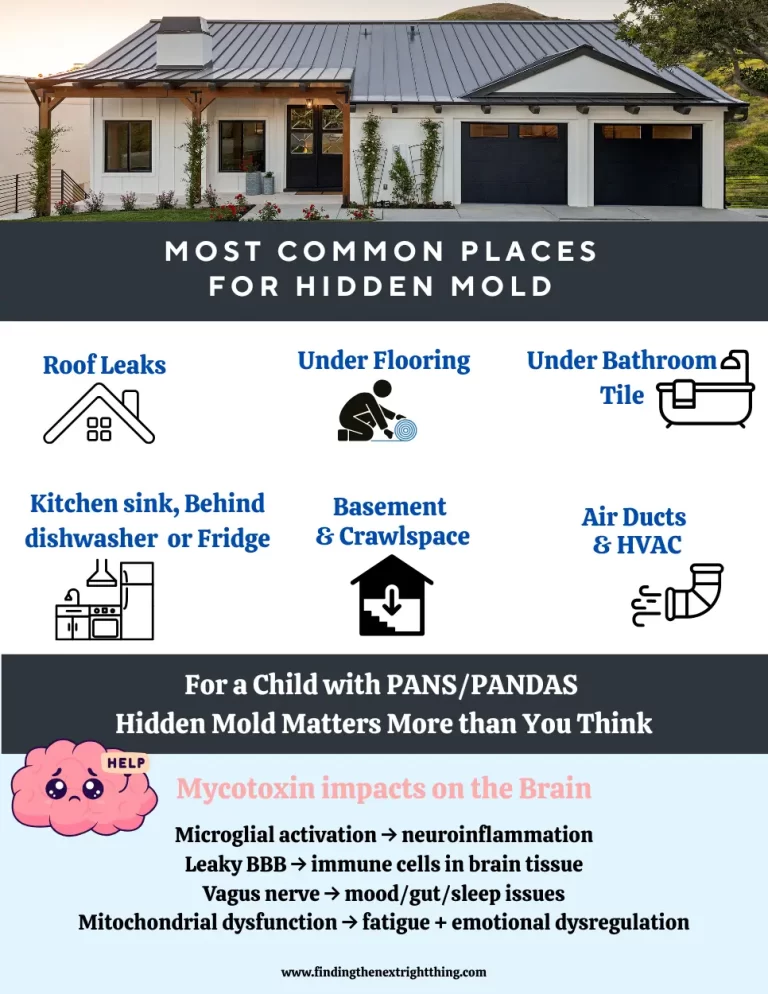
Infographic showing common hidden mold locations in a home, with notes on how mycotoxins impact the brain in PANS/PANDAS.

Hiring Professionals

Finding a Qualified Mold Inspector

If you’ve tested your home and found mold but don’t know the source, hire a qualified inspector to dig deeper. Many traditional home inspectors rely on outdated air sampling, which often misses hidden mold and underestimates contamination. If you suspect mold exposure, choose an inspector trained in mold illness, advanced testing, and mycotoxin risks.

A knowledgeable inspector will examine HVAC systems, drill holes to check behind walls, assess crawl spaces, and inspect attics, and much more. They need a strong understanding of mycotoxins and their health effects. If an inspector downplays the impact of mold exposure or dismisses concerns, find someone else, especially for individuals with PANS/PANDAS, Lyme, or chronic inflammatory conditions.

To avoid a conflict of interest, the best mold inspectors do not offer remediation services. Their job is to test and assess, not to sell cleanup solutions.  That way their recommendations are unbiased and based on an accurate evaluation of your environment, and not clouded trying to upsell you on remediation services.

Download this guide from Change the Air Foundation Questions to Ask When Hiring an Indoor Environmental Professional.

For a list of qualified mold inspectors who follow best practices, visit the International Society for Environmentally Acquired Illness (ISEAI) – Indoor Environmental Professional (IEP) Directory.

Choosing the Right Mold Remediation Company

When testing confirms mold, find a qualified remediation company that doesn’t cut corners. Many companies skip steps, leaving behind mold or failing to address mycotoxins.

A good remediation company sets up proper containment and uses HEPA air scrubbers to trap airborne mold particles. They should physically remove contaminated materials like drywall, carpet, or insulation.  Just spraying or painting over mold doesn’t work.

See the guide from Change the Air Foundation Questions to Ask When Hiring a Remediation Company.

For a list of mold remediators who follow best practices, visit the ISEAI Indoor Environmental Professional Directory

Cleaning after Remediation

Once mold remediation is complete, the job isn’t over yet. Mold remediation stirs up contaminated particles that settle on floors, walls, furniture, even clothes. You need to follow a thorough post-remediation cleaning protocol to clear these lingering toxins and keep your home safe.

Small-Particle Cleaning Protocol

To fully remove mold spores and mycotoxins, follow the two-step cleaning process.

  1. HEPA Vacuuming – A true HEPA vacuum is necessary to remove the ultrafine mold particles embedded in dust. Every surface should be vacuumed, including walls, ceilings, floors, furniture, books, and décor. Mold spores and toxins settle everywhere, not just in the visibly affected areas.  A couple of trusted brands are Miele Complete C3 Calima HEPA, Shark Rotator Professional Lift Away.
  2. Microfiber Wiping with Mold-Specific Cleaning Solutions – After vacuuming, all surfaces should be wiped down using microfiber cloths and a mold-specific cleaning agent like EC3 or Benefect Decon 30. Microfiber cloths are ideal because they effectively trap small particles instead of just spreading them around.

This process may need to be repeated multiple times to ensure that all residual spores and toxins are removed.

High Quality Air Filtration

Air purifiers don’t replace remediation, but they can help reduce lingering mold and mycotoxins in your home’s air. A high-quality air purifier with HEPA and activated carbon filtration can help remove lingering contaminants from the air, cutting back on toxins that enter the lungs and reducing exposure. Some air purifiers also contain photocatalytic oxidation (PCO) or PECO technology, which can help break down volatile organic compounds (VOCs) and mold-related toxins.  Some trusted brands are Jaspr, Intellipure, and AirOasis.

What personal possessions should you toss?

This is one of the most debated issues in mold recovery, with lots of opinions.  The first question is how sensitive are the people in the home and how sick have they become? For individuals with severe mold illness, extreme chemical sensitivities, or neurological symptoms (such as those with PANS/PANDAS, Lyme, or CIRS), even tiny amounts of lingering mycotoxins may trigger reactions.

Mycotoxins aren’t alive, but they can still off-gas and trigger inflammation. Bringing contaminated items to your new or cleaned space can sabotage your healing.

That said, not everything needs to be thrown out. Here are some general guidelines:

✤ Items you can usually keep (non-porous):

Non-porous materials do not absorb mold spores or mycotoxins and can be salvaged with thorough small-particle cleaning. These include:

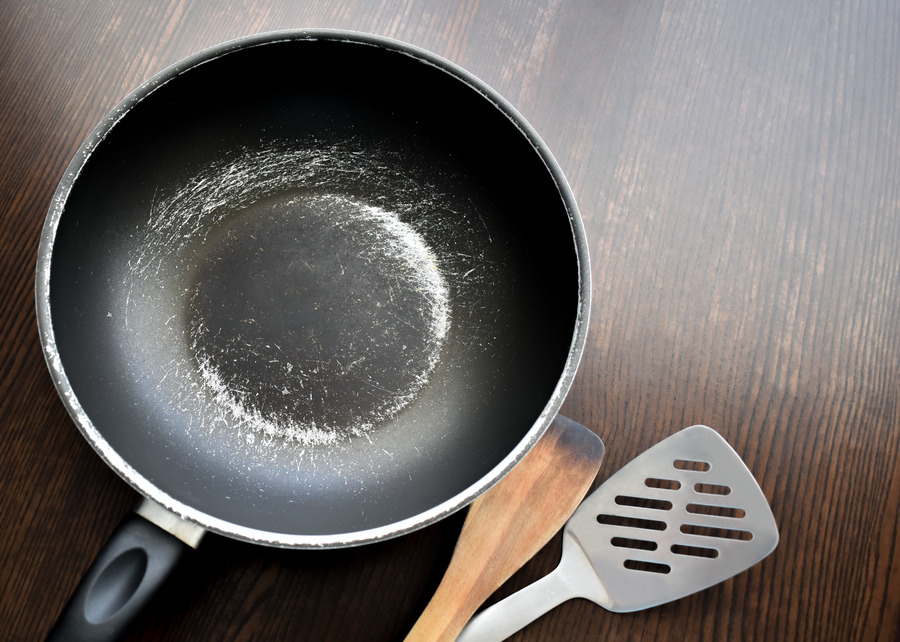
  • Metal (stainless steel cookware, tools, silverware)

  • Glass (dishes, mirrors, vases)

  • Hard plastic (toys, storage bins)

To clean: HEPA vacuum first, then wipe down with microfiber cloths and mold-specific cleaning solutions (like EC3, Benefect Decon 30, or vinegar).

✤ Items you should Toss (Porous & High-Risk)

Porous materials act like sponges, soaking up mold spores and mycotoxins. These items are almost impossible to fully decontaminate and can continue to off-gas toxins, leading to persistent exposure and ongoing symptoms. If you or your child are highly sensitive, it’s safest to replace:

  • Pillows, mattresses, and bedding (even if washed, mycotoxins often remain embedded in the fibers)

  • Upholstered furniture (couches, recliners, padded chairs, headboards)

  • Carpet and rugs (especially if they were in a contaminated area)

  • Stuffed animals and plush toys

  • Paper items (books, notebooks, cardboard boxes—these trap mold spores in the fibers)

  • Exception: Unless you are hyper-sensitive, most people are able to retain clothing by performing extra wash cycles, and using EC3, Borax, and Vinegar.  You could do 3 washes and use one of those in each wash, or combine a couple in one wash.  This will depend on the individual, but the thicker the material or the item (think puffy coats, quilts, thick curtains) the greater likelihood that they will still hold onto mycotoxins)
✤ The Gray Area (Semi-Porous)

Semi-porous materials can go either way, depending on how contaminated the home was and how sensitive you are. These include:

  • Wood furniture (sealed solid wood may be salvageable with sanding/sealing; particleboard or MDF should be tossed)

  • Shoes, purses, and bags (if made of leather or synthetic materials, they may hold onto mycotoxins)

If you’re unsure, trial it and bring one item into a safe space and see if symptoms return. When in doubt, it’s often safer to replace than risk re-exposure.

Feeling Worse After Leaving Mold?!

Many people feel worse before they feel better. This happens because the body, now free from constant exposure, begins releasing stored mycotoxins, which can overwhelm detox pathways and cause unpleasant symptoms. Support your detox with hydration (filtered water + minerals), gentle movement, and liver-nourishing nutrients like NAC or dandelion tea can help ease this process.

“Unmasking” can also happen: once out of the moldy home, your immune system can overreact to even tiny exposures from dust, perfumes, cleaning products. Use air purifiers and fragrance-free products, and support your mast cells with quercetin or vitamin C.

Mold profoundly inflammes the nervous system, causing dysautonomia (nervous system imbalance).  When leaving mold, the brain has to adjust, leading to worse brain fog, anxiety, dizziness, or feeling detached from reality.  If you have PANS/PANDAS or mast cell activation, your nervous system may be in a heightened inflammatory state, making symptoms worse.  Magnesium Threonate can calm brain inflammation and support nerves.  Vagus nerve stimulation, deep breathing, cold water therapy or humming can help regulate the nervous system.

Mold damages the gut lining and microbiome, leading to new food sensitivities, bloating, and gut issues. Support gut healing with Saccharomyces boulardii, L-glutamine, and a short-term low-histamine diet.

Finally, mold depletes vital nutrients like magnesium, B vitamins, and glutathione. Replenish them to help your body heal and restore balance.

To learn more about detoxing mold and mycotoxins, read the Natural Guide to Mold Toxicity.

Further Testing for Mold Toxicity PANS/PANDAS

1. OAT (Organic Acids Test)

The Organic Acids Test is one of the best functional lab tests for mold-exposed individuals. Run by labs Mosaic Diagnostics this urine test looks at a wide range of biochemical markers that reflect:

  • Fungal overgrowth (including Aspergillus, Candida)

  • Detox function (glutathione, oxidative stress)

  • Mitochondrial damage (Krebs cycle metabolites)

  • Neurotransmitter balance (dopamine, serotonin precursors)

  • B-vitamin deficiencies

  • Oxalates (which often increase with mold + yeast)

If your child has neurological symptoms (OCD, tics, rage, anxiety), the OAT can help you identify whether mold is still driving neuroinflammation, yeast is out of control, or mitochondria dysfunction, so you can choose targeted  nutrients, antifungals, or mitochondrial support.

2. Gut Zoomer

Since mold affects the gut lining and microbiome, stool testing can be very helpful, especially if there are GI symptoms (bloating, pain, constipation, picky eating, or new food intolerances). These tests look for:

  • Pathogenic bacteria (Clostridia, Klebsiella, Pseudomonas)

  • Fungal markers (yeast and mold)

  • Inflammation (calprotectin, secretory IgA)

  • Leaky gut (zonulin)

  • Pancreatic enzyme output

  • Commensal bacteria imbalances

A child may clear mold exposure but still struggle due to gut inflammation, yeast, or loss of beneficial flora. You can’t heal the brain if you don’t address the gut.

Additional Resources

Here are some trusted sites, tools, and organizations, for education, testing, finding practitioners, or just not feeling so alone.

ChangetheAirFoundation.org

Change the Air Foundation is an organization dedicated to raising awareness about the connection between indoor air quality and chronic illness, especially in children. Their mission is to educate, empower, and equip families to take control of the air they breathe, whether at home, school, or work.  They have resources like podcasts, mini-classes, FAQs and guides.

SurvivingMold.com

Dr. Shoemaker’s website has additional resources for people navigating biotoxin illness. You’ll find:

  • Guides for Patients – Detailed information on CIRS, symptoms, and treatment steps.

  • A List of Certified Shoemaker Protocol Doctors – This directory helps locate a provider trained in the Shoemaker Protocol.

  • E-Books & Articles – Extensive research on mold illness, including treatment strategies, case studies, and patient recovery stories.

  • Lab Testing & Diagnosis Info – A breakdown of key biomarkers, like TGF-beta1, C4a, and MMP-9, which indicate mold-related immune dysfunction. 

International Society for Environmentally Acquired Illness

ISEAI is focused on identifying, treating, educating about, and researching environmentally acquired illnesses, such as mold-related illness, chronic Lyme, chemical sensitivities, CIRS, and MCAS. Their mission to integrate environmental illness awareness into mainstream medicine through clinical practice, education, and research.  They offer directories of practitioners experienced in treating complex, environmentally-triggered illnesses like PANS/PANDAS

When Mold Isn't the Whole Story

If you’ve addressed mold, done the detox, and your child is still struggling, there’s another piece of the puzzle that often gets missed: actinomycetes. These bacterial toxins, which thrive in the same water-damaged environments as mold, can cause just as much harm, sometimes more. Let’s take a closer look.

Actinomycetes

If the mold testing in your home was not as high as you expected or you remediated and detoxed and aren’t getting better, you may want to consider actinomycetes.

Mold and mycotoxins get most of the attention in water-damaged buildings, but actinomycetes can be even more harmful.  These bacteria thrive in damp, poorly ventilated spaces alongside mold, releasing toxins that trigger inflammation, neurological issues, and immune dysfunction.

Some people who think they’re reacting to mold may actually be suffering from actinomycetes exposure.

Water-Damaged Building Materials

When water-damaged building materials are left untreated, it doesn’t just allow mold to grow, it creates the perfect environment for the growth of various bacteria. This happens in several ways:

  1. Organic Material Decomposition: Mold feeds on organic materials like wood and drywall, breaking them down and creating more moisture. This extra moisture and organic waste, making the area even more inviting for bacteria.
  2. Surface Damage: As mold spreads, it damages surfaces, forming tiny cracks where moisture and organic debris get trapped. These damp, sheltered spaces become the perfect breeding ground for bacterial overgrowth.

Mold and actinomycetes often grow together, but when mold is left untreated, actinomycetes can take over and become the dominant organism.

Health Impacts of Actinomycetes

Actinomycetes are now emerging as equally important if not more, than mold and mycotoxins, in the development of CIRS (Chronic Inflammatory Response Syndrome) and other chronic health conditions.

Dr. Ritchie Shoemaker’s research has shown that in some patients previously diagnosed with mold-related CIRS, actinomycetes levels were even higher than mycotoxins and were likely the driving force. These bacteria thrive in moist, water-damaged environments and produce inflammatory compounds that trigger an intense immune response, especially in genetically susceptible individuals.

Exposure to Actinomycetes can trigger chronic inflammation, immune dysfunction, and neurological symptoms. Some of the most common issues include:

1. Immune Suppression & Secondary Infections

Actinomycetes can lower immune defenses, especially in someone already dealing with mold illness.  This sets the stage for opportunistic pathogens.  Pathogens like Staphylococcus, Mycoplasma, and Streptococcus can take advantage of the compromised system, leading to skin infections, sinus infections and respiratory infections.

2. Chronic Inflammatory Response Syndrome (CIRS)

Like mycotoxins, actinomycetes can trigger CIRS, a condition characterized by persistent inflammation, fatigue, brain fog, memory issues, joint and muscle pain, and sleep disturbances.  Shoemaker’s protocol has evolved over the years to include actinomycetes testing and treatment, for patients who failed to recover with the mold-only detox protocols.

3. Neurological Impacts

Actinomycetes produce neurotoxic metabolites that can cross the blood-brain barrier, leading to peripheral nerve pain (neuropathy), cognitive dysfunction (slow thinking, memory lapses), mood imbalances (anxiety, depression, irritability), and sensory hypersensitivity (light, sound, and touch intolerance).

4. Respiratory Systems

Inhalation of actinomycetes can lead to chronic sinusitis, post-nasal drip, persistent dry cough, and inflammation of the airway.

Actinomycetes colonization in sinuses can be resistant to treatment if not identified, especially when actinomycetes hide with MARCoNS (Multiple Antibiotic Resistant Coagulase-Negative Staph).

5. Biofilm Formation

Actinomycetes form biofilms that shield them from the immune system and antibiotics.
These biofilms allow chronic infections to persist, which explains why some people don’t improve after standard mold detox.

If someone has addressed mold exposure, completed detox protocols, and still feel sick, actinomycetes may be the next thing to pursue. They often coexist with mold and mycotoxins in water-damaged environments but require different treatment strategies, including targeted biofilm disruptors, antimicrobial therapies, and continued support for detox.

📋 For more information on actinomycetes read Dr. Shoemaker’s Research Article:  Exposure to Actinobacteria resident in water-damaged buildings and resultant immune injury in Chronic Inflammatory Response Syndrome.

Actinomycetes Testing

 EnviroBiomics offers an Actino Test, which uses a Swiffer-style dust collection method, similar to ERMI and EMMA testing. This makes it easy to collect samples from settled dust in your home, which can then be analyzed for actinomycetes and other bacterial contaminants.

Quick Recap

 Mold, mycotoxins and actinomycetes are a systemic health threat that goes far beyond what the eye can see. In a child with PANS or PANDAS, mold is catastrophic.

  • Mold Produces Mycotoxins – These fat-soluble toxins infiltrate the body, disrupt detox pathways, and cause neurological, immune, and gut dysfunction.
  • Mycotoxins Are Airborne & Persistent – Even after visible mold is removed, mycotoxins linger in dust, HVAC systems, and porous materials.  After remediation some possessions may need to be tossed.
  • Actinomycetes: A Missing Piece in CIRS. Dr. Ritchie Shoemaker’s research suggests that bacterial biotoxins from actinomycetes may be even more dangerous than mold, leading to CIRS and neurotoxicity.
  • Mold Weakens the Immune System & Triggers Autoimmunity – Mycotoxins suppress immune function, reactivate latent infections (like Lyme & Epstein-Barr), and disrupt the gut microbiome and lining, setting the stage for autoimmune diseases.
  • Symptoms Can Be Misdiagnosed – Mold toxicity can mimic chronic fatigue, ADHD, anxiety, MCAS, fibromyalgia, and even neurological diseases like Parkinson’s and Alzheimer’s.
  • Testing is Critical – Many people have mold illness but don’t realize it. Testing your home and your body for mycotoxins, actinomycetes, and biotoxins is key to healing.

For more about healing from mold and biotoxins illness check out the Herbal Guide.

Frequently Asked Questions

Yes, mold is a major trigger of PANS and PANDAS, and other autoimmune conditions. Mycotoxins overstimulate the immune system, inflame the brain, overwhelm detox pathways, which can push a child who’s already vulnerable into severe flares.

Mold can cause or worsen OCD, anxiety, rage, tics, sensory overload, fatigue, brain fog, and poor sleep.  In children it often causes hyperactivity, anxiety, rage and mood swings.  Physical signs may include sinus congestion, skin rashes, food sensitivities, and dark circles under the eyes (“allergic shiners”).


Yes. Mold exposure can increase histamine release and neuroinflammation, which both contribute to sudden rage and severe mood swings. Rage is a common symptom of mold toxicity and Bartonella in children with PANS or PANDAS.


Mycotoxins cross the blood-brain barrier, activating microglia (the brain’s immune cells). This constant inflammation disrupts normal brain signaling, making it harder for kids to regulate mood, thoughts, and behavior.

The top priority is always reducing exposure. No supplement or treatment can overcome a toxic environment. Once exposure is managed, supporting detox pathways helps the body recover.

  • Sudden onset of OCD, anxiety, or tics

  • Severe emotional swings or rage episodes

  • Bedwetting or urinary frequency

  • Regression in behavior or skills

  • Sensory sensitivities

  • Sleep disturbances

  • Food restrictions or ARFID

  • Handwriting or motor skill decline

  • Dilated pupils and fight-or-flight symptoms

Many families discover mold was the hidden root behind a plateau or flare.

Detox

Toxin Overload | The Other Pandemic

Our kids are swimming in toxins, and their bodies aren’t built for it.

Your grandmother didn’t have to worry about microplastics in her drinking water, pesticides in her bread, or GMOs in her corn. But we do. And our children’s bodies, still developing, still vulnerable, are struggling under the weight of the toxins they’re carrying.

Today, 1 in 4 children in the U.S. has a chronic illness. 1 in 6 has a neurological disorder. That’s not just genetics. This is a response to something deeper: a mismatch between our biology and our modern environment.   It’s our total toxic body burden.

What This Guide Covers

You can’t bubble-wrap your child from every exposure. But you can reduce what’s going into their bucket, and support their body’s ability to clear what’s already there. This post is more educational, but if you are looking for natural detox support for kids, check out the Natural Detox Guide.

What’s inside:

  • What’s filling your child’s bucket (and why some kids spill over sooner)

  • How modern toxins disrupt immunity, brain development, and gut function

  • Why detox isn’t a trend.  It’s survival in a chemical world

  • Safe, gentle ways to support natural detox in children

The goal here is to give you  tools to lower the toxic burden, and strengthen your child’s capacity for healing.

Table of Contents

The Toxic Overload in our Children

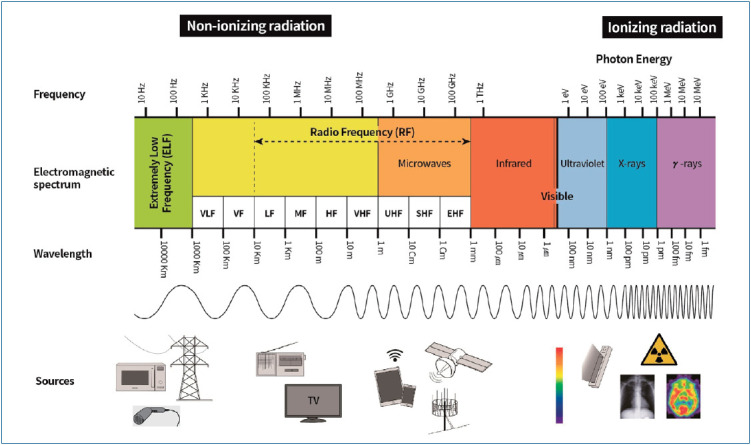
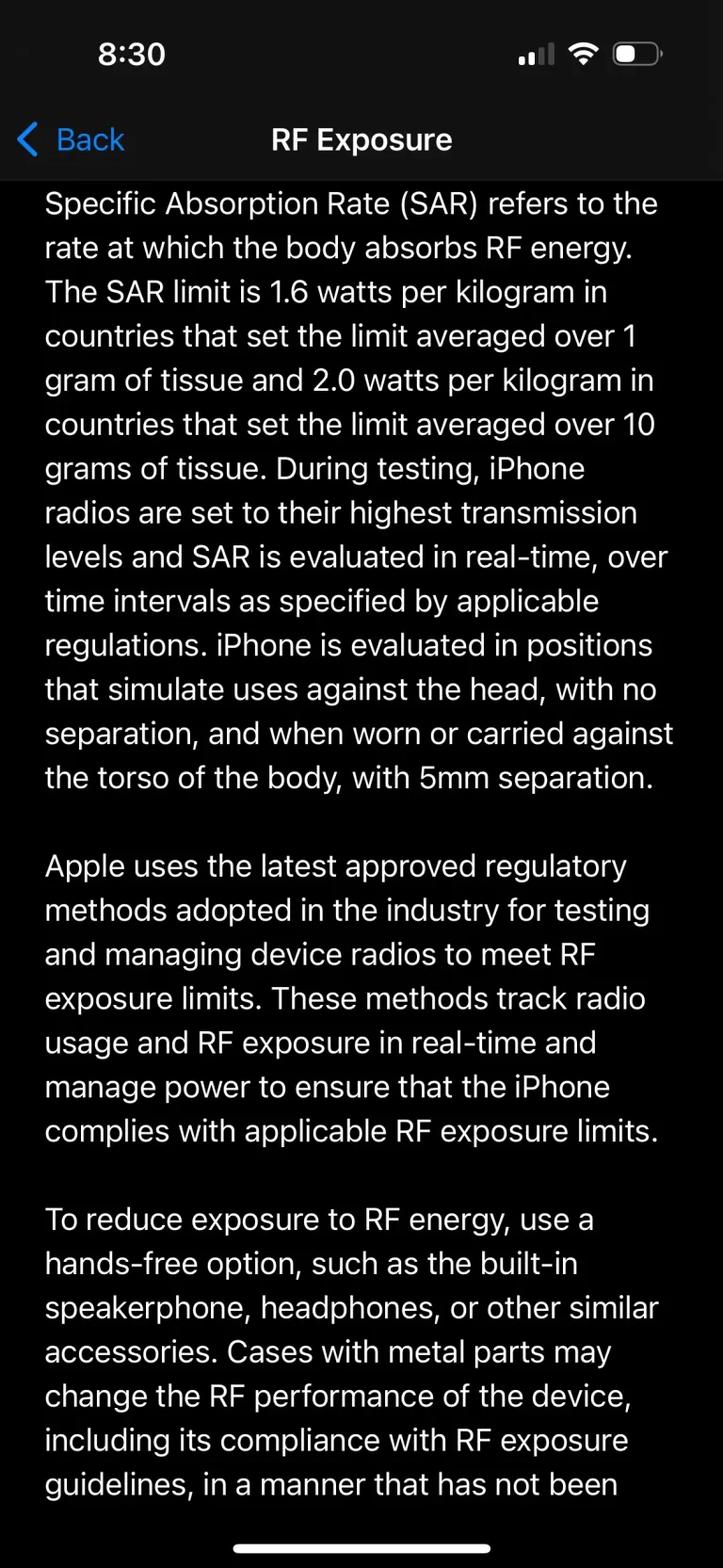
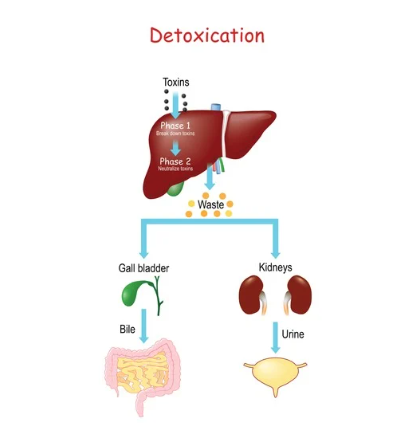
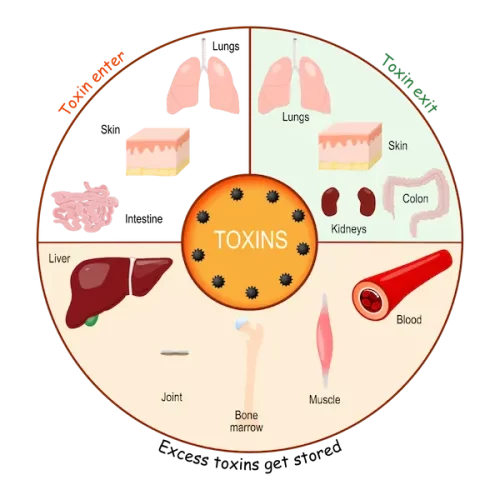
We live in a world our biology hasn’t caught up to. Our detox systems (liver, kidneys, lymph, skin) were designed to handle some smoke from a fire, not 350,000 synthetic chemicals, microplastics, pesticides, heavy metals, food additives, and EMFs. It’s no wonder our kids are sick.

Imagine your body’s detox system as a bucket. In the past, the bucket could easily hold the natural toxins it was exposed to. But today, our buckets are overflowing, and the toxic body burden is more than our bodies can handle.

This overflowing bucket shows up differently in each person, depending on many factors including their genetic makeup. For some, it might appear as persistent fatigue, eczema or mood swings.  While others develop autoimmune conditions, chronic illnesses or cancer.

an Overflowing bucket representing toxin overload in kids

Kids have Smaller Buckets | The Toxic Body Burden Overflows Quicker

Children are not just miniature adults. With their developing systems and smaller bodies, children are particularly vulnerable to the toxins in our environment.  Pound for pound, a child’s exposure to toxic chemicals is significantly greater than that of an adult.  They eat, drink, and breathe more per pound than adults do.   Their little buckets fill up faster, sometimes triggering a chain reaction of health issues that conventional medicine struggles to name or address, including PANS and PANDAS. This toxic load is setting the stage for immune dysfunction, and brain inflammation. 

But, it’s not just about their size.  The blood brain barrier (BBB) is a protective shield that blocks harmful substances from entering the brain.  In children, the blood-brain barrier is still developing and is more permeable.   For a PANS/PANDAS child,  a weakened or more permeable BBB allows pathogens and toxins to enter the brain more easily.  And, this worsens neuroinflammation and the immune confusion that drives these conditions.

Their bodies also contain lower levels of certain chemical-binding proteins, meaning more of these harmful substances can reach vulnerable organs and tissues. During childhood, organs like the brain, liver, and kidneys develop at remarkable rates.  This rapid development makes them particularly vulnerable to disruption from chemical exposure and toxin overload.

Additionally, their detoxification systems, the systems that help rid the body of harmful chemicals, are still maturing and not yet fully functional. So when these toxins enter a child’s body, they tend to stay longer and have a greater impact.

And unlike adults, children have a longer life ahead of them. This means more time for the long-term effects of chemical exposure to compound, be it developmental issues, chronic illness, or diseases that take decades to appear.

According to a recent study, American children’s health has worsened significantly since 2007. Data from 10 pediatric health systems show that between 2011 and 2023, the percentage of U.S. children (ages 3–17) diagnosed with chronic conditions rose nearly 20% increase.  Overall, a child in the US in 2023 was 15% to 20% more likely to have a chronic condition compared with a child in 2011.

It should be no surprise that our children’s generation is the first generation that is expected to have shorter life spans than their parents.

The New Normal Isn't Normal

We now live in a country where:

  • 1 in 4 children has a chronic illness.

  • 1 in 6 has a neurological disorder.

  • 1 in 9 has ADHD.

  • 1 in 30 children have autism.
  • 1 in 22 children in California has autism.

  • An estimated 1 in 200 has PANS or PANDAS (that was the incident rate of autism in the 90s).

These aren’t just numbers.   They reflect the very real, very widespread shift in childhood health.  And they all point to the same things:  overwhelmed systems, inflamed brains, and a medical system that too often treats symptoms without asking what’s pushing these children past their threshold in the first place.

Most conventional systems still treat these cases as isolated puzzles, not part of the broader pattern of toxic load, environmental stress, and chemical exposure overwhelming young bodies and developing brains.

So, where do we go from here? 

You can’t control every toxin your child encounters. You can’t undo what they’ve already been exposed to. But you can start today, lowering what’s going into the bucket, and supporting the body’s ability to gently clear what’s already there.

This isn’t about fear. It’s about action. It’s about understanding what’s making our children sick, and taking practical steps to help their systems recover.

Start with reduction. Then support drainage. Then rebuild resilience.

Next, we’ll walk through the biggest toxin categories filling your child’s bucket—starting with heavy metals—and what you can do to lessen their impact.

Heavy Metals

Heavy metals like aluminum, mercury, lead, and cadmium are found throughout our environment, often in places we least expect. The problem is that once these metals enter our bodies, they can be difficult to remove, accumulating in tissues over time and leading to a variety of health issues. Our bodies are simply not designed to process and eliminate the high levels of heavy metals we’re exposed to in today’s world.

Aluminum

In the last 40 years, aluminum has become far more pervasive in our daily lives than most of us even realize. Once a relatively obscure metal, it’s now used in everything from cookware and food packaging to cosmetics, vaccines, and even our water supply, thanks in part to industrial runoff and water treatment practices. Its popularity stems from being lightweight, heat-conductive, and highly durable. But this convenience comes with hidden risks, especially for children and individuals with compromised detox pathways.

When aluminum enters the body, it doesn’t just quickly exit. Instead, it can accumulate in soft tissues, including the brain, liver, lungs, and bones, where it can trigger oxidative stress, neuroinflammation, and mitochondrial dysfunction. Over time, this low-grade toxicity may contribute to a range of neurological conditions. In adults, aluminum has been extensively studied for its role in Alzheimer’s disease, with research pointing to aluminum’s ability to provoke brain inflammation and interfere with normal neuron signaling. For developing brains, the impact may be even more profound.

Studies have shown that children with autism spectrum disorders (ASD) often have elevated levels of aluminum in their bodies, with research since the 1970s correlating high levels of heavy metals and children with ASD.  While correlation doesn’t prove causation, these findings are concerning given that many of these children already struggle with impaired detoxification, methylation, or mitochondrial function. Their bodies may not efficiently eliminate aluminum, allowing it to accumulate and further inflame neurological and immune systems. And for children with PANS/PANDAS, who often sit at the intersection of neuroinflammation, autoimmunity, and toxin overload, aluminum is another drop in an already overflowing bucket.

Everyday Sources of Aluminum Exposure

Aluminum foil can leach into food when heated, especially with acidic or spicy ingredients. You don’t need to avoid it entirely, but do not use it with heat, instead  switch to glass or silicone bakeware.

Most commercial antiperspirants use aluminum-based compounds to block sweat glands. Daily use over lymph-rich areas like the underarms contributes to the total body burden. Aluminum-free deodorants are a simple and safer alternative.

Aluminum is also used as an adjuvant in some vaccines to boost immune response. While the CDC believes that the doses are small and considered safe for the general population, children with detox issues (like MTHFR mutations, ASD, or PANS/PANDAS) may have trouble clearing it efficiently. This isn’t fear-based. It’s about understanding individual needs and genetics.

In processed foods, aluminum is used as an anti-caking agent or leavening ingredient, look for additives like sodium aluminum phosphate or sodium aluminum sulfate. Reducing intake of packaged and ultra-processed foods can also help lower dietary exposure of chemical overload.

Also, some municipal water systems use aluminum sulfate during treatment. If you’re already filtering for contaminants like chlorine or heavy metals, choose a filter that also targets aluminum to be safe.

What can you do to Reduce your Aluminum Exposure?

  • Swap out cookware: Choose stainless steel, cast iron, ceramic, or glass over aluminum pots and pans.
  • Reduce foil use: Don’t bake, fry or grill foods in foil.

  • Switch to aluminum-free deodorants. 

  • Minimize processed foods and avoid those with aluminum-based additives.

  • Use a high-quality water filter: Look for filters that remove aluminum, fluoride, and other metals.

  • Support detoxification: If your child has ASD or PANS/PANDAS, focus on supporting methylation, liver and lymphatic pathways, and glutathione production. Mineral balancing (especially with magnesium, zinc, and silica) may help displace aluminum from tissues.

Taking steps to reduce toxic exposures is one part; the other is gently encouraging natural detox in kids using safe, supportive practices that match their development to reduce their toxic burden.

Mercury

Mercury also has well-documented health dangers. For many years, mercury was used in dental amalgam fillings, which can slowly release mercury vapor as they degrade over time. Though its use in dentistry has diminished since 2004, the environmental presence of mercury remains widespread, primarily due to industrial activities like coal burning and mining. These processes release mercury into the air and water, where it persists and accumulates in the food chain.

Mercury is a potent neurotoxin, meaning it directly harms the brain and nervous system. It can cross the blood-brain barrier (BBB), a protective shield meant to keep harmful substances out of the brain. Unfortunately, when this barrier is weakened by other toxins, like glyphosate, mercury can pass through more easily. Once in the brain, it interferes with neurotransmitter function, leading to cognitive issues, mood disorders, and a host of other neurological problems. Pregnant women and young children are particularly vulnerable, as mercury exposure can impair fetal development and early childhood growth. This is why supporting natural detox in kids is essential for minimizing long-term damage.

Lead

Though the use of lead in paints and gasoline has been significantly reduced, it still lingers in older homes, contaminated soil, and even some water supplies. Lead exposure is particularly dangerous for children, as it can interfere with brain development, leading to learning disabilities, behavioral problems, and lowered IQ. In adults, chronic lead exposure can contribute to cardiovascular issues, kidney damage, and reproductive problems. The key to avoiding lead exposure is to be mindful of older environments and ensure your water and living spaces are tested and safe. But beyond avoidance, supporting natural detox in kids helps the body’s ability to eliminate these metals.

Cadmium

Cadmium is a lesser-known heavy metal.  But, it’s found in everyday items like batteries, tobacco smoke, and some industrial emissions. Over time, cadmium can build up in the kidneys, potentially leading to kidney disease, bone demineralization, and lung damage. Smokers are particularly at risk, as cigarette smoke is a significant source of cadmium. Reducing exposure involves minimizing contact with industrial pollutants and avoiding smoking or secondhand smoke.

Arsenic

Arsenic occurs naturally in the environment, but in some areas, it contaminates groundwater at dangerous levels, especially in private wells. If you use a well, test your water annually. When tests show high arsenic levels, filtration systems like reverse osmosis can help remove it effectively. But water isn’t the only source.  Food matters, too. Rice absorbs arsenic from the soil, partly because of how it’s grown (those flooded paddies pull arsenic from the soil).  Brown rice contains more arsenic than white because the outer bran layer holds onto it. This becomes a bigger issue when toddlers are eating rice cereal or rice-based snacks daily.  The exposure adds up quickly.

To lower arsenic in rice, rinse it thoroughly and cook it in extra water (use a 6:1 water-to-rice ratio), then drain it before serving. While this doesn’t eliminate all the arsenic, it can cut levels by about half. Even better, rotate in lower-arsenic grains like quinoa, millet, oats, amaranth, or buckwheat to reduce the burden.

Chronic exposure to arsenic can cause skin conditions, respiratory issues, and even an increased risk of cancers such as bladder, lung, and skin cancer. If you live in an area where arsenic is a concern, testing your water and using proper filtration systems is essential to limit your exposure.

Balancing Life with Heavy Metals

Aluminum and other heavy metals might not be the only root cause of your child’s condition, but for many kids with PANS/PANDAS, ASD, or other complex conditions, it’s adding to their total toxic body burden. One piece of the puzzle. 

In children already dealing with neuroinflammation, chronic infections, or immune dysregulation, even “low-level” or background exposure to these metals can tip the scale.  Supporting natural detox practices in kids reduces the risk of that tipping point.

You don’t have to eliminate every possible source (which, frankly, is impossible in today’s world). Focus on reduction and resilience. Lower exposures when you can.  Then, strengthen your child’s ability to detox what’s already there. This often involves gentle detox support: improving liver and kidney function, restoring mineral balance, optimizing methylation, opening drainage pathways, and using binders to help carry toxins out.

Glyphosate, Pesticides & Herbicides (and Their Role in Our Toxic Body Burden)

Glyphosate is a chemical that’s become impossible to escape.  It was originally introduced by Monsanto (now owned by Bayer) in 1971 as the active ingredient in Roundup.  Glyphosate quickly became the world’s most used herbicide. It’s a non-selective herbicide, meaning it kills just about any plant it touches. (Monsanto also introduced Agent Orange as an herbicide.)

Glyphosate is heavily used in agriculture, particularly on genetically modified (GMO) crops like soy, corn, canola, cotton, sugar beets, and alfalfa.  Those crops are “engineered” to survive glyphosate while every other plant around them dies.

But glyphosate contamination extends beyond farming. Over time, glyphosate has spread deeper into our soils and ecosystems, to the point where it now contaminates nearly everything we touch.  

Glyphosate’s Reach and Our Health

It’s now in the air, water, soil, food supply, and even our clothing. Studies have found glyphosate residues in rainwater, drinking water, and the urine of people who have never worked with pesticides.¹ Researchers have also detected glyphosate in breast milk, umbilical cord blood, and infant formula, raising concerns about early-life exposure and developmental impacts.²

Glyphosate use has been banned in 29 countries, with another 7 imposing restrictions.  But here in the United States, its use remains widespread. Even Mexico, which proposed a ban on glyphosate, reversed its decision in 2024 under pressure from the U.S. and corporate interests. 

Bayer was just ordered to pay $2.1 billion to a man who developed cancer from Roundup.  That’s one of the largest verdicts of its kind and there are 60,000 more lawsuits pending.  And, instead of trying to find ways to make their product less toxic, they have been adding ingredients making the formula more toxic to our health.  If they aren’t deterred by a $2.1 billion dollar verdict imagine how much money they are bringing in, making us sick.

How our Bodies Pay the Price

Mitochondrial Dysfunction

Glyphosate doesn’t just harm plants, it disrupts our mitochondrial function by promoting oxidative stress, free radical damage, and disrupting ATP synthesis. It interferes with the electron transport chain, impairing the cell’s ability to generate energy efficiently. Over time, this energy deficit can weaken vital organs and compromise the immune system, especially in children with chronic illness.

Disrupting Gut and Blood Brain Barrier

Glyphosate disrupts the function of tight junctions in the body.  These junctions act as gatekeepers. They maintain the health and integrity of critical barriers in our body, namely the gut and the blood-brain barrier. When glyphosate compromises these tight junctions, it weakens our body’s defenses. Harmful substances that should be kept out of our bloodstream and brain, like toxins and pathogens, are able to slip through these barriers and enter the bloodstream and brain. When tight junctions in the intestines are disrupted, it leads to “leaky gut,” allowing  undigested food particles and toxins leak into the bloodstream. This triggers chronic inflammation and contributes to autoimmune diseases and other long-term health problems.

A 2023 study from Arizona State University (ASU) confirmed that glyphosate easily crosses the blood-brain barrier, infiltrating the brain and increasing pro-inflammatory cytokines.  Once inside the brain, it ramps up pro-inflammatory cytokines and fuels neuroinflammation.  This inflammatory effect is linked to cognitive diseases such as Alzheimer’s, Parkinson’s, and other neurological disorders.  

Heavy Metal Synergy

Glyphosate acts as a chelator, and binds to heavy metals like aluminum, making it harder for the body to eliminate them.  This bond interferes with natural detoxification processes. As a result, the combination of glyphosate and heavy metals intensifies neurological damage.  This is particularly important for individuals with PANS/PANDAS, Lyme disease, or mold toxicity, who already struggle with detox and immune regulation.

“Chart showing rising glyphosate use in U.S. agriculture alongside increasing rates of childhood neurological and chronic conditions

The Environmental Fallout from Glyphosate

Glyphosate is fundamentally altering  the world around us, degrading soil health and disrupting ecosystems. Glyphosate blocks the shikimate pathway, a biological process essential for plants and beneficial microbes that support soil fertility and human gut health.  While humans don’t have this pathway, the bacteria that support both soil fertility and gut health do, making glyphosate’s widespread use a major ecological concern.

Destroys Soil Microbes & Reduces Nutrient Density

When glyphosate is sprayed on crops, it doesn’t just kill weeds, it kills the microbial life in the soil. Healthy, nutrient-rich soil depends on a thriving community of fungi, bacteria, and other microorganisms that break down organic matter, cycle nutrients, and improve plant resilience. Without these microbes, soil loses its fertility, structure, and ability to retain water, leading to increased erosion, desertification, and poor crop yields over time. This creates a vicious cycle where farmers become increasingly dependent on chemical fertilizers and pesticides to compensate for the depleted soil.   This cycle further perpetuates environmental damage.

Glyphosate in Waterways & Wildlife

The damage extends beyond farmland. Glyphosate runoff from agricultural fields spills into rivers, lakes, and groundwater, contaminating drinking water and harming aquatic life. Pollinators like bees and butterflies, which rely on diverse plant life for survival, are also affected, as glyphosate destroys flowering plants and weakens their immune systems, making them more susceptible to disease.

As soil quality declines and ecosystems become more fragile, the ability to grow nutrient-dense food and sustain biodiversity is being compromised.  Glyphosate use is taking a heavy toll, on our health, on our ecosystems, and on future generations. 

🎧 Podcast Recommendation: How Declining Soil Health is Making us all Fatter and Sicker.

The Rise in Chronic Diseases: Correlation or Causation?

Researcher and MIT scientist, Dr. Stephanie Seneff has extensively studied the link between glyphosate use and the increase in chronic diseases, autoimmune diseases and autism. Her findings suggest that glyphosate is a key driver of modern health epidemics.

Line graph showing the rise in glyphosate use over time alongside increasing rates of autism and chronic disease, based on analysis by Dr. Stephanie Seneff

Her work explores how glyphosate interferes with biological processes and might be at the root of this increase in chronic disease. For example:

  • Gut Microbiome Disruption: Glyphosate disrupts beneficial gut bacteria, contributing to dysbiosis, which has been linked to both autism and autoimmune diseases. A disrupted gut microbiome can lead to systemic inflammation and increased gut permeability (“leaky gut”) both of which are known to play significant roles in the development of autoimmune conditions.
  • Impaired Detoxification: Glyphosate’s inhibition of critical pathways like the shikimate pathway (which is essential for producing certain amino acids in plants and gut bacteria) may affect the body’s ability to detoxify. This impaired detoxification could lead to a buildup of environmental toxins, heavy metals, and other harmful substances in the body, triggering immune responses and neuroinflammation.
  • Nutrient Deficiencies: Researchers have shown that glyphosate chelates important minerals, such as magnesium, iron, and manganese. When crops are sprayed with glyphosate, their nutrient density diminishes, and the long-term consumption of these foods can contribute to nutrient deficiencies in humans, which further compromises immune function and brain health.

Steps to Reduce Glyphosate Exposure

  • Eat Organic Whenever Possible – Organic foods are grown without glyphosate-based herbicides. Studies show that switching to an organic diet can reduce glyphosate levels in the body by over 70% within a week.  That could be a significant shift in the toxic body burden.
  • Filter Your Water – Glyphosate has been detected in tap water. Use a high-quality water filter to remove pesticide residues.
  • Avoid Processed & GMO Foods – Corn, soy, wheat, and oat-based foods tend to have the highest glyphosate levels. Choose organic, non-GMO alternatives.
  • Support Detoxification – Optimize glutathione levels, mitochondrial function, and gut health with nutraceuticals, infrared sauna therapy, castor oil packs, and detox baths with Bentonite Clay and Epsom Salt.
  • Regenerative Farming – Support local farmers using regenerative farming practices that prioritize soil health and biodiversity.

🎧 Podcast Recommendation: How the Weedkiller Glyphosate Affects Your Body and How to Avoid It

Frankenfood

Ultra-Processed, GMO & Synthetic Food-Like Products

What are Frankenfoods?

Frankenfoods are the ultra-processed, lab-created, and chemically altered products that now dominate grocery shelves.  They’re engineered to look like food, taste like food, and feel like food, but our bodies know they’re fake.

Ultra-processed foods now make up over 60% of the American diet. These include boxed snacks, frozen meals, packaged baked goods, sugary drinks, and even some “health” foods with long ingredient lists. They’re engineered for shelf stability and to addict us, not for our health.

The problem is, our bodies don’t recognize many of these ingredients as food. They strain detox pathways, disrupt the gut-brain axis, and trigger inflammatory responses that confuse the immune system. In a child with PANS/PANDAS, ASD, or another chronic condition, these foods are fuel for dysfunction.

Frankenfoods aren’t just “junk food” they’re a direct contributor to neuroinflammation. And the effects are cumulative. 

From Crops to Chemistry | GMOs

Most Frankenfoods wouldn’t exist without genetically modified organisms (GMOs). These lab-altered crops are meant for industrial agriculture, not our health. They support the ultra-processed food industry.

The majority of corn, soy, canola, cottonseed, and sugar beets grown in the U.S. are genetically modified. Not to improve nutrition or flavor, but to withstand repeated spraying with herbicides like glyphosate. These GMO crops survive the chemical onslaught while everything else around them dies. After that, they’re harvested, processed, broken down, and injected into nearly every packaged food on the market.

Unless it’s organic or certified non-GMO, it’s safe to assume the food has been genetically tampered with somewhere along the line.

Additives | The Chemistry Hidden in our Food

Flip over almost any package in the snack aisle and you’ll find a chemical cocktail listed as ingredients: artificial dyes, preservatives, flavor enhancers, texture stabilizers, and synthetic sweeteners. 

Some interfere with enzymes in the liver, others damage the gut lining, and several disrupt neurotransmitter balance in the brain. For children with PANS/PANDAS, ASD, or ADHD, the reaction can be immediate and dramatic, agitation, meltdowns, brain fog, or sleep disruption. But for others, it may quietly build over time as another layer of inflammation.

Artificial food dyes are banned or restricted in several countries, yet remain widely used in the U.S., especially in foods marketed to children. The EU requires warning labels on products containing certain dyes, acknowledging their link to behavioral issues. 

Preservatives like BHA and TBHQ, flavor enhancers like MSG, and emulsifiers like polysorbate 80 have all been shown to impact gut health, mitochondrial function, and immune regulation. And many of these additives interact with each other in ways science still doesn’t fully understand.

None of these have been part of the human diet for the last hundred thousand years. They are foreign to our biology, and they add to the total body burden.

How Ultra-Processed Foods Harm the Gut-Brain Axis

The gut and brain are in constant communication, sending signals through the vagus nerve, the microbiome, immune cells, and hormones. When that system is running clean, it supports regulation, focus, stable moods, and strong immunity. But ultra-processed foods short-circuit that feedback loop.

Refined sugars and starches flood the bloodstream, spiking insulin and triggering inflammation. Industrial seed oils, like soybean, corn, and canola, are high in omega-6 fats that promote inflammatory signaling. Add in synthetic emulsifiers, flavorings, and preservatives, and the gut lining takes a direct hit. This leads to increased intestinal permeability (leaky gut) which allows undigested food particles and pathogens to enter the bloodstream and activate the immune system.
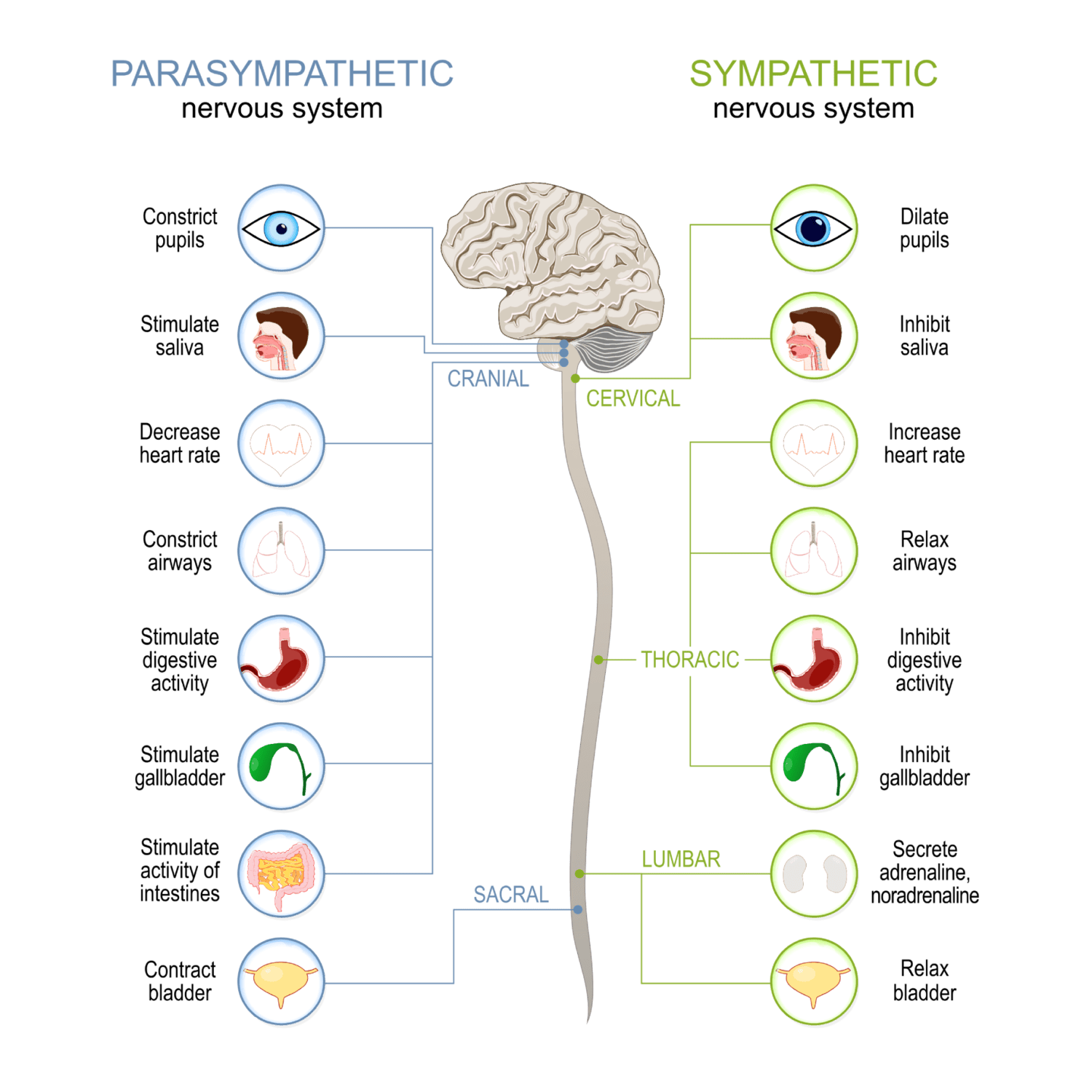
In children with PANS/PANDAS or other neuroimmune conditions, this immune activation doesn’t stay in the gut. It reaches the brain, fueling neuroinflammation and worsening symptoms.

On top of that, ultra-processed foods are nutrient-poor. They displace real foods rich in the vitamins, minerals, and amino acids needed for detoxification, methylation, and neurotransmitter synthesis. So not only are these foods actively inflammatory, they’re also depriving kids of the fuel they need to heal.

UPFs Fill Up their Buckets

Ultra-processed food is not just less healthy than real food, they are toxins!  These synthetic, chemically altered foods add to the same toxic body burden as pesticides, plastics, and heavy metals. They demand attention from the liver, steal nutrients needed for detoxification, and introduce compounds the body doesn’t easily metabolize or excrete. For a child with an already overflowing bucket, this added strain can be enough to tip them into flare or regression.  The body doesn’t differentiate between “chemical from the pantry” and “chemical from the paint aisle.” 

What to Watch for

Here are common red flags that signal a food is more chemical experiment than nourishment:

Common Ultra-Processed Ingredients

  • Artificial Colors  (Red 40, Yellow 5, Blue 1): linked to hyperactivity, behavioral issues, and neuroinflammation.
  • Preservatives (BHA, BHT, TBHQ): used to prevent spoilage, but also shown to disrupt mitochondrial and immune function.

  • Flavor Enhancers (MSG, autolyzed yeast, “natural flavors”): stimulate appetite and can provoke neurological symptoms in sensitive kids.

  • Emulsifiers & Stabilizers (polysorbate 80, carrageenan, mono- and diglycerides): linked to gut lining damage and microbiome disruption.

  • Refined Grains & Sugars (glucose syrup, high fructose corn syrup, maltodextrin): spike blood sugar, trigger inflammation, and displace nutrient-dense food.

Watch for Label Language Tricks

  • “Natural Flavors”:  A catch-all term that can. It can mean hundreds of chemical compounds derived from natural sources, but often in unnatural ways.
  • “Bioengineered” or “Derived from Bioengineered Ingredients”: The quiet rebranding of GMO labeling.

  • “Plant-Based”: Doesn’t mean whole food. Many “plant-based” meats and snacks are ultra-processed and loaded with additives.

  • “Whole Grain” or “Low Fat”: Often a distraction from the chemical list that follows. Low fat frequently means high sugar or starch.

Where They Hide

  • Kids’ yogurts and snack bars
  • Breakfast cereals and toaster pastries

  • Frozen entrees and “kids’ meals”

  • Shelf-stable baked goods and snack cakes

  • Fruit snacks and gummies

  • Vegan cheeses and plant-based meats

  • “Gluten-free” treats made from starches and gums

Just because a product is labeled organic or gluten-free doesn’t mean it’s unprocessed. Check the ingredients, not just the claims.

Plastics

Plastics, Microplastics & Nanoplastics

Plastics are everywhere, literally woven into the fabric of our daily lives. They wrap our food, hold our drinks, and even make up the clothes we wear. At first glance, plastics seem to make life more convenient, but the convenience is costing us. Plastics never truly biodegrade. Instead, they break down into smaller and smaller particles.  First, they break down into microplastics, and then nanoplastics, ultrafine particles small enough to enter human cells and even cross the blood-brain barrier.

Nanoplastics

These fragments now contaminate nearly every part of our environment. They’re in the air we breathe, the water we drink, the food we eat, and even in our bloodstream. A 2024 study published in The New England Journal of Medicine discovered microplastics embedded in the arteries of heart disease patients. The findings? Patients with detectable plastic particles had significantly higher rates of heart attacks, strokes, and vascular inflammation.

But the issue goes even deeper.

Nanoplastics behave like microscopic shards of glass inside the body. They physically irritate tissues, disrupt hormones, alter immune signaling, and trigger chronic inflammation. Nanoplastics adsorb environmental toxins like heavy metals or pesticides and can then ferry them deeper into vulnerable tissues, including the brain.


For children, whose systems are still developing, the risk is even more serious. Their detox pathways are immature, their blood-brain barrier is more permeable, and their smaller body size means the same amount of exposure creates a much higher dose per pound.

To put things in to perspective, the average American consumes the equivalent of a credit card’s worth of microplastics every single week.

Spoonful of colorful microplastics with text: “On average, Americans consume the equivalent of one credit card per week in microplastics and nanoplastics”

Sources of Microplastic Exposure:

  • Plastic food packaging and takeout containers

  • Water bottles (especially when left in the sun or reused)

  • Synthetic clothing (polyester, nylon, fleece) that sheds microfibers into the air and water

  • Household dust (contaminated with airborne microplastics from carpets, furniture)

  • Processed foods which often test high for plastic particles

How to Reduce Your Family’s Exposure:

  • Switch to glass or stainless steel containers for food and drink

  • Avoid microwaving food in plastic (even “microwave safe” ones can leach chemicals)

  • Use natural-fiber clothing and bedding (cotton, wool, linen) when possible

  • Wash synthetic clothing in a Guppyfriend bag or use a fiber-catching filter on your washing machine

  • Choose whole, unpackaged foods when possible

  • Filter your drinking water with a system tested for plastic particles

Reducing plastic exposure won’t eliminate every risk, but it does lighten the toxic load. And for children already facing inflammatory conditions like PANS/PANDAS, autism, or chronic immune issues, reducing plastic burden can lessen the total toxic body burden.  

Small changes can stack up. Choose glass or stainless steel containers, avoiding plastic packaging when possible, and opting for products made from natural materials are simple steps we can take to reduce our exposure.

Industrial Chemicals

Everyday products are often hiding some of the most harmful exposures our children face. From non-stick pans to waterproof jackets, we’ve built convenience into our routines, without fully realizing the invisible cost. These industrial chemicals, found in our kitchens, bathrooms, and even receipts, aren’t just temporary. They build up in the body, disrupting development, immune function, and hormonal balance over time.

PFAS ("Forever Chemicals")

PFAS, or per- and polyfluoroalkyl substances, are synthetic chemicals that have quietly become one of the most pervasive environmental threats of our time. Nicknamed “forever chemicals” for their ability to resist breaking down, PFAS accumulate in the tissues of humans and animals alike, for decades. These substances are commonly found in products designed to repel water and grease, such as non-stick cookware, waterproof clothing, food packaging, and firefighting foams.

What makes them especially dangerous is their ability to travel easily through soil, air, and water, contaminating entire ecosystems. Because they’re so persistent, even small, repeated exposures can lead to a significant toxic burden over time, particularly in children, whose systems are still developing.

The Health Risks of PFAS

PFAS exposure causes immune disruption, hormone imbalance, and damage to organs like the liver and kidneys. Long-term studies show that PFAS exposure raises the risk of certain cancers. Because PFAS also interfere with the endocrine system, they may impair reproductive health and development, especially in pregnant women and young children.

PFAS in Our Drinking Water and Food Supply

Industrial discharges, runoff from firefighting foams, and contamination from landfills have contaminated drinking water with PFAS across the globe. In many U.S. communities, water samples now exceed federal safety standards. And it doesn’t stop at water.  PFAS are in our food too. These chemicals migrate from food packaging directly into the food we eat. One of the most well-known culprits? Microwave popcorn. The inside of the popcorn bag is often coated with PFAS to prevent grease from soaking through. But when the bag is heated, those chemicals can leach into the popcorn itself, right before we hand it to our kids as a snack.

Microwave popcorn isn’t the only source, PFAS can also be found in fast food wrappers, pizza boxes, and other grease-resistant packaging. Reducing these exposures where possible, choosing stovetop popcorn made with clean ingredients, using uncoated parchment paper instead of convenience packaging, and limiting takeout when practical, can help take a significant burden off the system.

Phthalates

Manufacturers use phthalates to make plastics soft and flexible. These chemicals show up in toys, food packaging, vinyl flooring, and countless personal care products. Phthalates disrupt hormones and have been linked to reproductive problems, developmental delays, and hormone-related cancers. Reduce exposure by avoiding plastic containers and choosing personal products labeled “phthalate-free.”

Bisphenol A (BPA) & Bisphenol Substitutes (BPS, BPF)

BPA is another plastic-related chemical commonly found in food and drink containers, like water bottles and the lining of canned goods. Like phthalates, BPA is an endocrine disruptor that can mimic estrogen and disrupt hormonal balance. Long-term exposure has been linked to infertility, heart disease, and an increased risk of breast and prostate cancers. Though many manufacturers now offer “BPA-free” products, other bisphenol compounds, like BPS, can still pose similar risks, so it’s important to be mindful of all plastics, especially those used in food storage.

Just Say No to the Receipt! That receipt you were handed by the grocery store employee is covered in BPA.  When you touch a receipt, even for seconds, the amount of BPA that rubs off on your hands is more than you think.  Connecticut, Illinois and Washington have banned BPA in receipts due to the severe health hazards they pose. Until other states catch up, request digital receipts or wash your hands after handling paper ones.

Parabens

Parabens are synthetic preservatives commonly found in skincare products, cosmetics, and processed foods. They’re used to prevent the growth of bacteria and mold and extend the shelf life of products like lotions, shampoos, deodorants, and packaged foods.  Parabens have been shown to mimic estrogen in the body, disrupting hormone balance and interfering with the endocrine system. This hormonal disruption has been linked to an increased risk of breast cancer, metabolic disorders, and cardiovascular disease.  

Indoor Air Pollution

Volatile Organic Compounds (VOCs)

Most people assume that air pollution is an outdoor problem, caused by smog, car emissions, and industrial waste. However, indoor air can be up to five times more polluted than outdoor air, with toxins lingering in places where we eat, sleep, and breathe every day.

VOCs are a group of chemicals that easily evaporate into the air, making them common in household cleaners, paints, and air fresheners. These everyday products release volatile organic compounds (VOCs), including formaldehyde, and other harmful chemicals into the air. With the average person spending 90% of their time indoors, reducing indoor air pollution is an important part of protecting our health and supporting the body’s natural detoxification processes.

Some VOCs, like benzene and formaldehyde, are also known carcinogens. To reduce exposure choose non-toxic cleaning products, use low-VOC paints, and find a good air purifier for your home. 

Several plants like spider plants, snake plants, peace lilies, aloe vera, ficus, and bamboo can remove VOCs from indoor air.  Bring a piece of the outdoors indoors and clean your air in the process.

Electromagnetic Pollution

EMFs and Dirty Electricity

For decades, scientists have recognized the dangers of ionizing radiation, including UV rays, X-rays, and gamma rays. We’ve all experienced a painful sunburn after a day at the beach, which is actually a visible sign of UV radiation damaging our skin cells. That same radiation, with repeated exposure, can eventually lead to skin cancer by harming the DNA in our cells. X-rays, while invaluable, come with similar risks. That’s why the technician always drapes that heavy lead apron over you before stepping out of the room. They understand radiation’s potential to damage our DNA and increase cancer risk with excessive exposure.

But what about non-ionizing radiation?

The kind emitted by our cell phones, Wi-Fi routers, and power lines. For years, the scientific community believed these lower-energy waves were essentially harmless.

Fig. 1.
Copyright © 2020 by The Korean Pediatric Society.https://pmc.ncbi.nlm.nih.gov/articles/PMC7642138/figure/f1-cep-2019-01494/.

Research is now challenging this assumption, proving that non-ionizing radiation can cause significant harm even at levels far below heating thresholds. Studies conclude that chronic EMF exposure can lead to cellular dysfunction, increased oxidative stress, nervous system dysregulation, and long-term health conditions.

EMF exposure has been linked to an ability to disrupt the blood brain barrier (BBB).  Studies suggest that radiation from wireless technology weakens the BBB, making the brain more vulnerable to toxins like heavy metals, mold mycotoxins, and chemicals.  This landmark study demonstrated that low level radiation caused BBB permeability after just 2 hours of exposure!

Sources of EMFs

We are exposed to EMFs from multiple sources all day, every day, including:

  • Cell Phones & Wireless Devices:  Smartphones, tablets, laptops, Bluetooth devices, and wireless earbuds all emit RF radiation during calls, data transmission and bluetooth usage.
  • WiFi Routers & Smart Home Devices:  Wireless internet signals continuously emit pulsed EMFs. 
  • Microwave Ovens:  Even when microwaves are shielded, leakage can still occur.
  • Power Lines:  High-voltage power lines create low-frequency electromagnetic fields (ELFs). 

Does this seem like conspiracy theory or fringe science? Think again.

Your iPhone comes with an entire section dedicated to RF (radiofrequency) exposure, and it’s not hidden in the fine print. Under Settings > Legal & Regulatory > RF Exposure, Apple explains how the device is tested for radiation absorption (SAR) and advises users to carry the phone with a 5mm separation from the body. Why? Because when held directly against the skin, like in a pocket, bra, or against a child’s body, the body may absorb more RF energy than the safety threshold allows.

Apple even suggests reducing exposure by using speakerphone or headphones, and warns that certain phone cases, especially those with metal, can interfere with RF safety performance.

This isn’t fringe. It’s built into the phone, and it’s worth paying attention to if your child is dealing with immune dysregulation, mitochondrial stress, or neurological symptoms. EMFs may not be the root cause of illness, but in sensitive systems, they can be a contributing factor.

Screenshot of Apple iPhone RF Exposure warning about radiofrequency absorption and safety recommendations

Exposure to Dirty Electricity

When we flip on a light switch or plug in our laptops, we rarely think about the quality of electricity flowing through our homes. But beneath the surface, our homes often buzz with “dirty electricity,” a hidden byproduct of our modern tech-filled homes.

Dirty electricity happens when the smooth, consistent flow of electrical current is disrupted.  This disruption creates voltage spikes and electrical noise on our home wiring, similar to static on a radio station.  

Common Sources:

  • Dimmer Switches – Generate high-frequency voltage that radiate EMFs.
  • LED & Fluorescent Lights – Disrupt voltage flow, introducing electrical interference into home wiring.
  • Smart Meters – Emit frequent wireless RF signals, increasing household EMF pollution.
  • Household Appliances – Computers, refrigerators, and TVs produce electrical noise that spreads throughout the wiring in your home.

How EMFs & Dirty Electricity Affect Our Health

Chronic EMF exposure disrupts cellular processes, damages DNA, and alters the body’s electrical balance.  Dr. Dietrich Klinghardt, a leading expert in functional medicine and environmental  medicine, has spoken extensively about the impact of WiFi, 5G, EMFs and mold, and immune function.  His research and clinical observations show how WiFi, 5G, and EMFs worsen biotoxin related illnesses, particularly mold toxicity and Lyme disease.

EMFs & the Blood Brain Barrier

 Studies show that radiofrequency (RF) radiation weakens the BBB.  This damage allows toxins like glyphosate, heavy metals, and mold mycotoxins to pass directly into the brain. 

EMFs + Mold & Biotoxin Illness

Dr. Klinghardt explains that Wi-Fi and 5G radiation don’t just affect humans, they also affect mold colonies. Mold exposed to EMFs becomes more aggressive.  Research indicates that EMFs act as a stressor on mold colonies, causing them to release up to 600x more mycotoxins.  These neurotoxins can severely affect the brain, nervous system, and immune health.  

EMFs Weaken the Immune System

EMFs suppress detoxification pathways. They interfere with the body’s ability to clear mycotoxins, heavy metals, and environmental toxins.  EMF exposure also lowers melatonin levels, which impacts sleep, cellular repair, and detoxification, key elements in mold and autoimmune recovery.

Research suggests 5G radiation penetrates deeper into our tissues.  It worsens mitochondrial dysfunction and oxidative stress, making recovery even harder.

🎧 Podcast Recommendations: Klinghardt Conversations #3 with Dr. Dietrich Klinghardt

EMF Protection Strategies

  • Turn fff Wi-Fi at night.
  • Use wired internet Instead of Wi-Fi – Ethernet connections eliminate wireless radiation and reduce EMF load in the home.
  • Keep phones on airplane mode when possible.  Avoid sleeping next to your phone.
  • Shield the Bedroom from EMFs – Options include EMF-blocking paint, canopies, and grounded shielding fabrics.
  • Say no to smart meters – Smart meters emit high levels of pulsed RF radiation, which can worsen mold toxicity symptoms.
  • Practice grounding (earthing) daily – Walking barefoot outdoors neutralizes excess electromagnetic charge, helping reduce inflammation and oxidative stress.
Barefoot child standing on green grass during grounding practice

Mitigating Dirty Electricity

You can’t see dirty electricity, but you can measure and reduce it.

How to Measure Dirty Electricity:

  • Greenwave Broadband EMI Meter – It measures dirty electricity levels in millivolts (mV).  Using the filters, you can compare the readings before and after filters are installed.   I use this is my home and found one room in my house that had exceptionally high levels that needed multiple filters.  

Install Dirty Electricity Filters:

  • Greenwave Filters – Plug them into electrical outlets to neutralize erratic voltage spikes, smoothing out the electrical current.

Other Strategies:

  • Unplug household appliances and electronic devices when not in use.
  • Use incandescent bulbs instead of LED or fluorescent.
  • Avoid Dimmer switches all together.

🎧 Podcast Recommendation:The Body is Electric and Dirty Electricity Harms.

📘 Book RecommendationThe Non-Tinfoil Guide to EMFs:  How to Fix Our Stupid Use of Technology

Start Living the Detox Life

Our world is flooding us with toxins.  In the past, our detoxification systems could handle the natural toxins we encountered. But today, our buckets are overflowing with industrial chemicals, heavy metals, plastics, and pesticides, making it more important than ever to actively avoid toxins and support our body’s detox pathways.  

For families dealing with PANS/PANDAS, natural detox support becomes even more important. These children already have sensitive immune systems and inflamed brains, so clearing the body’s toxic burden can be an important step in their healing journey. By understanding the threats and taking small, intentional steps, we can help protect our bodies and those of our families, while giving our most vulnerable kids a fighting chance to heal.

To learn more about strategies to address natural detox in kids read the Detox Herbal Guide

Histamine

histamine

Mast cells are part of the immune system, responsible for detecting threats and triggering an immune response. When mast cells are functioning and regulated, they release chemical mediators like histamine in controlled amounts to help the body respond to infections, injuries, or allergens. However, in individuals with Mast Cell Activation Syndrome (MCAS), these cells become hyperreactive, releasing excessive histamine and other inflammatory compounds in response to triggers that wouldn’t typically cause a reaction. This chronic, dysregulated immune response can lead to systemic inflammation and a flood of symptoms affecting multiple systems in the body.

Think of histamine as a fire alarm: under normal circumstances, it sounds an alarm to warn the body of an incoming threat. But in MCAS, the alarm system is on the fritz.  The alarm keeps going off even after the threat has passed. This constant state of alert fuels chronic inflammation and overloads the nervous system.

Histamine intolerance, on the other hand, occurs when the body struggles to break down histamine. Normally, the enzymes diamine oxidase (DAO) and histamine N-methyltransferase (HNMT) help break down histamine, preventing it from accumulating to problematic levels. But if these enzymes are deficient, whether due to genetic factors, gut dysbiosis, or environmental triggers like mold or infections, histamine can build up, leading to symptoms similar to MCAS.

Dr. Neil Nathan, in his book Toxic, explains that mast cells don’t just play a role in immune function.  They also act as a bridge between the immune system and nervous system. Conditions like PANS/PANDAS, chronic infections (like Lyme disease), and mold toxicity, put the nervous system in a constant state of high alert.

Mast cells are found throughout the body but they are densely concentrated in the brain, especially near the hypothalamus and other areas involved in regulating mood, cognition, and the stress response. When they become overactive, they release not only histamine but also cytokines, prostaglandins, and other inflammatory mediators that can disrupt neurotransmitter function, increase neuroinflammation, and contribute to neurological symptoms like anxiety, OCD, rage episodes, and brain fog.

This means that for individuals with MCAS or histamine intolerance, histamine isn’t just causing hives or digestive upset. It’s actively dysregulating the nervous system, driving neuropsychiatric symptoms. Dr. Nathan emphasizes that in cases of mold toxicity and Lyme disease, stabilizing mast cells and reducing histamine load can be a necessary part of calming neuroinflammation and restoring nervous system balance.

Symptoms of MCAS and Histamine Intolerance

Because mast cells exist throughout the body, MCAS and histamine intolerance can cause a wide range of symptoms. Some of the most common include:

  • Neurological:  Headaches, tremors, tics, seizures, dysautonomia (unusual spasmodic motions)
  • Psychiatric: Anxiety, depression, brain fog, irritability, OCD, mood swings, sleep disturbances
  • Gastrointestinal: Nausea, diarrhea, bloating, acid reflux, abdominal pain
  • Cardiovascular: Heart palpitations, arrhythmias, chest pain, dizziness, low blood pressure, POTS-like symptoms
  • Respiratory: Nasal congestion, shortness of breath, wheezing, asthma-like symptoms
  • Skin & Allergic-Type Reactions: Hives, itching, flushing, swelling, eczema
  • Musculoskeletal: Shifting muscle and joint pain (resembling fibromyalgia)
  •  Visual:  Eye irritation, dryness, loss of visual clarity, eyelid twitching or tremors 
  • General:  Fatigue, malaise, temperature dysregulation

For children with PANS/PANDAS, mast cell activation and histamine excess can worsen neuroinflammation, intensifying anxiety, rage episodes, OCD, and other behavioral symptoms. Since mast cells communicate directly with the nervous system, their dysregulation can drive both physical and neuropsychiatric symptoms.

Impact of Genetics

Genetic mutations, such as SLC22A4 or DAO gene mutations, impair the body’s ability to clear histamine effectively, leading to a buildup of histamine in the bloodstream and tissues, which can trigger chronic inflammation, digestive issues, and neuropsychiatric symptoms like anxiety, brain fog, and mood instability. These genetic susceptibilities make individuals more prone to histamine intolerance, mast cell activation, and heightened inflammatory responses, which can exacerbate symptoms in PANS/PANDAS.

Identifying Root Causes & Triggers

While stabilizing mast cells and reducing histamine load is important, it’s only part of the equation. To truly resolve MCAS and histamine intolerance, it’s critical to identify and address the underlying triggers that are keeping the immune system in a constant state of overactivation.

For many individuals, especially those with PANS/PANDAS, Lyme disease, and mold toxicity, mast cell dysfunction isn’t happening in isolation. It’s a response to deeper root causes, including:

  • Mold Exposure & Mycotoxins – Mold toxicity is one of the most common and overlooked triggers for mast cell activation. Dr. Neil Nathan emphasizes that mold exposure disrupts immune regulation, inflames the nervous system, and directly triggers histamine release. 
  • Chronic Infections:  – Tick-borne infections like Lyme disease, Bartonella, and Babesia, as well as viral infections like EBV (Epstein-Barr Virus), can prolong immune activation, making mast cells hypersensitive. These infections keep the body in a constant “fight-or-flight” mode, preventing true healing until they are addressed.
  • Gut Imbalances & Dysbiosis – Since DAO (the enzyme that breaks down histamine) is produced in the gut, poor gut health can lead to histamine overload. Leaky gut, SIBO (Small Intestinal Bacterial Overgrowth), and gut dysbiosis can also contribute to inflammation and immune dysregulation, worsening symptoms.
  • Dietary Triggers & Histamine-Rich Foods – People with MCAS and histamine intolerance should avoid high-histamine foods, such as fermented foods, aged cheeses, alcohol, and processed meats, at least until they get their condition under control. Leftovers are problematic too, because histamine levels increase the longer food sits, even in the fridge. Freshly cooked meals are often a better option.

Dr. Nathan estimates that 70-80% of his patients with mold toxicity also suffer from MCAS. He explains that the inflammatory response driven by mold exposure makes the mast cells hypersensitive, leading to chronic, often debilitating symptoms.

Retraining the Nervous System

Dr. Neil Nathan stresses that in many of his patients, mast cell dysfunction is driven not just by physical triggers but also by an overactive nervous system. In cases of PANS/PANDAS, Lyme disease, and mold toxicity, the body can become stuck in a chronic fight-or-flight state. This heightened stress response signals to the immune system that it’s under constant threat, perpetuating mast cell activation and histamine release even after the original trigger is gone.

For this reason, Dr. Nathan recommends limbic system retraining and vagus nerve stimulation to support recovery.

  • Limbic System Retraining – The limbic system, which includes the amygdala and hypothalamus, controls our response to stress and perceived threats. In cases of MCAS, PANS/PANDAS, Lyme, and mold toxicity, the limbic system can become hypersensitized, reacting to non-threatening stimuli as if they were dangerous. Programs like Primal Trust, DNRS (Dynamic Neural Retraining System), and The Gupta Program help “rewire” the brain’s response to triggers, calming the overactive fight-or-flight response and reducing mast cell activation.
  • Vagus Nerve Stimulation – The vagus nerve plays a key role in regulating the parasympathetic nervous system (the “rest-and-digest” response). When chronic illness, stress, or trauma disrupts vagus nerve function, inflammation and mast cell activation increase. Stimulating the vagus nerve through techniques like deep breathing, gargling, humming, cold exposure, and neurofeedback can help restore balance to the nervous system and reduce histamine-related symptoms.

Often Missed

Because histamine-related symptoms are so varied, and overlap significantly with those of PANS/PANDAS, they’re often overlooked. Parents may assume their child’s symptoms are solely due to infection or immune dysregulation, when in reality, histamine could be acting as fuel on the fire. This is especially true if a child has chronic infections like Lyme, Bartonella, or mold toxicity, which are known to trigger mast cell activation and histamine release.

 A simple way to assess whether histamine is a contributing factor is to trial some of the herbal and natural interventions listed in the Herbal Guide. Many of these remedies help stabilize mast cells, support histamine breakdown, and reduce inflammation, and if your child responds positively, you know you’re on to something.

If histamine is a factor, even small adjustments, like avoiding high-histamine foods, reducing environmental triggers, or supporting detox pathways, can make a noticeable difference in symptoms. And for some children, addressing histamine overload can be the missing link that allows the rest of the pieces to fall into place. Learn about Herbal Antihistamines and Mast Cell Stabilizers in the Herbal Guide

Cell Danger Response

The CDR | Limbic Training & Vagus Nerve

What is the CDR? Seeking Safety from the Inside Out

Healing from chronic illness, including PANS/PANDAS, Lyme disease, and mold toxicity, requires more than killing infections or calming inflammation. The body must feel safe at every level. That safety starts at the cellular level and reaches all the way to the brain and nervous system.   The Cell Danger Response (CDR), the autonomic nervous system, the limbic system, and the vagus nerve all work together. 

Dr. Robert Naviaux first identified the Cell Danger Response (CDR) as the body’s built-in emergency system (Read his research paper here.). At its core, it’s a survival mechanism.  When  cells detect a threat, whether it’s an infection, toxin, injury, or chronic stress, they shift from growth and repair mode into defense mode. They stop growing and repairing. They send out danger signals instead.

This works well for short-term survival. But when the threat never stops, cells don’t return to healing mode. The body stays stuck. No matter how many antimicrobials or detox protocols you throw at it, real recovery remains out of reach.

To heal, we must reset this pattern. Calming the Cell Danger Response, supporting the vagus nerve, and sending consistent safety cues allow the body to shift gears. From survival to repair. From alert to rest. That’s when healing can begin.

Table of Contents

What Triggers the Cell Danger Response?

The Cell Danger Response (CDR) starts with a threat. These threats act like alarm bells, warning the body that it’s not safe.  Once activated it sets off a chain reaction of protective mechanisms.

In children with PANS/PANDAS or related chronic conditions, these threats or triggers are often:

  • Infections – bacterial, viral, fungal, or parasitic

  • Environmental toxins – mold, heavy metals, pesticides

  • Psychological stress or trauma

  • Physical injury or inflammation

  • Metabolic dysfunction or nutrient depletion

Any one of these can initiate the Cell Danger Response. When a trigger is detected, the cell shifts its behavior.  Instead of focusing on normal function like growing, digesting, or communicating, it puts up its shields, diverting energy toward defense and calling in reinforcements from the immune system.
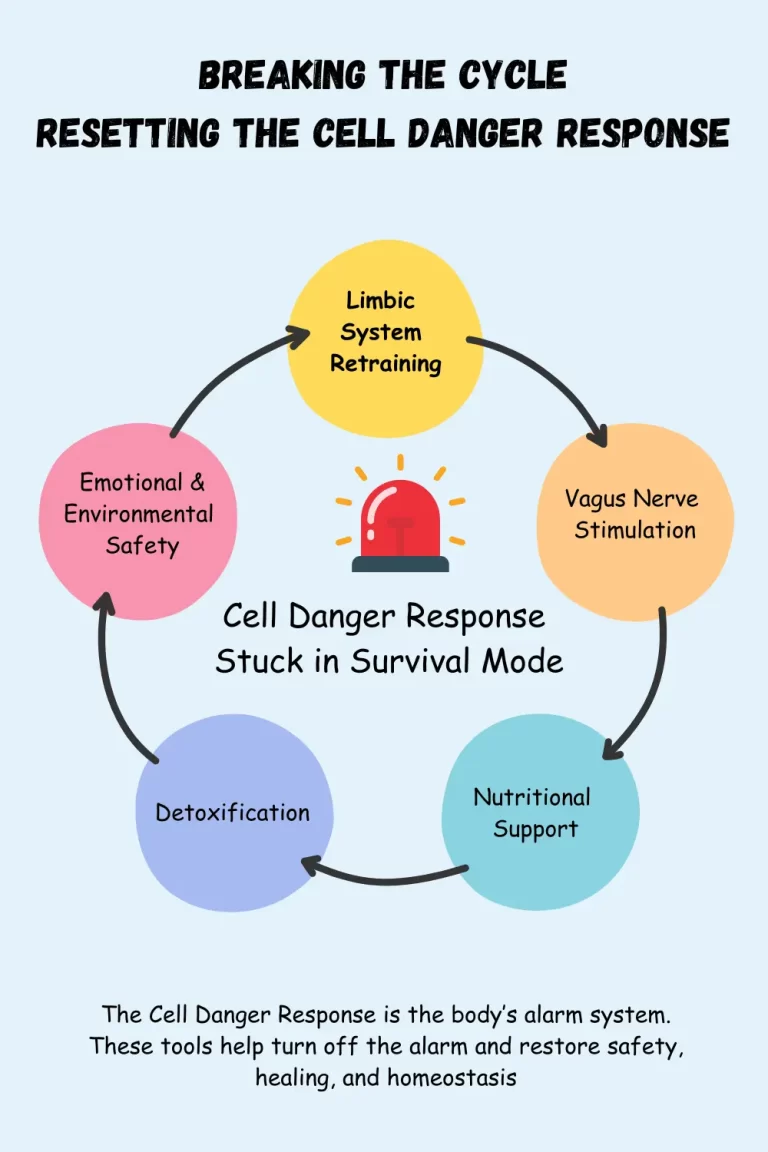
The Cell Danger Response itself is not inherently harmful. If you meet a bear in the forest, you want this system online. That same survival system helps fight infections or heal from injury.

The real problem arises when the threat lingers or keeps returning. The body never gets the “all clear.”   It gets stuck in defense mode and can prevent true healing.

How the Cell Danger Response Works

When cells detect a threat, they flip a metabolic switch.  They abandon repair and focus entirely on survival. This involves three key shifts:

  • Mitochondria shift their energy production from oxidative phosphorylation (efficient) to glycolysis (less efficient) to conserve energy for defense.
  • The immune system ramps up, releasing inflammatory signals to fight off pathogens or toxins.
  • Metabolism slows.  Growth and detoxification pause to conserve for defense.

This shift helps in the short-term.  But in chronic conditions like PANS/PANDAS, the body doesn’t reset.  The body stays in alert mode.

What Happens when the CDR Gets Stuck?

  • Neuroinflammation – Ongoing immune activity in the brain worsens anxiety, OCD, fatigue, and sensory issues.
  • Mitochondrial dysfunction – Cells remain in low-power mode, causing fatigue, pain, and sluggish detoxification.
  • Immune dysregulation – Constant alert can trigger autoimmunity, mast cell activation and histamine surges.

At its heart, the Cell Danger Response protects us. But the survival response can become the disease process.  To heal, the body needs to feel safe again.

This locked-in state doesn’t just affect the cells, it also sends ripples throughout the entire body, especially the nervous system. One of the first systems to react is the autonomic nervous system, which controls our unconscious bodily functions like heart rate, digestion, and stress responses.

How the CDR Impacts Nervous System Balance

The autonomic nervous system (ANS) is your body’s internal control system. It regulates unconscious processes like heartbeat, digestion, immune responses, and temperature. It has two branches:

  • The sympathetic nervous system (SNS), which activates “fight or flight.”

  • The parasympathetic nervous system (PNS), which restores “rest and digest.”

These two branches work in balance. When the body feels safe, the PNS takes the lead. When danger is detected, the SNS takes over. This switching is normal and healthy, when short-lived.

But the Cell Danger Response changes this rhythm. It pushes the nervous system toward sympathetic dominance. This chronic high-alert state suppresses rest, slows digestion, disrupts immunity, and blocks healing.

In children with PANS/PANDAS, this imbalance often drives behavior: sudden rage, anxiety, sleep problems, and emotional volatility. The body is trying to survive, not thrive. 

The Sympathetic Nervous System | Stuck in the ON Position

The sympathetic nervous system is built for emergencies. It primes the body for action: faster heart rate, shallow breathing, tightened muscles, and sharpened focus. It’s essential in the face of real danger.

But in chronic illness, the SNS often stays activated long after the threat is gone.

This constant “on” state comes with a cost:

  • Anxiety, panic, irritability and hypervigilance
  • Sleep disturbances, insomnia and chronic fatigue
  • Digestive issues (constipation, bloating, food sensitivities)
  • Rapid heart rate, poor circulation, cold hands/feet
  • Tension headaches, muscle pain and sensory overload

When the sympathetic system dominates, the parasympathetic system can’t do its job. Healing functions like digestion, detoxification, immune balance, get suppressed.

To heal, the body must shift back to parasympathetic mode. That’s where rest, repair, and growth happen. Our goal is to help the nervous system relearn that it is safe, so the body can finally exhale and begin to heal.

Healing the CDR | Resetting the Safety Signals

To shift out of the Cell Danger Response, the body needs consistent, internal cues of safety. This doesn’t come from antibiotics or supplements. It begins in the nervous system, specifically the limbic system and the vagus nerve. These two systems are at the heart of our body’s natural healing intelligence.  They act as gatekeepers between perceived threat and real calm.

By supporting and retraining them, we can help the brain and body downshift from survival mode into a state of regulation and healing.

The Limbic System | Rewiring the Fear Loop

Thousands of years ago, the limbic system helped humans survive. It acted as an early warning system for danger. In a world filled with predators, harsh weather, and food scarcity, quick reactions kept people alive. 

Imagine an early human spotting a bear. Instantly, the amygdala, the brain’s fear center, would sound the alarm and trigger the fight-or-flight response. Within seconds, the hypothalamus released adrenaline and cortisol. Heart rate spiked. Blood pressure surged. Muscles tensed for action.  The body was primed for flight or fight. The body diverted energy from digestion and other non-essential functions to survival.

Once safe, the limbic system would turn off the alarm, allowing the parasympathetic nervous system to take over. Stress hormones dropped. The body calmed. Digestion and immune function resumed. Meanwhile, the hippocampus recorded the event. The brain learned: avoid that place, bears live there.

This short-term activation of the limbic system saved lives. Most of the time, early humans lived in a state of rest and recovery, only activating their fight-or-flight response when truly necessary.

Today, though, the ‘bear’ often looks more like a missed deadline, mold in the HVAC, or your kid’s fourth meltdown of the morning. Our limbic systems don’t know the difference, and stay stuck on high alert.  This constant activation keeps the body in survival mode. Over time, it wears us down. Chronic inflammation, anxiety, sleep disruption, and immune chaos follow. For families dealing with PANS/PANDAS, MCAS, Lyme, or mold, this story is all too familiar.

Thankfully, the limbic system is plastic. We can teach it something new. 

Limbic retraining programs use structured, repetitive techniques to:

  • Interrupt stress pathways

  • Reinforce calm

  • Desensitize the brain to false alarms

With time and consistency, the brain begins to downshift. The CDR loosens its grip.

The Vagus Nerve | Restoring the Brakes

The vagus nerve is the body’s communication superhighway. It runs from the brainstem through the heart, lungs, and digestive tract, carrying signals that regulate inflammation, stress, and digestion.

It also acts as a brake. When the vagus nerve is strong, it slows heart rate, calms inflammation, supports gut function, and signals that the body is safe.

In chronic illness, vagal tone often drops. The “brake” doesn’t work. Inflammatory signals continue unchecked, and the body can’t settle.

In your digestive system, the gut relies on the vagus nerve to coordinate the contractions that push food through your intestines and triggers the release of digestive enzymes. This explains why stress, which dampens vagal tone, often manifests as digestive distress.  From the butterflies of nervousness to constipation and bloating during particularly stressful weeks, the vagus nerve is behind the changes.

Strengthening the vagus nerve helps shift the ANS back into parasympathetic mode.

Simple daily practices like deep breathing, cold exposure, humming, or social engagement, stimulate the vagus nerve and send calming signals back to the brain. These signals reinforce safety, lower stress hormones, and create the internal environment necessary for healing

Limbic Retraining

Limbic retraining programs are designed to “retrain” the brain to stop perceiving neutral signals as dangers. This retraining helps the brain break this cycle.

Limbic retraining is based on the science of neuroplasticity, which is the brain’s ability to rewire itself. These programs use structured exercises and techniques to help the brain:

  1. Recognize that it is safe – Many chronic illnesses keep the brain in a state of threat detection, where everyday experiences (foods, smells, sounds, or even emotions) trigger an overactive stress response. Limbic retraining helps the brain “rewire” this response so that it no longer misinterprets normal stimuli as threats.
  2. Interrupt old stress patterns – Repetitive negative thought patterns, catastrophic thinking, and fear-based responses strengthen the neural pathways of stress and inflammation. By introducing new, positive neural patterns, limbic retraining weakens these stress circuits and creates alternative pathways for calm and resilience.
  3. Regulate the autonomic nervous system – A stuck limbic system keeps the body locked in sympathetic dominance (fight-or-flight mode). Retraining the brain helps activate the parasympathetic nervous system (rest-and-digest mode), supporting immune balance, digestion, sleep, and overall recovery.

The goal is to remind the brain that it is safe. Over time, threat responses weaken. Calm becomes the new default.

Top Limbic Retraining Programs

  1.  Dynamic Neural Retraining System (DNRS). Developed by Annie Hopper, DNRS is a neuroplasticity-based program that aims to retrain the brain’s limbic system to reduce its hyperactivity. It involves a structured series of cognitive exercises, visualizations, and mindfulness practices to help recondition the brain’s stress circuits. The focus is on  neuroplasticity, rewiring the brain, cognitive restructuring. Ideal for people dealing with chronic illness, chemical sensitivities, chronic fatigue, or anxiety stemming from limbic dysfunction.
  2. Gupta Program.  Created by Ashok Gupta, this program focuses on healing chronic conditions by addressing the overactivation of the brain’s limbic and autonomic nervous systems. It combines guided meditations, mindfulness practices, and brain retraining techniques to calm the brain’s stress responses. The Gupta program focuses on mindfulness, meditation, neuroplasticity exercises.   May be most beneficial for chronic fatigue syndrome (CFS), fibromyalgia, chronic pain, or environmental sensitivities.
  3. Primal TrustAcademy.  Founded by Dr. Cathleen King, integrates polyvagal theory, brain retraining, and somatic healing. It focuses on shifting the body out of survival mode using a combination of nervous system regulation techniques, mindfulness, and self-compassion practices.   It’s best for trauma-related conditions, chronic dysregulation.

Each of these programs offers tools to help parents and children shift from survival to recovery. 

Vagus Nerve Stimulation Techniques

Stimulating the vagus nerve consistently helps shift the nervous system from fight-or-flight to rest-and-digest. These techniques act as gentle nudges, reminding the body that it is safe, and allowing inflammation to settle, digestion to resume, and healing to begin.

You don’t need fancy equipment to begin. Many of the most effective tools are free and can be done at home:

  • Deep Breathing & Meditation – Slow, intentional breathing like the 4-7-8 method or box breathing—activates the vagus nerve and reduces cortisol. Even five minutes a day can change your baseline stress response.
  • Cold Exposure– Brief exposure to cold, like ending your shower with cold water, splashing cold water on your face, or placing an icepack on the back of the neck, triggers the vagus nerve and activates the parasympathetic system.
  • Humming, Gargling, and Singing –The vibrations that flow through your throat when you hum your favorite song or gargle with warm salt water directly massage your vagus nerve as it travels through this area. This gentle stimulation helps your entire system remember what safety feels like.
  • Gentle Movement & Somatic Practices – Activities like yoga, integrate breath control and slow, intentional movement, which activate the vagus nerve and promote nervous system balance. These practices also help release stored tension and trauma from the body, signaling safety.
  • Laughter & Social Connection – There is medicine in joy and belonging. Your nervous system feels its best in the warmth of genuine connection and shared laughter, reminding your body that you are safe, seen, and supported.
  • Vagus Nerve Stimulators – Devices like Apollo Neuro or the Safe and Sound Protocol (SSP) use vibration and auditory stimulation to enhance vagal tone, reducing stress responses and improving emotional regulation. These tools are particularly useful for individuals with PANS/PANDAS, MCAS, or trauma-related nervous system dysregulation.
Circular diagram showing five steps to reset the Cell Danger Response: Limbic System Retraining, Vagus Nerve Stimulation, Nutritional Support, Detoxification, and Emotional & Environmental Safety. A red alarm icon in the center represents the body being stuck in survival mode.

Supporting Safety with Detox and Nutrition

While limbic retraining and vagus nerve stimulation help calm the nervous system, the body also needs physical resources to shift out of survival mode. Detoxification and nutritional support form the foundation for this biological reset.

Detoxification

When the Cell Danger Response is active, detoxification slows down dramatically. Toxins and metabolic waste can build up.  And, if the exits (liver, kidneys, lymph, gut) are blocked, the whole system backs up.

Gentle detox strategies can help clear these exits:

  • Binders (like activated charcoal or bentonite clay) help capture and carry out toxins

  • Lymphatic support (dry brushing, rebounding) keeps drainage moving

  • Sweating (Epsom salt baths, sauna) helps release toxins through the skin

  • Hydration ensures kidneys flush waste efficiently

A clear system tells the body it’s safe to resume normal function.  Learn more in the Detox Guide and the Detox Pathways  Guide.

Nutritional Support | Restoring our Reserves

Chronic illnesses and autoimmune diseases often deplete key nutrients.  The body burns through B vitamins, magnesium, zinc, antioxidants, and more just to maintain the stress response.  Over time, these deficits impair our mitochondrial function, immune system and detox capacity.

It’s important to restore our nutrient reserves.

  • Minerals like magnesium, potassium, and selenium support mitochondrial repair and calm the nervous system

  • Amino acids from quality proteins help rebuild neurotransmitters and immune cells

  • Essential fatty acids (especially omega-3s) reduce inflammation and support brain health

  • Methylation support (like folate, B12, and choline) aids detox and gene regulation

The right nutrients tell the body: you are supported, resourced, and safe to heal.  Learn more in the Vitamins & Minerals Guide.

Healing | Safety at Every Level

The brain and body can be rewired. The nervous system is highly adaptable, and with the right tools, techniques, and mindset shifts, we can break the cycle of chronic stress, restore balance, and unlock the body’s natural ability to heal.

Gut health

gut health

When parents first learn about PANS/PANDAS, the focus is usually on infections, inflammation, and the immune system, and rightfully so. But one critical factor is often overlooked (it was for me): gut health.  Understanding and supporting gut health is a foundational step in healing PANDAS. 

“All disease begins in the gut.”

~Hippocrates

The gut is far more than just a digestive organ. It plays a central role in immune regulation, inflammation control, and brain function. The gut-brain connection is so important that the gut is often referred to as the “second brain.”  The gut produces neurotransmitters like serotonin and dopamine which regulates immune activity, and the gut lining serves as a barrier between the body and the outside world.

When the gut is damaged it can:

  • Trigger neuroinflammation, worsening OCD, anxiety, and rage episodes.
  • Increase immune overactivation, fueling autoimmunity and mast cell activation.
  • Disrupt detoxification, leading to toxin buildup that worsens symptoms.

Gut health is one of the most adaptable systems in the body. The gut can be reshaped through the food we eat, the environment we create, and the interventions we choose.

Below we’ll take a look at:

  • The gut-brain connection, how the gut directly impacts neurological symptoms.
  • Key gut issues in PANS/PANDAS, including leaky gut, microbiome imbalances, and motility dysfunction.
  • The main causes of leaky gut, including gluten, mold, infections, glyphosate, and histamine overload.
  • What the research says about leaky gut and the development of autoimmune diseases.

The Gut-Brain Connection

The gut and brain are in constant communication through the gut-brain axis. The gut-brain axis connects the nervous system (via the vagus nerve), the immune system, and hormonal signaling.  This allows the gut to directly influence mood, behavior, and inflammation levels. When the gut is inflamed or imbalanced, it can send pro-inflammatory signals to the brain, worsening OCD, anxiety, rage episodes, and brain fog.  Addressing gut imbalances can be instrumental in healing PANDAS, as it helps reduce neuroinflammation.

The vagus nerve, a long nerve that runs from the brainstem to the intestines, is an important part of this system. The vagus nerve regulates digestion, inflammation, and the body’s stress response, acting as a bridge between the gut and the brain. 

Since the vagus nerve plays a key role in calming the body’s stress response and controlling gut function, inflammation in this area can impair digestion, worsen gut motility, and increase fight-or-flight responses. 

An unhealthy gut fuels neurological and immune dysfunction. For children with PANS/PANDAS, gut inflammation can:

  • Trigger neuroinflammation, making symptoms like anxiety, OCD, and mood swings worse.
  • Dysregulate the autonomic nervous system, leading to issues like POTS, dizziness, dysautonomia or temperature dysregulation.
  • Affect neurotransmitter production, disrupting serotonin, dopamine, and GABA levels.

At the same time, brain inflammation and chronic stress can impair gut function, creating a vicious cycle. That’s why focusing on gut health is so important for healing.

Key Gut Issues

1. Leaky Gut & Tight Junction Dysfunction

The intestinal lining is a protective barrier between the outside world and the bloodstream. It allows beneficial nutrients to be absorbed while blocking harmful toxins, large undigested food particles, and pathogens.  The barrier is held together by “tight junctions”, specialized proteins that regulate what passes between gut cells.

When these tight junctions become loose or damaged, the barrier weakens allowing harmful substances like toxins, undigested food particles, and bacterial byproducts (LPS endotoxins) to “leak” into the bloodstream. This is known as leaky gut or intestinal permeability.

What happens when the gut becomes leaky?

  • Toxins and bacterial byproducts (like LPS endotoxins) enter circulation, triggering an inflammatory immune response.
  • The immune system mistakenly reacts to food particles as threats, increasing food sensitivities.
  • Inflammatory cytokines spread throughout the body, worsening brain inflammation, mast cell activation, and autoimmune reactions.

Leaky Gut is a Necessary Precondition to Develop Autoimmunity

Dr. Alessio Fasano, a leading researcher in gut health, has changed our understanding of how autoimmune diseases develop. In his 2011 study, he found that leaky gut isn’t just a side effect of chronic illness, it’s a prerequisite for autoimmune disease.  Meaning if someone has an autoimmune condition they almost certainly have some level of intestinal permeability.

Dr. Fasano’s “Three-Legged Stool” of Autoimmunity identifies three components that must be present for autoimmune diseases to develop.

1.  Genetic Predisposition.  A person must have a genetic susceptibility 

2.  Environmental Triggers. Infections, toxins, mold, stress, and dietary factors

3.  Leaky Gut. A damaged gut barrier allows inflammatory molecules to enter the bloodstream, triggering an immune response

Genetics alone are not enough to trigger autoimmunity.  Without environmental factors and leaky gut, it may never develop.  This also means that healing the gut could be one of the most effective strategies for reducing autoimmune activity.  

If a child has leaky gut, it could not only trigger autoimmunity, it could prevent healing by allowing a continuous influx of inflammatory triggers into the bloodstream, keeping the immune system in a heightened state and leading to persistent flares. Repairing the intestinal barrier is essential for healing PANDAS naturally, as it prevents the continuous triggering of the immune system.

Side-by-side illustration of a healthy gut lining with intact tight junctions and a damaged gut lining showing gaps between cells. Gluten particles are shown around the damaged lining to highlight how gluten and glyphosate contribute to leaky gut and autoimmune responses.

2. Gut Microbiome Imbalance & Brain Inflammation

The gut is home to trillions of bacteria, viruses, and fungi, known as the gut microbiome. These microbes play a critical role in digestion, immune regulation, detoxification, and neurotransmitter production. When the gut microbiome is balanced, it supports overall health. But when harmful bacteria outnumber beneficial ones, a condition known as dysbiosis, it can fuel inflammation and contribute to neurological and immune dysfunction.

How Gut Imbalances Fuel Brain Inflammation

The gut microbiome is directly linked to brain function and immune regulation through the gut-brain axis. When dysbiosis occurs:

  • Inflammatory cytokines are released – Certain bacteria produce lipopolysaccharides (LPS endotoxins), which can cross the gut barrier and enter the bloodstream. These toxins trigger an immune response that increases neuroinflammation, worsening symptoms like anxiety, OCD, rage, and sensory sensitivities in PANS/PANDAS.
  • Harmful microbes produce neurotoxins – Some bacteria, such as Clostridia species, release compounds that disrupt dopamine metabolism, leading to aggression, irritability, and emotional instability.
  • Histamine-producing bacteria increase immune activation – Certain gut bacteria produce excess histamine, which can overstimulate the nervous system, leading to mast cell activation, anxiety, and sleep disturbances.
  •  The gut loses its ability to regulate immune balance – A healthy gut microbiome helps “train” the immune system, promoting immune tolerance. When dysbiosis occurs, immune dysregulation and autoimmunity are more likely.

Biofilms | Hidden Roadblocks

Biofilms are protective “shields” created by bacteria, fungi, and parasites. Think of them like a slimy shield. They allow pathogens to hide from the immune system and resist both antimicrobial herbs and pharmaceutical treatments.

In children with PANS/PANDAS, chronic infections like Lyme, Bartonella, or Candida can form thick biofilms in the gut lining and other tissues. These biofilms can become a breeding ground for pathogenic microbes while keeping the immune system blind to their presence.

What does this mean for your child?
You can be doing “all the right things” like diet changes, probiotics, antimicrobials, and still not see progress, because the infections are hiding behind the biofilm. Biofilms must be gently broken down to allow antimicrobial herbs or medications to reach their target and to allow the immune system to respond appropriately.

Supporting Biofilm Breakdown

Certain natural agents can help dissolve biofilms. These include:

  • Enzymes like nattokinase, serrapeptase, or lumbrokinase

  • Herbs like oregano oil, berberine, and neem (often combined in antimicrobial protocols)

  • EDTA or binders to pull out metals that stabilize biofilm structure 

It’s important to start slowly. Breaking apart biofilms can lead to the release of stored toxins and microbial debris, which may cause “Herx” reactions or temporary worsening of symptoms. Support detox pathways and go low and slow.

3. Motility & Peristalsis

Proper intestinal motility ensures food moves through the digestive tract at the right speed, slow enough to allow for proper nutrient absorption, but fast enough to prevent stagnant waste and toxins from accumulating. This process is controlled by peristalsis, the rhythmic contraction of muscles that propels food forward through the digestive tract to elimination.

When gut motility is too slow, it leads to 

  • Small Intestinal Bacterial Overgrowth (SIBO) and dysbiosis
  •  Toxin reabsorption (toxins your body was trying to eliminate end up being reabsorbed into your tissue)

Poor gut motility in children with neuroimmune conditions could be caused by:

  1. Nervous System Dysregulation (“Fight-or-Flight” Mode) – Chronic stress, trauma, and limbic system dysfunction (common in PANS/PANDAS) weaken the rest-and-digest response, slowing peristalsis.
  2. Chronic Infections (Lyme, Bartonella, Viruses) – These infections produce inflammatory cytokines that interfere with gut motility and contribute to dysbiosis.
  3. Mold Toxins & Vagus Nerve DysfunctionMycotoxins inflame the vagus nerve, disrupting the gut-brain connection and further impairing digestion.
  4. Low Stomach Acid & Digestive Enzyme Deficiency – The body prioritizes survival over digestion.  The parasympathetic nervous system (“rest-and-digest”) is responsible for producing stomach acid, digestive enzymes, and bile. But when a child is in chronic fight-or-flight mode, these functions slow down or shut off.  Frequent antibiotic use can kill beneficial bacteria that help stimulate stomach acid and enzyme release.  

4. Intestinal Absorption & Nutrient Deficiencies

The small intestine is where most nutrient absorption happens, but only if the gut lining is healthy. The small intestine is lined with with specialized cells and microscopic finger-like projections called villi and microvilli, which are responsible for breaking down food and extracting essential vitamins, minerals, and other nutrients.  But, when the gut lining becomes inflamed or damaged, these villi do not work as well.  That means fewer nutrients are absorbed, even with a healthy diet, impacting everything from mood and cognition to immunity and detox.

Chronic inflammation and infections can also increase the body’s demand for vitamins and minerals, making it even harder to maintain sufficient levels.

For children with PANS/PANDAS, MCAS, Lyme, or mold toxicity, this nutrient depletion can exacerbate underlying issues and symptoms.  If the gut is inflamed, no amount of dietary changes or supplements will help until the gut lining is repaired.

Most Common Causes of Leaky Gut & Gut Issues

1. The Case Against Gluten

For many individuals, gluten is a major trigger that can worsen leaky gut, fuel inflammation, and intensify the devastating neurological symptoms of PANS. And here’s what’s important for parents to understand: you don’t need a Celiac diagnosis for gluten to be causing harm.

So what happens when our children eat gluten?

Gluten contains a protein called gliadin, when gliadin enters the gut, it triggers the release of zonulin.  Zonulin is a regulator of the tight junctions that keep the  intestinal walls from allowing toxins to pass into the bloodstream. When there’s too much zonulin, the tight junctions between gut cells loosen, creating tiny gaps where they shouldn’t be.

Through these gaps, undigested food particles, harmful bacteria, toxins, and inflammatory molecules, can escape into the bloodstream. The body recognizes these as foreign invaders and launches an immune attack. For children already battling PANS/PANDAS, this adds fuel to an already raging fire, overloading their immune system, disrupting brain chemistry, and feeding the chronic inflammation that drives their symptoms.

Dr. Fasano’s research confirms that elevated zonulin levels are strongly linked to autoimmune diseases, and removing gluten can help restore the gut lining.

2. Mold

Mold and mycotoxin exposure is often overlooked in children with PANS/PANDAS, and other inflammatory conditions, but it can wreak havoc on the gut lining, triggering immune activation and systemic inflammation.

Beyond direct damage to the gut barrier, mold toxins also suppress secretory IgA (IgA), an important part of the immune system that helps defend the gut against harmful microbes. When IgA levels drop, the gut becomes more vulnerable to infections and overgrowths, allowing opportunistic pathogens like Candida and harmful bacteria to thrive.  Read the Root Causes | Mold guide to learn more about how toxic mold is to our bodies.

3. Chronic Infections

Bacterial infections, particularly Lyme disease and Bartonella, release lipopolysaccharides (LPS), also known as endotoxins, which can trigger immune activation, weaken tight junctions, and contribute to leaky gut. These bacterial toxins increase systemic inflammation, not only harming the gut but also crossing the blood-brain barrier, worsening neurological symptoms like anxiety, OCD, brain fog, and mood instability.

Viral infections, such as Epstein-Barr Virus (EBV) and Human Herpesvirus 6 (HHV-6), further contribute to gut dysfunction by increasing oxidative stress and disrupting mitochondrial function. These viruses can become reactivated in times of stress or immune suppression, keeping the body in a constant inflammatory state and preventing the gut from healing properly.  Read the Root Causes | Infections guide to learn more about the role chronic infections play in PANS/PANDAS and other autoimmune diseases.

4. Glyphosate

Glyphosate has contaminated our food supply.  This chemical weed-killer is now found in everything from our breakfast cereals to our drinking water, and its effects on our health are more profound than most realize.

Glyphosate Was Patented as an Antibiotic

Did you know? Glyphosate was originally patented as an antibiotic, and it acts just like one inside our bodies. It kills the beneficial bacteria we need (like Lactobacillus and Bifidobacterium) while allowing harmful bacteria (like Clostridia and Salmonella) to thrive. This imbalance creates the perfect storm for gut inflammation, leaky gut, and histamine overload.

Destroys Good Bacteria, Allows Harmful Ones to Thrive

Our gut bacteria do more than just assist with digestion.  They’re responsible for creating neurotransmitters that regulate our children’s mood, focus, and emotional stability. When glyphosate damages these bacteria, we often see worsening anxiety, OCD behaviors, irritability, and brain fog.

The Wheat Connection

Farmers often spray wheat with glyphosate right before harvest, a process called “desiccation,” to speed up drying and make harvesting easier. This means wheat is one of the most heavily contaminated crops, and glyphosate residues are often highest in conventional wheat-based products like bread, crackers, and breakfast cereals.

Even some organic wheat can contain trace amounts of glyphosate due to environmental drift, water contamination, or processing equipment. For children with PANS/PANDAS, this creates a double hit: gluten, which can already increase zonulin and intestinal permeability, plus glyphosate, which damages the microbiome and detox pathways. Many families see dramatic improvements when they remove both gluten and glyphosate-contaminated grains from the diet.

This doesn’t mean every child needs to be permanently grain-free, but for those in the middle of a flare or healing from mold and immune dysregulation, a clean, anti-inflammatory diet can dramatically reduce symptom intensity and help the gut finally begin to repair.

Read more about the devastating impacts of glyphosate on our health in the Root Causes | Detox guide.

 🎧 Podcast Recommendations:  How Glyphosate and Soil Health Affects Our Health.

5. Environmental Factors

Environmental toxins such as heavy metals (lead, mercury, aluminum), chemicals (BPA, phthalates, PFAS), chronic stress, and EMFs can weaken the gut barrier and contribute to leaky gut.

  • Heavy metals disrupt the gut microbiome, increase oxidative stress, and interfere with digestion, making the gut more vulnerable to inflammation.
  • Plastics, food additives, and industrial chemicals act as endocrine disruptors and can alter gut bacteria, further impairing intestinal integrity.
  • Chronic stress and trauma activate the fight-or-flight response, reducing stomach acid, enzyme production, and slowing gut motility, which worsens permeability.
  • Emerging research also suggests that chronic EMF exposure may alter gut bacteria, increase oxidative stress, and contribute to leaky gut. 

Simple steps like filtering drinking water, reducing plastic use, managing stress, and improving detoxification can help protect the gut and support overall recovery.

Side-by-side chart of nutrients and herbs that heal the gut and substances that harm it, with a comparison graphic of healthy vs. leaky gut lining below

Gut Testing

Functional gut testing can help identify dysbiosis, leaky gut, fungal overgrowth, and impaired detox pathways, allowing for more targeted and personalized treatment.  Functional testing can provide clarity, but it’s not necessary to begin gut healing. Many families see improvement using foundational strategies like cleaning up the diet, reducing environmental exposures, and herbal support.  But, if there’s no improvement after those interventions, consider additional testing.

Here are the top tests to consider:

  1. Organic Acids Test (OAT).  The Organic Acids Test (OAT) is a urine-based test that takes a comprehensive look at gut health, neurotransmitter metabolism, and mitochondrial function. It is particularly useful for detecting yeast or fungal overgrowth, which can contribute to brain fog, anxiety, and histamine intolerance.  It is also very useful for detecting Clostridia toxins, which disrupt dopamine metabolism and are linked to OCD, aggression, and mood instability.  It also assesses B vitamin status, important for detoxification, gut repair, and neurotransmitter production.   The OAT is considered when there is suspected yeast overgrowth, mood imbalances, mitochondrial dysfunction and neurological symptoms.
  2.  GI-MAP Stool Test.  The GI MAP test is a DNA-based stool test that provides a very detailed analysis of the gut microbiome.  Unlike conventional stool tests, which rely on culturing bacteria, GI-MAP uses qPCR technology to detect bacterial DNA. The test can detect beneficial and harmful bacteria, parasites, fungal overgrowth, and markers of gut inflammation. It also measures immune function through secretory IgA levels, as well as markers of leaky gut and gluten sensitivity.
  3. Gut Zoomer. The Gut Zoomer test evaluates 170+ bacterial species, fungi, viruses, inflammatory markers, and markers of intestinal permeability (such as zonulin and LPS endotoxins).  It’s a good option for individuals dealing with histamine intolerance, leaky gut, and microbiome imbalances that contribute to neuroinflammation.

Each of these tests provides unique insights into gut health!

The Takeaway | Healing Begins in the Gut

The gut influences nearly every system involved in this condition: the immune system, the nervous system, detoxification pathways, and the brain itself.  If your child is struggling with PANS/PANDAS, don’t underestimate the power of gut healing. It may just be the missing piece you’ve been looking for.

Learn about strategies to begin to repair the gut in the Herbal Guide | Gut.

Read about the 5R Framework for Gut Repair in this post How to Heal Your Leaky Gut Naturally.

Vitamins & Minerals

Vitamins & Minerals

These nutrients fuel the systems that need to work properly for healing to happen. Enzymes, hormones, neurotransmitters, detox pathways, tissue repair, immune regulation, all of these rely on vitamins and minerals to function. Without them, even the best medical treatments or protocols won’t get you to baseline.

For children with neuroimmune conditions, even minor deficiencies can create major ripple effects: prolonged flares, brain fog, worsening OCD, poor sleep, increased anxiety, constipation, fatigue, and more. Nutrient gaps are often invisible at first glance, but they quietly block progress.

Why These Kids Are So Depleted

Many of our kids are nutrient-depleted before we even start addressing root causes. And it’s not just about eating “junk” food. The truth is, modern farming practices have stripped our soil, and our food, of the minerals our bodies need to thrive.

Even if your child eats fruits and vegetables every day, they still may not be getting enough. For example, studies show that broccoli today contains up to 50% less calcium than it did a hundred years ago. Across the board, nutrient levels in vegetables have dropped by 20–50% over the last few decades. That’s a huge problem when minerals are the spark plugs for everything from immune function to detox and brain health. Add in the reality of modern life, chronic stress, frequent illness, picky eating, gut inflammation, food sensitivities, and environmental toxins, and you have a perfect storm for nutrient depletion. These kids are using more and absorbing less.

And if your child has chronic inflammation, gut issues, or immune dysregulation? Their need for minerals is even higher, and their ability to absorb them may be compromised.

Why These Nutrients Are So Critical for Healing

Vitamins and minerals fuel the core processes the body needs to calm inflammation, restore balance, and heal.

  • Magnesium is a calming, multitasking mineral involved in over 300 enzymatic reactions. Without enough of it the body can’t make energy efficiently (ATP synthesis), stabilize cell membranes,  modulates cytokine activity, or modulate histamine.  But 70% of the population is magnesium deficient or insufficient.

  • Zinc is key for tissue repair, immune modulation, and gut integrity. Inflammation and infection deplete zinc quickly, and deficiency can look like picky eating, slow healing, skin rashes, and frequent illness.

  • Selenium protects against oxidative stress and supports the production of glutathione, the body’s master antioxidant and defense against oxidative stress, especially during detox. Glutathione helps neutralize free radicals, reduce brain inflammation, and prepare the body for deeper healing.

  • Vitamin D is best known for bone health, but in the context of chronic illness, its role in immune regulation and inflammation control is even more critical. Many of our kids are deficient even with sun exposure, especially if they’re inflamed or have poor conversion due to genetics.

  • Vitamin C isn’t just for colds.  It helps strengthen the gut lining, lower histamine, support the adrenal glands, and regenerate glutathione and vitamin E. In kids with mast cell activation or histamine overload, vitamin C can also help quiet the system and reduce histamine.

  • Vitamin A helps maintain the mucosal barriers that protect the gut, lungs, and sinuses, which are first-line defenses in kids who are always “catching something.” It also helps modulate the immune response, which is key when the immune system is confused or overreacting.

  • The B Vitamins—especially B6, B12, and folate, are often underestimated but crucial. They support methylation, neurotransmitter production (like serotonin and dopamine), red blood cell formation, and energy metabolism. In kids with MTHFR or COMT mutations, methylated or activated forms (like P-5-P or methylcobalamin) may be essential, but need to be introduced with care.

The Detox Connection

If you’ve been researching healing strategies for PANS, PANDAS, or chronic illness, you’ve probably heard a lot about detox. And yes—supporting detoxification is critical. These kids often have a heavier toxic burden than their systems can handle. Mold, viruses, bacteria, chemicals, and even the byproducts of chronic inflammation can overwhelm their internal cleanup crews.

Minerals like magnesium, zinc, selenium, molybdenum, and manganese serve as cofactors, helpers that enzymes need in order to neutralize toxins and escort them out of the body. Without them, the trash just piles up.

Why Starting Detox Too Soon Can Backfire

If you jump into binders like zeolite, charcoal, or bentonite clay before restoring mineral levels, you can end up depleting the body even more. These binders don’t just pull toxins, they can also bind to essential minerals like magnesium, calcium, and zinc. And in a child who’s already running on empty, that can trigger a whole new set of symptoms:

  • Increased fatigue

  • Mood instability

  • Constipation

  • Headaches or joint pain

  • Worsening of neuropsychiatric symptoms

It’s not that the detox protocol was “bad.” It’s that the body wasn’t ready.  We have to nourish and restore before we start stripping things away.

Ionic Mimicry: When the Body Gets Desperate

When the body can’t find the minerals it needs, it improvises. In a process called ionic mimicry, it starts substituting toxic metals for missing minerals, just to keep basic functions going, but it comes at a cost.

Here’s how it works:

If magnesium is low, the body might plug in cadmium or lead. If there’s not enough selenium, it might use mercury or arsenic.

These substitutions allow the body to limp along, but they come at a high cost.  Toxic metals create oxidative stress, clog enzymes, and drive increased inflammation, further overwhelming the body’s natural healing systems.

The Hidden Cost of Substitution

Toxic metals don’t behave like the minerals they mimic. They clog up enzymes, block detox pathways, interfere with neurotransmitters, and create oxidative stress.  Many of these issues don’t improve with binders or antimicrobials alone, because the body still doesn’t have the tools it needs to let go of the toxic load.

The Good News is It’s Reversible

Once you begin replenishing the missing minerals, the body gradually starts releasing the toxic metals.  You don’t have to force it. You don’t need aggressive chelation. Just restore what’s missing, and the body begins to correct the imbalance, on its own, in its own timing.

I like to think of it this way: Each cell has a row of reserved seats, labeled magnesium, selenium, zinc. When those seats are empty, the body will fill them with whatever it can find to act as a “stand-in” like lead or mercury, just to keep things going. But when the right mineral finally shows up, it bumps the imposter out of the seat, restores function, and opens the door for detox. 

That’s detoxification in action, and it begins with replenishing the minerals it needs.

Supporting Glutathione Naturally

Before jumping into glutathione supplements, it’s important to strengthen the body’s natural glutathione production pathways. Nutrients like NAC (N-acetyl cysteine), glycine, selenium, and vitamin C are powerful precursors that help the body build glutathione internally. Some children may eventually benefit from liposomal glutathione support, but introducing it too early, especially before mineral and antioxidant systems are restored, can stir up toxins faster than the body can safely clear them. As always, start low, go slow, and support drainage first.

Why Methylation Matters (Especially with MTFHR)

You’ve likely heard of the term MTHFR or methylation.

Methylation turns nutrients “on” so your cells can use them. 

It also:

  • Break down and clear histamine

  • Detox from environmental toxins and heavy metals

  • Produce and balance neurotransmitters like dopamine, serotonin, and norepinephrine

  • Build and repair DNA

  • Regulate inflammation

When methylation isn’t running properly, nothing runs well, detox backs up, emotions spiral, energy crashes, and inflammation takes over. And unfortunately, many children with PANS/PANDAS have genetic mutations that affect these pathways.

What the Genes Are & Why They Matter

Here are a few of the most common players:

  • MTHFR: Impairs the conversion of folate into its active, usable form (methylfolate). This affects everything from detox and neurotransmitters to immune regulation.

  • COMT: Slows the breakdown of dopamine and stress hormones—often leading to mood swings, irritability, or feeling “stuck in high gear.”

  • DAO: Involved in breaking down histamine. Mutations here can increase histamine overload, allergies, and mast cell symptoms.

  • CBS: Can push sulfur metabolism into overdrive, making kids sensitive to sulfur-based supplements, foods, or even glutathione.

These mutations don’t cause PANS/PANDAS, but they make recovery harder by slowing the very systems that are supposed to protect, repair, and regulate the body.

Why Some Kids Don't Tolerate Methylated Vitamins

Methylation support is often a missing puzzle piece, but going too fast can backfire.

Many well-meaning practitioners will start with high doses of methylfolate (active folate) or methylcobalamin (active B12) to “fix” MTHFR mutations. But for kids with COMT issues, high histamine, or inflamed brains, those forms can feel like pouring gasoline on an already overloaded system.

Parents report symptoms like:

  • Worsening anxiety

  • Rage episodes or aggression

  • Hyperactivity

  • Insomnia

  • Panic attacks

It doesn’t mean your child doesn’t need folate or B12. It just means they may not tolerate fully methylated forms—at least not yet.

Alternatives to Methylated Vitamins

If your child is sensitive, consider starting with folinic acid instead of methylfolate. Folinic acid is a gentler, upstream form of folate that supports DNA repair and immune function without triggering the same overstimulation.

You can also try:

  • Hydroxycobalamin instead of methylcobalamin for B12

  • P-5-P (activated B6) for neurotransmitter support without the “buzz”

  • B2 (riboflavin) to help the whole methylation cycle move smoothly

  • Magnesium, trace minerals, and liver support to prepare the terrain

Once your child is stable, you can slowly introduce methylated forms, if needed, but always start low, go slow, and make sure other systems (detox, gut, nervous system) are supported first.

Methylation is Not a Solo Act

This is the part many protocols miss: methylation doesn’t happen in a vacuum. It depends on minerals like magnesium and zinc. It’s affected by inflammation, gut health, toxin load, and emotional stress. If your child is inflamed, overloaded, or nutrient-depleted, it’s like asking a car to drive with no gas and a clogged exhaust pipe.

Supporting methylation is less about “fixing genes” and more about giving the body what it needs to do its job again. Once the system is ready, even small amounts of support can create big shifts, improved focus, better sleep, fewer meltdowns, more emotional flexibility.

So Where Should You Start?

You don’t need to tackle everything at once.

Start with gentle support to restore minerals and key vitamins that fuel energy, calm the nervous system, and support detox.

Foundational Nutrients to Begin With:

  • Magnesium (glycinate for calming, threonate for focus, citrate for constipation)

  • Zinc (especially if there’s frequent illness, or picky eating)

  • Vitamin D (check levels—most kids need D3 + K2 for proper absorption)

  • Vitamin C (for immune balance, histamine support, and gentle gut repair)

  • Trace minerals or a low-dose multi-mineral formula (for overall balance)

Start with one or two at a time. Observe your child. Track changes. Give each new nutrient at least 5–7 days before adding another.

Cells & Circulation

Cells & Circulation

Cells are the foundation of life.  At the core of every biological process is the cell, and at the heart of cellular function is circulation. Circulation is the body’s delivery system for oxygen, nutrients, and immune support, while also clearing waste and toxins. When circulation is compromised, cells struggle to produce energy, detoxification slows, and inflammation rises, making it harder to heal.

Understanding how cellular health, mitochondria, and blood flow work together is essential for supporting recovery.

The Importance of Cellular Health

Cells serve as the building blocks of every organ, immune function, and brain process. They rely on a steady supply of oxygen and nutrients to generate energy, repair damage, remove toxins, and support detoxification pathways that clear harmful substances like heavy metals, mold toxins, and biotoxins. However, in conditions like PANS/PANDAS, multiple factors can disrupt normal cellular function.

Cellular Dysfunction

In PANS/PANDAS chronic inflammation causes cellular dysfunction. When the immune system remains overactive for extended periods, inflammatory molecules attack healthy tissues, damaging cell membranes and impacting mitochondrial function. This leads to oxidative stress, which further inflames the nervous system and contributes to neuroinflammation, one of the key drivers of symptoms in PANS/PANDAS.

Mitochondrial dysfunction

Mitochondria serve as the energy powerhouses of the cell, responsible for producing ATP, the fuel for every function in the body. When mitochondria become impaired due to chronic infections, environmental toxins, or oxidative stress, energy production declines.  Since immune cells also require ATP to function properly, a decline in mitochondrial efficiency can weaken the immune response, making it harder for the body to fight infections and recover from illness.

Impaired Circulation & Oxygenation

Impaired circulation and oxygenation further compound these issues. Many children with PANS/PANDAS experience poor blood flow due to hypercoagulation, a condition where inflammation thickens the blood and reduces oxygen delivery to tissues. Additionally, endothelial dysfunction, where blood vessels lose their ability to dilate properly, and autonomic nervous system imbalances, which cause poor blood flow regulation, can further limit the amount of oxygen reaching cells. Without enough oxygen, cellular energy production slows down, detoxification backs up, and healing is delayed.

Toxin Accumulation

Another issue is toxin accumulation. Cells naturally process and eliminate metabolic waste, but when exposed to high levels of heavy metals, mold toxins, or byproducts from chronic infections, detoxification pathways become overwhelmed. As a result, toxins accumulate in tissues, increasing inflammation and disrupting cellular communication. This cycle makes it even more difficult for the body to clear infections, regulate immune responses, and maintain normal neurological function.

Cell Membranes Protect & Nourish the Cell

Cell membranes serve as the protective barrier around each cell, controlling what enters and exits. These membranes are made of phospholipids, cholesterol, and proteins, which work together to facilitate nutrient exchange, support cellular communication, and assist in detoxification. When membranes are healthy, cells can efficiently take in essential nutrients while keeping harmful toxins out.

Inflammation weakens these membranes, making them more permeable and prone to damage. Heavy metals and other toxins can embed themselves into the membranes, interfering with normal cellular function. A deficiency in essential fatty acids, particularly omega-3s, can make membranes stiff and dysfunctional, impairing their ability to transport nutrients. Additionally, low levels of choline, a nutrient for membrane repair, can leave cells vulnerable to oxidative stress.

Restoring membrane health is essential for improving cellular function. Consuming healthy fats, such as omega-3 fatty acids from wild-caught fish, phosphatidylcholine from pastured eggs, and natural cholesterol sources like grass-fed butter, helps to rebuild and strengthen membranes. Antioxidants such as vitamin C and glutathione can also protect membranes from oxidative damage, reducing inflammation and supporting the body’s ability to detoxify.

Mitochondria | The Energy Creators

Mitochondria are the engines of the cell, responsible for generating ATP, the molecule that powers every function in the body. When mitochondria are working well, they provide the energy needed for cognitive function, muscle movement, immune defense, and detoxification. However, when mitochondrial function is impaired our body starts to show signs like fatigue, brain fog, and immune suppression.

Several factors can damage mitochondria, including oxidative stress, environmental toxins, blood sugar regulation, and poor circulation. Chronic inflammation generates free radicals that damage mitochondrial DNA, while exposure to toxins such as heavy metals and pesticides can interfere with ATP production. Fluctuations in blood sugar, including rapid spikes and crashes, place added stress on mitochondria, impairing their ability to produce energy efficiently. Additionally, impaired oxygenation due to circulatory issues reduces the efficiency of mitochondrial energy generation, compounding fatigue and neurological symptoms.

To support mitochondrial health, it is essential to provide the body with the necessary nutrients for ATP production. Coenzyme Q10 (CoQ10), alpha-lipoic acid, magnesium, and B vitamins all play critical roles in energy metabolism. Getting adequate sleep and improving oxygenation through deep breathing or mild exercise can also enhance mitochondrial repair and function.

Metabolic Waste | Ammonia and Lactic Acid Buildup

When mitochondria are impaired and cells can’t generate energy efficiently, waste products begin to accumulate, particularly ammonia and lactic acid. In healthy metabolism, these byproducts are quickly cleared through the liver and detox pathways. However, in children with PANS/PANDAS, chronic inflammation, mitochondrial dysfunction, and sluggish detoxification can allow these waste products to build up to toxic levels.

  • Ammonia buildup occurs when protein metabolism is disrupted, often due to urea cycle issues, methylation imbalances (such as CBS pathway upregulation), or overwhelmed liver detox pathways. Ammonia is highly neurotoxic; even small elevations can cause rage episodes, brain fog, sleep disturbances, anxiety, and worsening neurological symptoms. Supporting ammonia clearance with nutrients like L-ornithine, activated charcoal, B6, and targeted liver support can help lower this burden.

  • Lactic acid accumulation happens when impaired mitochondria can’t complete aerobic respiration and cells are forced into anaerobic energy production. This buildup can cause fatigue, muscle soreness, headaches, mood swings, and exacerbate brain inflammation. Mitochondrial support with CoQ10, B vitamins, alpha-lipoic acid, magnesium, and oxygen therapies can help reduce lactic acid levels and restore proper cellular energy flow.

Managing these metabolic byproducts is essential for reducing neuroinflammation, stabilizing mood, and supporting the energy needs of a healing brain and immune system.
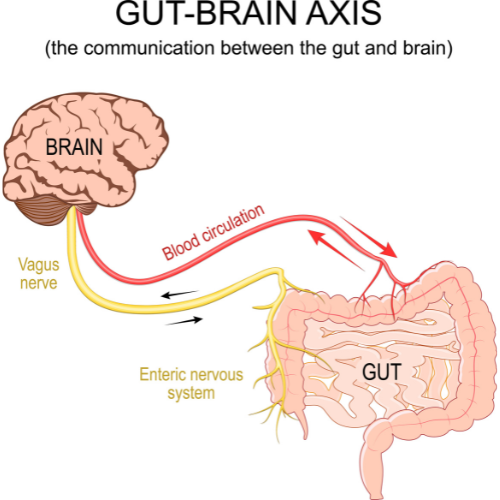
Oxygen, Circulation & Hypercoagulation

Oxygen is fundamental to cellular function, providing the fuel needed for ATP production and detoxification. Many children with PANS/PANDAS have impaired circulation, which restricts oxygen delivery to tissues. Hypercoagulation, or thickened blood, is a common issue in these conditions due to chronic infections and systemic inflammation. As the blood thickens, oxygen transport slows down, leading to fatigue, headaches, and increased neuroinflammation.

Autonomic nervous system dysfunction further disrupts circulation by causing poor regulation of blood flow, leading to symptoms such as cold hands and feet, dizziness, and low blood pressure. Endothelial dysfunction, where blood vessels become inflamed and constricted, further limits oxygen flow to tissues, exacerbating fatigue and cognitive difficulties.

Improving circulation and oxygenation is critical for restoring energy and brain function. Engaging in gentle movement, such as stretching or walking, can help stimulate blood flow. Consuming foods that boost nitric oxide levels, such as beets and leafy greens, supports blood vessel dilation, improving circulation. Proper hydration and electrolyte intake can also enhance blood viscosity, promoting better oxygen delivery to tissues. In more severe cases, therapies like hyperbaric oxygen therapy (HBOT) can increase oxygen saturation in the body, supporting healing at a cellular level.

Microcirculation & Brain Blood Flow

The brain requires a constant supply of oxygen, glucose, and nutrients to function properly. When circulation is impaired, cognitive symptoms can become more noticeable. Poor blood flow to the brain can contribute to headaches, dizziness, and mood instability.

Several factors impair brain circulation, including mast cell activation and histamine release, which cause blood vessels to constrict, reducing oxygen delivery. Chronic infections can lead to the formation of microclots, further limiting circulation to brain tissues. Inflammation can also weaken the blood-brain barrier, making it more permeable and allowing harmful substances to enter the brain, increasing neuroinflammation and worsening symptoms.

Supporting brain blood flow involves reducing inflammation, stabilizing mast cells, and improving overall circulation. Incorporating bioflavonoids such as quercetin, rutin, and resveratrol can strengthen blood vessels, while engaging in light cardiovascular exercise can help promote oxygen delivery to the brain.

Quick Recap

  • Cells need oxygen, nutrients, and efficient detoxification to function properly.
  • Mitochondrial dysfunction leads to fatigue, brain fog, and immune suppression.
  • Impaired circulation (hypercoagulation, poor blood flow) reduces oxygen delivery.
  • Toxins overload detox pathways, increasing inflammation and slowing healing.
  • Strengthening cell membranes with omega-3s, choline, and antioxidants supports repair.
  • Improving circulation with nitric oxide boosters, hydration, and movement enhances oxygenation.

Healing, at its core, is the ability of our cells to regenerate and recover. When we take steps to protect and support our cells with nutrient dense food, reducing toxin exposure, managing stress, and getting adequate sleep, we are enabling our body to heal itself.

See the Herbal Guide for more information about supporting cellular health.

Detox Pathways

Detox Pathways

Detoxification is one of the body’s most important functions.  It’s a built-in system that works to eliminate the toxins, waste products, and harmful substances. Every day, we are exposed to a growing cocktail of environmental toxins from the air we breathe, the water we drink, and the food we eat.

Pesticides, heavy metals, plastics, mold toxins, and industrial pollutants enter our bodies through various routes, and if they aren’t  eliminated, they accumulate in tissues and disrupt critical functions in our body.

While the human body is designed to detoxify naturally, modern toxin exposure is at an all-time high, making it harder for our detox pathways to keep up. When these detox pathways become overloaded, toxins recirculate instead of being excreted, leading to fatigue, brain fog, skin issues, gut problems, immune dysfunction, and inflammation. Supporting detoxification is no longer optional.  It’s required for maintaining health, reducing chronic illness, and allowing the body to heal.

How Detoxification Works

The detoxification process is complex, involving multiple organs and systems that have to work together to neutralize and eliminate toxins. This process occurs in three main phases:

Phase I | Activation – Making Toxins Water-Soluble

This first step takes place in the liver, where enzymes (mainly cytochrome P450) convert fat-soluble toxins into intermediate forms that can be processed. These intermediates are often more reactive, and potentially more harmful, than the original toxins. If the body does not transition efficiently into Phase 2, these toxic byproducts can accumulate, leading to oxidative stress, cellular damage, and inflammation.

What can go wrong?

  • If Phase 1 outpaces Phase 2, toxic intermediates can build up and trigger detox symptoms like headaches, fatigue, brain fog, and joint pain.
  • Toxin exposure overloads the system, leading to DNA damage and immune dysfunction.

How to support Phase 1:

  • Antioxidants (Vitamin C, E, Glutathione, NAC) – help neutralize toxic byproducts.
  • B Vitamins (B2, B6, B12, Folate, Choline) – support liver enzyme activity.
  • Curcumin, green tea, rosemary – protect the liver from oxidative stress.

Phase 2 | Conjugation – Neutralizing & Preparing Toxins for Elimination

In Phase 2, the liver attaches molecules to the reactive intermediates from Phase 1, making them less toxic and easier to excrete. This is done through several pathways:

  • Methylation – requires B vitamins, magnesium, and SAMe.
  • Glutathione Conjugation – uses glutathione to neutralize heavy metals & mold toxins.
  • Sulfation – depends on sulfur-rich foods like garlic, onions, and eggs.

What can go wrong?

  • If methylation is impaired (common with MTHFR mutations), detox slows down.
  • Low glutathione levels leave the body vulnerable to heavy metals and oxidative stress.
  • Poor diet (low in amino acids & sulfur) leads to inefficient toxin processing.

How to support Phase 2:

  • Glutathione (liposomal or NAC) to assist in detoxification.
  • Methylation nutrients (Methylfolate, B12, Magnesium) for proper function.
  • Sulfur-containing foods (eggs, garlic, cruciferous vegetables) to support sulfation.

Phase 3 | Elimination – Removing Toxins from the Body

Once toxins are processed, they must exit the body through stool, urine, sweat, or breath. If elimination is sluggish, toxins can recirculate and get reabsorbed into the bloodstream.

Primary Elimination Pathways:

  • Bile & Stool – The liver excretes fat-soluble toxins into bile, which is then eliminated through the stool. Constipation slows this process, allowing toxins to be reabsorbed.
  • Urine & Kidneys – Water-soluble toxins are filtered by the kidneys and excreted through urine. Dehydration reduces clearance, concentrating toxins in the body.
  • Sweat & Skin – The body releases certain toxins through sweat, but if you rarely sweat, this detox route is underutilized.
  • Lungs & Breath – The respiratory system eliminates carbon dioxide and some volatile toxins. Shallow breathing reduces this detox pathway.

How to support Phase 3:

  • Drink plenty of clean, filtered water to support kidney function.
  • Consume fiber (flaxseeds, psyllium, chia seeds) to bind toxins in the gut.
  • Use binders (activated charcoal, chlorella, bentonite clay) to prevent toxin reabsorption.
  • Exercise & sauna therapy to enhance sweating and remove stored toxins.

Detoxification Organs & Their Role

  1. The Liver.  The liver is the body’s primary detoxification organ, responsible for processing and neutralizing toxins through the phases of detoxification mentioned above. It also produces bile, which is essential for digesting fats and carrying fat-soluble toxins into the digestive tract for elimination.  The Liver requires antioxidants, amino acids, and B vitamins to function optimally.
  2. The Kidneys. (Filtering Water-Soluble Toxins) The kidneys filter the blood, removing water-soluble toxins and waste products, which are then excreted in the urine. The kidneys need proper hydration and electrolytes to maintain efficient function.
  3. The Lymphatic System. (The Waste Removal Sytem) The lymphatic system is a network of vessels and nodes that transports lymph fluid, which contains waste products and immune cells throughout the body. Unlike blood circulation, it has no pump and requires movement.  Rebounding, dry brushing, and massage can help clear stagnant lymph.
  4. The Gut. (Preventing Toxin Reabsorption) A healthy gut is essential for detoxification. The gut not only helps to eliminate waste through bowel movements but also plays a role in supporting the immune system and preventing the reabsorption of toxins back into the bloodstream. A healthy microbiome helps metabolize toxins before elimination. Probiotics, fiber and bile support optimize gut detox.
  5. The Skin. (Detox through Sweat) The skin is our largest organ and can be the primary route of detoxification of heavy metals. Through sweat, the body can expel toxins, which is why practices like sweating through exercise, hot baths or using an infrared sauna can support detoxification.
  6. The Lungs. (Deep Breathing) The lungs are responsible for expelling carbon dioxide and other gaseous toxins from the body. Deep breathing exercises can help enhance lung capacity and support the detoxification process by improving oxygen exchange and promoting the release of toxins.
Diagram showing how toxins accumulate in organs like liver, kidneys, lungs, and brain

Supporting Your Detox Pathways

Supporting your body’s detox pathways involves more than just doing an occasional cleanse. It’s about creating daily habits and practices that help your body function optimally.

Here are some strategies to support your detox pathways:

  • Stay Hydrated: Water is essential for all phases of detoxification. It helps the kidneys filter toxins and supports the elimination of waste through urine and sweat.
  • Eat a Nutrient-Rich Diet: Foods rich in antioxidants, fiber, and essential nutrients like vitamins, minerals, and amino acids provide the building blocks your body needs to process and eliminate toxins.
  • Incorporate Detoxifying Herbs: Herbs like milk thistle, dandelion, and burdock root can support liver function, while others like nettle and parsley support kidney health.
  • Promote Regular Bowel Movements: Fiber-rich foods, hydration, and probiotics help maintain healthy digestion and regular elimination, preventing toxins from being reabsorbed into the body.
  • Sweat Regularly: Exercise, saunas, and other practices that promote sweating help the body eliminate toxins through the skin.
  • Deep Breathing: Practice deep breathing exercises to enhance lung function and promote the release of gaseous toxins.
  • Lymphatic Support: Activities like dry brushing, massage, and movement can help stimulate lymphatic flow and support detoxification.
Chart displaying ways to support opening the detox pathways naturally

The Glymphatic System | Detoxing the Brain While You Sleep

The brain has its own detox system: the glymphatic system. This system works primarily while we sleep to clear out waste products from the brain, including toxins, damaged proteins, and even amyloid plaques, which have been linked to neurodegenerative diseases like Alzheimer’s. Think of it as the brain’s overnight cleaning crew, flushing out metabolic waste, toxins, and inflammatory debris.
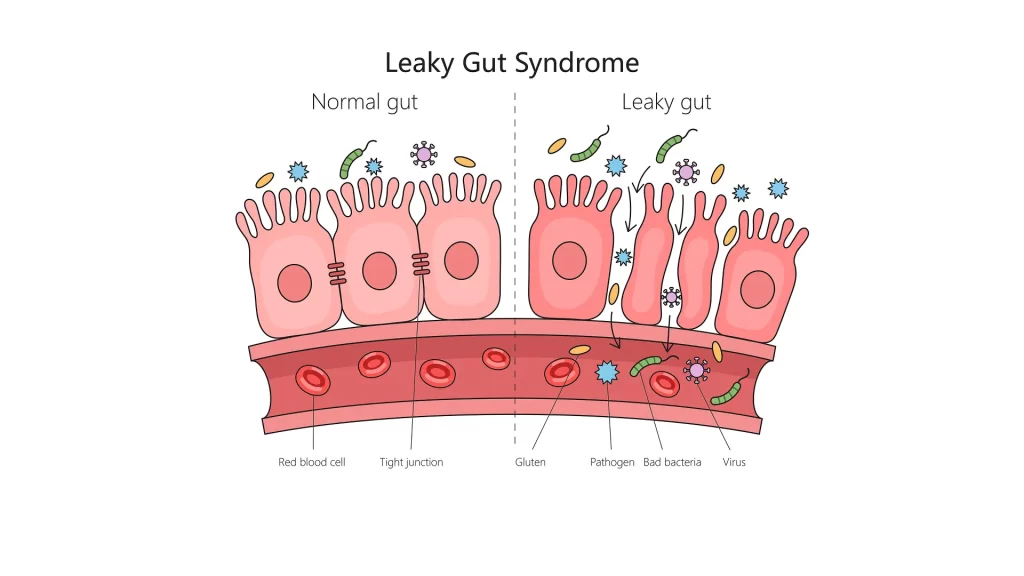
Supporting the glymphatic system is just as critical as supporting the liver and kidneys. Deep, restorative sleep, staying hydrated, and reducing inflammation are all ways to ensure your brain’s detox system is functioning at its best. Sleep hygiene, such as creating a relaxing bedtime routine and ensuring you get enough hours of rest, can make a significant difference in your brain’s ability to detoxify.

Living the Detox Life

Detoxification is not a cleanse or one-time event. It’s a continuous process that requires daily habits.  By understanding how your body detoxifies and incorporating practices that enhance this natural process, you can help reduce your toxic burden and prevent chronic illness. Supporting your detox pathways is one of the most loving things you can do for your body, allowing it to thrive in a world filled with constant challenges.

Read the Detox | Root Causes page to learn more about why detoxing is so important to our health.

Address Genetics

Support Genetics

Genetics can play a powerful behind-the-scenes role in how our bodies process inflammation, handle toxins, regulate mood, and recover from illness.

That doesn’t mean genes cause these conditions outright. But they can create biological vulnerabilities, places where your system may be more likely to struggle, especially under the pressure of infections, toxins, or chronic stress. This is where genetics meets environment. And understanding that intersection gives us new tools to support healing.

Is PANDAS Genetic?

Kids with PANS or PANDAS often carry certain genetic traits that don’t cause the condition directly but can tilt the terrain, making the body more prone to inflammation, poor detox, or neuroimmune dysregulation when stressors hit. 

Genes influence how we break down toxins, modulate immune responses, balance neurotransmitters, and repair from stress or infection. When those genes aren’t working efficiently, due to inherited variants or “dirty genes,” as Dr. Ben Lynch calls them, the result is a system that’s more vulnerable under pressure. And for many of our kids, that pressure includes infections, mold, chemicals, or immune triggers.

What are SNPs and Why Should You Care?

We all carry tiny variations in our DNA called SNPs (single nucleotide polymorphisms). Some don’t do much at all. Others can impact the efficiency of critical processes like detoxification, neurotransmitter metabolism, methylation, folate processing, and immune regulation.

In children with PANS/PANDAS or other neuroimmune challenges, these genetic variations often show up as trouble detoxifying mold or medications, histamine intolerance, sulfur sensitivities and more. Knowing which variations your child carries allows you to personalize their care instead of guessing at what might help. Testing can be done through consumer platforms like Ancestry.com (with raw data analysis via platforms like Genetic Genie, Strategene, or My Happy Genes), or through practitioner testing with IntellxxDNA.

Key Genetic Variations & Their Impact

Let’s walk through some of the most relevant genetic mutations seen in kids with PANS or PANDAS, and how they might affect your child’s health.

COMT | Cleaning Up Dopamine & Adrenaline

COMT (Catechol-O-Methyltransferase) helps your child’s body break down stress chemicals and neurotransmitters like dopamine, norepinephrine, and epinephrine. Think of it as the emotional and mental “reset” button.  If this gene is sluggish, these chemicals can build up too high, leading to anxiety, OCD, hyperactivity, and trouble winding down at night. You might see racing thoughts, increased pain sensitivity, or sensory overload.

On the flip side, if COMT is too fast, your child may clear dopamine too quickly, leading to low motivation, brain fog, depression, and fatigue. These children often struggle with focus or seem emotionally flat.

Many parents find that COMT status helps explain why certain supplements (like methylated B vitamins) help one child focus and make another spin out with anxiety or irritability. In PANS/PANDAS kids, it’s not uncommon to see either end of this spectrum, and understanding it can shape your entire approach to calming the nervous system.
MTHFR | The Methylation Switch

If you’ve spent more than ten minutes in the health and wellness world, you’ve probably heard of MTHFR. This gene helps your body activate folate (vitamin B9), which is necessary for methylation, a process essential for detox, neurotransmitter balance, hormone metabolism, and even DNA repair.

When MTHFR is impaired (especially the C677T or A1298C variants), your child may struggle with poor detox, elevated histamine, mood swings, or chronic inflammation. It’s also one of the reasons some kids can’t tolerate synthetic folic acid and need either methylfolate or folinic acid instead.

This mutation is especially important in kids who are sensitive to chemicals or medications, have trouble detoxing mold or metals, or who flare after viral reactivation. Supporting methylation with the right B vitamins can be game-changing, but go slow, especially if your child also has COMT or DAO variants.

DAO & Histamine

DAO helps your body break down histamine.  Histamine is the chemical behind allergies and inflammation.  When DAO function is impaired, histamine builds up. This can show up in so many varied ways that often mimic PANS symptoms like anxiety, insomnia, irritability, mood swings, and more.

DAO and mast cell activation go hand in hand. If a child flares after eating, reacts to environmental changes, or seems extra sensitive to supplements or foods, this gene may be playing a role. 

HLA | Mold Sensitivity & Autoimmune Priming

The HLA (Human Leukocyte Antigen) genes regulate how your immune system recognizes threats. Certain HLA variants don’t clear biotoxins, like mold, Lyme, or other chronic infections, efficiently. Instead of eliminating the threat, the immune system stays stuck in overdrive, leading to chronic inflammation, autoimmunity, or persistent neurological symptoms.

Children with these HLA types may be the “canaries,” the ones who flare after exposure to a moldy building, can’t recover fully from infections, or develop a prolonged inflammatory response. These kids often don’t tolerate standard PANS/PANDAS treatments well until the biotoxin piece is addressed.

Knowing your child’s HLA status can help explain why detox stalls, why they’re sensitive to mold when others aren’t, or why inflammatory flares seem to come out of nowhere. It also helps guide treatment toward binding and clearing toxins, not just managing symptoms.

PEMT | Cellular Integrity & Detox

PEMT plays a role in making phosphatidylcholine, a necessary component of healthy cell membranes, bile production, and brain health. Low phosphatidylcholine can lead to leaky cell membranes, poor bile flow, and difficulty clearing toxins, especially mold and metals.

If your child has sluggish detox, gallbladder issues, brain fog, or persistent neurological inflammation, PEMT may be a missing piece. Many families find that adding choline-rich foods (like eggs (the yolks), sunflower lecithin, or liver) or phosphatidylcholine supplements improves fat digestion, detox, and brain clarity.

CYP450 | Medication & Detox

The CYP450 family includes genes that help the liver metabolize drugs, hormones, and toxins. When these pathways are slow, the body can become overwhelmed by even small exposures. Kids may be extra sensitive to medications, chemicals, or fragrances, and may experience hormonal symptoms earlier or more intensely.

Support includes cruciferous vegetables, milk thistle, and reducing environmental toxin exposure wherever possible.

CBS | Sulfur Sensitivity & Detox

CBS regulates sulfur metabolism, critical for producing glutathione your body’s master antioxidant. If CBS is upregulated, your child may produce excess sulfur compounds and ammonia, which can trigger irritability, headaches, gut discomfort, or brain fog. On the flip side, if CBS is underactive, your child may struggle to detox efficiently.

If sulfur-rich foods (like garlic, onions, or eggs) worsen symptoms, or if your child is sensitive to glutathione, this gene may be relevant. Support here includes molybdenum, B6, and gentle detox strategies.

Genetics Loads the Gun—But the Environment Pulls the Trigger

A genetic mutation is not a diagnosis. It’s a clue. It tells us where the body may need extra support, and where to tread carefully.  Understanding your child’s genetic profile means you’re gathering better data for making smart decisions now.

SNPs and other genetic variants don’t cause PANS or PANDAS outright. But they can reveal where your child’s system is likely to struggle: detoxing mold, clearing histamine, processing stress, or regulating neurotransmitters. The good news? These vulnerabilities aren’t destiny. They’re opportunities. When you know your child’s genetic tendencies, you can support them more precisely, with the right forms of B vitamins, targeted detox strategies, and gentler interventions that match their unique biology instead of working against it.

This is especially critical in complex cases like PANS/PANDAS, where trial-and-error can cause flares, backslides, and burnout for the whole family. Understanding genetics gives you a map. It doesn’t give you every answer, but it narrows the guesswork and helps you build a more sustainable care plan.

💡 Want to go deeper?

And remember: genes are just one piece of the puzzle. But when used wisely, they can help you move from overwhelmed to informed, and start building a protocol that actually works for your child.

📚 Book Recommendation: Dirty Genes by Dr. Ben Lynch

In Dirty Genes, Dr. Ben Lynch, breaks down how certain gene mutations (like MTHFR, COMT, DAO, and others) can affect everything from inflammation to detoxification and mood. The overarching theme of his book is that the environment, lifestyle, and nutrition can “clean” or “dirty” these genes, meaning you can take real steps that can decide whether or not these genes get flipped on, and how much they impact your life.

His book shares both the science behind these genes and the practical, actionable steps, like nutrition, lifestyle tweaks, and supplements.  A must-read for PANS/PANDAS parents trying to heal holistically.

Hormones & HPA Axis

Hormones & HPA Axis

Hormones influence nearly every system in the body, from regulating brain chemistry, immune balance, metabolism, digestion, to how we respond to stress.

For children with PANS/PANDAS, these system are already under pressure. Then, when you add HPA axis dysfunction, cortisol imbalances, and blood sugar instability into the mix, and things can quickly escalate.

From our experience with practitioners, other parents’ stories, to the research, hormones are often overlooked in PANS/PANDAS treatment. But working on hormonal regulation, a healthy stress response, and metabolic flexibility can help move the needle.

Table of Contents

The HPA Axis | The Body’s Stress Manager

The hypothalamic-pituitary-adrenal (HPA) axis is the body’s stress management system.  It’s a communication network between three glands:
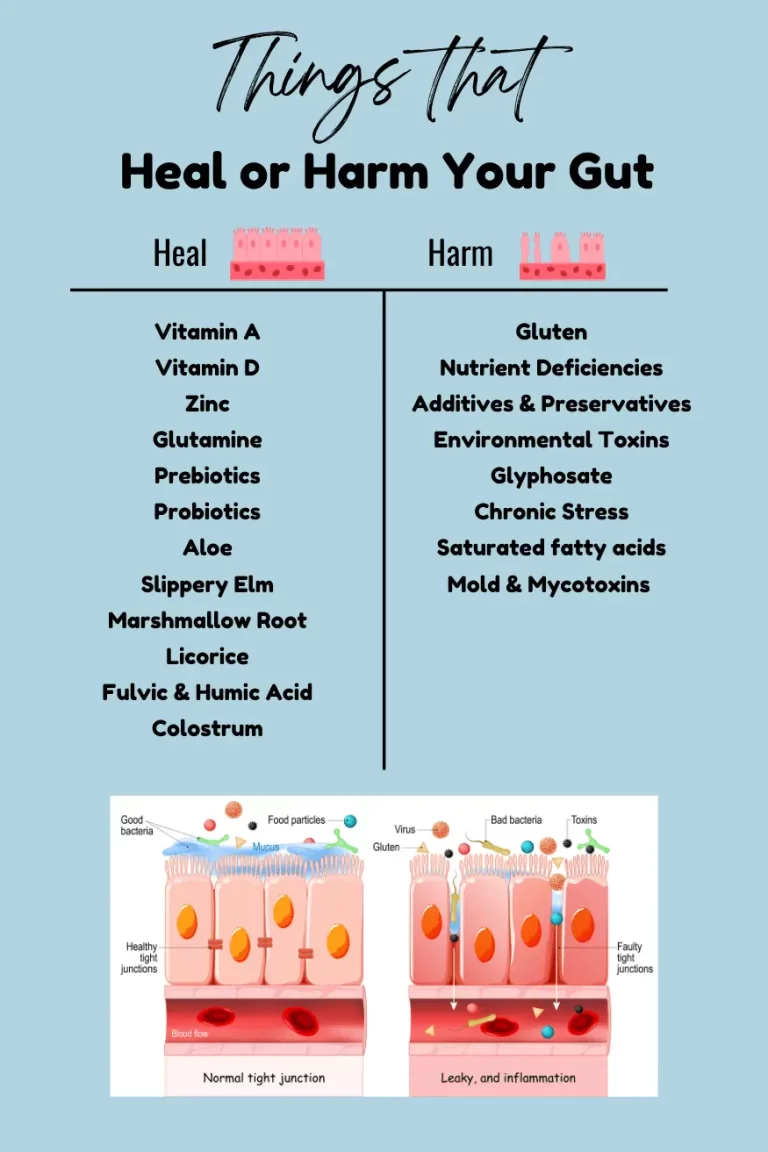
  1. Hypothalamus (located in the brain) – The master regulator that detects stress and signals the pituitary gland
  2. Pituitary Gland– Receives signals from the hypothalamus and tells the adrenal glands to release cortisol.
  3. Adrenal Gland– Responds by producing cortisol and adrenaline.

It controls the release of cortisol, the primary stress hormone, which helps regulate:

  • Energy levels
  • Sleep-wake cycles
  • Inflammation
  • Blood sugar
  • Mood and focus

When functioning properly, the HPA axis keeps everything in balance, cortisol rises in the morning to help us wake up, falls throughout the day, and reaches its lowest point at night for restful sleep.

Adrenaline & Cortisol? Our Internal Stress Response Process

Cortisol is known as the “stress hormone,” but adrenaline (epinephrine) also plays a role in how the body responds to stress. Cortisol works slowly and lasts longer, but adrenaline kicks in right away when the body senses danger.

This is how our body responds to a stressor:

↪️  The hypothalamus detects a stressor (physical, emotional, immune-related) and releases corticotropin-releasing hormone (CRH).

↪️   CRH signals the pituitary gland to release adrenocorticotropic hormone (ACTH).

↪️ ACTH goes to the adrenal glands.  It stimulates the release of adrenaline (epinephrine) for a quick response.

↪️  In response, heart rate increases and blood pressure rises to increase oxygen delivery.  Blood sugar spikes to provide quick energy.  The brain enters a hyper-focus mode to prioritize survival.  If the stress continues, the adrenal glands release cortisol which provides longer-term support by:

  • Keeping blood sugar elevated and suppressing non-essential functions (like digestion, reproduction and immune response) to prioritize survival.
  • Regulating inflammation, which can become problematic when cortisol is either too high or too low.

Once the stressor is gone, the HPA axis “turns off”, allowing cortisol levels to return to normal and shift back into rest-and-digest mode.

But in PANS/PANDAS, chronic infections, immune dysfunction, and neuroinflammation can throw the HPA axis into dysregulation, leading to:

  1. Hyperactive HPA Axis (Stuck in “Fight or Flight”)
  2. Burned-Out HPA Axis (“Adrenal Fatigue”)
The word “Cortisol” spelled out in rustic wooden block letters on a neutral background, symbolizing the stress hormone's role in HPA axis function.

Hyperactive HPA Axis | Stuck in Fight or Flight

When the HPA axis is constantly being triggered, cortisol remains elevated, which keeps the body on high alert indefinitely. When the body senses an ongoing threat like a chronic infection, toxins, or emotional stress, cortisol stays elevated and the body never receives the all clear. Add in excess adrenaline and you get sudden mood swings, sensory issues and aggression.

Symptoms of High Cortisol & High Adrenaline:

  • Chronic anxiety, panic attacks, OCD  – Excess cortisol overstimulates the amygdala, the brain’s fear center, leading to heightened anxiety and obsessive-compulsive behaviors.
  • Sleep disturbances – Many experience middle-of-the-night wake-ups (often around 3 AM) due to cortisol spikes interfering with melatonin production.
  • Increased heart rate and high blood pressure – Cortisol keeps the sympathetic nervous system (“fight-or-flight”) activated, leading to heart palpitations, dizziness, and blood pressure fluctuations.
  • Suppressed immunity – High cortisol lowers immune defenses, making individuals more susceptible to infections, viruses, and chronic inflammation. (Source)
  • Aggressive outbursts & rage –Adrenaline surges can trigger sudden, intense emotional reactions that seem disproportionate to the situation.
  • Sugar cravings and energy crashes – High cortisol and adrenaline spike blood sugar, leading to energy crashes and metabolic instability that worsen mood and focus.
  • Digestive issues  – When the body prioritizes survival, it diverts energy away from digestion, causing bloating, constipation, and gut dysbiosis.

What Causes High Cortisol?

  • Chronic infections (Lyme, mold toxicity, viral reactivations, PANS/PANDAS)
  • Psychological and emotional stress (trauma, anxiety, PTSD, caregiving stress)
  • Blood sugar instability (high-carb diets, skipping meals, reactive hypoglycemia)
  • Environmental toxins (pesticides, heavy metals, plastics, endocrine disruptors)

Hypoactive Burned Out HPA Axis | Adrenal Fatigue

After prolonged periods of chronic stress or illness, the adrenal glands become exhausted, resulting in the body not putting out enough cortisol. The body, no longer able to sustain high cortisol production, enters a state of HPA axis burnout, leading to extreme fatigue, brain fog, and an increased risk of autoimmune flares.  In this state, the body may relay more on adrenaline surges, resulting in bursts of wired energy followed by crashes.

Symptoms of Low Cortisol:

  • Chronic fatigue and low energy –Exhausted upon waking, even after a full night’s sleep, and afternoon energy crashes.
  • Brain fog, poor focus, memory issues – Low cortisol affects cognitive function, making it harder to concentrate, recall information, or stay mentally sharp. (Source)
  • Low blood pressure and dizziness – Without enough cortisol, the body struggles to regulate blood pressure, leading to lightheadedness when standing.
  • Mood instability (depression, irritability) – Cortisol helps regulate neurotransmitters like serotonin and dopamine. Low levels contribute to depression, irritability, and low motivation.
  • Increased inflammation, pain, and autoimmune flares – Cortisol is naturally anti-inflammatory. When it’s too low, chronic inflammation worsens, triggering joint pain, muscle aches, and immune system overactivity.

What causes Low Cortisol?

  • Prolonged chronic stress (physical, emotional, or immune-related)
  • Chronic infections or toxin exposure (Lyme, mold, heavy metals, viral reactivations)
  • Overuse of stimulants (caffeine, sugar, excessive exercise pushing the adrenals further into depletion)
  • Blood sugar crashes & hypoglycemia (when blood sugar drops, the adrenals must compensate with cortisol release, but in burnout, they can’t keep up—leading to worsening fatigue and poor metabolic resilience.

Blood Sugar & The HPA Axis | Keeping Kids on an Even Keel

The HPA axis and blood sugar regulation are deeply interconnected with blood sugar regulation, working closely with the pancreas and liver to maintain stability. When the body perceives stress, whether from emotional distress, infections, toxins, or unstable blood sugar, the HPA axis signals the release of cortisol. When the HPA axis triggers cortisol release, the liver dumps stored glucose into the bloodstream to provide energy for a fight-or-flight response.

In a healthy system, insulin brings blood sugar back into balance by moving glucose into cells. But when stress is chronic, cortisol stays elevated, leading to constant glucose release, overworked insulin production, and eventual insulin resistance. This pushes kids into a cycle of crashes, irritability, and poor energy regulation.

Balanced blood sugar isn’t just about energy levels, it’s foundational for metabolic flexibility, nervous system stability, and emotional regulation. Many kids with PANS/PANDAS lack this flexibility; their bodies depend heavily on glucose for quick fuel and struggle to adapt when levels drop. This can make skipping a meal or eating a sugary snack a major trigger for behavioral regression.

To prevent these spikes and crashes, a diet focused on whole foods with a low glycemic index, which break down slowly in the body, is key.

Adding protein and healthy fats to meals also helps. These nutrients slow down sugar absorption, providing a steady energy release and keeping kids feeling full and focused longer. Breakfasts like eggs and avocado toast or snacks like nuts and apples can help stabilize blood sugar, reduce mood swings, and support better focus.

Blood Sugar as a Metabolic Trigger

In a child with PANS/PANDAS, even minor blood sugar drops can act as a metabolic “stress signal,” activating the HPA axis and triggering a cortisol surge. This rapid response may lead to adrenaline spikes, mood swings, and increased neuroinflammation, especially in kids who are already dealing with chronic infections or toxin overload.

Over time, repeated episodes of glucose instability wear down the body’s ability to maintain balance. This is where metabolic dysfunction and blood sugar regulation overlap: if the body can’t stabilize its fuel source, the brain and immune system become more reactive, and flares become harder to control.

Symptoms of Blood Sugar Dysregulation

  • Mood swings, irritability, and panic attacks – Blood sugar fluctuations can cause adrenaline spikes, leading to increased anxiety, irritability, and emotional instability.
  • Brain fog, dizziness, and sugar cravings – Low blood sugar deprives the brain of the steady glucose it needs to function properly. This results in poor concentration, dizziness, and a need for quick sugar fixes.
  • Waking up at 3 AM – Nighttime blood sugar crashes trigger cortisol spikes, causing sudden wake-ups in the early morning hours.
  • Energy crashes after meals – A spike in blood sugar, often from consuming refined carbs, is quickly followed by an insulin surge that causes an energy slump and increased hunger.

Balancing Blood Sugar & Cortisol

  • Protein + Healthy Fats at Every Meal – Helps maintain steady blood sugar and prevents sharp spikes and crashes.
  • Avoid Refined Sugars & Processed Carbs – Minimizes insulin surges that lead to energy dips and cravings.
  • Magnesium + B Vitamins – Essential for adrenal function, cortisol regulation, and blood sugar stability.
  • Eat Every 3-4 Hours – Prevents hypoglycemia-induced stress responses and supports consistent metabolic energy.

HPA Axis Dysfunction & Chronic Inflammation

HPA axis dysfunction does more than just disrupt hormones.  It drives chronic inflammation, something these kids need less of, not more.

While cortisol is an anti-inflammatory hormone in short bursts, chronic stress causes it to become either too high (leading to immune suppression) or too low (failing to regulate inflammation properly). This imbalance can fuel widespread inflammation, leading to other downstream effects:

  • Autoimmunity– Chronic HPA axis activation has been linked to autoimmune diseases like Hashimoto’s.  Prolonged stress triggers immune dysregulation, increasing the likelihood of the body attacking its own tissues.
  • Neuroinflammation – The brain is highly sensitive to HPA axis dysfunction. Chronic stress fuels inflammation in the brain, making the blood-brain barrier more permeable and allowing toxins and immune cells to attack brain tissue. This can worsen symptoms like mood swings, cognitive dysfunction, and neuropsychiatric behavior.
  • Gut Disorders – Chronic cortisol elevation can cause gut permeability, allowing harmful particles to leak into the bloodstream, triggering systemic inflammation. This can also disrupt the balance of gut microbiota, leading to dysbiosis.

Environmental Toxins & Hormones

Endocrine-disrupting chemicals (EDCs) are synthetic chemicals and environmental toxins that interfere with the body’s hormonal balance, mimicking or blocking natural hormones, including cortisol, which can contribute to HPA axis dysfunction.

Sources of EDCs & Hormone Disrupting Toxins

  • Plastics (BPA, BPS, & Phthalates) – Found in plastic bottles, food containers, and canned goods.
  • Pesticides & Herbicides (Glyphosate, Atrazine) – Used in conventional farming.
  • PFAS (“Forever Chemicals”) – Found in non-stick cookware, waterproof fabrics.
  • Heavy Metals (Mercury, Lead, Cadmium, Aluminum) – Found in polluted water, industrial waste, and some cosmetics.

EMFs Impact on Melatonin & Cortisol Cycles

In today’s digital world, constant exposure to screens, WiFi, and electromagnetic fields (EMFs) has become an unavoidable part of life. While technology brings convenience, it also introduces invisible stressors that can significantly disrupt hormonal balance, particularly the sleep-wake cycle regulated by melatonin and cortisol.

How EMFs Disrupt Melatonin Production
Melatonin is the body’s primary sleep hormone, responsible for signaling the brain when it’s time to rest. It follows a circadian rhythm, naturally rising in the evening as darkness sets in and peaking around bedtime to promote deep, restorative sleep. However, EMF exposure has been shown to suppress melatonin levels, making it harder to fall and stay asleep. (Study)

Artificial Light & Blue Light Exposure: Screens (phones, tablets, TVs) emit blue light, which tricks the brain into thinking it’s still daytime. This suppresses melatonin production, delaying sleep onset and reducing overall sleep quality.

Cell Phones & WiFi Radiation: Studies suggest that radiofrequency (RF) radiation from wireless devices can reduce the pineal gland’s ability to produce melatonin, leading to lighter, disrupted sleep cycles and an increased risk of insomnia. (Study)

How EMFs Keep the HPA Axis in a State of Stress
The HPA axis is highly sensitive to environmental stressors, including EMF exposure. The body perceives EMFs as a low-level stress signal, causing the adrenal glands to release cortisol.

Cortisol Dysregulation: Normally, cortisol peaks in the morning to help us wake up and gradually decreases throughout the day. However, prolonged EMF exposure has been linked to nighttime cortisol spikes, making it harder for the body to transition into a relaxed, parasympathetic state needed for sleep.

Increased Inflammation & Oxidative Stress: EMFs have been shown to trigger cellular stress responses, leading to inflammation, mitochondrial dysfunction, and oxidative stress, all of which further disrupt hormone balance and increase overall biological stress.

Tips to Reduce EMF Exposure & Improve Hormonal Balance

  1. Turn Off WiFi at Night: Cutting down on wireless signals while sleeping allows the nervous system to reset and helps lower cortisol levels overnight.
  2. Use Blue Light Filters or Night Mode: Devices now offer settings that reduce blue light exposure, minimizing melatonin suppression in the evening.
  3. Keep Phones & Devices Out of the Bedroom: Charging a phone on the nightstand or sleeping next to WiFi-connected devices exposes the brain to EMFs all night, interfering with deep sleep cycles.
  4. Opt for Wired Internet Instead of WiFi (When Possible): Using ethernet cables instead of wireless internet reduces RF radiation exposure in the home.
  5. Grounding & Natural Light Exposure: Spending time outdoors in natural sunlight during the day helps reset the body’s circadian rhythm, making it easier to produce melatonin at night.

By reducing EMF exposure, especially in the evening, we allow the body’s natural cortisol and melatonin cycles to function properly, leading to better sleep, improved stress resilience, and more balanced hormone regulation.

How to Heal the HPA Axis & Restore Balance

Reduce Stress Exposure

  • Limit Screen time & EMF exposure (WiFi & bluelight disrupt melatonin & cortisol)
  • Reduce environmental toxins (EDCs, switch to glass containers, use air purifiers and non-toxic personal care products)
  • Establish healthy boundaries (emotional & social stress directly impact HPA function)

Support the Nervous System

  • Morning Sunlight Exposure – Resets the circadian rhythm & cortisol cycle
  • Deep Breathing & Vagus Nerve Activation – Stimulates the parasympathetic nervous system
  • Gentle Movement (Yoga, Walking, Rebounding) – Lowers cortisol without overtaxing the system

Balance Blood Sugar & Nutrient Deficiencies

  • Eat Balanced Meals (Protein + Fats + Fiber)
  • Magnesium, Zinc, & B-Vitamins – Support adrenal repair and blood sugar metabolism
  • Electrolytes – Help regulate low blood pressure & adrenal fatigue

Adaptogenic Herbs & Supplements

  • Ashwagandha & Rhodiola – Help modulate cortisol
  • Phosphatidylserine – Lowers high cortisol at night
  • Licorice Root – Helps increase low cortisol (use with caution)

Parental Burnout | Your Hormones Matter Too

Managing PANS/PANDAS is an intense and often exhausting journey, not just for the child, but for the entire family. At the very least, caring for a child with PANS/PANDAS is incredibly stressful—at worst, it’s traumatic, and that unrelenting stress takes a toll on your body in ways we often overlook or downplay.  I know I was stuck with 3am nightly wake-ups until I realized this was cortisol and took steps to correct it.

Understanding how hormones, the HPA axis, and blood sugar regulation play into your child’s condition is key to helping them heal. But it’s equally important for you, as a parent, to consider these factors for your own health.  

We cannot pour from an empty cup.

HPA axis dysfunction is a foundational imbalance that impacts every system in the body. Addressing HPA dysfunction can reduce inflammation, stabilize mood, improve immune function, and restore metabolic balance.  All things we ALL need!