Anti-inflammatory

Anti-Inflammatory Herbs

Inflammation is the body’s natural immune response, its way of defending against infection, injury, or harmful exposures. When the body senses a threat, it releases chemical messengers like histamines, cytokines, and prostaglandins, which work with white blood cells to isolate and repair the affected area.

But when inflammation becomes chronic, as it often does in PANS/PANDAS, that same protective process turns harmful. The ongoing release of inflammatory cytokines and histamines, along with activated microglia in the brain, can create widespread dysfunction, particularly in the nervous system.

The First Step in Healing

When a child is in the middle of a PANS/PANDAS flare, reducing the neuroinflammation is the priority.  Once the inflammation comes down, the nervous system can shift out of fight-or-flight, allowing the body to redirect energy back to healing, not just surviving.  Natural anti-inflammatory remedies are the foundational part of our PANDAS flare protocol.

A Quick Note on Conventional Treatments 

We always try to use natural options first, but we use conventional medication too.  During a severe flare, I believe in using every tool in the arsenal! Antibiotics, Ibuprofen, or even a short steroid burst can be critical depending on your child’s presentation. Aside from KPV, this page focuses specifically on herbal and natural anti-inflammatory remedies to reduce PANDAS inflammation, but those aren’t the only ones we rely on. If you’re looking for an overview of conventional medical approaches, check out my post: So You Suspect PANDAS—Now What?

Individual Responses to Herbs & Other Natural Ways to Reduce PANDAS Inflammation

These herbs can be incredibly effective, but as you probably know by now, every child is different. What works beautifully for one may not work at all (or might even backfire) for another. There’s a lot of trial and error. One tip from experience: don’t overuse your go-to “rescue herb” outside of a flare, it may lose its punch when you need it most. Having a clearly defined PANDAS flare protocol helps you respond quickly and confidently, without scrambling to remember what worked last time.

Our PANDAS Flare Protocol

When we’re managing an active flare, I temporarily increase certain vitamins and bring in an anti-inflammatory herbal blend, made of some of the herbs below. There is no one-size-fits-all plan, but here’s a simplified outline of what that looks like in our home:

  • Increase Vitamin C and D 

  • Add Vitamin A, E and Zinc (if not already part of the daily protocol)

  • Introduce anti-inflammatory herbs at higher frequency/doses

My personal go-to rescue remedies include (not all at one time, usually 2 during a flare):

  • Pycnogenol (pine bark)

  • Resolvins

  • Cat’s claw

  • Rosemary

  • Ginger

  • Feverfew + Perilla (Feverfew on its own can cause itching)

During the acute phase, I use higher or more frequent dosing than I do for maintenance. Then, as the flare resolves, I scale back slowly, removing one herb at a time or dropping from three daily doses to two, then one, until we return to baseline.

We also use Ibuprofen when needed.

Maintenance

For ongoing inflammation support and support the system, I rotate:

  • Curcumin

  • Ginger

  • Boswellia 
  • Cat’s claw

These have been well tolerated across my kids and are part of our long-term PANDAS flare protocol. 

Disclaimer: I’m not a doctor and this is not medical advice.  This information is based on my own personal experience and is for educational purposes only and is not intended to diagnose, treat, or replace medical care. Always consult with your healthcare provider before starting any new supplement, protocol, or treatment.  See the full disclaimer at the bottom of the page.

Natural Ways to Reduce PANDAS Inflammation

Table of Contents

There are many herbal combination formulas designed to target inflammation and immune dysregulation.  But early on, it’s best to introduce herbs individually. That way, if there’s a reaction, whether it’s sensitivity, a flare, or a die-off response, you’ll know exactly what caused it. Starting with single herbs allows you to track tolerance, minimize guesswork, and build a personalized protocol. Once tolerance is clear, combination formulas may offer more convenience and synergy.

Aloe

Anti-Inflammatory Properties

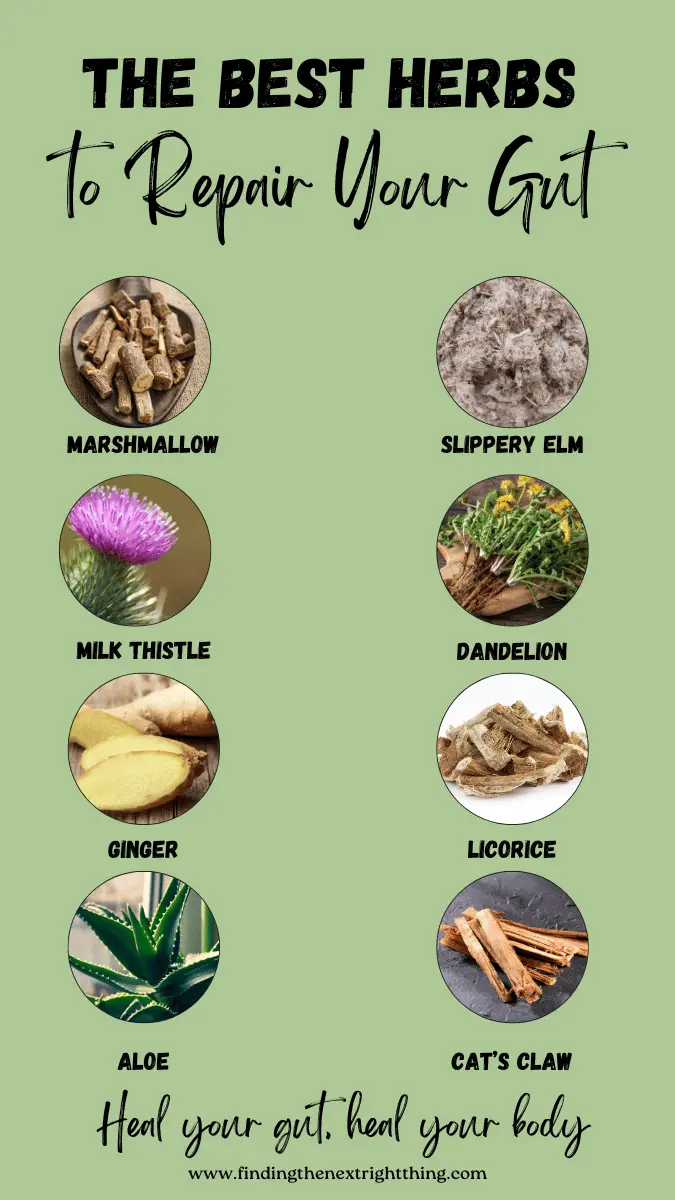
Aloe is a gentle but powerful anti-inflammatory herb, especially for calming inflammation in the gut. It contains polysaccharides like acemannan, which modulate immune activity and reduce pro-inflammatory cytokines. Aloe can help shift the body out of “crisis mode” and into a more regulated, healing state, especially when the gut is part of the picture (which it usually is in autoimmune diseases).  This is one of the herbs Dr. O’Hara mentions in her book, Demystifying PANS/PANDAS:  A Functional Medicine Desktop Reference, and I’ve heard her talk about how helpful it can be on podcasts.

Gut Healing + Antimicrobial + Mold Binding

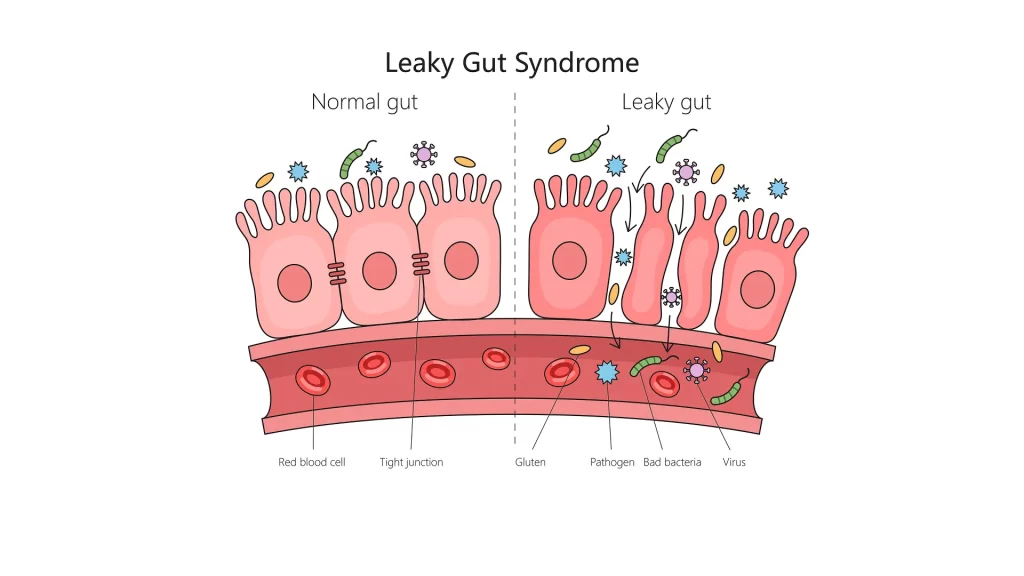
Aloe supports the integrity of the gut lining and helps restore the mucous layer, which is often compromised in children with leaky gut or inflammatory GI conditions. Its natural antimicrobial properties also offer additional protection, helping to rebalance the gut microbiome while reducing irritation.  Aloe is also an adsorbent mold binder like charcoal and clay, but it also gives us its antihistamine properties, blocks H1 receptors, and manages mast cells. (Major multi-tasker)

Constipation Relief

Aloe has mild laxative effects due to compounds in the latex of the outer leaf. These compounds gently stimulate bowel movements, when constipation happens. Start low and adjust as needed for comfort.  Aloe should not be taken daily for more than a couple of months.
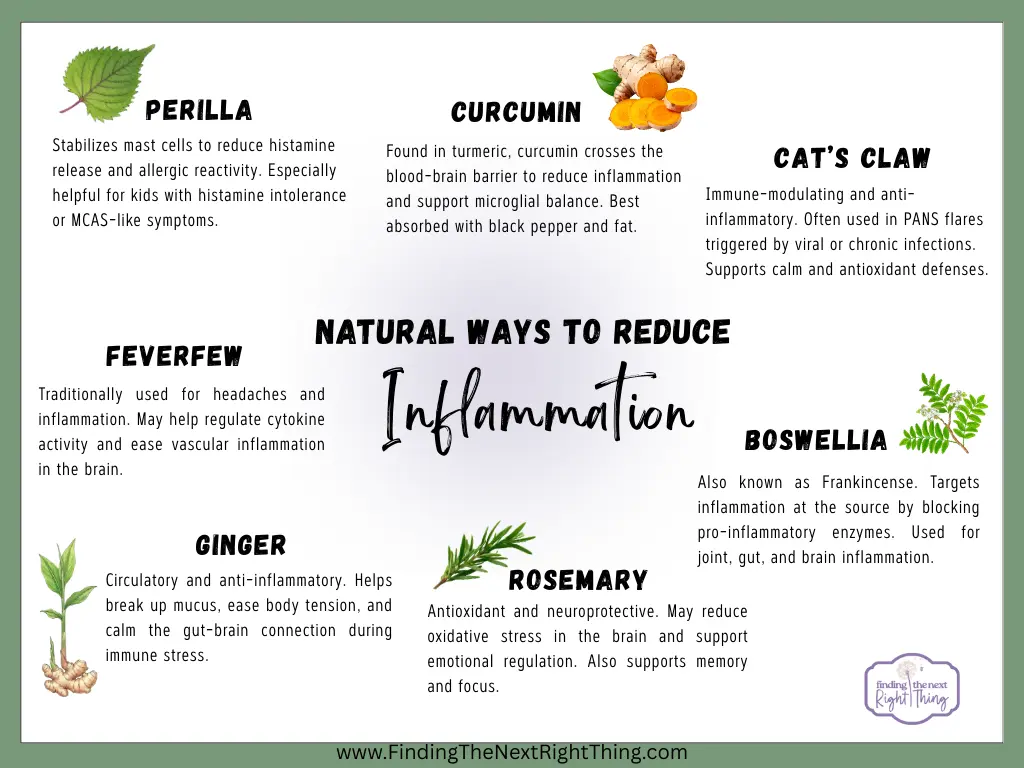
Infographic listing herbs that naturally reduce inflammation, including perilla, curcumin, cat’s claw, ginger, feverfew, boswellia, and rosemary. Includes brief descriptions of each herb’s anti-inflammatory or immune-supportive effects for children with conditions like PANS or PANDAS.

Boswellia

Anti-Inflammatory Properties

Boswellia is best known for its ability to reduce systemic inflammation without irritating the gut, a huge benefit over traditional NSAIDs. Its active compounds, boswellic acids, work by blocking key inflammatory enzymes, including 5-LOX and COX-2.

Boswellia can also cross the blood-brain barrier, and help address neuroinflammation.

Some children with PANS may flare on Boswellia, so start low and monitor closely. It’s best taken on an empty stomach for better absorption.

Cat’s Claw

Anti-Inflammatory Properties

Cat’s Claw is a major multitasker.  It has powerful anti-inflammatory and immune-modulating properties.  Cat’s Claw helps balance immune activity and reduce oxidative stress, calming chronic inflammation from both infections and autoimmune triggers.

It’s also an antioxidant, antiviral, and antimicrobial, which is one reason it’s a popular for chronic infections like Lyme or Epstein-Barr.  It’s one of Dr. Rawls’ favorite herbs for chronic Lyme.

Note: Cat’s Claw must be taken with food for activation and it can take several weeks to reach its modulating and gut healing full effect. Be patient, it’s working in the background.

Curcumin

Anti-Inflammatory Properties

Curcumin, the active component in turmeric, is a broad-spectrum anti-inflammatory that selectively inhibits COX-2 (the inflammation enzyme) without blocking COX-1 (the protective enzyme). That makes it gentler on the gut than NSAIDs.

It helps with inflammation throughout the body, including the brain, joints, gut, and immune system, and is a top recommendation by Dr. Nancy O’Hara for managing inflammatory symptoms in PANS/PANDAS.

Absorption Tips: Curcumin has poor bioavailability on its own, so always take it with black pepper (piperine) or a fat-containing meal.

Feverfew

Anti-Inflammatory Properties

Best known for migraines, Feverfew also helps reduce inflammation by targeting the NF-kB pathway and blocking inflammatory enzymes like COX-2 and iNOS. It can be especially calming to the brain. In her book, A Light in the Dark for PANDAS  & PANS, Dr. Crista highlights feverfew for easing “excess excitatory brain chemistry” like tics or compulsions.

Tip: Feverfew can sometimes cause mild itchiness.  Combining it with Perilla, a natural antihistamine, can balance out that effect.

Ginger

Anti-Inflammatory Properties

Ginger is packed with bioactive compounds like, gingerols and shogaols, that help fight inflammation.  They work by reducing cytokine levels and oxidative stress in the body.  Ginger also soothes digestion, supports nutrient absorption, and helps regulate immune activity.

Bonus: Ginger is also a strong antiviral, making it helpful during flares caused by viruses, colds, or the flu. Fresh ginger offers the most antiviral benefits.

Perilla

Anti-Inflammatory & Antihistamine Properties

Perilla is rich in rosmarinic acid, which suppresses pro-inflammatory cytokines and calms immune overactivation. It also stabilizes mast cells, so it’s a multitasker if also dealing with MCAS, allergies, or histamine intolerance.

It can soothe gut inflammation and reduce allergic reactions, while also supporting neurological balance.

Perilla + Feverfew is one of my favorite combinations for flares.

Pine Bark (Pycnegenol)

Anti-Inflammatory Properties

Pine bark extract, especially Pycnogenol, is rich in proanthocyanidins, powerful compounds that reduce inflammation and oxidative stress. It can calm overactive microglia in the brain, helping to reduce neuroinflammation.

It’s also known for ADHD and attention/focus. This is one I like to give before school for its stimulating effects.

Resolvins

(Pro-Resolving Mediators)

Anti-Inflammatory Properties

Resolvins are a unique class of molecules derived from omega-3 fatty acids (EPA and DHA). But unlike typical anti-inflammatory compounds that simply suppress inflammation, resolvins do something more: they help the body complete the healing process.

In a typical immune response, the body detects a threat (like a virus, toxin, or injury), mounts an inflammatory defense, and then turns that inflammation off when the danger passes. But in conditions like PANS/PANDAS, Lyme, mold illness, and autoimmunity, that “off switch” doesn’t always get triggered properly. Resolvins help flip that switch. They work by:

  • Clearing out inflammatory cells (like neutrophils and macrophages) once they’ve done their job

  • Signaling immune cells to stop producing pro-inflammatory cytokines like IL-6 and TNF-alpha

  • Promoting tissue repair and regeneration, especially in the brain, gut, and joints

  • Preventing new inflammation from starting unnecessarily

Resolvins where the first anti-inflammatory that we tried that really moved the needle for my oldest.  We use Dr. Crista’s formulation.

Rosemary

Anti-Inflammatory Properties

Rosemary is rich in rosmarinic acid and carnosic acid, which reduce pro-inflammatory cytokines and activate the Nrf2 pathway, a key pathway for internal antioxidant defense. It’s also one of the few herbs that crosses the blood-brain barrier, helping reduce neuroinflammation and supporting cognition.

Other Medicinal Uses

  • Catalyst: Rosemary enhances the bioavailability of other herbs, especially for brain and neurological support.

  • Appetite Support: Taken before meals, it can stimulate bile flow and can help increase appetite, especially in picky eaters.

KPV (Peptide)

KPV is a peptide from alpha-MSH (a peptide hormone in the brain). It’s been studied for its strong anti-inflammatory effects without suppressing the immune system outright. It may also help downregulate inflammatory cytokines like IL-6 and TNF-alpha, and may support resolution of chronic neuroimmune inflammation.   

We’re currently using KPV in our protocol to help manage chronic baseline inflammation. We’re slowly seeing promising changes but I haven’t personally trialed it during an acute PANS/PANDAS flare. That situation just hasn’t come up yet, but it’s one I’ll update on if and when it does.

Important:  Peptides like KPV are often micro-dosed, especially in sensitive kids. Some protocols begin as low as 1/8 of a capsule. 

Developing your own PANDAS Flare Protocol

You don’t need to use every herb listed here—and definitely not all at once. Start with one or two that fit your child’s current needs and watch closely for changes. Keep in mind that what works in one flare may not work the same way next time. Flexibility is part of the process.

Also remember: even the best herbs won’t work well if foundational supports are missing. Make sure your child is getting consistent sleep, staying hydrated, and that you’ve removed as many environmental stressors as possible. These basics make everything else more effective and are some of the simplest natural ways to reduce inflammation day to day.

AND, most importantly, remember although we may want to rely on natural ways to reduce the inflammation, conventional methods like ibuprofen, steroids, IVIG or PLEX are valuable tools to get out of crisis mode.

Herbs for inflammation are just one piece of a solid PANDAS flare protocol. To build a more comprehensive plan, head back to the Main Herbal Guide where you’ll find targeted options for:

Addressing inflammation without supporting these other systems can limit progress. A well-rounded protocol gives your child the best chance to recover more quickly and fully.

Frequently Asked Questions | PANDAS Flare Protocol & Inflammation Support

A PANDAS flare protocol is your go-to action plan for reducing inflammation and calming symptoms during an acute episode. It typically includes a combination of natural anti-inflammatories, supportive nutrients (like Vitamins A, C, D, E, and Zinc), and conventional tools if needed. Our family protocol often involves rotating 1–2 key herbs (like Pycnogenol or Cat’s Claw), temporarily increasing dosing frequency, and using ibuprofen if symptoms are intense. Every child’s protocol will look a little different, but having a plan reduces panic when a flare hits.

There’s no single “best” one, every child responds differently. Some families swear by Curcumin or Boswellia. Others find Resolvins or Pine Bark (Pycnogenol) more effective. My go-to’s are Pycnogenol, Resolvins, Cat’s Claw during a flare, with Curcumin and Boswellia in our long-term rotation.  Perilla + Feverfew is another favorite combo for brain-based symptoms. Start with one herb, watch closely, and adjust based on how your child responds.

During a sudden flare, you may need to act fast. 

  • Ibuprofen – For reducing neuroinflammation quickly. Use proper pediatric dosing and track duration.

  • Benadryl (Diphenhydramine) – Helps calm histamine-driven flares or if there’s suspected allergy involvement.

  • Natural Remedies – My top fast-acting choices: Pycnogenol, Resolvins, and Perilla + Feverfew (see full guide for details).

  • Supportive Add-ons – Ensure hydration, sleep, use a vibration plate and add Vitamin A, D and Zinc during acute phases.

These steps don’t replace medical treatment. If you’re not sure what’s driving the flare or symptoms are escalating, check out my guide: So You Suspect PANDAS—Now What?

Stay in the know

No Spam, no nonsense— just the things I wish I’d known earlier,

sent with a big virtual hug.

Hi, I’m Brooke.  I’m an herbalist and mom to three kids with PANS/PANDAS. Everything on this site comes from years of research, lived experience, and talking with other families walking a similar road.

If you’re just getting started, begin with What is PANDAS? to get familiar with symptoms and warning signs. Then head to So You Suspect PANDAS, Now What? for practical steps you can take right away.

You’ll also find targeted guides on things like:

You don’t have to learn everything at once. Just keep going. Keep asking questions.  And, keep your hope! You’ll get there.

Brooke

Infections

infections

Most people think an acute infection is the primary cause of PANS/PANDAS flares, but infections are rarely acting alone.

While a strep infection or virus may seem like the trigger, they’re often the tipping point in an already stressed system. Underneath the flare, many children are dealing with deeper, chronic infections, like Lyme, Bartonella, Mycoplasma, or Epstein-Barr Virus (EBV), that quietly inflame the immune system over time.

When the immune system is already dysregulated, even a mild infection can push it into overdrive, leading to flares of OCD, rage, tics, anxiety, or regression.

Herbs can play a powerful role in treating both acute and chronic infections, not just by targeting pathogens, but by supporting immune balance, modulating inflammation, and building long-term resilience.

You can think of these herbs for infections in three categories:

  1. Acute flares– For sudden symptom spikes triggered by infections
  2. Prophylaxis– To strengthen the immune system and reduce frequency/severity of future infections
  3. Latent Infections– To address underlying, persistent pathogens that may be driving chronic symptoms

Click below to explore the herbs we’ve found most helpful in each category.

Macroshot of Japanese Knotweed bud

Many of the plants labeled as “invasive” by ecologists are, in fact, some of the most pharmacologically potent. Take Japanese knotweed (Polygonum cuspidatum), for example, it grows aggressively and is nearly impossible to eradicate once established, you will usually see it along the side of the road, especially near water.  But, its stalks and roots are a rich source of resveratrol, a compound with antioxidant, anti-inflammatory, and neuroprotective properties.  It also contains emodin, a powerful anthraquinone with broad-spectrum antiviral and antibacterial activity. Emodin has been shown to inhibit viruses like herpes simplex, influenza, and coronaviruses, while also disrupting bacterial biofilms.  Stephen Buhner (brilliant herbalist) often highlighted it as a cornerstone herb in Lyme protocols due to its ability to cross the blood-brain barrier and modulate cytokine activity.

Kudzu (Pueraria lobata) another fast-spreading invasive vine that blankets entire landscapes in the South, is often seen as a weed. But, it contains isoflavones like puerarin, daidzein and genistein that reduce inflammation, improve microcirculation, protect against excitotoxicity in the brain and has strong antimicrobial effects.

In an era of rising antibiotic resistance and super bugs, these “weeds” may be our greatest untapped farmacy.

Kudzu vine

Want the Good Stuff?

No Spam, no nonsense— just the things I wish I’d known earlier,

sent with a big virtual hug.

Mold

Healing from mold

Many families dealing with PANS/PANDAS find that healing from mold exposure is necessary to fully heal.  

Mold, PANDAS/PANS and chronic inflammation can create a perfect storm of neuroinflammation, immune confusion, and overwhelmed detoxification pathways.  Healing requires a gentle, persistent approach that respects the body’s need for safety and regulation.

This post focuses on Healing from Mold, but if you want to read more about Mold as a root cause and trigger for PANS, PANDAS and other chronic illnesses, read the Root Causes & Triggers Guide | Mold.

Disclaimer: I’m not a doctor and this is not medical advice. This information is about my own personal experience and is meant for educational purposes only and is not intended to diagnose, treat, or replace medical care. Always consult with your healthcare provider before starting any new supplement, protocol, or treatment.

Table of Contents

Step 1: Reduce Exposure

There’s no healing from mold toxicity if you’re still being exposed. Period.
Before you can detox, you have to stop the incoming load.

This means:

Test your environment (home, school, daycare, etc.) using reliable methods:

  • ERMI (Environmental Relative Moldiness Index):
    A DNA-based dust test developed by the EPA. It measures 36 types of mold and gives a moldiness score based on dangerous vs. harmless species. Best for an overview of historical exposure (what’s been in your air system and settled into dust).

  • HERTSMI-2 (Health Effects Roster of Type-Specific Molds):
    A more focused dust test that looks at 5 of the most dangerous, health-disruptive molds (the ones strongly linked to chronic inflammatory responses, like Aspergillus and Stachybotrys). Ideal if you’re evaluating whether a home is safe to stay in or return to after remediation.

  • EMMA (Environmental Mold and Mycotoxin Assessment):
    A newer, lab-based test that checks both mold DNA and airborne mycotoxins (the chemical poisons mold produces). Great if you suspect active mold and chemical exposure. EMMA can detect mycotoxins even when you can’t visibly see mold.

If budget allows, combining an ERMI or HERTSMI with an EMMA gives the clearest picture of both mold growth and active toxin exposure.

Fix the source of moisture:

  • Roof leaks, plumbing issues, bathroom leaks, basement seepage, and HVAC systems are the biggest culprits.

  • If moisture isn’t fixed, mold will come back, even after remediation.

Remediate properly:

  • Hire experienced mold remediation specialists who understand mold illness, not just “visible mold cleanup.”

  • Avoid companies that only use fogging or paint over mold without proper removal.

  • Proper remediation often includes: Containment, HEPA vacuuming, removal (not just cleaning) of contaminated materials, and addressing hidden sources (like HVAC ductwork or inside wall cavities).

Relocate temporarily or permanently if needed:

  • If remediation isn’t fully successful, or if it’s not possible, you may need to relocate, even short-term, to allow the body to begin recovering away from constant exposure.

Reduce food-based mycotoxins:

  • Some foods carry their own mold toxins (especially peanuts, corn, wheat, aged cheeses, and processed foods).

  • Eating a low-mold diet reduces the total burden on your child’s detox pathways.

Step 2: Nourish the Body | Show your Liver some Love & Load Up on Fats

Why Healthy Fats Matter in Mold Detox

Mold toxins (mycotoxins) are fat-soluble, which means they don’t float freely in the bloodstream, they tuck themselves away into fatty tissues like the brain, liver, nervous system and cell membranes. Getting them out requires a strategic effort, and healthy fats play an important role.

Here’s why: to escort mycotoxins out of the body, your liver packages them into bile, which is then released into the digestive tract for elimination. But your body can’t make good, robust bile without enough healthy dietary fat. In this way, fats aren’t just fuel, they’re functional.

When you include the right fats, you support bile flow, improve toxin binding in the gut, and ease the liver’s workload. Without enough fat, bile production stalls. And when bile stalls, toxins recirculate. For kids with mold and PANDAS/PANS, that toxic loop can amplify neuroinflammation and cause flares.

Both Dr. Jill Crista and Dr. Neil Nathan, leaders in mold-related illness, emphasize the importance of healthy fats during detox. Dr. Crista often repeats, “The solution to pollution is dilution.”  They dilute the toxic burden and slow the release of mycotoxins from tissues, making the process safer and less overwhelming.   Dr. Crista is the premier expert on mold and PANDAS and PANS (She had twins with PANS and mold exposure). Check out her website for helpful resources.

Fats also help bind toxins in the gut, working alongside bile to carry them out through the stool. 

Healthy Fats to Focus on:

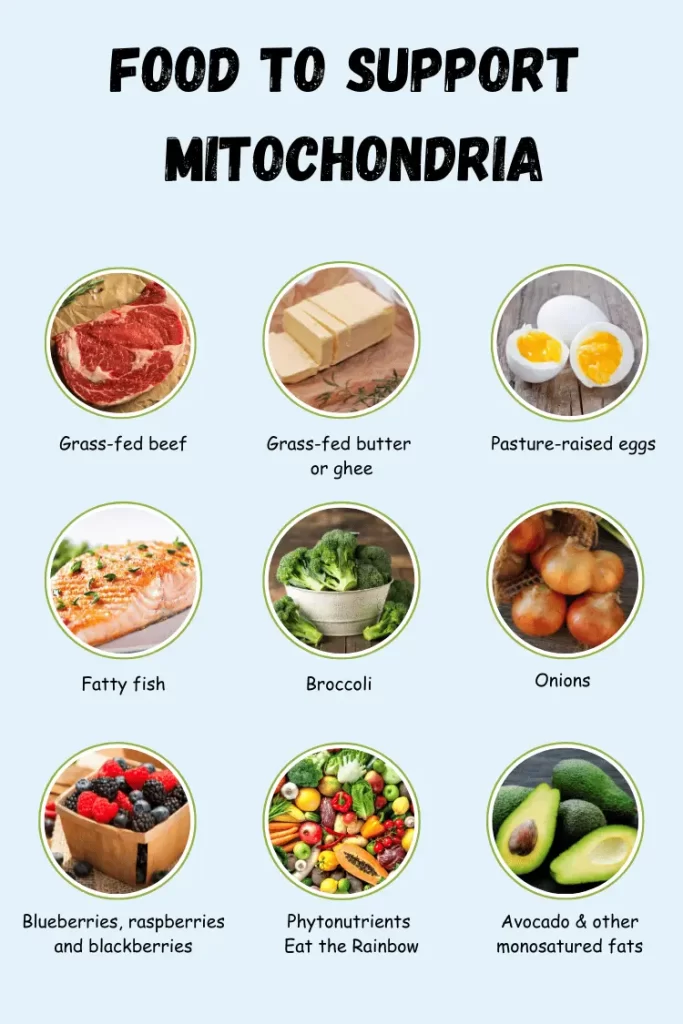
  • Avocados (rich in monounsaturated fats + glutathione precursors)

  • Extra virgin olive oil (supports bile production and anti-inflammatory pathways)

  • Grass-fed butter or ghee (loaded with butyrate to nourish the gut lining)

  • Wild-caught fatty fish like salmon and sardines (high in omega-3s that reduce neuroinflammation)

  • Flaxseed and chia seeds (gentle plant-based sources of healthy fats and fiber)

Why the Liver?

The liver is your body’s main filter, especially when it comes to mold and mycotoxins. It processes and neutralizes these fat-soluble toxins, preparing them for elimination via bile and urine. But if your liver is sluggish, depleted, or overwhelmed, those toxins can stay in circulation or get reabsorbed, causing inflammation, immune dysfunction, and worsening symptoms. For children dealing with mold, PANS, and chronic inflammation, focusing on the liver is even more critical because these issues can slow detoxification dramatically.

Before doing any heavy detoxing, you need to nourish and support the liver so it can keep up with the demands.

Foods for Liver Support

Cruciferous Vegetables: Broccoli, cauliflower and brussels sprouts are rich in sulfur compounds that aid detoxification.

Beets: High in betaine, beets support bile flow and protect liver cells from oxidative stress.

Lemons and Limes: Their vitamin C content helps neutralize free radicals and supports detox enzymes.

Garlic and Onions: Packed with sulfur compounds, they boost the production of glutathione, a critical antioxidant for liver health.

Liver Supportive Practices

Castor Oil Packs: Apply a castor oil pack over the liver area (right upper abdomen) for 20–30 minutes a few times a week. Castor oil packs can help reduce inflammation, stimulate lymphatic drainage, and support detox pathways.

Infrared Sauna: Encourages deep sweating to excrete  fat-soluble toxins, like mycotoxins. Also supports mitochondrial health and circulation.

Stay Hydrated: Drinking plenty of water helps flush out toxins and supports bile flow.

Herbs & Nutraceuticals for Liver Health

  • Milk Thistle – antioxidant, hepatoprotective, regenerates liver tissue

  • Dandelion Root – stimulates bile and gently detoxes the liver

  • Schisandra – supports both Phase I & II liver detox pathways

  • NAC + Glutathione – crucial for processing mycotoxins and oxidative stress

  • Vitamin B Complex – needed for methylation and Phase II detox

Once the liver is supported and the body is better nourished, we need to make sure all the other detox pathways, the bowels, lymph, kidneys, lungs, and skin, are ready to handle the extra burden.

If you mobilize toxins without making sure the exits are clear, everything can back up, causing even more inflammation.

Step 3: Regularity

If your child isn’t having at least 1–2 healthy bowel movements a day, detox will backfire.

Mold toxins and other waste products are processed through bile and dumped into the gut. If the bowels aren’t moving regularly, those toxins get reabsorbed, triggering more inflammation, brain fog, and worsening symptoms.
Before adding in detox protocols, you have to clear the exits.

Here’s how to support motility gently:

Hydration + Electrolytes:
Aim for at least half your child’s body weight (in pounds) in ounces of clean, filtered water daily. Add trace minerals, sea salt, or a clean electrolyte powder (like LMNT, BEAM, Seeking Health) to improve absorption.

Movement + Body Position:
Physical movement stimulates digestion. Even gentle activities like walking, bouncing on a trampoline, stretching, or yoga help. Using a footstool under the feet (like a Squatty Potty) can also help.

Gentle Gut-Supportive Herbs:

  • Ginger tea or capsules: Naturally stimulates digestion and motility.

  • Peppermint oil (enteric-coated): Eases spasms and promotes smoother transit.

  • Iberogast: A blend of herbs clinically shown to support gut motility, bloating, and discomfort.

Fiber (But Go Slow):
Some children benefit from soluble fiber (like chia, flax, oats) which helps bulk and soften stool.
If dysbiosis or SIBO is suspected, be cautious, fiber can sometimes worsen symptoms. Always introduce slowly and watch carefully.

Natural Short-Term Helpers (If Needed):

  • Ground flaxseed or psyllium husk can provide a gentle “bulk” boost.

  • Aloe vera inner leaf juice soothes the gut lining while encouraging movement.
    Save stronger herbal laxatives (like senna or cascara) for true emergencies—short term only.

If you’re not pooping daily, you’re not detoxing safely.

Open the exits first—or everything else downstream (binders, antimicrobials, detox agents) can actually make things worse.

Step 4: Open Detox Pathways & Add Supports

Mold and mycotoxins can overwhelm the body’s natural detox processes, so ensuring that pathways like sweat, urine, bile, and lymphatic drainage are working optimally is required to properly detox. This careful opening of detox pathways is even more important for children with mold and PANDAS or PANS, and multiple layers of immune dysregulation.

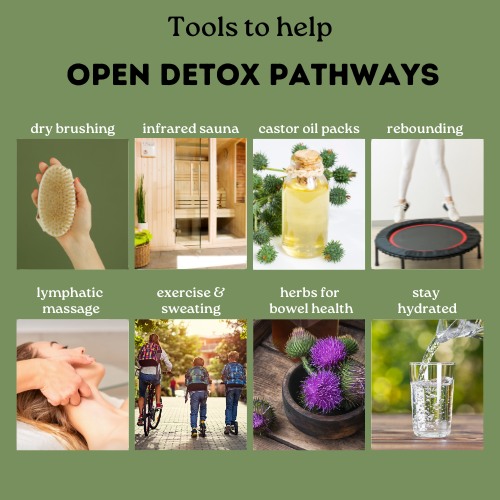
Chart displaying ways to support opening the detox pathways naturally

Detox Pathways and How to Support Them

Before you “pull” toxins out with binders or antifungals, you need to open the exits: liver, lymph, kidneys, skin, lungs, and bowels.

The Liver & Bile Flow

The liver takes fat-soluble toxins (like mold and mycotoxins) and uses a complex two-phase process to make them water-soluble so they can be excreted. But these toxins leave the liver through bile. If bile is sluggish, thick, or not being released adequately, those processed toxins get reabsorbed into your system, a phenomenon called enterohepatic recirculation.

To keep the liver and bile flowing:

  • Castor oil packs are used to stimulate both lymphatic drainage and bile flow. Apply a flannel cloth soaked in castor oil to the liver area (upper right abdomen), cover with a wrap or plastic, and apply gentle heat for 30–60 minutes. You can also wear a castor oil wrap overnights.

  • Herbal bitters, such as dandelion root, gentian, and artichoke, stimulate digestive enzymes and encourage bile flow. A few drops before meals can prime the system for better toxin processing.

  • Choline and inositol, two key nutrients for liver health, help maintain healthy bile viscosity and prevent fat accumulation in the liver. 

  • Healthy fats are critical here. Fats signal the gallbladder to release bile. Without enough fat, bile can sit stagnant. Embrace olive oil, avocado, pasture-raised butter, coconut oil, and omega-3s—your liver will thank you.

Lymphatic System

Often overlooked, the lymphatic system is one of the most important players in detoxification. It’s responsible for clearing immune debris, environmental toxins, and waste products from your tissue and delivering them to the liver and kidneys for removal. Unlike the cardiovascular system and heart, the lymph doesn’t have a central pump. It relies on movement, both muscular and manual, to flow.

A stagnant lymphatic system is like a clogged gutter. Waste builds up, inflammation increases, and your immune system becomes overwhelmed. To support flow:

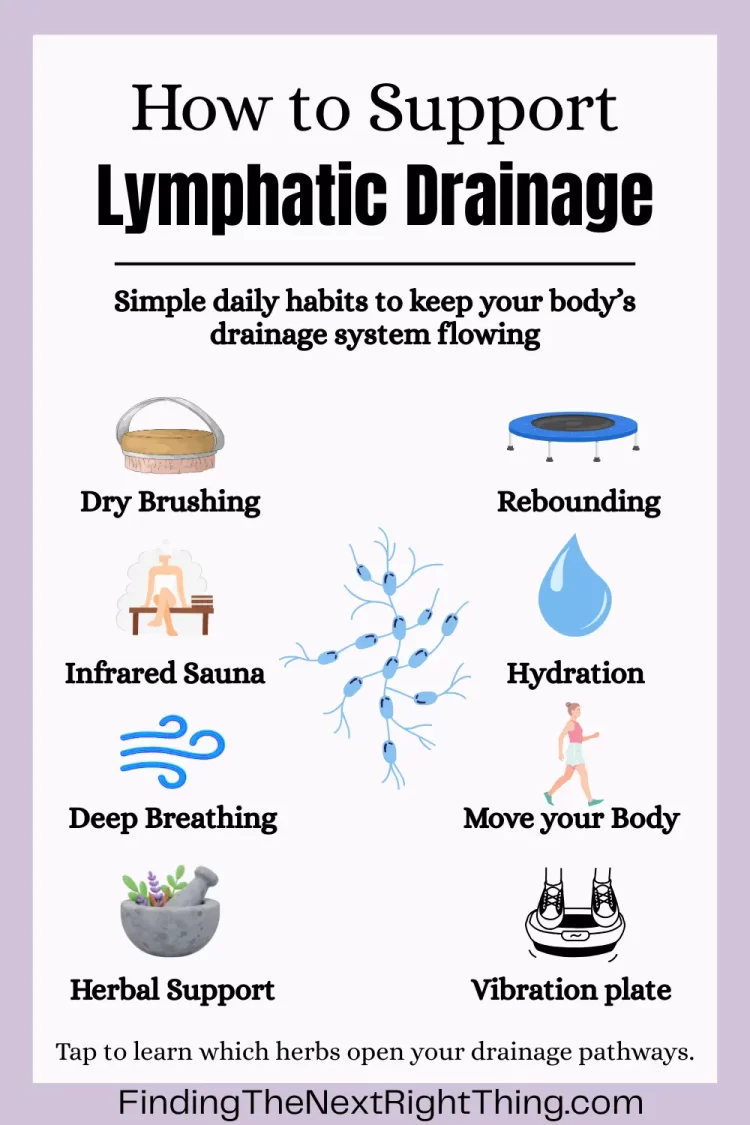
  • Dry brushing stimulates lymphatic movement and exfoliates the skin. Use a natural-bristle brush and start at the extremities, brushing toward the heart in short, firm strokes before showering.

  • Rebounding, or bouncing gently on a mini trampoline for just 5–10 minutes a day, uses gravity and motion to open lymphatic valves and move fluid through the system.

  • Lymphatic activation techniques, like Dr. Perry’s “Big Six” routine, focus on manually stimulating the six major clusters of lymph nodes (neck, armpits, diaphragm, abdomen, groin, and behind the knees) to support full-body flow.

  • Herbs like cleavers, echinacea, and burdock support lymphatic drainage gently from within and often combine well with liver or kidney support formulas.

To learn more about the lymphatic system, read my post The Lymphatic System:  Your Child’s Hidden Detox System.

The Kidneys

The kidneys are your built-in filtration system. Every minute, they’re working to remove water-soluble waste products and environmental toxins from your blood via urine. But if your water intake is low or you’re consuming water that contains additional contaminants, like fluoride, heavy metals, and pharmaceutical residues, they can quickly become overburdened.

  • Clean Water. Our water has become contaminated with heavy metals, pesticides and pharmaceuticals, adding to our body’s total toxic burden. Investing in a good water filtration system, like reverse osmosis (RO), can significantly reduce exposure to toxins and give your kidneys a break.  Many families, including ours, use the AquaTru Countertop Water Purifier.
  • Hydration. Aim for half your body’s weight in ounces of filtered water daily. Add a pinch of mineral-rich sea salt and electrolytes to help with absorption and cellular hydration. 
  • Kidney-supportive herbs like nettle leaf and dandelion root act as natural diuretics, gently increasing urine flow to help flush toxins. These herbs also replenish minerals, support urinary tract health, and reduce inflammation in the filtering system itself.

The Skin

Your skin is your largest organ, and a powerful route for detoxification. Sweating helps eliminate heavy metals, pesticides, mold toxins, and other fat-soluble waste products stored in tissue. If your liver or kidneys are overloaded, the skin is sometimes the first place it shows up, as rashes, breakouts, or sensitivities.

  • Infrared Saunas are ideal for mold detox. Unlike traditional saunas, infrared penetrates deeper into fat cells where toxins like mycotoxins are stored. If you don’t have access to a spa, there are affordable at-home sauna blankets or tents. 
  • Epsom salt baths (1–2 cups in warm water) supply magnesium and sulfate, which support Phase II liver detox and calm the nervous system. Soak 20–30 minutes and hydrate well afterward.

  • Exercise, even gentle movement, increases circulation and stimulates sweat. This doesn’t need to be intense, daily walks, stretching, yoga, or rebounding all count.

  • Avoid harmful ingredients in skincare. Anything you put on your skin gets absorbed, so choose personal care products without phthalates, parabens, synthetic fragrances, or petroleum-based ingredients. Think of your skin as a two-way street: what goes on can go in.

The Lungs

Your lungs are your primary route for eliminating volatile toxins (think chemicals, mold VOCs, environmental pollutants). They also regulate oxygen exchange, which your cells need to detoxify properly. 

We need CLEAN AIR. Most people spend a significant portion of their time indoors, where air quality can be up to five times worse than outdoor air due to the accumulation of pollutants. The air in our homes and businesses commonly contains air contaminants like dust, mold spores, pet dander, volatile organic compounds (VOCs) from cleaning products or furniture, and even toxins like carbon monoxide and radon. In homes with poor air quality, mold spores, mycotoxins, and VOCs can turn the lungs into an inflow, rather than an outflow.

  • Air Purifiers: Investing in a high-quality air purifier is one of the best ways to ensure you are breathing cleaner air. Air purifiers, like the Intellipure , Jaspr models, or iAdaptAir from AirOasis, use advanced filtration systems to capture fine particles, allergens, mycotoxins and even VOCs.
  • Ventilation: Nothing beats fresh air. Open your windows for at least 30 minutes a day to exchange stale indoor air for fresh outdoor air and reduce pollutants. Especially after things like cooking or cleaning, which can release harmful particles and chemicals into the air.  I leave our windows open as much as possible year round, even if only for a short time in the coldest months.
  • Steam inhalation is a wonderful lung and sinus detox tool. Add a few drops of essential oils (rosemary, eucalyptus, clove, frankincense) to hot water, tent a towel over your head, and inhale for 5–10 minutes.

  • Houseplants like spider plants, snake plants, aloe, and pathos are natural air purifiers. They absorb CO₂, VOCs, and airborne toxins while boosting oxygen levels indoors.

  • Control humidity. Mold loves moisture, so keep indoor humidity between 30–50% and consider using a dehumidifier, especially in basements or bathrooms. Check crawlspaces and HVAC systems for hidden mold sources.

Want a more detailed look at each detox organ and how to support it?
From sluggish bile flow to stagnant lymph, each pathway plays a unique role in helping your child detox safely. If you’re using binders, antifungals, or detox agents, this step can make or break your progress.

👉 Explore the full Detox Pathways Guide for in-depth herbal and functional medicine strategies tailored to PANDAS and PANS kids.

Step 5: Binders

Binders escort mycotoxins out of the body, preventing reabsorption and allowing safe elimination. Rotating binders can help target different types of toxins effectively.

Here’s a breakdown of my favorite binders and their benefits:

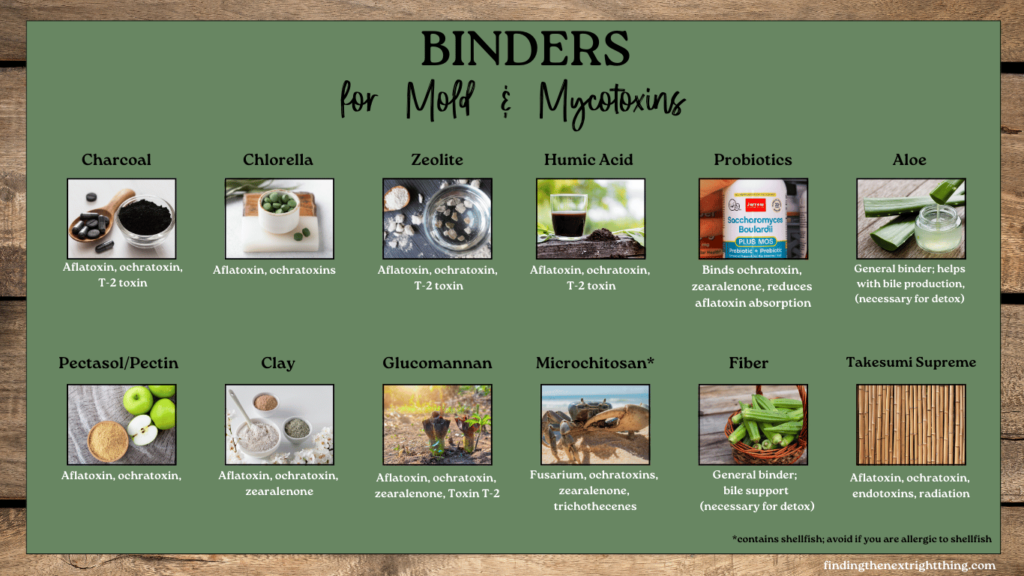
  • Chlorella: Chlorella is a nutrient-dense algae, which binds to heavy metals, pesticides, and mycotoxins, transporting them out of the body. Chlorella also promotes liver function and is densely packed with vitamins and minerals. But, not all chlorella is created equal, make sure you find a high quality chlorella. In our home, we’ve used Energybits  and BioPure becuase they prioritize purity and testing. Always ensure you’re sourcing from companies that provide third-party lab verification.
  • Activated Charcoal: Activated charcoal is a highly porous substance that acts as an adsorbent for toxins, chemicals, and gases in its microscopic pores. But, activated charcoal works indiscriminately—it doesn’t just bind harmful toxins; it can also latch onto beneficial nutrients. It’s often advised to take binder take charcoal 2 hours away from pharmaceuticals, food, vitamins, or mineral supplements. I personally rotate charcoal with other binders to avoid any potential leaching of nutrients.
  • Saccharomyces boulardii: This beneficial probiotic yeast supports gut health while binding and removing fungal byproducts, including mycotoxins, and supports healthy flora at the same time.  Also, a gentle binder to get started with and repopulate healthy gut flora.
  • Zeolite:  A volcanic mineral with a cage-like structure that captures heavy metals, radioactive particles, mycotoxins and other toxins.  Unlike other binders, it works systemically, not just in the gut, making it useful for deep detoxification. It also supports pH balance and reduces oxidative stress.  
  • Humic & Fulvic Acid: Humic and fulvic acids are sourced from ancient decomposed plant material.  They help chelate heavy metals, reduce inflammation, and boost cellular energy, keeping your system clean and balanced. They are also a rich source of trace minerals that nourish the body, addressing deficiencies in chronic illnesses. In our house we use BEAM and Ion Gut Support.
  • Fiber: Incorporating a source rich in insoluble fiber will help bind mycotoxins. Dr. Neil Nathan recommends OptiFiber Lean in his book Toxic. It contains glucomannan, a plant based fiber derived from konjac root. Dr. Crista recommends Flax seed, Chia seed, Rice bran and Oat bran. 
  • Pectasol: A modified citrus pectin that targets heavy metals and mycotoxins while promoting immune function. 
  • BentoniteClay: Absorbs toxins and heavy metals in the digestive tract, providing gentle yet effective detox support.
  • NAC (N-acetylcysteine) Some research suggests that NAC has a unique ability to bind directly to gliotoxin, a mycotoxin produced by certain mold species, including Aspergillus. Gliotoxin is particularly harmful as it suppresses the immune system and damages tissues through oxidative stress.
  • Takesumi (Bamboo Charcoal): A unique form of activated charcoal that supports gut health and detoxification, and is often used for radiation.
  • Aloe: Aloe binds toxins in the digestive tract and encourages healthy bile flow and elimination.
  • Microchitosan:  Microchitosan is a fat-soluble derivative of chitin (from shellfish) that binds fat-soluble mycotoxins like ochratoxin A, trichothecenes, zearalenone, and fumonisins. 


Chart listing binders for mold and mycotoxins, including charcoal, chlorella, zeolite, humic acid, probiotics, clay, and more.

Tips:

  • Always hydrate

  • Start low, go slow

  • Take 2+ hours away from food, meds, or supplements

  • Rotate binders based on symptoms or testing

  • Avoid constipation and address immediately if it appears

Step 6: Antifungals & Nasal Sprays

These natural antifungals are effective, widely accessible, and supportive of overall health.

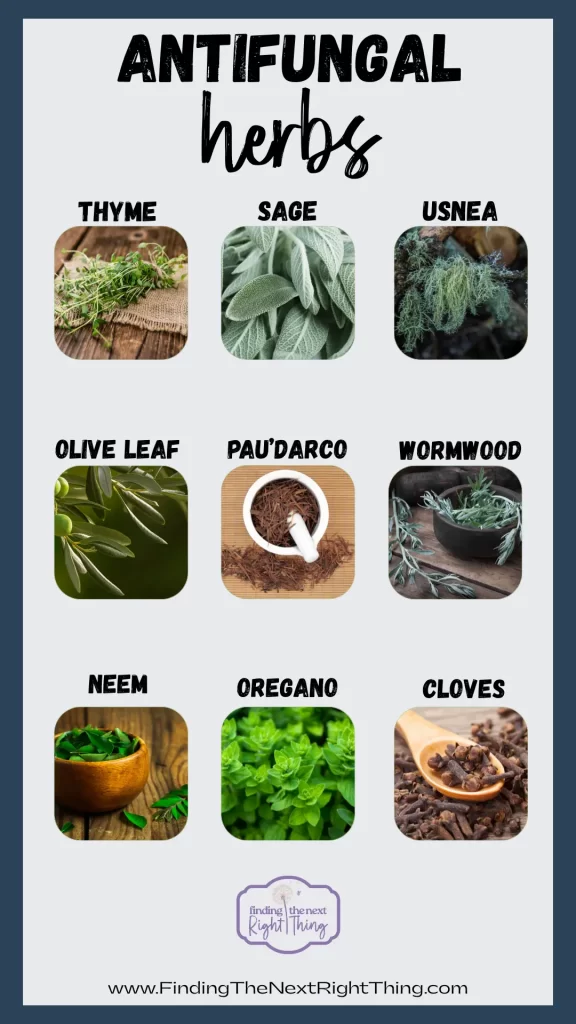
  • Pau D’Arco – systemic antifungal, especially for lungs and skin

  • Olive Leaf – antiviral, antibacterial, supports gut lining and immune function

  • Holy Basil – antifungal + calming adaptogen

  • Usnea – broad-spectrum, works well for sinus mold

  • Oil of Oregano – powerful, but use with caution and short-term

  • Thyme – respiratory-specific, great for steam therapy or capsules

Nasal AntifungalsThe sinuses are a common reservoir for mold and mycotoxins.

  • Argentyn 23 (colloidal silver) – antimicrobial and biofilm disruptor

  • Xylitol nasal spray – breaks down fungal biofilm

  • Steam inhalation with essential oils (thyme, eucalyptus, rosemary)

Antifungal herbs chart showing thyme, sage, usnea, olive leaf, pau d’arco, wormwood, neem, oregano, and cloves — natural herbal antifungals that support gut, immune, and whole-body balance.

Step 7: Biofilm Busters

Biofilms are sticky, protective layers made of proteins, sugars, and fats that pathogens (like mold, Lyme bacteria, Candida, and other microbes) build to hide from the immune system.

This is one reason chronic infections and toxic load can be so hard to fully clear.

Once inflammation is managed, detox pathways are open, and binders and antifungals are working well and have been on board for a while (several months)—you can SLOWLY start working on breaking down biofilms to help flush out hidden infections and toxins.  For those dealing with mold and PANDAS or PANS, biofilm is often a must!

Biofilm Busting Basics

Start Slow!! Always introduce biofilm disruptors cautiously, especially in sensitive kids, because breaking biofilms can suddenly expose hidden pathogens and toxins to the immune system.
(This can temporarily worsen symptoms if you’re not careful.)

Enzymes vs. Herbal Disruptors:
Both enzymes and herbs can target biofilms, but they work slightly differently

Enzymatic Biofilm Busters (The "Scissors ")

These work by digesting the structural proteins that hold the biofilm matrix together.  They physically “clip apart” the sticky scaffolding of biofilms, making it easier for antimicrobials and immune cells to reach pathogens.

Top enzyme choices:

  • Serrapeptase – A proteolytic enzyme that digests fibrin, a major component of biofilms.

  • Nattokinase – It breaks down fibrin and improves blood flow.

  • Lumbrokinase – Derived from earthworms; a more potent option, often used with Lyme, co-infections like Bartonella, or significant clotting tendencies.

Best used on an empty stomach (30–60 minutes before meals or antimicrobials) for maximum effect.

Herbal Biofilm Disruptors (The "Dissolvers ")

These are herbs and plant compounds that:

  • Weaken biofilm structures

  • Disrupt microbial communication (called “quorum sensing”)

  • Attack the pathogens hiding inside

Powerful options include:

  • Oregano Oil – Breaks down biofilms and kills bacteria and yeast

  • Thyme – Strong antimicrobial with biofilm disruption capabilities

  • Neem – Broad-spectrum antimicrobial; great for gut dysbiosis and parasites too

  • Berberine – Especially helpful against gut pathogens; reduces biofilm formation

  • Pau d’Arco – Antifungal herb that can weaken yeast biofilms

How herbs help:
They chemically weaken or dismantle the biofilm layer while simultaneously attacking the bugs hidden inside.

Herbal antimicrobials are usually introduced after enzymes have had time to work, so the herbs can penetrate deeper.

Targeted Products

  • Biocidin (Bio-Botanical Research)
    Broad-spectrum herb formula that disrupts biofilms, kills pathogens, and supports gut health.
    Start extremely low—just 1 drop every few days!

  • InterFase (Klaire Labs)
    Powerful enzyme blend specifically designed to break down biofilms.
    Best taken on an empty stomach before antimicrobials.

  • Biofilm Neutralizer (ARG/Allergy Research Group) A combination of enzymes and herbs that simultaneously disrupts biofilms and supports pathogen clearance.

To learn more about Biofilms, read the Herbal Guide to Biofilms.

Detoxing from mold, especially with PANDAS/PANS, isn’t a quick fix. It’s a season of slow, thoughtful rebuilding.  Here’s your roadmap in a nutshell:

  • Remove the source. Mold exposure must stop or your child’s body can’t catch up.

  • Support detox pathways. Open the liver, lymph, kidneys, bowels, skin, and lungs to safely move toxins out.

  • Establish daily bowel movements. Pooping 1–2 times daily prevents recirculation and inflammation.

  • Add binders + healthy fats. These grab toxins and support bile flow without overwhelming fragile systems.

  • Layer in antifungals and sinus support. Address both the ebody and sinuses when the foundation is ready.

  • Break down biofilms—slowly. Don’t start here. Build resilience first, then target stealth infections and biofilms.

This roadmap applies whether your child has mold illness alone or is navigating the added layers of mold and PANDAS/PANS.

Frequently Asked Questions

Yes, mold exposure can absolutely trigger or worsen symptoms of PANDAS and PANS. Mold is a powerful immune disruptor that creates chronic inflammation and weakens detox pathways, making it harder for the body to fight off infections. For some children, mold is the hidden root cause behind a sudden flare or a plateau in healing. In others, it acts as a secondary trigger, keeping the immune system in a constant state of overreaction.

Nature offers powerful antifungal herbs that can help support the body in clearing mold-related toxins. Some of the best natural mold antifungal options include:

  • Oregano oil – Strong antifungal, antiviral, and antibacterial

  • Garlic (allicin) – Targets mold and supports immune defense

  • Pau d’arco – Used traditionally for fungal and yeast overgrowth

  • Olive leaf extract – Broad-spectrum antimicrobial with antifungal properties

  • Neem – Targets mold, parasites, and bacterial biofilms

  • Berberine-containing herbs (like goldenseal) – Antifungal and supports gut balance

These herbs are often paired with binders and detox support to help the body safely eliminate mold toxins without overwhelming the system.


If your child with PANDAS experiences flares that don’t follow infection (like strep) or seem worse at home or school, it may be time to look at environmental triggers like mold. Clues that mold may be involved include:

  • Symptoms worsen in certain environments (home, basement, classroom)

  • Musty smells, visible mold, or past water damage

  • Mold-related symptoms in family members (fatigue, brain fog, headaches)

  • Poor response to antibiotics or plateauing despite treatment

  • Skin rashes, chronic congestion, or histamine intolerance

If you suspect PANDAS caused by mold, a proper home inspection and gentle mold detox may be a crucial next step.


Before tackling mold, it’s essential to open detox pathways so your child’s body can safely remove toxins. This reduces the risk of flare-ups and herx reactions. Here’s how to get started:

  • Support lymph flow with dry brushing, gentle movement, and herbal lymph tonics (like cleavers or red root)

  • Open the liver with herbs like milk thistle, dandelion root, or burdock

  • Encourage bile flow with bitter herbs and warm lemon water

  • Use gentle binders like activated charcoal or bentonite clay to carry toxins out

  • Ensure daily bowel movements to prevent reabsorption of toxins

Herbal support can gently prime the body for mold detox, creating a smoother and more effective healing process.

Join the Newsletter

Subscribe to get latest content by email.

Have you learned something in your family’s health journey?

Have you found a great doctor

New to FNRT?

Have you learned something in your family's health journey that you think others should know about?

You can share however you are comfortable: anonymously, bare bones information or extensively researched, or co-author a post.

Detox

Gentle Detox for PANDAS & PANS

Our bodies are designed with a remarkable, built-in detoxification system, one that flushes out toxins, cellular debris, and pathogens every single day. But in today’s world, that system is under more pressure than ever before. We’re exposed to thousands of chemicals, heavy metals, pesticides like glyphosate, microplastics, and electromagnetic frequencies (EMFs) our ancestors never encountered. For children with PANDAS or PANS, whose immune and detox pathways are often more sensitive, this toxic load can overwhelm their little bodies.

Most chronic illnesses are really environmental illnesses. 

Dr. Dietrich Klinghart, MD

That’s why supporting natural detoxification, and taking a gentle, holistic approach to detox, is so important. By reducing exposure, opening up elimination routes, and using herbs and nutraceuticals strategically, we can help our bodies to release what no longer belongs.

What are we detoxing from?

Environmental toxins. From the air we breathe to the water we drink and the food we eat, we’re constantly exposed to chemicals and compounds that can disrupt biological processes, inflame tissues, and slow healing.

  • Heavy Metals (mercury, lead, aluminum) from water, fillings, and pollution

  • Glyphosate & Pesticides from non-organic food and grain products

  • Microplastics found in drinking water, food packaging, clothing fibers, and even the air

  • Endocrine Disruptors in personal care, cleaning products, plastics, and synthetic fabrics

  • Pathogen Byproducts (mycotoxins, ammonia, endotoxins) from chronic infections and dysbiosis

To learn more about how these toxins make it into our bodies and what they are doing to our health, read the Root Causes Toxin Guide.

Disclaimer: I’m not a doctor and this is not medical advice. This information is about my own personal experience and is meant for educational purposes only and is not intended to diagnose, treat, or replace medical care. Always consult with your healthcare provider before starting any new supplement, protocol, or treatment.

Table of Contents

Step 1 | Reduce Exposure

Supporting detox for children with PANDAS and PANS begins by reducing the toxic load coming in. Otherwise, you’re bailing water from a sinking ship without plugging the leak.  No matter how many binders or detox agents you introduce, if the toxic burden keeps pouring in, you’ll struggle to make headway. The first and most foundational step is to stop adding fuel to the fire.

Children with PANS or PANDAS are particularly sensitive to environmental toxins. Their detox systems are often underdeveloped, overburdened, or genetically impaired. What might be a minor exposure for one child could cause a full-blown flare in another. Reducing everyday exposure helps lighten the load, and may even calm symptoms before you start active detox.

Minimize Toxin Exposure

  • Switch to non-toxic cleaning and personal care products

  • Filter drinking and bath water (remove heavy metals, chlorine, fluoride)

  • Use air purifiers and ventilate your home regularly

  • Avoid heating or storing food in plastic—use glass, ceramic, or stainless steel

  • Choose organic when possible—especially high-residue produce (see the EWG’s Dirty Dozen list)

  • Avoid canned foods unless BPA-free

  • Limit high-mercury fish (like tuna and swordfish), and choose lower-mercury options like sardines or salmon

  • Avoid artificial dyes and colors made from petroleum.  You can find plant based food coloring alternatives.
  • Ditch aluminum cookware and use stainless steel or cast iron

  • Reduce EMF exposure by turning off Wi-Fi at night, keeping devices out of bedrooms, and using wired connections where possible

  • Wear natural fibers (cotton, wool, linen) instead of synthetic, chemically-treated fabrics

You can use the EWG website to help you find products that are safe and consumer guides about purchasing low-tox. 

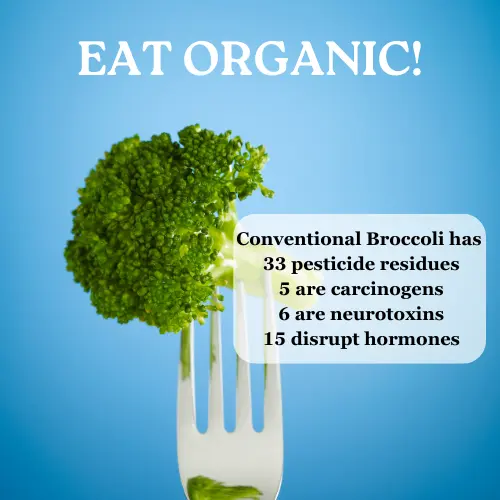
A fork holding a piece of broccoli with text about pesticide residues found in conventional broccoli.

Step 2 | Open Detox Pathways

Before you “detox,” you have to open the exit doors. If the liver, kidneys, bowels, or lymph are backed up, toxins can’t leave, they’ll recirculate and worsen inflammation. For kids with PANDAS and PANS, this step is even more important because their detox pathways often struggle to keep up with environmental toxins. These children frequently have underlying genetic vulnerabilities (like MTHFR, CBS, or COMT mutations) or nutrient deficiencies that limit their body’s ability to clear chemicals efficiently. That means they’re more likely to accumulate toxins that can perpetuate neuroinflammation and immune dysfunction.

This step lays the groundwork for an effective detox for children with PANDAS/PANS, preventing flares and supporting safer, steadier progress.

Herbs & Nutrients to Support Elimination Routes:

  • Liver: Milk thistle, dandelion root, burdock, schisandra, cruciferous vegetables, like broccoli
  • Kidneys: Nettle, dandelion leaf, hydrangea root, hydration, trace minerals

  • Lymph: Cleavers, echinacea, burdock root, lemon water

  • Bowels: Soluble + insoluble fiber (chia, flax, psyllium), magnesium, aloe vera (inner leaf), triphala

  • Skin: Sulfur-rich foods (onions, garlic), vitamin C, zinc, chlorophyll-rich greens

  • Lungs: Mullein, thyme, elecampane, NAC, clean air

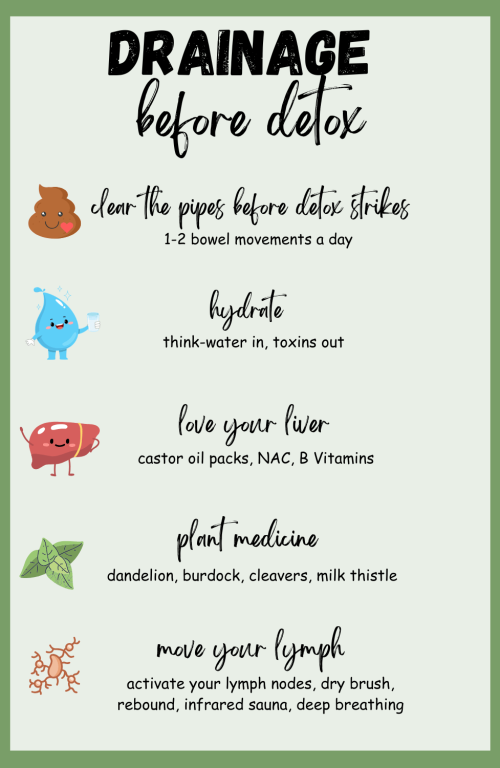
Drainage Before Detox | Functional and Herbal Detox Support Guide for PANDAS and PANS

Supportive Detox Therapies

These gentle therapies help mobilize toxins through the lymph, liver, and skin, and can be incorporated several times a week depending on tolerance.

Infrared Sauna
Encourages deep sweating to excrete heavy metals and other fat-soluble toxins. Also supports mitochondrial health and circulation.

Dry Brushing
Stimulates lymphatic flow beneath the skin, supports gentle exfoliation, and improves blood circulation.

Castor Oil Packs
Used over the liver or abdomen, castor oil packs stimulate lymphatic flow, reduce inflammation, and support liver detox. Use 3x/week for best results.

Epsom Salt Baths
Rich in magnesium sulfate, these baths support detox through the skin, ease muscle tension, and calm the nervous system.

IonCleanse Foot Baths

Often used by practitioners for kids with autism or those needing detox support.  

Rebounding (Mini Trampoline)
One of the best ways to stimulate lymphatic drainage in kids. Just 5–10 minutes a day improves circulation, lymph flow, and immune activation.

Lymph Node Activation
Specific techniques can be used to manually stimulate major lymphatic drainage points, often referred to as “The Big 6.” These are clusters of lymph nodes located in key areas: behind the knees, underarms, near the groin, base of the neck, and under the jaw. Light massage, gentle tapping, or vibrational tools like lymph wands or sonic brushes can help encourage these nodes to drain more effectively. 

Vibration Plate

Vibration plates provide gentle stimulation to the lymphatic and circulatory systems by using rapid, low-amplitude vibrations all while standing, sitting or just placing your feet on the plate.

By opening these detox pathways first, you create the foundation for deeper detox work down the line, part of any safe and gentle effective detox for PANDAS or PANS. Remember, go slow and support the body’s own wisdom at every step. To read more about opening detox pathways in more detail, read the Detox Pathways page in the Herbal Guide.

🔍 Want to go deeper?
Learn which herbs, nutrients, and therapies help open each detox pathway, and why it matters so much for kids with PANDAS or PANS.

👉 Read the full Detox Pathways Guide for step-by-step support.

Step 3 | Poop 1-2 times a day

If the bowels aren’t moving, neither are the toxins. 

Detox protocols emphasize regular elimination (ideally 1–2 bowel movements daily) to support the removal of waste and reduce the likelihood of toxin reabsorption.

Support Regularity With:

  • Soluble and insoluble fiber (chia, flax, psyllium, leafy greens)

  • Triphala, aloe, or licorice root (gentle herbal laxatives)

  • Sufficient hydration (half your weight in ounces per day)

  • Movement and abdominal massage

  • Magnesium citrate or magnesium oxide if needed occasionally

Gut motility plays a major role in supporting detox for PANDAS and PANS, and in overall immune stability.  If your child isn’t pooping, start there.

Read the Gut Health Herbal Guide for practical strategies, herbal support and tips.

Step 4 | Introduce Binders

Once you’re pooping regularly and your drainage pathways are open, binders are your next step. 

Binders Catch & Carry

Most binders sit in the gut and “catch” toxins that the liver, lymph, or GI tract have already dumped into the intestines, and carry them out. They prevent reabsorption, not mobilization. This is why binders work best after drainage pathways are open and the body is eliminating properly.

Match the Binder to the Toxin

Different binders have different affinities. Some bind metals well but don’t touch mycotoxins. Others work on pesticides but don’t grab ammonia.

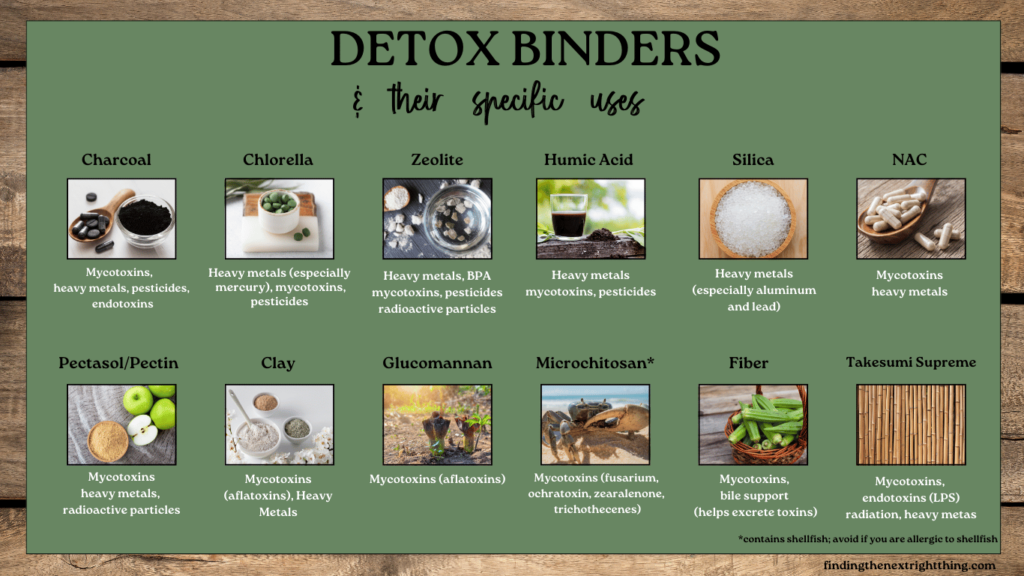
  • Heavy Metals. Activated Charcoal, Chlorella, Zeolite, Silica, Humic Acid, NAC, Silica
  • Mold/Mycotoxins. Zeolite, Pectin (Pectasol), Bentonite clay, Microchitosan, Fiber, Takesumi, Glucomannan

  • Pesticides.  Chlorella, Charcoal, Zeolite, Humic & Fulvic Acids, Pectin (Pectasol)

Start slowly, away from food or meds, and always hydrate well.

Chart showing different detox binders and their uses for binding mycotoxins, pesticides, heavy metals, and toxins, a key part of a detox protocol for PANDAS and PANS.

Timing is Everything

Unlike vitamins or nutrients, some binders  (activated charcoal, takesumi, glucomannan or clay) don’t play well with others.  Their job is to grab onto things in the digestive tract and escort them out of the body. But if you take them at the wrong time, they’ll bind the good stuff, too.

Binders like activated charcoal, takesumi, glucomannan or clay should be taken at least one hour before and one to two hours after food, supplements, or medications.   Other binders are more selective and generally don’t leach nutrients to the same degree.

My favorite time to give binders is right before bed. Timing wise, it’s easier for me to give right before bed, and it aligns with the body’s natural rhythms. During sleep, the glymphatic system, a brain-wide waste clearance system, becomes more active. This system helps flush out toxins, metabolic waste, and even inflammatory byproducts from the central nervous system. By taking binders before bed, you’re giving the body the tools it needs to “catch” and remove those toxins while your child sleeps and the brain is in deep clean-up mode. 

Binders Can Be Constipating

Binders like activated charcoal, bentonite clay, and even some fibers are highly effective, but they can also absorb water and slow things down in the gut. For kids who are already prone to constipation, this can quickly turn into a situation.  

If constipation is already a problem, starting with less constipating binders like chlorella, pectin, humic acid, zeolite, NAC, and fiber may be helpful. You can support regularity with magnesium citrate or oxide, aloe vera (inner leaf), triphala, and plenty of hydration. Warm lemon water or fiber-rich foods like chia and flax can also help keep things moving.

Step 5 | Push + Pull (Binder + Detox Agents)

Once a person tolerates binders well and elimination is regular, it’s time to layer in detox agents that mobilize toxins stored in tissues. This is the “push” liberating toxins from deeper compartments like fat cells, brain tissue, or joints. But once those toxins start moving, they need somewhere to go. That’s where binders come in, they “pull” toxins out through the digestive tract for safe removal.

Detoxification works best when you gently push and pull at the same time. But push too hard, or without enough support, and you may experience a Herxheimer reaction (aka a detox flare). Look for signs like headaches, increased irritability, fatigue, or a return of old symptoms. These are signals that the detox is outpacing drainage.

Detox Agents (Push):

  • NAC – Supports glutathione and detox of environmental chemicals

  • ALA (Alpha Lipoic Acid) – Regenerates glutathione and crosses the blood-brain barrier

  • Glutathione – The body’s master detoxifier; can be taken as liposomal, IV, or nebulized

  • MSM – A sulfur donor that helps build glutathione and reduce inflammation

  • Burdock Root & Dandelion – Traditional blood and liver detoxifiers

  • Schisandra – Adaptogen that supports phase I & II liver detox

  • Spirulina – Nutrient-dense algae that binds metals, supports liver, and nourishes the body

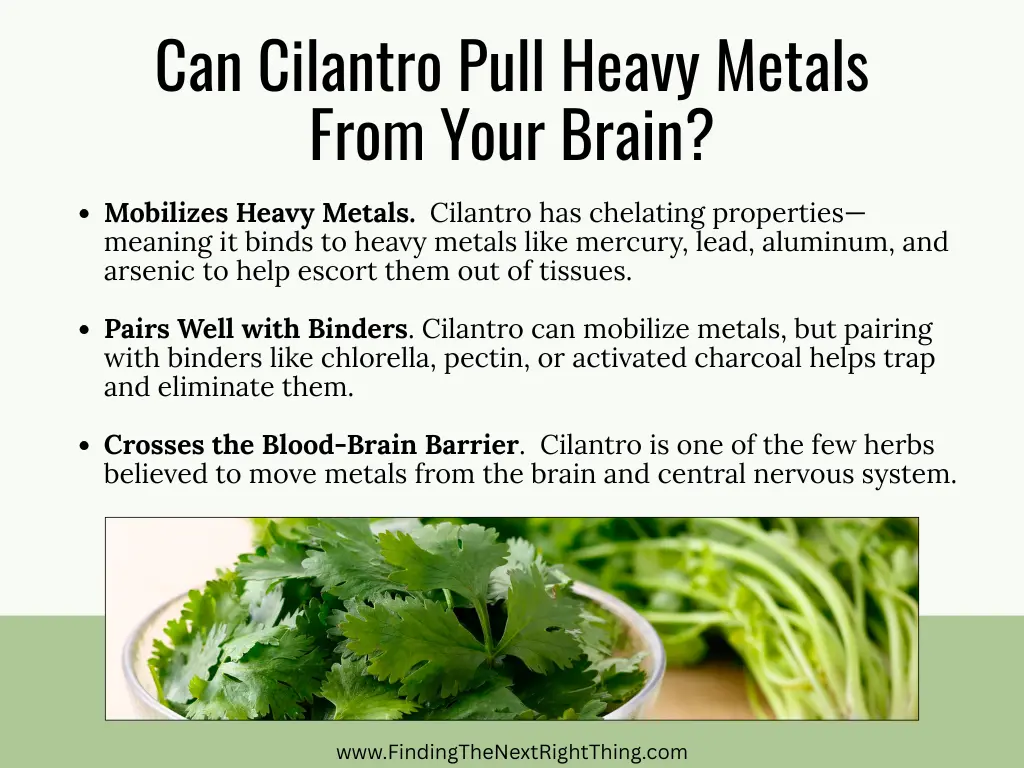
  • Cilantro – Mobilizes heavy metals from tissues and enhances natural chelation.

You can rotate binders and detox agents to prevent adaptation and avoid overburdening any single pathway. Some people do best with gentle, pulsed detox, using agents just a few times per week, while others tolerate daily support.

bowl of fresh cilantro leaves with roots on a wooden surface; text above reads "Cilantro removes heavy metals from the body" — visual guide on how to detox heavy metals naturally using herbs.

Managing Herxheimer Reactions (Healing Crisis or Detox Flares)

When toxins start to move, some kids feel better right away. Others? Not so much. This is where Herxheimer reactions come in, often shortened to “Herx.”

A Herx reaction happens when the body releases more toxins than it can eliminate. The immune system reacts to those circulating toxins or pathogen byproducts with inflammation, leading to temporary symptom flares.

Common signs of a Herx reaction

  • Irritability or sudden mood shifts
  • Headaches or dark circles under the eyes
  • Increased OCD, anxiety, or sensory sensitivity
  • Sleep disruption or fatigue
  • Body aches or skin rashes

How to Support Through a Herx

  • Hydrate More: Water helps flush out mobilized toxins. Add a pinch of sea salt or trace minerals for better cellular uptake.

  • Epsom Salt Baths: Magnesium sulfate supports detox through the skin, relaxes muscles, and soothes the nervous system. Start with ½ cup for kids, and increase to 1 cup as tolerated.

  • Back Off Binders: If symptoms worsen after adding binders or detox agents, take a break for a day or two and reintroduce more slowly.  You can break open capsules and sprinkle small amounts into applesauce or drinks.

  • Drainage Support: Add gentle support like castor oil packs, lymphatic massage, or a short trampoline session to help toxins move out, not just around.

  • Liver & Lymph Support: Add lemon water, bitter herbs, or gentle teas (like nettle or dandelion) to nudge sluggish detox organs.

  • Rest + Reassurance: Detox is hard work for little bodies. Offer comfort and reduce demands.

With detox some days you push, other days you pause. That’s normal. 

Final Thoughts on Detox for PANDAS and PANS

Detox isn’t about doing more. It’s about doing what the body needs, in the right order, at the right pace. For kids with PANS or PANDAS, that often means going slowly, watching closely, and adjusting as you go. The goal isn’t to chase every toxin; it’s to lower the load enough that the immune system can recalibrate and start healing.

If you’re feeling unsure about where to begin, start with the basics: open the exits, support daily elimination, and use herbs that gently assist the body without pushing it too hard. These gentle detox strategies for PANDAS can help reduce inflammation and support recovery.

🌿 Want to see how detox fits into the bigger picture?
Head back to the Herbal Guide for tools and plant-based strategies to support gut health, immune balance, nervous system regulation, and more.

🎧 Podcast Recommendation

BetterHealthGuy Blogcasts, Klinghardt Conversation #3. Listen to Dr. Klinghardt discuss how to approach detoxification.

Frequently Asked Questions

Natural detox for kids means supporting the body’s built-in elimination systems so toxins can leave safely and gently. It is not about forcing toxins out quickly. It is about helping the liver, kidneys, lymph, gut, skin, and lungs do the jobs they were designed to do. For children with PANS or PANDAS, natural detox is especially important because their systems are often overwhelmed by toxins and inflammation.

Yes. When detox pathways are open and toxins are leaving efficiently, inflammation often drops. Many families see improved emotional regulation, fewer neurological symptoms, and better immune stability. Detox does not cure PANS or PANDAS, but it removes a major burden that keeps the immune system stuck in overdrive.

Signs that detox pathways are functioning well include:

  • Regular bowel movements (1–2 daily)

  • Clear urine and good hydration

  • Reduced chemical sensitivities

  • Fewer headaches or dark circles

  • Improved energy and mood stability
    If detox causes worsening symptoms, it often means pathways need more support before continuing.


Toxins and PANS are deeply connected. Environmental toxins like mold, heavy metals, glyphosate, pesticides, and microplastics place constant stress on the immune system. In children with PANS or PANDAS, this toxic load can worsen neuroinflammation, weaken immune regulation, and make infections harder to clear. Reducing toxins is often a missing piece in stabilizing symptoms and preventing flares.

The biggest contributors to toxins and PANS include:

  • Mold and mycotoxins

  • Heavy metals like aluminum, mercury, and lead

  • Glyphosate and pesticide residues

  • Microplastics and endocrine disruptors

Reducing these exposures is one of the most powerful forms of natural detox for kids.

Want the Good Stuff?

No spam, no nonsense— just the things I wish I’d known earlier,

sent with a big virtual hug.

Histamine

histamine

 If you’re here, you might be wondering: Could histamine be part of what’s driving my child’s symptoms? How are histamine and anxiety related? Many kids with PANS/PANDAS have a histamine component, whether it shows up as rashes, congestion, food sensitivities, anxiety, or flare.

Even if you’re not dealing with a formal MCAS (mast cell activation syndrome) diagnosis, histamine overload is worth exploring. It often plays a background role in chronic inflammation, neuropsychiatric symptoms, and immune dysregulation.  And, if you’re dealing with mold, histamine is very likely involved.

 Supporting histamine balance, gently and naturally, can be a powerful piece of the healing puzzle.

That’s where herbal and natural antihistamines and mast cell stabilizers come in. These tools don’t just block symptoms, they help calm the immune system, reduce flare intensity, and support balance in the gut, brain, and beyond. 

What Are Antihistamines?

Histamine is a natural chemical messenger released by mast cells when the immune system detects a threat, like pollen, infection, or stress. While it plays a key role in defending the body, too much histamine (or poor histamine breakdown) can trigger symptoms like itching, swelling, runny nose, headaches, and digestive issues.

Antihistamines work by blocking histamine from binding to its receptors, which are found all throughout the body:

  • H1 receptors – found in the skin, lungs, and mucous membranes (allergies, itching, congestion)

  • H2 receptors – found in the stomach (triggers acid production)

  • H3/H4 receptors – found in the brain and immune cells (modulate neurotransmitters and inflammation)

Most natural antihistamines work on H1 receptors, helping calm classic allergy-type symptoms like rashes, sinus congestion, and hives.

But antihistamines manage symptoms after histamine is already released. They don’t prevent the release in the first place.

What Are Mast Cell Stabilizers?

Mast cell stabilizers act like calming agents for the immune system. Instead of waiting for histamine to flood the system and react, they prevent mast cells from releasing it in the first place.

In chronic conditions like MCAS (Mast Cell Activation Syndrome) or PANS/PANDAS, mast cells tend to be hyperactive and trigger histamine release too easily.

  • How they work: They reduce mast cell degranulation (the process of releasing histamine and inflammatory chemicals)

  • Why it matters: Long-term, this helps reduce flares, calm inflammation, and prevent symptom cycles before they start

Why the Distinction Matters

  • Antihistamines = symptom relief (great for flares or allergy seasons)

  • Mast Cell Stabilizers = flare prevention (support long-term balance)

Combining both can give deeper support: immediate symptom relief and long-term resilience for someone struggling with histamine.

Natural Histamine Support:

Antihistamines + Mast Cell Stabilizers

These herbs and nutrients support the body’s ability to manage histamine in two main ways:

  • Antihistamines block histamine receptors, reducing immediate symptoms like itching, congestion, or flushing.

  • Mast cell stabilizers calm the release of histamine and other inflammatory compounds, helping prevent flares before they start.

Some remedies do both! The goal is to reduce the histamine load now and teach the body to respond more calmly over time.

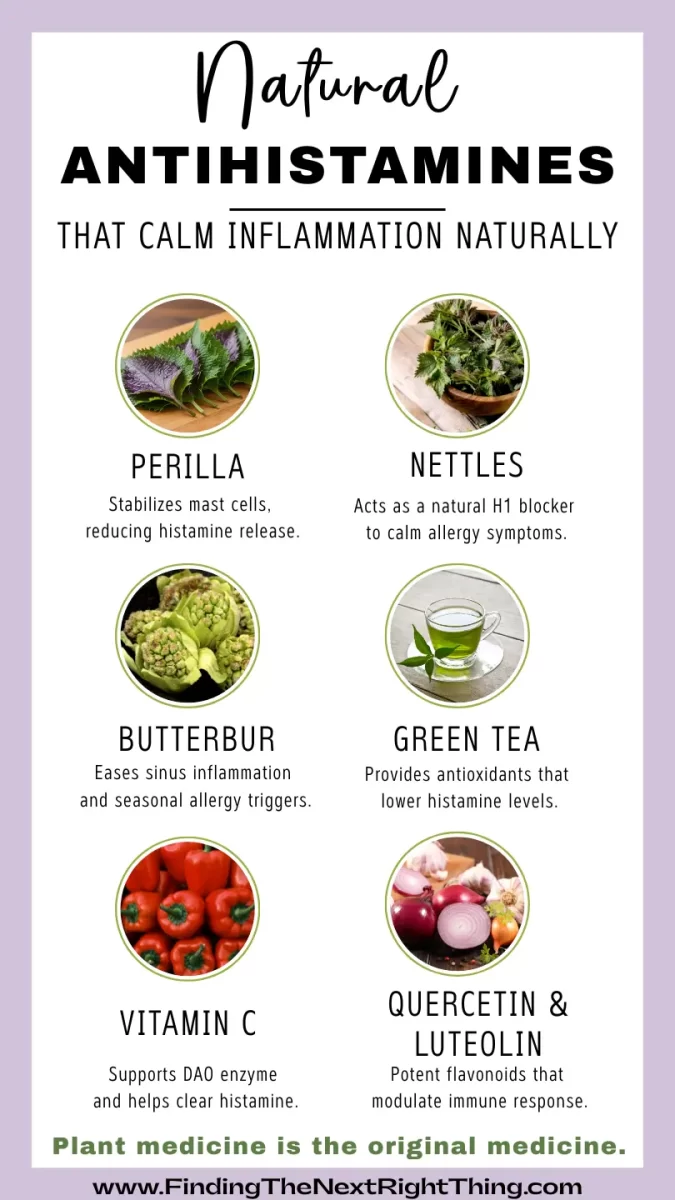
Infographic listing six natural antihistamines—Perilla, Nettles, Butterbur, Green Tea, Vitamin C, and Quercetin & Luteolin—each with descriptions of their anti-inflammatory and histamine-lowering effects.

Quercetin

Dual Action – Antihistamine + Mast Cell Stabilizer

Quercetin is one of the most well-studied natural histamine regulators. It stabilizes mast cells (preventing histamine release) and blocks histamine receptors, especially H1 receptors that cause symptoms like rashes, congestion, and sneezing.

Why it’s helpful:
In kids with histamine intolerance, MCAS, or PANS-related flares, quercetin can reduce reactivity and help calm the immune system without sedation. It’s also an antioxidant, antiviral, and anti-inflammatory.

Tips for use:

  • Combine with bromelain to boost absorption and calm inflammation.

  • Start low and slow (especially if your child is sensitive).

Vitamin C

Dual Action – Antihistamine + Mast Cell Stabilizer

Vitamin C helps break down histamine and supports the activity of DAO, the enzyme that clears histamine in the gut. It also helps stabilize mast cells and strengthens the mast cell membrane and reduce oxidative stress.

Why it’s helpful:
This is a go-to for allergy flares, viral illnesses, and detox support. It’s gentle enough to use long-term and may help reduce histamine-related symptoms like anxiety, hives, flushing, or food reactions.

Tips for use:

  • To support DAO activity, take 30 minutes before meals.
  • Use buffered or liposomal forms if your child has a sensitive gut.

  • Can be increased during illness or exposure.

Nettle

Antihistamine

Nettle works like a natural H1 receptor blocker, similar to over-the-counter antihistamines, but without the drowsiness. It reduces histamine levels in the bloodstream and eases allergy-like symptoms.  Great for kids with environmental allergies, itchy skin, or sinus congestion. It’s also anti-inflammatory;  calming the immune system.

Green Tea

Dual Action – Antihistamine + Mast Cell Stabilizer

EGCG (epigallocatechin gallate), the active compound in green tea, reduces histamine activity and helps stabilize mast cells. It also supports detox, liver function, and antioxidant defense.

Ideal for kids with histamine-driven anxiety, immune overactivation, or reactivity to foods. Because EGCG crosses the blood-brain barrier, it also offers gentle neuroprotective support.

Avoid before bed, it may be mildly stimulating.

Perilla

Mast Cell Stabilizer

Perilla is rich in rosmarinic acid, a polyphenol that not only prevents mast cell degranulation (which is when mast cells “dump” histamine and other inflammatory mediators into the body), but also calms the release of pro-inflammatory cytokines like IL-6 and TNF-alpha.

Perilla has gentle anti-anxiety effects, making it supportive for the emotional dysregulation that can accompany histamine surges in children with PANS/PANDAS.

Because of its multi-tasking on inflammation, histamine, and anxiety it’s one of the herbs I keep on hand at all times.

I like to pair it with feverfew during a flare.

Tips for use:

  • Available in tincture, capsules, or as part of herbal blends.

  • Helpful both for prevention and flare support.

Butterbur

Mast Cell Stabilizer

Butterbur reduces histamine and leukotriene release from mast cells. It also helps regulate inflammatory signaling, especially in the brain and respiratory system.

Traditionally used for helping migraines, sinus pressure, and allergy symptoms. May be helpful with flares that come with headaches or neurological symptoms.

  • Only use PA-free (pyrrolizidine alkaloid-free) extracts

  • Often combined with quercetin or perilla for better effect.

  • For headaches, I take 100mg per hour combined with a little rosemary.

DAO Enzyme (Diamine Oxidase)

Mast Cell Stabilizer

DAO breaks down histamine from foods in the digestive tract. If your child has low DAO activity (from gut inflammation, mold exposure, or genetics), histamine can build up after meals.  Helpful for food-triggered symptoms, especially bloating, headaches, rashes, or mood shifts after eating.

Tips for use:

  • Take before meals that include high-histamine foods (leftovers, fermented foods, aged cheese, etc.).

  • Combine with gut-healing herbs to support long-term repair.

Luteolin

Mast Cell Stabilizer + Neuroinflammatory Support

Luteolin calms overactive mast cells and reduces inflammatory cytokines like IL-6 and TNF-alpha. It also reduces oxidative stress in the brain and gut.  Generally known as a top herb for neuroinflammation, MCAS, and immune overactivation. May help reduce anxiety, sensory symptoms, and gut-brain inflammation.

  • Often combined with quercetin in mast cell support blends.

  • Consider as part of a long-term regulation protocol for highly reactive kids.

PEA

Mast Cell Stabilizer + Neuroinflammatory Support

PEA is a naturally occurring fatty acid that the body produces in response to stress, inflammation, or injury. It helps calm overactive mast cells and downregulates the immune response, especially in the nervous system. PEA also interacts with the endocannabinoid system, reducing the release of inflammatory compounds without being psychoactive.  It also helps preserve the blood brain barrier integrity, which can become leaky during periods of low oxygen or oxidative stress.  And, it reduces excitotoxicity and the release of inflammatory cytokines when blood sugar crash.

PEA has been studied for its role in calming neuroinflammation and supporting nervous system regulation, which some families find helpful for symptoms like sensory sensitivity or discomfort.

  • Available in capsules or micronized powder (micronized forms are better absorbed)

  • Can be used daily and builds effectiveness over time

  • Often paired with luteolin or other flavonoids in neuroimmune blends

  • PEA is one of my favorites!

Over-the-Counter (OTC) Antihistamines

While herbs are incredibly effective for many, over-the-counter medications can still play an important role, especially for acute symptoms or severe reactions.  Here’s a basic overview of how they’re often described:

H1 Blockers (for allergy-type symptoms)

  • Diphenhydramine (Benadryl) – fast-acting, sedating

  • Loratadine (Claritin) – non-drowsy, daily use

  • Cetirizine (Zyrtec) – longer-lasting with mild sedative effect

  • Fexofenadine (Allegra) – non-drowsy, good for seasonal allergies

H2 Blockers (for histamine-related gut issues)

  • Famotidine (Pepcid) – reduces acid and histamine in the stomach

Lifestyle Tips to Complement Antihistamines

Start a Low-Histamine Diet:

  • Focus on fresh, unprocessed foods.
  • Avoid left-overs, as they have much higher histamine content
  • Avoid aged, fermented, or high-histamine foods (wine, cheese, processed meats).

Reduce Stress:

  • Stress triggers histamine release. Yoga, meditation, or deep breathing can help.

Stay Hydrated:

  • Adequate hydration supports histamine breakdown and detoxification pathways.

To read more about histamine check out the Histamine page on the Root Causes & Triggers chart.

To address Inflammation alongside Histamine head to the Inflammation Herbal Guide.  If mold is in the picture, make sure you read the Mold Herbal Guide.

For deeper dives into histamine intolerance, MCAS, and low-histamine strategies, I highly recommend Mast Cell 360. It’s a thorough, practitioner-led resource that covers the nuances many other sites miss.

Disclaimer: I’m not a doctor and this is not medical advice. This information is about my own personal experience and is meant for educational purposes only and is not intended to diagnose, treat, or replace medical care. Always consult with your healthcare provider before starting any new supplement, protocol, or treatment.

Nervous System Support

Nervous System Regulation

Living with PANS/PANDAS can turn life upside down, not just for the child, but for the whole family. The sudden onset of OCD, anxiety, rage, aggression, sleep disturbances, and food restrictions can put any family in crisis. Many parents walk away from those early months or years with their own trauma. I know I did.

We have to find and heal the root causes of PANS or PANDAS in order to truly heal, but stabilizing the nervous system in the meantime is just as important.  It eases suffering, reduces the stress on the body, and gives the child the internal regulation they need to begin healing.

Nervous System Dysregulation in PANS/PANDAS: Why Calming Support Matters

Children with PANS/PANDAS live in a constant state of nervous system overdrive. When the immune system is inflamed and the brain is under attack, the body shifts into fight, flight, or freeze mode, triggering symptoms like:

  • Rage and aggression

  • Panic attacks or extreme separation anxiety

  • Sleep disturbances, inability to sleep or rest

  • Tics and compulsive behaviors

  • Emotional volatility

  • Shutdown, numbness, or dissociation

Calming herbs and natural remedies for anxiety in children can help them feel safer in their own skin and reduce flare severity.

The neuroinflammation in PANS and PANDAS affects areas like the amygdala, basal ganglia, and prefrontal cortex, leading to a flood of stress chemicals like cortisol, histamine, and glutamate. Left unchecked, this state keeps the body in survival mode, making healing even harder.

Calming the nervous system doesn’t just ease symptoms.  It may help create a more stable foundation for long-term healing.

That’s where herbal and nutraceutical support comes in.

Natural remedies for anxiety in children with PANS/PANDAS aren’t about suppressing emotions, they support regulation, safety and resilience.  They can reduce the intensity of symptoms, ease stress on the body and brain, and create the conditions where healing is possible.

Some herbs work quickly for acute anxiety or flares. Others are “builders,” gentle and cumulative, getting more effective over weeks or months.

My Favorite Herbs for Calming the Nervous System

Albizia for its mood stabilizing + antihistamine properties. 

Gotu Kola for its calming, peaceful effects.

Blue Vervain for the Type A personality types with a lot of tension.

Ashwaganda for its adaptogenic + anti-inflammatory effects.

Pine Bark for its anti-inflammatory + cognitive enhancing properties.

Disclaimer: I’m not a doctor and this is not medical advice. This information is about my own personal experience and is meant for educational purposes only and is not intended to diagnose, treat, or replace medical care. Always consult with your healthcare provider before starting any new supplement, protocol, or treatment.

Table of Contents

Natural Remedies for Anxiety in Children

llustrated chart showing six herbs, Ashwagandha, Albizia, Passionflower, Blue Vervain, Gotu Kola, and Chamomile, used as natural remedies for anxiety in children, with brief calming benefits and emotional support descriptions for each herb.

Albizia

Mood Support • Mild Sedative • Antihistamine

Known as the “happiness bark,” Albizia calms the nervous system and uplifts the mood. Albizia can reduce anxiety, irritability, and nighttime restlessness. It also has natural antihistamine and anti-inflammatory effects.  Due to its antihistamine properties it could be a good choice if histamine contributes to neuroinflammation or behavioral flares. Albizia is a gentle natural remedy for anxiety in children.

Best For:

  • Mood swings

  • Bedtime wind-down

  • Histamine-driven flares

  • Gentle emotional support

Pair With: Gotu Kola, Passionflower, or Blue Vervain for deeper calming blends. 

Gotu Kola

Cognitive Calm • Nervine Tonic • Parasympathetic Activation

Gotu Kola promotes a calm, but alert state.  It’s referred to as a “brain tonic.”  It’s a favorite in Ayurveda for mental clarity, and it shines in kids with obsessive thoughts, high anxiety, or “spin cycle” thinking. Gotu kola supports the parasympathetic nervous system (rest and digest), crosses the blood-brain barrier, and helps reduce the effects of endotoxins that can inflame the brain.  For endotoxin lessening effects, take 15 minutes before meals.  This was the first herb that seemed to really calm my son coming out of a flare, but it took a week or two.

Best For:

  • OCD-style looping

  • Mental agitation

  • Focus issues and worry

  • Overall nervous system regulation

Blue Vervain

Tension Releaser • Anti-Tics • "Type A" Relief

Blue Vervain is incredibly grounding for kids who are intense, tightly wound, or perfectionistic. It calms both mental and muscular tension, great for jaw clenching, neck tightness, or irritability. It also helps spasmodic disorders like tics, and can ease agitation when it flares into aggression.

Best For:

  • Individuals who hold tension in their body, especially the neck.

  • Perfectionism, rigidity, or irritability

  • Tics or spasmodic movement

  • Headaches from stress

Ashwagandha

Adaptogen • Anti-inflammatory • Mood Stabilizer

Ashwagandha is a foundational adaptogen. It supports the HPA axis (your stress-response system), lowers cortisol, and improves the body’s ability to stay balanced in the face of stress. It’s also strongly anti-inflammatory. This herb builds slowly, but its long-term effects are worth the wait. It’s one of the more established natural remedies for anxiety in children dealing with chronic immune and stress dysregulation.

Best For:

  • Anxiety and mood regulation

  • Sleep issues tied to cortisol

  • Daytime irritability

  • Recovery from prolonged stress

Pine Bark Extract

Cognitive Support • Anti-inflammatory • Neuroprotective

This antioxidant-rich extract may help reduce neuroinflammation and boost brain health.  Pine bark  increases blood flow to the brain, lowers oxidative stress, and enhances executive function.  Pine Bark is often a good fit for brain fog, difficulty concentrating, or post-flare cognitive fatigue in PANS/PANDAS.  This is one of my “go-to” remedies for a flare, but I also like to give it before school for focus.

Best For:

  • Focus and attention

  • Neuroinflammation

  • Mental clarity and processing speed

Chamomile

Gentle Sedative • Digestive Support • Nervous System Soother

Chamomile is one of the gentlest natural remedies for anxiety in children, especially those who are sensitive or overwhelmed easily. It works as a mild sedative and muscle relaxant, helping with tension, restlessness, and sleep issues. Chamomile also supports the gut-brain connection by soothing the digestive tract.

Best For:

  • Bedtime anxiety and insomnia

  • Tension-related tummy aches

  • Emotional sensitivity and overstimulation

  • General nervous system support

Passionflower

Anxiolytic • Sedative • Muscle Relaxant

Passionflower boosts GABA production, a calming neurotransmitter that helps regulate overexcited nerves. It’s stronger than chamomile and especially useful when anxiety becomes physical: racing heart, tight chest, restlessness, or trouble falling asleep.  This herb is a common go-to in acute anxiety phases.

Best For:

  • Bedtime resistance or “tired but wired” states

  • Nervous system overstimulation

  • Irritability or emotional reactivity

Caution: Some PANS/PANDAS kids may be sensitive to Passionflower. Start low (even 1–2 drops), and build slowly. If your child gets more irritable or hyper after taking it, discontinue and try a gentler herb like Skullcap or Chamomile.

Brahmi

Cognitive Support • Adaptogen • Neurotransmitter Balancer

Brahmi is a popular Ayurvedic herb used to enhance cognitive function, memory, and mood regulation. It supports calm focus and reduces the overstimulation that leads to reactivity or brain fog. Brahmi also helps regulate dopamine and serotonin, both important in emotional balance. It’s neuroprotective and calming without sedation, and works best over time.

Best For:

  • OCD tendencies, impulsivity, or anxious ruminations

  • Brain fog or attention challenges

  • Support during food restriction or low blood sugar

  • Calming without dulling alertness

Notes: Brahmi is a “builder.” You won’t see overnight results, but after 2–4 weeks, you may notice improved calm, clarity, and emotional regulation.

Reishi Mushroom

Immunomodulator • Adaptogen • Neurocalming

Reishi is a medicinal mushroom known for its gentle but profound effects on immune regulation. In children with PANS/PANDAS or MCAS, where the immune system tends to overreact, Reishi helps calm that reactivity without suppressing immune function. It also soothes the nervous system and supports deeper, more restorative sleep.  

Best For:

  • Immune system “overdrive” or inflammation-driven flares

  • Sleep disruption from anxiety or cortisol imbalance

  • Long-term nervous system support

  • Emotional and physical resilience

Notes: Reishi is very safe for long-term use and builds gradually over weeks. It blends well with adaptogens like Ashwagandha or nervines like Skullcap.

Nutraceuticals

Inositol

Mood Stabilizer • Neurotransmitter Support • OCD + Anxiety Relief

Inositol is a naturally occurring compound (often grouped with B-vitamins) that helps regulate serotonin and dopamine, two neurotransmitters central to mood, behavior, and focus.  (Levine J)  It’s been studied for its potential to ease obsessive or anxious thought patterns, especially in individuals with OCD. (Levine J) It’s an effective natural remedy for anxiety in children with PANS/PANDAS, particularly when mental “looping” or compulsive thinking takes over during flares (Fux M, Levine J, et al)

Best For:

  • Intrusive thoughts or compulsions

  • Generalized anxiety or ruminations

  • Mood instability and irritability

  • Sleep disruptions related to mental overactivity

  • Powder has a naturally sweet taste and is easy to mix into drinks or applesauce

NAC (N-Acetylcysteine)

Glutathione Precursor • Detox Support • OCD + Mood Regulation

NAC is a powerful antioxidant and precursor to glutathione, the body’s master detox molecule. It supports the brain by reducing oxidative stress and neuroinflammation, which are common drivers of PANS/PANDAS flares. Clinical research has explored NAC’s effects on obsessive-compulsive symptoms and anxiety. (Lafleur DL, et al)  It may help support brain function by reducing oxidative stress and neuroinflammation.

Best For:

  • OCD symptoms, mood swings, and anxiety

  • Detox support (mold, mycotoxins, environmental exposures)

  • Brain fog or neuroinflammation

  • Respiratory health (mucolytic)

Notes

  • Start low (some people do not tolerate NAC, especially those with issues with sulfur)

  • NAC is safe for long-term use. 

  • If sensitivity arises, support with binders and minerals to aid detox drainage.

Glycine

Calming Amino Acid • Sleep Support • Neurotransmitter Modulator

Glycine is an inhibitory neurotransmitter.  It helps quiet an overstimulated nervous system, especially before bed. It promotes deep, restorative sleep, improves memory, and can help reduce nighttime wakefulness or bedtime anxiety. Glycine also helps regulate blood sugar and supports detox. It’s one of the safest, most well-tolerated natural remedies for anxiety in children, particularly those with PANS/PANDAS who struggle to unwind or wake frequently during the night.

Best For:

  • Bedtime resistance or trouble staying asleep

  • Emotional overactivation

  • Kids who wake up groggy or unrested

  • Gentle mood support during stressful times

  • Can be used during the day for calming (lower doses)

  • Powder form tastes sweet and blends easily into food  (applesauce is my go-to) or drinks

Notes: Glycine is very well-tolerated. It’s one of the best starting points for children with sleep trouble and is safe for long-term use.

Lithium Orotate

Mood Stabilizer • Neuroprotective • Reduces Rage Cycles

Lithium orotate is a low-dose, over-the-counter mineral, not the same as prescription lithium. It supports mood regulation and helps reduce rage, irritability, and extreme emotional swings. While not traditionally considered an anxiolytic, many parents find it steadies emotional reactivity in PANS/PANDAS, especially when used with herbs that support the nervous system.

Best For:

  • Rage, aggression, or intense mood swings

  • Emotional dysregulation

  • Neurological recovery after long-term flares

  • Supporting behavior during detox or die-off reactions

Notes: Lithium works best as part of a holistic plan. It’s not sedating, but provides a calming and balancing effect, especially for kids who feel perpetually on edge.” It pairs well with herbs like Skullcap or Ashwagandha.

GABA

Neurocalming • Anti-Anxiety • Sleep Support

GABA, Gamma-Aminobutyric acid, is the brain’s primary inhibitory neurotransmitter.  It quiets overexcited neurons and balances out the stimulating effects of glutamate (the brain’s main excitatory neurotransmitter).  For children with PANS or PANDAS, where the nervous system often runs in overdrive, supplemental GABA can offer calming support. It may help with racing thoughts, anxiety, sleep disruptions, and overstimulation.

Best For:

  • Nervous system hyperarousal

  • Racing thoughts or bedtime anxiety

  • Irritability and emotional intensity

  • “Fight or flight” stuck states

Notes: GABA is typically well-tolerated and acts quickly, making it useful during acute flares or high-stress periods. PharmaGABA, a naturally fermented form, is thought to be the best bioavailable form capable of crossing through the blood brain barrier. Always start low, as some kids with a sensitive blood-brain barrier may not tolerate even low doses.

Pair With: Passionflower, Glycine, or Chamomile for synergistic calming.

What's Next?

Managing symptoms with herbs and nutraceuticals isn’t a cure, but the right tools can reduce flare severity, ease suffering, and give your child the bandwidth to begin real healing. These natural remedies for anxiety in children with PANS/PANDAS are most effective when used as part of a broader plan that supports the whole child: immune function, detox, gut health, and nervous system regulation.

If you’re building or refining your protocol, you might find these guides helpful:

  • Main Herbal Guide – Explore herbs by system (gut, detox, inflammation, sleep, and more)

  • Cell Danger Response – Learn more about the shift that’s often needed for someone with a chronic illness to fully heal.


Gut health

Gut health

All disease begins in the gut
― Hippocrates

Modern science is finally catching up with what ancient physicians understood.  The gut isn’t just where we digest our food, it’s at the very center of our health. For kids with PANS/PANDAS, healing the gut can be the turning point in their healing journey. When the microbiome is imbalanced, the immune system can overreact.  If we have a damaged gut lining it will allow neurotoxins, pathogens, and inflammatory messages to slip into the bloodstream, aggravating symptoms like OCD, anxiety, mood swings, and rage.

But, this is also where healing can begin.  The gut is incredibly adaptable and regenerative.  And, that’s where herbal medicine comes in. Herbs for gut health can decrease inflammation, balance the microbiome, repair the gut lining, and support motility without harsh side effects.

This guide walks through the cornerstones of functional gut healing for children dealing with chronic immune dysfunction, neuroinflammation, and microbiome imbalance. You’ll learn how to:

  1. Use food as medicine
  2. Balance the Microbiome 
  3. Restore tight junctions and mucosal integrity
  4. Repopulate beneficial flora
  5. Promote regularity and waste elimination
  6. Support nutrient absorption and cellular repair

Let’s start by turning to the most foundational tool we have: the food on our children’s plates.

Disclaimer: I’m not a doctor and this is not medical advice. This information is about my own personal experience and is meant for educational purposes only and is not intended to diagnose, treat, or replace medical care. Always consult with your healthcare provider before starting any new supplement, protocol, or treatment.

Table of Contents

Using Food as Medicine

The foods we eat have the power to either nourish and heal our body, or damage and disrupt. Healing begins on the plate.

That idea, passed down since Hippocrates, couldn’t be more true for our kids. Particularly for children with PANS and PANDAS, chronic inflammation, or neuroimmune disorders. When the gut is leaky or permeable, the immune system is hyperactive. Restoring balance in our gut begins with using food as a medicine.

Even if your child has a limited diet, adding in just a few healing foods can begin to shift the terrain.  Try to slowly swap out foods and pull back on some of the more inflammatory ones.

Here are some food categories that offer gut-healing benefits:

Eat Anti-Inflammatory Foods | Nourish + Protect

Reduce systemic and gut inflammation by including:

  • Berries (especially blueberries and cherries): Packed with antioxidants like anthocyanins and polyphenols.

  • Leafy greens and orange vegetables: Rich in beta-carotene and other antioxidants that support immune regulation.

  • Omega-3-rich foods: Wild salmon, walnuts, chia seeds, and flaxseeds help lower inflammation throughout the body.

  • Colorful fruits and vegetables: Eat the Rainbow! Diversity on the plate supports diversity in the microbiome.

Grid of foods with anti-inflammatory benefits, including berries, garlic, cruciferous vegetables, nuts, and culinary herbs.

Healthy Fats

Fats are essential for calming inflammation, absorbing fat-soluble vitamins (like A, D, and K), and supporting bile flow.  Bile flow is a necessary ingredient for detox and gut lining repair.

  • Avocado

  • Olive oil

  • Grass-fed butter or ghee

  • Coconut oil

  • Fatty fish (like salmon, sardines, or mackerel)

When detoxing mold or mycotoxins, healthy fats are even more important. Dr. Crista emphasizes: “The solution to pollution is dilution.” Healthy fats help dilute fat-soluble mycotoxins and support their safe removal through bile.

Inflammatory Foods | Remove the Triggers

Just as food can heal our body, it can do harm. Certain ingredients drive gut inflammation, damage the microbiome, and impair digestion. Removing these inflammatory triggers from the diet helps calm the inflammation driving the symptoms and creates space for healing.

But here’s the reality: many kids with PANS/PANDAS also have ARFID or extreme food aversions (one of mine included). For those kids, their diet might already be down to a very short list of “safe foods,” and the idea of removing more is not a good idea.

So do what you can, when you can.

As you are able to, add more of the good and reduce the burden of the bad over time. Even small changes can support the healing process. This is a marathon, not a sprint, and we have to be flexible.  These are just some guidelines to work towards.

Top Gut Irritants to Eliminate:

  • Processed Foods: High in additives, emulsifiers, and artificial colors that disrupt the microbiome and immune balance

  • Refined Sugar and Carbohydrates: These feed harmful bacteria and yeast (like Candida), driving dysbiosis

  • Industrial Seed Oils: Corn, soybean, canola, and vegetable oils are high in omega-6 fats that promote inflammation

  • Gluten: Increases gut permeability (zonulin activation) even in non-celiac individuals, especially important in autoimmunity

  • Dairy: Can trigger inflammation in children sensitive to lactose or casein; consider removing temporarily and reintroducing slowly

If your child is in a stage where they have a limited diet, start by focusing on what you can add rather than what you take away. Can you swap seed oils for butter or ghee? Can you add a handful of blueberries or blend in a spoonful of gut-healing veggie powder to applesauce? That’s a win.

Over time, as your child gets better, it may become easier to expand the diet and fine-tune triggers. 

Fiber | Feed the Flora, Sweep the Gut

Fiber feeds the beneficial bacteria that keep pathogens at bay and supports regularity by bulking up stool and sweeping waste out of the colon.

Sources of Gut-Friendly Fiber:

  • Legumes: Lentils, chickpeas, and black beans

  • Fruits & Vegetables: Apples, artichokes, leafy greens, carrots, bananas

  • Seeds: Chia, flax, and psyllium (also bind toxins).  You can buy chia and flax seeds ground and then add to favorite foods.

  • Whole Grains (gluten-free if sensitive): Oats, millet, quinoa

Fiber fermentation also produces short-chain fatty acids (SCFAs) like butyrate, which is a primary energy source for gut cells and helps repair the intestinal lining.

Probiotic Foods | Replenish Beneficial Bacteria

For kids with PANS/PANDAS, anxiety, or chronic inflammation, rebuilding the microbiome is important. Probiotic-rich foods replenish beneficial bacteria, promoting gut balance and resilience.

  • Yogurt: Choose unsweetened varieties with live cultures.
  • Fermented Vegetables: Sauerkraut, kimchi, and pickles (unpasteurized).

Tip: If your child won’t eat fermented foods (all of mine will not), you can stir a small spoonful of fermented brine (from sauerkraut or pickles) into salad dressing (ranch) or even hide a bit in ketchup or applesauce

Prebiotic Foods | Fuel for Flora

Prebiotics are types of fiber that the human body can’t digest, but your good bacteria can. When the beneficial bacteria ferment these fibers, they produce short-chain fatty acids (like butyrate), which helps to repair the gut lining and reduce inflammation.

  • Garlic, onions, and leeks: Rich in inulin and FOS (fructooligosaccharides)

  • Bananas (especially slightly green ones): Source of resistant starch

  • Asparagus, artichokes, and chicory root: High in inulin (Highlighted in the Feingold diet)

  • Oats and apples: Contain pectins that feed Bifidobacteria

  • Ground flax and chia seeds: Provide fiber + omega-3s

If your child is sensitive to FODMAPs or has SIBO, go slow with prebiotic foods or work with a practitioner. Even small amounts count.

Tip: For a sneaky way to get vegetables in your kids’ diets, try Dr. Cowans Garden with powdered vegetables including leeks, dandelion root powder, low oxalate greens, beets and more, to slowly add to their favorite meals, like spaghetti sauce, tacos, muffins, and pancakes.  Kids won’t taste it, but their microbes will! 

Digestive Enzymes from Food

Enzymes help break down proteins, fats, and carbs so your child can actually absorb the nutrients from the food they eat. Many kids with PANS/PANDAS or chronic inflammation have low enzyme output, which can lead to bloating and nutrient deficiencies.

Enzyme-Rich Foods:

  • Pineapple (bromelain)

  • Papaya (papain)

  • Raw honey (amylase, protease)(easily swapped for sugar)

  • Apple cider vinegar (stimulates digestive secretions)

  • Ginger & bitter greens (activate bile + enzymes)

These foods support digestion gently. Digestive enzyme supplements may be appropriate in some cases but should be used temporarily, not long term.

Balancing the Microbiome

The gut microbiome is a diverse ecosystem, home to trillions of microbes that impact digestion, immunity, inflammation, and mood. In kids with PANS/PANDAS, the balance of good and bad bacteria is often off balance from antibiotic use, mold or toxin exposure, infections, or a diet that’s been limited by ARFID or food aversions. When this balance is disrupted, it creates the perfect storm for immune dysfunction, gut permeability (leaky gut), and neurological symptoms.

Healing the microbiome takes a two-part approach:

1. Reduce what doesn’t belong (harmful microbes, yeast, overgrowths)
2. Encourage what does belong (beneficial bacteria, microbial diversity, balance)

Natural antimicrobials offer a gentle, targeted way to reduce harmful microbial overgrowth without the collateral damage often caused by pharmaceuticals. Unlike antibiotics, many herbs for gut health are selective, meaning they can suppress pathogens while preserving or supporting  beneficial flora. 

Top Antimicrobial Herbs for Gut Health

  • Berberine – From plants like Goldenseal and Oregon grape. It disrupts bacterial membranes, reduces inflammation, and may support blood sugar regulation too.
  • Olive Leaf – Antiviral and antifungal. Good for systemic overgrowth and immune modulation.

  • Caprylic Acid – Derived from coconut. Targets yeast and Candida in the gut.

  • Cat’s Claw – Antibacterial and anti-inflammatory; supportive for gut pathogens and co-infections.

  • Black Walnut & Wormwood – Most potent antiparasitic; often used in short-term protocols if parasitic infections are suspected.

  • Oregano Oil – Antibacterial, antifungal, antiviral. Helpful for Candida and gut dysbiosis. (nicknamed “the gut bomb; it’s not a first-line option, use caution and always pair with gut support.)

I like to use the stronger antimicrobials in a pulsed manner, and pair them with binders if mold, yeast, or die-off symptoms are a problem.

Probiotics

Once you’ve begun to reduce the microbial “clutter,” the next step is to nourish the good guys.  Probiotics help!

Types of Probiotics:

Strain-Specific
Different strains target different issues. For example:

  • Lactobacillus rhamnosus GG – gut barrier support
  • Bifidobacterium longum – calms inflammation + anxiety
  • Lactobacillus plantarum – anti-inflammatory + butyrate production
  • Saccharomyces boulardii – yeast-based probiotic that binds mycotoxins and is excellent post-antibiotics

Spore-Based Probiotics
These are resilient strains with a natural protective shell, so they survive stomach acid and arrive alive in the colon.

  • Bacillus subtilis
  • Bacillus clausii
  • Bacillus coagulans

Spore-based probiotics are often well-tolerated by PANS/PANDAS kids and are available in gummies or capsules (Just Thrive, MegaSporeBiotic)

These are the brands I use with my kids:

Side-by-side illustration of a healthy gut lining with intact tight junctions and a damaged gut lining showing gaps between cells. Gluten particles are shown around the damaged lining to highlight how gluten and glyphosate contribute to leaky gut and autoimmune responses.

Repairing the Gut Lining

The integrity of the gut lining is one of the most foundational elements of healing. In kids with PANS/PANDAS, chronic inflammation, infections, food sensitivities, and even emotional stress can compromise the gut lining. When that happens, tight junctions between intestinal cells loosen, allowing toxins, pathogens, and undigested food particles to leak into the bloodstream. This is commonly referred to as “leaky gut”, and it fuels systemic inflammation, immune dysregulation, and flares. Healing leaky gut starts with our tight junctions.

Tight Junction Support

 Butyrate
A short-chain fatty acid (SCFA) produced by the fermentation of prebiotic fibers in the colon. It’s the #1 fuel source for colonocytes (the cells lining your gut), and it directly helps tighten loose junctions.

  • Food sources: Grass-fed butter, ghee

  • Precursor foods: Oats, bananas, legumes, resistant starches

  • Supplement forms: Sodium butyrate (smell warning: they’re not pleasant, but worth it)

Zinc (especially Zinc Carnosine)
Zinc is essential for gut barrier maintenance and helps regulate cytokines that break down tight junction proteins. Zinc carnosine, in particular, has been shown to adhere to the gut lining and support its repair.

  • Food sources: Oysters, pumpkin seeds, red meat, chickpeas

  • Supplement: Zinc carnosine is better targeted for GI healing than standard zinc

Glycine
Glycine is an amino acid that supports collagen formation and is a building block of the gut lining. It also reduces inflammation and has a calming, inhibitory effect on the nervous system.

  • Food sources: Bone broth, collagen-rich meats, fish skin

  • Supplement: Often paired with magnesium or in powder form (sweet-tasting and mixes easily into applesauce)

Graph of best herbs to heal leaky gut. Heal your gut, Heal your body

Mucosal Healing & Tissue Repair (Healing Leaky Gut)

The next step is to rebuild and regenerate the mucosal lining.  The mucosal lining is a delicate but a powerful barrier that keeps the gut wall protected from damage. It’s our bodies first line of defense against toxins, pathogens, and allergens.  These are the top nutraceuticals and herbs for gut health to heal the mucosa.

L-Glutamine
This amino acid is the primary fuel for enterocytes (gut lining cells). It plays a n important role in rebuilding the mucosa, improving nutrient absorption, and calming inflammation.  Typically comes in powder form. Start low and increase gradually. Can be mixed with water or smoothies.

Aloe Vera (Inner Leaf)
Aloe soothes irritation, reduces acidity, and helps form a protective film along the intestinal lining. It also has gentle antimicrobial and liver-supportive properties. (short-term use only)

Slippery Elm or Licorice Root
Both herbs coat and soothe the mucosal lining, reduce inflammation, and support tissue regeneration. They also increase natural mucus production, protecting the gut from further irritation.

Colostrum
Often called “liquid gold,” colostrum contains immunoglobulins, growth factors, and peptides that directly stimulate healing of the intestinal lining and rebalance immune function.

Peptides (Advanced Option)
Peptides like BPC-157 and Thymosin Beta-4 (TB4) are signaling molecules that promote rapid tissue regeneration, reduce inflammation, and protect the gut barrier. These are typically used under the supervision of a practitioner.

  • BPC-157: Supports healing of the gut lining, especially in leaky gut, mold illness, or post-antibiotic recovery

  • TB4: Calms inflammation and supports healing of damaged tissues

Regularity & Gut Motility

Gut healing can’t happen if things aren’t moving.

Your digestive tract isn’t just about digestion, it’s your primary highway for eliminating waste, toxins, excess hormones, and inflammatory byproducts. If stool isn’t moving out, toxins gets reabsorbed. That means your child could be detoxing beautifully, eating all the right foods, but if they’re constipated, you’re just rerouting the toxins back into circulation.

Daily bowel movements (1–2 per day) are non-negotiable. And for PANS/PANDAS kids, motility is often impaired, from inflammation, dysbiosis, vagus nerve dysfunction, or mold exposure. Sometimes it’s a nervous system issue. Sometimes it’s microbial. Often, it’s both.

Why Motility Slows Down

  • Neuroinflammation: Can affect vagus nerve signaling (which governs gut movement)

  • Low stomach acid or bile flow: Slows digestion at the top of the chain

  • Dysbiosis or SIBO: Can interfere with peristalsis and slow down clearance

  • Dehydration or mineral deficiencies: Make stool harder and more difficult to pass

  • Stress: Puts the nervous system in sympathetic (fight/flight) mode, halting motility

Ways to Support Motility (and Keep Things Moving)

1. Herbs & Prokinetics

Gentle herbs can stimulate the enteric nervous system and encourage proper movement of food and waste.

  • Ginger – Stimulates digestion and relaxes the GI tract.  Ginger pulls double duty and is also an antiviral!

  • Iberogast – A blend of 9 herbs (including peppermint, chamomile, caraway) that supports motility and reduces bloating. A favorite for SIBO or slow-transit constipation. (Highlighted by Dr. Nathan in his book, Toxic)

  • Peppermint oil – Has antispasmodic and motility-promoting effects (especially in enteric-coated capsules to reach the small intestine)

2.  Hydration + Electrolytes

Hydration is foundational. Without adequate water, the colon pulls more from the stool, making it dry, hard, and slow.

  • Goal: Half your child’s body weight (in lbs) in ounces of water daily

  • Bonus: Add a pinch of mineral-rich sea salt or trace mineral drops to help water hydrate at the cellular level

  • Coconut water, electrolytes (like LMNT, BEAM or Seeking Health), and bone broth are helpful for sensitive kids

3. Fiber (But Choose Wisely)

Fiber helps bulk and move stool through the colon—but not all fiber is tolerated equally.

  • Soluble fiber (oats, flaxseed, chia, psyllium) absorbs water and forms a gel-like consistency to ease passage

  • Insoluble fiber (leafy greens, veggies, bran) adds bulk and speeds up transit

  • Caution: If dysbiosis or SIBO is present, some fibers (especially FODMAPs) can make things worse. Start slowly and track symptoms.

4. Movement & Body Positioning

  • Physical activity is key, even just walking, bouncing on a trampoline, or stretching supports peristalsis

  • Rebounding is an easy way to stimulate lymph AND gently encourage intestinal movement

  • Toilet posture matters: A squatty potty or footstool to raise knees above hips can make elimination easier (this was a game changer for us)

When You Need a Gentle Push

Herbal laxatives or bulk-forming agents can be helpful tools, but only used short term and mindfully.

Bulk-Forming Laxatives (Gentler)

  • Psyllium husk – Adds bulk and softens stool

  • Ground flaxseed – Nourishes beneficial flora while gently promoting regularity

  • Fenugreek – High in fiber and mucilage; soothes and moves

Stimulating Laxatives (Short-Term Use Only)

These work by triggering muscle contractions in the intestines. Use cautiously and never daily.

  • Senna – Powerful but can be irritating with frequent use

  • Cascara sagrada – Supports peristalsis, but also needs breaks between use

  • Aloe vera (inner leaf only) – Soothes and hydrates while gently encouraging motility (this comes in liquid form and can be added to juice)

Increasing Nutrient Absorption

You can be eating the most nutrient-dense diet in the world, but if you aren’t absorbing the nutrients properly, your body is still running on empty.

Many people dealing with conditions like PANS/PANDAS, mold exposure, or chronic inflammation aren’t absorbing nutrients.  This often stems from damage in the small intestine, low stomach acid, sluggish bile flow, or enzyme deficiencies. This can show up as fatigue, irritability, developmental delays, vitamin and mineral deficiencies, and cognitive or behavioral symptoms.

Healing the gut is about restoring optimal digestion and nutrient uptake.  This ensures your body can actually use the nutrients it’s being given.

Step 1: Support Digestive Enzymes & Stomach Acid

Digestive enzymes are proteins that help break down fats, proteins, and carbohydrates into smaller more absorbable pieces. When enzyme levels are low, food is only partially digested which often leads to fermentation, bloating, dysbiosis, and poor absorption.

When to suspect low enzymes:

  • Bloating after meals

  • Floating or greasy stools

  • Undigested food in stool

  • Fatigue after eating

Supportive Interventions:

  • Bitter Herbs: Bitters like dandelion, gentian, or artichoke stimulate digestive secretions. Just a few drops before meals can jumpstart enzyme flow.

  • Digestive Enzyme Supplements: Use a broad-spectrum enzyme with protease, lipase, amylase, and lactase (if dairy is still in the diet). These may be helpful during periods of inflammation or after antibiotics.

  • Apple Cider Vinegar: 1 tsp in a bit of water before meals can stimulate acid and enzyme production. Great for those with low stomach acid.

Note: Enzymes are best used short-term while you rebuild the terrain.

Step 2: Restore Stomach Acid (HCI)

Contrary to popular belief stomach acid is actually beneficial. Without enough hydrochloric acid (HCl), proteins aren’t properly broken down, minerals aren’t fully absorbed, and harmful pathogens can survive the stomach environment and reach the gut.

Low stomach acid is common in children with PANS/PANDAS, especially those exposed to mold or on long-term PPIs.

How to Support

  • Apple Cider Vinegar before meals (splash or gummies)

  • Digestive bitters to stimulate acid production

Signs of low acid include:

  • Feeling full for hours after meals

  • Gas, bloating, or belching

  • Undigested food in stool

Step 3: Support Bile Flow

Bile is responsible for breaking down fats and absorbing fat-soluble vitamins (A, D, E, and K). It’s also a major detox pathway, carrying out toxins and waste through the stool.

Many people with PANS/PANDAS, autoimmune conditions, or those exposed to mold, have sluggish bile due to liver overload or gallbladder dysfunction.

  • Bitter herbs for gut health like dandelion, gentian, artichoke

  • Choline and inositol (nutrients found in eggs, liver, or taken as supplements)

  • Castor oil packs over the liver area

  • Ox bile supplements (not a first line of defense)

Step 4: Enhance Cellular Uptake

Even if nutrients reach the bloodstream, they still need to get inside the cells.

This is where humic and fulvic acids can come in. These ancient mineral-rich compounds bind to nutrients in the digestive tract and helping to transport them across cellular membranes and into where they’re needed.

Benefits of Humic & Fulvic Acid

  • Improve cellular permeability and uptake of magnesium, zinc, calcium, etc.

  • Help transport trace minerals into tissues

  • Support hydration, energy production, and detox

Healing the Gut is a Process

Here’s what to keep in mind:

  • Food is foundational, but healing the gut doesn’t require perfection. Add more healing foods when you can, remove some of the inflammatory ones when possible.

  • Balance the microbiome by gently reducing harmful bacteria while encouraging the good ones to thrive.

  • Repair the gut lining with nutrients like butyrate, glycine, and glutamine to restore the barrier and reduce inflammation.

  • Keep things moving—regular bowel movements are essential to remove waste and avoid recirculation of toxins.

  • Improve absorption, so the nutrients you work so hard to provide actually get used by the body.

To learn more about gut health as a root cause of autoimmunity read the Gut Health page on the Root Causes & Triggers page.

Vitamins & minerals

Vitamins & Minerals

Disclaimer: This information is for educational purposes only and is not intended to diagnose, treat, or replace medical care. Always consult with your healthcare provider before starting any new supplement, protocol, or treatment.

Before I began seeing a functional practitioner several years ago, I had never given much thought about minerals. But what I’ve found is that our health relies on minerals much more than most people realize.  As Linus Pauling (Nobel Prize) once famously stated, “You can trace every sickness, every disease, and every ailment to a mineral deficiency.”

Minerals are the foundation for having healthy cells. Our body needs them to regulate the immune system, supporting our body’s natural detoxification pathways, and generating the energy every cell needs to thrive.  Vitamins are equally important; they work alongside minerals to support neurological health, hormone balance, and protect against inflammation.

For children with PANS/PANDAS, the demand for these minerals is even higher. Since their bodies are constantly fighting inflammation, immune dysfunction, chronic stress and environmental toxins, they burn through their vitamin and mineral stores much faster than normal. 

Why Minerals Are Depleted in PANS/PANDAS

Children with PANS/PANDAS live in a near-constant state of physiological stress, whether due to infections, neuroinflammation, mold exposure, or immune dysregulation. This constant stress drains the mineral stores faster than they can be replaced.

Macro & Trace Minerals

Magnesium

Magnesium is critical in over 300 enzymatic reactions. Magnesium supports the nervous system, neurotransmitter balance, and inflammation regulation. It’s also important for sleep, mood stability, and reducing sensory overwhelm.

Which form? It depends on your needs and priorities:

  • Magnesium Threonate: Crosses the blood-brain barrier, known for neurological symptoms, brain fog, and cognitive support (NeuroMag by Designs for Health).

  • Magnesium Glycinate: Calming, nice for anxiety and bedtime.

  • Magnesium Taurate: Supports emotional regulation and cardiovascular health.

  • Magnesium Malate: Provides mitochondrial support, may help with fatigue.

Zinc

Zinc is part of my flare protocol because it’s so important for immune function.  It also helps with tissue repair and managing inflammation. It may even stimulate appetite. It increases the appetite of my ARFID kid! However, chronic infections, mold exposure, and long-term gut dysfunction can deplete zinc.  Zinc can also help heal the gut lining.

Top food sources: Oysters, beef, pumpkin seeds, and sunflower seeds.

Trace Minerals

Small but mighty, trace minerals like selenium, iodine, and manganese play an important role in detox, thyroid health, and reducing oxidative stress.

  • Selenium: Brazil nuts are a rich source of selenium, which also supports glutathione production.

  • Iodine: You can find iodine in seaweed or iodized salt. Iodine supports thyroid and brain development 

  • Manganese: This mineral is essential for mitochondrial antioxidant enzymes.

If you’re interested in the current trace mineral status, consider HTMA testing.

Fulvic & Humic Acids for Improving Nutrient Absorption

While not technically minerals, fulvic and humic acids are rich in minerals and other beneficial compounds.  Humic and fulvic acids can significantly enhance mineral absorption and utilization in the body.   Which is why you will often see humic and fulvic added to herbals to boost their absorption. They help your body absorb and use minerals by acting as carriers that transport the minerals directly into your cells.

Fulvic and Humic Acids:

  • Bind heavy metals, helping remove toxins.
  • Improve gut health and improve absorption of vitamins and minerals.
  • Enhance energy production at the cellular level.

You can find fulvic and humic acids in liquid supplements or combined with trace minerals. Start slow, as these can initially trigger mild detox symptoms.  My favorites are BEAM and Ion. 

Assessing and Balancing Minerals

Minerals don’t work alone. They have a symbiotic relationship with each other. For example, too much calcium can suppress magnesium levels, while excess zinc can deplete copper. 

A Hair Tissue Mineral Analysis (HTMA) is a tool used to identify these imbalances and correct them. HTMAs give a snapshot of how the body has been storing minerals over time, and whether there are deficiencies, imbalances, or elevated heavy metals. Unlike bloodwork, which shows current levels, an HTMA provides a broader picture of mineral stores over time. This test identifies:

  • Mineral deficiencies (magnesium or zinc).
  • Imbalances between minerals (calcium vs. magnesium).
  • Toxic heavy metals, like lead or mercury, which can deplete critical minerals.

It is common in the ASD and PANS/PANDAS community to have elevated levels of aluminum, and low levels of zinc.  It was true for us.

Another testing option is a Micronutrient & Vitamin Deficiency Panel.  A micronutrient test looks at intracellular levels of vitamins, minerals and antioxidants.  This can give you a more accurate picture of what’s being properly absorbed and used by the body.

Electrolytes

Maintain Cellular Hydration
Electrolytes are minerals found in fluid form in our bodily fluids (like blood, urine and sweat) that carry an electric charge.  They help regulate hydration, nerve and muscle function, pH balance, blood pressure regulation and waste removal. They are responsible for balancing fluids inside and outside of cells, making sure that water reaches where it’s needed.  If electrolyte levels are too low, your cells can get dehydrated, which leads to fatigue, brain fog, and issues with focusing.  Electrolytes like sodium, potassium, calcium, and magnesium are responsible for sending electrical signals between nerves and muscles. These signals make it possible for the heart to beat, muscles to contract, and the brain to communicate with the rest of the body.

Favorite Electrolyte Options

  • LMNT: An electrolyte drink with sodium, potassium, and magnesium.
  • Beam Hydration: Electrolytes derived from fulvic acid, a naturally occurring substance.
  • Ultima Replenisher: A great option for kids, with multiple flavors and no artificial ingredients.

DIY Homemade Electrolyte Drink

If you want to make sure you know the ingredients or save some money, you can make your own electrolyte drink at home.   This recipe uses natural ingredients you may already have at home to provide electrolytes like sodium, potassium, and magnesium, as well as a touch of natural sweetness to make it more tasty for kids.

Ingredients:

  • 2 cups filtered water (or coconut water for extra potassium)
  • 1/8–1/4 tsp sea salt or Himalayan pink salt (rich in sodium and trace minerals)
  • 2 tbsp fresh lemon or lime juice  (provides potassium and vitamin C)
  • 1–2 tsp raw honey or maple syrup
  • 1/8 tsp cream of tartar or orange juice for potassium boost
  • Optional: 1/8 tsp magnesium glycinate powder or a trace mineral liquid for extra magnesium
  • Optional: Blend a handful of fresh or frozen berries (like strawberries or blueberries) with water before adding the other ingredients for a kid-friendly fruity drink.

Instructions:

  1. Mix all the ingredients in a mason jar or water bottle.
  2. Shake or stir well until the salt and honey are fully dissolved.
  3. Serve chilled or at room temperature.

Key Vitamins for PANS/PANDAS

Vitamin D

Vitamin D regulates the immune system and reduces inflammation. It’s also critical for mood and brain function, which can help stabilize emotions during flares. Always look for a D3/ K2 combination. Test blood levels before heavy supplementing, as too much vitamin D can cause toxicity. Most people can take 2,000–5,000 IU daily, depending on current levels.

Vitamin C

Vitamin C is a powerful antioxidant supporting the immune system, and reducing inflammation. It also has powerful antihistamine properties, making it excellent for children with histamine intolerance or MCAS (Mast Cell Activation Syndrome). 500–1,000 mg 2–3 times daily. (For histamine benefits, take with meals)

Vitamin A

Supports mucosal immunity and gut lining repair, especially important during infection or flare.

Top foods: Sweet potatoes, liver, egg yolks

Vitamin E

A fat-soluble antioxidant that supports immune balance and reduces oxidative stress.

Top foods: Sunflower seeds, almonds, spinach

B Vitamins

B vitamins are critical for mitochondrial energy production, neurotransmitter balance, detoxification, and immune regulation. In children with PANS/PANDAS, these processes are often under strain, and that strain is frequently tied to genetic mutations that affect how B vitamins are used in the body.

B vitamins are probably the most critical vitamin to supplement with P/P kids, but they are also the most complicated.

MTHFR & B Vitamins

What form of B Vitamins to Use?

It’s common for children with PANS/PANDAS to have at least one mutation in the MTHFR gene. This enzyme plays a key role in the methylation cycle.  Methylation impacts everything from DNA repair to neurotransmitter synthesis to detoxification.

When MTHFR is impaired, the body has a hard time converting folate into its usable, active form: methylfolate. This may lead to a buildup of unmetabolized folic acid (UMFA) and functional folate deficiency, even if blood levels look “normal.” UMFA has been associated with immune suppression, oxidative stress, and may aggravate behavioral issues.

Avoid synthetic folic acid. It’s common in cheap vitamins, cereals, fortified flours, and most standard children’s multivitamins and prenatal vitamins. For kids with MTHFR mutations, folic acid can impair methylation and cause other issues.

Other Vitamin B Options

Methylfolate (5-MTHF) is the bioavailable, active form of folate that bypasses the MTHFR mutation and supports proper methylation. However, in sensitive individuals, or those with mold exposure, high toxin loads, or immune dysregulation, starting too much too fast can trigger overstimulation, anxiety, irritability, aggression, or emotional dysregulation.

Start low, go slow

  • Some people start with just one dose every 3–5 days.

  • Monitor for behavior changes, agitation, or increased anxiety. You’ll know if it’s a problem.  Mine was deranged after about a week of methylfolate.

  • Some kids just need methylfolate just 2–3 times a week.

If methylfolate is not tolerated, try folinic acid. Folinic acid is another bioavailable form of folate that does not require the MTHFR enzyme for conversion, but it’s less activating than methylfolate. It’s commonly used by individuals who are too sensitive to methyl donors or who have a hard time detoxing or calming down after methylfolate.

Other Methylation Cofactors

A full methylation-supportive B-complex may include:

  • Methylcobalamin (B12) – Supports nervous system repair, detox, energy production

  • P5P (Vitamin B6) – Needed for neurotransmitter synthesis, especially serotonin and GABA. Helpful for anxiety, mood, and sleep

  • Riboflavin (B2) – Aids mitochondrial function and folate metabolism

  • Niacin (B3) – Helps “mop up” excess methyl groups if your child gets overstimulation occurs.

  • Biotin and Pantothenic Acid – Support adrenal function and cellular energy

Some options:

  • Seeking Health (especially “B-Minus” for those who can’t tolerate methyl groups)

  • Pure Encapsulations Activated B-Complex

  • Designs for Health B-Supreme

  • Thorne Methyl-Guard or Basic B Complex

Where to Start?

Start with the basics: magnesium to calm the nervous system and support the mitochondria, zinc to support appetite and immunity, and electrolytes to maintain cellular hydration. Trace minerals, like selenium, iodine, and manganese, to support detox pathways and immune regulation. I also like fulvic and humic to help improve nutrient absorption.

Testing like HTMA can find hidden deficiencies, imbalances in the ratios between minerals, or high heavy metal levels.

It’s not only about replacing the minerals that are low, it’s about restoring balance.

When it comes to vitamins, Vitamin C and D, help reduce inflammation and regulate immunity. (I add Vitamin A and E, for short periods, during flares.) But Vitamin B may be the most important vitamin for this population because of its role in methylation. Children with MTHFR mutations often need a methylated B vitamin or folinic acid. Avoid synthetic folic acid altogether. (That goes for everyone, especially women that are pregnant, despite the fact that synthetic folic acid is in most drugstore prenatal vitamins.)

Join the Newsletter

Subscribe to get latest content by email.

Have you learned something in your family’s health journey?

Have you found a great doctor

New to FNRT?

Have you learned something in your family's health journey that you think others should know about?

You can share however you are comfortable: anonymously, bare bones information or extensively researched, or co-author a post.

Cells & Circulation

cells & circulation

Disclaimer: This information is for educational purposes only and is not intended to diagnose, treat, or replace medical care. Always consult with your healthcare provider before starting any new supplement, protocol, or treatment.

Every system in the body, immune function, cognition, detoxification, energy, mood, starts with a single unit: the cell. When our cellular health is strong, we feel it. We’re more focused, calm, and resilient. When it’s compromised, the signs can be subtle (brain fog, fatigue) or overwhelming (neuroinflammation, immune dysfunction, chronic symptoms).

If you add impaired circulation, thickened blood, poor oxygen delivery, cold hands and feet, or headaches and you have a cellular system that’s under-resourced and struggling to keep up with even basic demands.

We have to focus on supporting cellular health, restoring energy production, improving blood flow, and enhancing oxygen delivery, so the body can actually use the nutrients, detox, and regulate inflammation more effectively.

Why Cellular Health Matters

Healthy cells are necessary for:

  • ATP (energy) production via the mitochondria

  • Tissue repair and regeneration

  • Immune function and detoxification

  • Neurotransmitter and hormone synthesis

But if nutrients can’t reach the cell, if the mitochondria aren’t functioning, or if circulation is impaired, the body shifts from healing mode to survival mode. If our body is in survival mode, it’s systems are performing at a bare minimum standard, the bare minimum to survive.  We have to move out of that survival mode and into the healing mode.

Feed the Cell: Micronutrients, Fats and Fuel

Essential Micronutrients

  • Magnesium – Co-factor for over 300 enzymatic reactions, energy metabolism and calming the nervous system.

  • B Vitamins (B6, B12, Folate) – Required for mitochondrial energy production and reducing homocysteine levels (a marker of oxidative stress).

  • Zinc – Supports antioxidant enzymes, stabilizes membranes, aids tissue repair, and balances immune function.

Healthy Fats & Phospholipids

Every cell in the body is wrapped in a phospholipid membrane, a protective barrier mostly made out of fats.  The membrane controls what goes in and out of the cells. Chronic inflammation, infections and oxidative damage the membrane, leading to poor cellular signaling, detoxification, and cognition.

  • Omega-3s (EPA/DHA) – These healthy fats, reduce inflammation, stabilize membranes, and improve mitochondrial function.

  • Phosphatidylcholine (PC) – This is one of the most critical to repairing the cell membrane.  PC also improves bile flow and supports methylation.

  • SPMs (Specialized Pro-Resolving Mediators) – Derived from omega-3s, these compounds actively resolve inflammation, instead of just suppressing it. (This is one of the supplements I like to keep on hand, to respond to flares in our house.)

Energize the Mitochondria

Mitochondria are the engines inside our cells. They take in fuel and turn it into ATP, the body’s energy currency.  Chronic illness, infection, inflammation, and toxin exposure all impair mitochondrial function, which means our body isn’t producing enough energy to fuel our body.

  • CoQ10 (Ubiquinol) – Helps mitochondria produce ATP efficiently and shields against oxidative stress.

  • Alpha-Lipoic Acid (ALA) – An antioxidant that helps recycle other antioxidants like glutathione.

  • NAD+ Precursors – Emerging support for mitochondrial repair and anti-aging.

Adaptogens for Cellular Resilience

Adaptogens help buffer the effects of chronic stress, which can trigger mitochondrial dysfunction and systemic inflammation.

  • Rhodiola – Supports stamina, focus, and cellular energy in physically or emotionally stressed individuals.

  • Ashwagandha – Balances cortisol, reduces inflammation, and supports recovery from long-term stress.

  • Holy Basil (Tulsi) – Antioxidant-rich and calming to both the nervous system and cellular stress pathways.

Antioxidants for Protection & Repair

Oxidative stress = damaged cells, disrupted DNA, and slow recovery. Antioxidants help neutralize free radicals and calm inflammation.

  • Resveratrol (from Japanese Knotweed) – Supports mitochondrial function, blood vessel integrity, and neuroinflammation.

  • Quercetin – Stabilizes mast cells, supports circulation, and calms oxidative inflammation.

  • Curcumin – Potent anti-inflammatory; supports detox, circulation, and mitochondrial resilience.

Cellular Detoxification

Healthy cells detox continuously, eliminating waste and neutralizing free radicals. This system gets backed up in mold illness, chronic infections, and toxin exposures.

  • NAC – Precursor to glutathione; supports liver detox, calms inflammation, and binds mycotoxins like gliotoxin.

  • Glutathione (liposomal or IV) – Your body’s master antioxidant and detoxifier.

  • Selenium – Needed for glutathione recycling and immune protection.

See the Detox Pathways Guide for more detail on detoxification.

Circulation, Oxygen & Blood Flow

Healthy blood flow = nutrient delivery + oxygen delivery + waste removal.

Many kids with PANS/PANDAS or chronic infection have:

  • Hypercoagulation (thick blood)

  • Microclots or poor capillary flow

  • Cold extremities, low BP, dizziness

  • Neuroinflammation from poor brain oxygenation

These issues reduce healing at the tissue level and increase inflammation.  Without good circulation, nutrients don’t reach the cells, waste isn’t cleared effectively, and the brain can’t function at full capacity.

This section focuses on improving blood flow, oxygenation, and microcirculation, especially in the brain, so your child’s body can actually use the nutrients you’re working so hard to provide.

Brain Blood Flow & Microcirculation

Movement – Gentle stretching, walking, or rebounding helps stimulate flow.

Hydration – Thicker blood = slower oxygen delivery. Proper hydration + electrolytes support healthy blood viscosity.

Nitric Oxide Boosters – Beets, arugula, and pomegranate improve blood vessel dilation.

Bioflavonoids – Quercetin, rutin, and resveratrol strengthen capillaries and improve microcirculation.

Herbal Circulatory Stimulants – Certain herbs are gentle but effective in promoting healthy blood flow:

  • Ginkgo biloba – Improves brain circulation and supports memory and focus.
  • Ginger – Supports circulation and digestion, and modulates clotting pathways.
  • Gotu kola – Helps repair microvascular tissue and supports calm focus.
  • Rosemary – Increases peripheral circulation and supports alertness.
  • Cayenne (capsicum) – Circulatory stimulant (best in low doses or blended formulas).

Fibrinolytic Enzymes – These support the breakdown of fibrin, the sticky protein involved in clot formation. For kids with mold, Lyme, or chronic infection, these can help reduce microclots and biofilm stagnation (these are potent and should not be used if a person is on an anticoagulant or has bleeding concerns):

  • Nattokinase – Helps break down excess fibrin and improve capillary flow.

  • Lumbrokinase – More targeted than nattokinase, but a lot more expensive.

  • Serrapeptase – Supports circulation and may reduce inflammation in tissues.

Hyperbaric Oxygen Therapy (HBOT)
Some families report benefits from HBOT, including improved focus, energy, or sleep, likely by delivering oxygen deep into tissues.

Support Circulation & Oxygenation

The brain is very sensitive to changes in circulation. When oxygen and glucose delivery are impaired, you may see headaches, rage episodes, tics, sensory dysregulation, sleep disturbances, and foggy or scattered thinking.

Factors that Disrupt Brain Blood Flow:

  • Mast cell activation & histamine release – Cause blood vessel constriction.

  • Inflammation – Weakens the blood-brain barrier and reduces flow.

  • Microclots – From chronic infections or toxic exposures, limiting oxygen delivery.

Supportive Tools:

  • Bioflavonoids – Quercetin, resveratrol, rutin

  • Low-histamine diet – To reduce vasoconstriction

  • Movement & oxygen therapy – To increase delivery of nutrients and oxygen

  • Ginkgo & gotu kola – Specifically support cerebral blood flow and cognitive clarity

  • CoQ10 & ALA – Improve mitochondrial oxygen use inside the cell

Improving circulation is not just about increasing energy, it’s about opening the pathways that allow oxygen, nutrients, and detoxification support to reach the brain and body.  The right herbs, enzymes, and movement can gently help clear the path.

Eating for Cellular Resilience

Avoid Inflammatory Foods

Consuming inflammatory foods forces cells into a state of chronic stress, reducing their ability to regenerate and function, and driving systemic inflammation, which is the root cause of many chronic illnesses.

  • Refined Sugars and Processed Carbs: These disrupt blood sugar levels, feed harmful gut bacteria, and trigger inflammatory pathways.
  • Gluten and Dairy (for sensitive individuals): Both are common triggers for immune system activation in genetically susceptible people (25% of the population have the gene for Celiac, which gene can be “turned on” at any time).
  • Industrial Seed Oils: Oils like soybean, corn, and canola are high in omega-6 fatty acids, which promote inflammation. Swap them out for grass fed butter, ghee and olive oil.
  • Artificial Additives: Preservatives and food dyes can aggravate immune responses and stress detoxification systems.

Eat for Repair

Food is not just fuel, it’s information. The foods we choose every day either nourish our child’s cells, helping them grow, repair, and defend… or they contribute to inflammation, dysfunction, and fatigue. Nutrient-dense, whole foods provide the raw materials your child’s body needs for mitochondrial energy production, DNA repair, detoxification, and rebuilding tissues affected by chronic illness.

Healing begins on the plate. But remember with kids, especially those with ARFID we have to be realistic with our expectations, it’s about crowding in the good as consistently as possible, but without stressing us or them out.

Grid of nine foods that support mitochondrial health: grass-fed beef, grass-fed butter or ghee, pasture-raised eggs, fatty fish, broccoli, onions, blueberries/raspberries/blackberries, colorful phytonutrient-rich produce, and avocados. Designed to promote optimal cellular energy and detoxification.

Sulfur-Rich Vegetables for Detox & Repair

Sulfur is essential for building glutathione, the body’s master antioxidant, and for supporting healthy detox pathways. It’s also critical for maintaining the flexibility and integrity of your child’s cell membranes.

Top Picks:

  • Broccoli, Cauliflower, Cabbage – Rich in sulforaphane, which activates Phase II detox enzymes and supports immune resilience.

  • Garlic and Onions – Contain allicin, a potent compound that supports immune defense, fights pathogens, and enhances tissue repair.

  • Brussels Sprouts, Leeks, Arugula – Help thin bile, improve liver clearance, and support methylation pathways.

Tip: If your child is sensitive to sulfur foods (common in mold or histamine-sensitive kids), start with small portions or consider supporting detox and methylation pathways first.

Eat the Rainbow: Phytonutrients

Each color in plant foods represents a different class of phytonutrients, compounds that reduce inflammation, quench free radicals, and support cell signaling and repair.

  • Bright Reds (bell peppers, tomatoes, strawberries): Rich in lycopene and anthocyanins, powerful antioxidants that protect DNA from oxidative stress.

  • Dark Greens (spinach, kale, broccoli): High in chlorophyll, magnesium, and folate, all essential for mitochondrial function and cellular detox.

  • Oranges & Yellows (sweet potatoes, carrots, squash): Provide beta-carotene, which converts to vitamin A—vital for immune health and mucosal integrity.

  • Purples & Blues (blueberries, blackberries, purple cabbage): High in anthocyanins, which support brain health, microcirculation, and memory.

  • Low-Sugar Fruits: Focus on berries and green apples for antioxidant power without spiking blood sugar.

Healthy Fats = Healthier Cell Membranes

Every single one of your child’s cells is wrapped in a fatty membrane. These membranes are the gatekeepers.  They control what gets in and what gets out. Quality fats = strong, flexible, communicative cells.

Key Fats:

  • Omega-3 Fatty Acids (EPA/DHA): Found in fatty fish, flax, chia, and walnuts. Omega-3s reduce inflammation, support brain development, and stabilize cell membranes.

  • Monounsaturated Fats: Avocados, olives, and extra virgin olive oil support mitochondrial efficiency and heart health.

  • Saturated Fats: Grass-fed butter and ghee help deliver fat-soluble vitamins (A, D, E, K) to cells and stabilize blood sugar.

Don’t fear fat. Healthy fats are calming to the nervous system and provide sustained energy for repair and resilience.

Clean Proteins: Raw Materials for the Body

Protein provides the amino acids needed to build everything, from neurotransmitters and hormones to immune cells, enzymes, and connective tissue.  But quality matters. Grass-fed, pasture-raised animals have a better fat profile (more omega-3s, less inflammatory omega-6s), and contain more antioxidants like vitamin E and CLA. 

Best Choices Include:

Grass-Fed Beef

  • Higher in omega-3s and CLA

  • Contains zinc, iron, and B vitamins for mitochondrial and immune support

Wild-Caught Fish

  • Packed with EPA and DHA for brain health, mood, and cellular signaling

  • Lower toxin load compared to farmed fish

  • Complete Protein – fish delivers all nine essential amino acids your body needs but cannot produce on its own.

Organic Pasture-Raised Eggs

  • Eggs are one of the best sources of choline, a nutrient critical for maintaining cell membrane integrity and neurotransmitter production. Choline also supports liver detoxification and reduces inflammation.
  • Eggs contain B vitamins (including B12), selenium, and vitamin D, which contribute to energy production, immune health, and bone strength.

📚 Book Recommendation: The Wahls Protocol

If you’re curious about how nutrient-dense foods can improve cellular health and support recovery from an autoimmune disease, The Wahls Protocol is a great place to start.

Dr. Terry Wahls, a professor of medicine, was diagnosed with progressive multiple sclerosis (MS) and ended up confined to a wheelchair. When conventional treatments failed, she turned to functional medicine and ancestral nutrition. Through research and personal experimentation, she developed a protocol that focuses on restoring mitochondrial health, rebuilding cell membranes with healthy fats and phospholipids, and reducing systemic inflammation.

Her results were extraordinary, she went from wheelchair-bound to biking 18 miles. Dr. Wahls’s research shows how critical cell membranes, phospholipids and nutrition are in restoring cellular function and healing from conditions like autoimmune diseases.  She now has a whole following now of “Wahls Warriors,” people who have overcome MS or other autoimmune disease using the Wahl’s Protocol.

Restoring cellular health requires:

  • Nourish the cells with nutrient-dense food, healthy fats, and clean proteins. Every bite is information.  It either fuels inflammation or reduces it, either drains energy or restores it.

  • Rebuild the membranes with omega-3s, choline, and phospholipids so nutrients can get in and toxins can get out.

  • Energize the mitochondria, with targeted supplements like CoQ10, alpha-lipoic acid, and adaptogens.

  • Clear cellular waste with glutathione, NAC, and sulfur-rich foods that support detox pathways.

  • Improve circulation to deliver nutrients and oxygen where they’re needed. If blood is thick, stagnant, or poorly oxygenated, the brain and body won’t heal, no matter how great your protocol is.

  • Reduce hypercoagulation and inflammation, especially in kids with mold exposure, chronic infection, or PANS/PANDAS flares.

  • Support oxygenation and microcirculation, including brain blood flow, to restore energy, focus, and resilience.

ARFID

ARFID Adaptation | Keeping it Real

If your child has ARFID, extreme food sensitivities, I get it, one of mine has ARFID too.  You don’t have to overhaul everything at once. Progress in these cases is about gentle, consistent nudges in the right direction.

Meet them where they’re at.
Look at their “safe foods” and see what small swaps or subtle upgrades you can make:

  • Pasta → Switch from white pasta to a lentil-based option for more fiber and nutrients.  With spaghetti sauce mine didn’t notice the difference.

  • Mac & Cheese → Choose a cleaner brand (like Annie’s Organic) and stir in a teaspoon of ghee or load up on organic butter for healthy fat.

  • Eggs or Chicken Nuggets → Upgrade to pasture-raised or organic for better nutrient density and less inflammatory fat.  Look for organic nuggets or meatballs. Or, meat with vegetables blended in.  Mine like the Kidfresh brand of chicken meatballs with vegetables blended in.

Focus on “adding in” before “taking away.”
Especially for kids with food trauma, restriction can create more stress. Prioritize adding nutrient density, more healthy fats, minerals, and protein, wherever possible. Over time, this nourishes the gut, reduces inflammation, and naturally leads to improved tolerance.

Try:

  • Nutrient-dense smoothies with collagen, berries, and MCT oil

  • Omega-3 supplements or emulsified fish oil (some are flavorless or taste like fruit).  Mine loves the Nordic Naturals gummies.

  • Powdered veggies mixed into sauces, applesauce, or yogurt

  • High-quality protein snacks like Epic bars or grass-fed jerky

Keep blood sugar stable.
Even small meals or snacks spaced throughout the day can help reduce irritability, anxiety, and fatigue.

Every step counts.

Join the Newsletter

Subscribe to get latest content by email.

Have you learned something in your family’s health journey?

Have you found a great doctor

New to FNRT?

Have you learned something in your family's health journey that you think others should know about?

You can share however you are comfortable: anonymously, bare bones information or extensively researched, or co-author a post.

Detox Pathways

Detox Pathways

“Detox” gets a lot of attention, but most people misunderstand what it actually means. It’s not about forcing the body to dump toxins all at once. That approach can backfire.

The real goal is to support the body’s natural elimination systems so they can do their job efficiently. Learning how to open detox pathways means making sure waste has a clear way out—through bile, urine, stool, sweat, and breath. When those routes are open and moving well, inflammation tends to go down, symptoms can stabilize, and the body has more bandwidth for healing.

However, if these pathways are congested, toxins recirculate, symptoms worsen, and the process can become counterproductive.

First Things First | How to Open Detox Pathways?

Think of your child’s detoxification system like a highway. If the traffic is backed up, due to sluggish liver function, poor lymph flow, or constipation, forcing more toxins onto the road creates gridlock. The body reabsorbs what it can’t eliminate, and symptoms worsen.

That’s why before you start any detox protocol, it’s essential to make sure you know how to open the detox pathways

  • Liver – filters and transforms toxins for elimination
  • Kidneys – filter the blood and flush out waste
  • Lymphatic system – clears cellular debris and immune waste
  • Digestive tract – eliminates waste via the colon
  • Skin – releases toxins through sweat

Supporting each of these systems gently and consistently is key. Hydration, bowel regularity, light movement, and targeted herbs can all help open the detox pathways so that any clearing work doesn’t overwhelm the system. Before adding binders or detox supplements, pause and ask: is the exit open?

Chart displaying ways to support opening the detox pathways naturally

Herbs that Support the Liver

Your liver is your body’s master filter. It takes toxins from food, infections, medications, and the environment and prepares them for elimination. These herbs are traditionally used to support liver function and promote bile flow, which may help the body process toxins more efficiently.

Milk Thistle – Rich in silymarin, a powerful antioxidant that protects and regenerates liver cells. Supports both Phase 1 and Phase 2 liver detox.

Dandelion Root – Stimulates bile flow to help eliminate fat-soluble toxins. Acts as a gentle diuretic and supports digestion and liver clearance.

Burdock Root – Known as a “blood cleanser,” it helps eliminate waste from the bloodstream, supports bile flow, and reduces oxidative stress.

Kidney Support Herbs

The kidneys, filter waste, balance electrolytes, and manage hydration. These herbs keep them working smoothly:

Nettle Leaf – A natural diuretic that increases urine flow to help flush toxins. Rich in trace minerals like magnesium and potassium, which are often depleted during detox.

Dandelion Root – Its diuretic effects help eliminate fluid retention and reduce toxin load, without depleting potassium like synthetic diuretics can.

Lymphatic System | Keep it Flowing

The lymphatic system clears debris from tissues, helps the immune system process pathogens, and carries waste to the kidneys and liver for elimination.

These herbs support lymphatic drainage and reduce congestion:

Echinacea (angustifolia + purpurea) – Increases lymph flow and white blood cell activity. Supports both immune defense and detoxification.

Burdock Root – Also supports lymphatic drainage, particularly through the skin. Great for clearing skin-related inflammation or rashes linked to sluggish lymph. Usually paired with dandelion.

Cleavers – A gentle, child-friendly lymphatic tonic. Reduces puffiness, swollen glands, and stagnation. Pairs well with Echinacea or Dandelion Root.

🌿 Want to understand how the lymph really works—and why it’s so crucial in kids with PANDAS?
Read The Lymphatic System: Your Child’s Hidden Detox System, a full blog post that breaks down how this overlooked system clears immune waste, what clogs it, and what actually helps.

It’s a great starting point if your child struggles with swelling, sluggish drainage, or constant detox setbacks.

An infographic Titled How to Support Lymphatic Drainage and icons representing various ways to stimulate the lymphatic system

Regularity

Why Regularity is a Non-Negotiable

The liver sends many toxins to the intestines via bile. But if stool sits too long in the colon, those toxins can get pulled back into circulation, making your child feel worse, not better.

Support Daily Elimination With:

  • Fiber-Rich Foods – Veggies, seeds, nuts, and whole grains help bind and carry waste.

  • Hydration – At least half of body weight (in pounds) in ounces of water daily.

  • Movement – Gentle exercise stimulates gut motility.

  • Probiotics & Prebiotics – Support the gut microbiome and reduce inflammation.

  • Herbs if needed – Aloe, magnesium citrate, triphala, or psyllium husk, but use gently and avoid dependence on harsh laxatives.

Detox Enhancing Practices

Herbs and supplements only go so far, we also need to add supportive practices that stimulate our detox pathways and support elimination. If you’re learning how to open the detox pathways, make sure to incorporate these practices.

Infrared Sauna

Infrared saunas promote sweating at a deeper level than traditional saunas by penetrating the skin and reaching tissues beneath the surface.  In addition to detoxification, infrared heat improves circulation, supports muscle recovery, and helps reduce inflammation. It’s best used two to three times per week, starting slowly and ensuring proper hydration before and after each session.  These methods help open and maintain drainage pathways, especially in sensitive kids.

Rebounding

Rebounding is a fun and surprisingly powerful way to activate the lymphatic system. Unlike the circulatory system, the lymph system doesn’t have a central pump, it relies on movement to keep things flowing. Just 5 to 10 minutes of gentle bouncing on a mini trampoline can stimulate lymphatic flow, enhance circulation, and improve immune function. It’s an excellent option for kids, especially those with lots of energy or sensory needs, and it’s particularly helpful before or after sauna, baths, or detox supplementation.

Activating Lymph Nodes (a.k.a. "The Big 6")

In addition to whole-body movement, specific techniques can be used to manually stimulate major lymphatic drainage points—often referred to as “The Big 6.” These are clusters of lymph nodes located in key areas: behind the knees, underarms, near the groin, base of the neck, and under the jaw. Light massage, gentle tapping, or vibrational tools like lymph wands or sonic brushes can help encourage these nodes to drain more effectively. Starting or ending the day with five minutes of targeted lymphatic activation can make a noticeable difference in congestion, swelling, or fatigue.

Castor Oil Packs

Castor oil packs are a traditional remedy known for stimulating lymph flow and supporting liver detoxification. When applied over the abdomen or liver area with gentle heat, castor oil may increase circulation and encourages the movement of stagnant waste from tissues.  Castor Oil packs can be used a few times per week to gently support the drainage pathways without overwhelming the system.

Epsom Salt Baths

Epsom salt, or magnesium sulfate, is a gentle but effective way to support detoxification through the skin. Adding Epsom salts to a warm bath helps draw toxins out while delivering magnesium to support hundreds of enzyme functions in the body. These baths also help calm the nervous system, reduce muscle tension, and improve sleep. Soaking for 20 to 30 minutes two to three times per week can support detoxication and promote relaxation.

Detox Foot Baths

A simple foot soak can be a gentle way to promote detoxification, especially for children who are sensitive to more aggressive methods. Soaking the feet in warm water with Epsom salt, bentonite clay, or activated charcoal may help draw out toxins and improve circulation in the lower extremities. This practice can be calming, especially before bedtime, and may help with inflammation.

IonCleanse Foot Bath

Many families and practitioners use the IonCleanse to support detoxification, especially those with mold exposure, Lyme disease, or neuroimmune conditions. This foot bath can often be found at wellness clinics, though some families choose to invest in a home unit after seeing improvements.

Supporting Detox is Essential, Especially for Complex Conditions

It’s critical for everyone’s health that they support their detoxification pathways, but it’s even more important for those with an autoimmune condition or other those with genetic mutations like MTHFR. 

Once those drainage pathways are open and functioning well, you can begin deeper clearing work. If you’re ready for that next layer, explore the Herbal Guide to Detoxification for targeted herbs that support safe, gradual toxin removal.

Or, to learn more about what we need to watch out for with environmental toxins, read the Root Causes Guide on Toxin Overload | The Other Pandemic.

Keep Learning + Supporting Your Child

Understanding how to open detox pathways is just one piece of the puzzle. If you’re supporting a child with PANS or PANDAS, you’re likely navigating inflammation, immune dysfunction, and nervous system overload all at once.

Looking for next steps?

Want it all in one place? Download our free symptom journal template to help track flares, triggers, and progress as you go.

You’re doing incredible work. Keep learning, keep advocating—and take it one step at a time.

Join the Newsletter

Subscribe to get latest content by email.

Have you learned something in your family’s health journey?

Have you found a great doctor

New to FNRT?

Have you learned something in your family's health journey that you think others should know about?

You can share however you are comfortable: anonymously, bare bones information or extensively researched, or co-author a post.

Genetics

Supporting Genetics

Our genes are like blueprints, guiding how our bodies process nutrients, detoxify, manage stress, and even regulate mood and cognition. But slight variations in the blueprints, known as genetic polymorphisms or SNPs (single nucleotide polymorphisms), can slow down or impair the efficiency of certain biological pathways. These SNPs don’t cause illness outright, but they can predispose someone to specific vulnerabilities, especially under stress or environmental strain. That can show up as slower detox, too much inflammation or histamine, or high levels of certain neurotransmitters. 

But as Dr. Ben Lynch explains in his book Dirty Genes:

Your genes are not your destiny, but knowing how they work can empower you to make smarter choices for your health.

Test Don't Guess

It’s important to understand your child’s baseline. Testing can be done through consumer platforms like Ancestry.com (with raw data analysis via platforms like Genetic Genie, Strategene, or My Happy Genes), or through practitioner-guided testing like MaxGen Labs or IntellxxDNA. Genetic counseling may be helpful if you’re navigating complex results.

Testing helps you avoid guesswork and better tailor your child’s care plan based on their individual biology, not generalized protocols.

Key Genes to Consider—and How to Support Them

Below are some of the key genes that influence detoxification, neurotransmitter balance, and stress regulation.

Disclaimer: This information is for educational purposes only and is not intended to diagnose, treat, or replace medical care. Always consult with a qualified healthcare provider, genetic counselor, or licensed practitioner before acting on genetic information or introducing new supplements, especially in children. I am not a medical doctor and the content provided here should not be interpreted as medical advice.

Table of Contents

MTHFR | Methylation Bottleneck

A mutation (or SNP) in this gene can slow down the methylation cycle, which impacts everything from your child’s mood to their ability to detox efficiently.

Food is Medicine: Supporting MTHFR Through Diet

Before jumping to supplements, foundational support always starts with food. Folate-rich foods (not to be confused with synthetic folic acid!) can gently support this pathway without overstimulating it.

Folate-Rich Foods

(Ditch the folic acid—look for these naturally folate-rich options instead.)

  • Dark leafy greens (spinach, kale, romaine)

  • Avocados

  • Asparagus

  • Lentils and beans

  • Beets

  • Brussels sprouts

Do your kids not tolerate most of these? Mine don’t either, but there might be some unicorns out there! Try Dr. Cowan’s – powdered vegetable blends (like low-oxalate greens or beet powder) that mix easily into familiar foods, like spaghetti sauce or taco meat without changing the flavor too much.

B12-Rich Foods

(Helps convert homocysteine, supporting detox and brain health.)

  • Wild-caught fish: salmon, sardines, mackerel
  • Grass-fed beef
  • Crab
  • Organic chicken
  • Eggs (especially the yolk)

Magnesium-Rich Foods

(Magnesium helps regulate homocysteine levels and supports methylation.)

  • Pumpkin seeds
  • Almonds
  • Cashews
  • Bananas
  • Dark chocolate (opt for 70% cocoa or higher)

Supplements for MTHFR Support

While food is foundational, targeted supplementation can give methylation an extra boost—just be mindful of how your child’s body responds.

Methylated B Vitamins

  • Methylfolate (5-MTHF) and Methylcobalamin (B12) can help bypass the conversion issue, but not every child tolerates them well.

  • Start low and slow: Some practitioners recommend starting with very small amounts, often every other day or a few times a week, especially for sensitive children. 

  • Watch for overstimulation: If your child experiences anxiety, agitation, hyperactivity, or difficulty sleeping, scale back or stop.

Folinic Acid (Not Synthetic Folic Acid)

  • A gentler alternative to methylfolate for kids who are sensitive or experience side effects.

  • Does not bypass the same enzymatic step as methylfolate, but still supports folate metabolism.

  • Often better tolerated in kids with COMT, MAO, or fast methylation tendencies.

Supportive Nutrients

  • Magnesium: Cofactor in methylation and calming for the nervous system.

  • NAC (N-Acetylcysteine): Helps lower homocysteine and supports glutathione production.

COMT | Fight or Flight

COMT is a gene responsible for breaking down certain neurotransmitters like dopamine, epinephrine (adrenaline), and norepinephrine (noradrenaline). These are feel-good and fight-or-flight chemicals, which influence mood, focus, stress response, and even sleep patterns.

Two Types of COMT:  Too Much or Too Little

Some children have a slow COMT variant. Their body doesn’t clear out stress chemicals as quickly, which can lead to emotional intensity, irritability, or feeling overstimulated. They may seem “stuck on” after stress or melt down from things that feel small to others.

Others have a fast COMT variant. They burn through dopamine and other neurotransmitters too quickly, leading to low motivation, poor focus, and flat mood. These kids often seem calm but may have trouble getting started or staying engaged.

Knowing which version your child has can help guide food and supplement strategies to bring more balance.

If Your Child has Slow COMT

These children tend to feel flooded by stimulation or stress. Their systems benefit from calming, grounding support, and a gentler approach to B vitamins, especially methylated folate, which can be overstimulating if used too frequently.

Helpful supports include:

  • Magnesium (glycinate or threonate) to calm the nervous system

  • Adaptogens like ashwagandha and holy basil to regulate cortisol

  • Protein-rich foods with natural methyl donors (eggs, turkey, lentils)

  • Polyphenol-rich foods like blueberries and olive oil to support dopamine balance

Start low and go slow with methylfolate—some children do best with it just a few times a week. If it causes anxiety or irritability, switch to folinic acid.

If Your Child has Fast COMT

These kids need help making and holding onto dopamine. They often do better with folinic acid instead of methylated B Vitamin forms and foods that help build focus and mood from the ground up.

Focus on:

  • Protein sources rich in tyrosine (turkey, eggs, cheese, almonds)

  • Healthy fats (avocados, chia seeds, wild-caught fish) for brain support

  • Iron-rich foods (grass-fed beef, spinach, lentils), paired with vitamin C for absorption

  • Supplements like L-tyrosine, rhodiola, and hydroxycobalamin (a gentler B12 form)

Kids with fast COMT may need consistent structure and dopamine-friendly rewards to feel engaged and focused.

MAO-A | Your Emotional Thermostat

The MAO-A gene (Monoamine Oxidase A) regulates how quickly the brain breaks down serotonin, dopamine, and other “feel-good” neurotransmitters. Think of it like a thermostat that controls emotional intensity and resilience.

Depending on your child’s MAO-A variant, their emotional landscape may look very different.

Slow MAO-A (“Warrior” Type):
Some kids have a slow MAO-A variant, meaning they don’t break down neurotransmitters like serotonin and dopamine quickly enough. This can lead to too much of these chemicals floating around in the brain, which may sound good, but in reality, it can cause irritability, aggression, mood swings, or impulsivity. These children might seem quick to anger or easily frustrated, and their emotions can feel intense and hard to manage.

Fast MAO-A (“Worrier” Type):
On the flip side, a fast MAO-A variant means neurotransmitters are broken down too quickly, leading to low levels of serotonin and dopamine. This can result in anxiety, depression, low motivation, or trouble focusing. These kids might seem overly sensitive, prone to sadness, or struggle with chronic worry.

For Slow MAO-A: The "Warrior" Type

Kids with slow MAO-A break down neurotransmitters slowly, meaning they may have too much serotonin or dopamine hanging around. This can lead to mood swings, irritability, impulsivity, or rage episodes, common in PANS/PANDAS flares.

These kids are often fiery, passionate, intense and struggle to “come down” once they’re emotionally activated.

Supportive strategies:

  • Riboflavin (Vitamin B2) to help regulate neurotransmitter breakdown

  • Sulfur-rich foods (eggs, onions, garlic) to support detox pathways

  • Gentle mood stabilizers like low-dose lithium orotate 

  • Magnesium glycinate or taurate to calm and regulate the nervous system

  • Calming adaptogens like holy basil or ashwagandha may help with reactivity

These kids often benefit from structure, predictability, and physical outlets for emotion like movement or art.

For Fast MAO-A: The "Worrier" Type

Some research and anecdotal reports suggest that fast MAO-A variants may be associated with quicker neurotransmitter turnover, which some believe could contribute to symptoms like low mood, anxiety, or sensitivity.  They may seem anxious, sensitive, withdrawn, or struggle with sadness, poor focus, or disrupted sleep.

These kids are often sweet, introspective, and prone to “carrying” stress for others.

Supportive strategies:

  • Tryptophan-rich foods (turkey, oats, pumpkin seeds) to rebuild serotonin

  • Complex carbs like quinoa and sweet potatoes to help tryptophan enter the brain

  • Inositol and magnesium threonate to support mood and calm anxiety

  • Gentle serotonin support with melatonin

  • Liposomal curcumin to reduce neuroinflammation and protect neurotransmitters

These children often do well with warmth, connection, sensory supports, and stress buffering.

PEMT | The Gene for Brain & Liver Health

The PEMT gene helps your child’s body make phosphatidylcholine (PC), a major building block of cell membranes, especially in the brain and liver. PC is also critical for bile production, detox, and healthy methylation.

When PEMT isn’t working efficiently, cells may become fragile, and toxins aren’t cleared well, leading to inflammation, nervous system reactivity, and buildup of waste products.

Food First

To support PEMT function naturally, focus on foods rich in choline, healthy fats, and B vitamins. Choline is the key building block for phosphatidylcholine, and some of the best dietary sources include pasture-raised eggs (especially the yolks), grass-fed beef and chicken, wild-caught fish, and liver, which can be blended into meatballs. Healthy fats are equally important. They help maintain cell membrane integrity and support bile flow. Good options include avocados, olive oil and grass-fed butter (drizzled on veggies or blended into sauces), fatty fish like salmon and sardines, and nuts and seeds, especially flax and chia. Finally, B vitamins such as B6, B12, and folate act as vital cofactors for methylation and PC production. These can be found in spinach, lentils, asparagus, salmon, and eggs, rounding out a PEMT-supportive, nutrient-dense plate.

ARFID-Friendly Tip

If eggs or liver are off the table, consider incorporating powdered organ blends (like from Heart & Soil or Smidge), or adding powdered greens and choline-rich veggies to sauces and smoothies.

Supplements to Support PEMT Function

While food should always come first, some kids need extra support, especially if they’re low in choline, struggling with bile flow, or showing signs of poor detox.

Phosphatidylcholine (PC)
This is the direct product of the PEMT gene and essential for repairing cell membranes, especially in the brain and liver. PC helps rebuild damaged tissue, improve liver function, and increase bile flow, which is critical for detox and digestion.

  • In our family, we’ve used brands like BodyBio PC and Seeking Health due to their reputation for purity. Work with your practitioner to choose a product that suits your child’s needs.

  • It can be taken as a liquid or softgel. But the softgels are on the larger side, so if swallowing pills is difficult these are not a good option.  The liquid is an acquired taste, but I have heard of parents mixing it with cinnamon and xylitol or honey to make it appetizing to littles.

  • PC may support nervous system resilience and mood regulation over time.

B-Complex (with folate + B12)
Look for a methylated or activated B-complex if tolerated (or folinic acid versions for sensitive kids). These provide the necessary cofactors for the methylation cycle and PEMT function.

DAO | Histamine Intolerance

The DAO (Diamine Oxidase) gene is responsible for making the enzyme that breaks down histamine in the gut. When DAO function is impaired, either genetically or because of mold, infections, gut dysbiosis, or nutrient deficiencies, histamine starts to build up. Think of it like a bucket filling slowly with water. A little histamine is fine. But too much and, it spills over.

A low histamine diet

Certain foods naturally contain more histamine or can trigger the body to release histamine. While every child’s tolerance is different, these are the usual suspects to watch out for:

  • Aged and Fermented Foods: Aged cheeses, yogurt, sour cream, sauerkraut, kombucha, and cured meats (like salami and pepperoni).
  • Smoked or Processed Meats: Bacon, hot dogs, and deli meats.
  • Fish (especially leftovers): Mackerel, tuna, sardines, anchovies, and any fish that’s been sitting for a while.
  • Alcohol and Vinegars: Red wine, champagne, balsamic vinegar, and apple cider vinegar.
  • Canned or Leftover Foods: The longer food sits, the more histamine it can develop. Fresh is best!

Nutrients that Support DAO Activity

  • Vitamin C – a natural antihistamine and DAO cofactor
  • Vitamin B6 (P-5-P) – necessary for DAO production

  • DAO supplement – 15 minutes before a meal


CYP | The Filter System

The CYP (Cytochrome P450) family of genes controls how your child metabolizes toxins, hormones, and medications.

When these enzymes are under-functioning or overloaded (due to mold, chemicals, or chronic infections), it can lead to toxin buildup, hormone imbalances, poor medication tolerance, and mood or behavior issues.

How to Support CYP Enzymes:

  • Cruciferous veggies like broccoli, cauliflower, kale, and cabbage support liver detox and CYP activity.

  • Sulfur-rich foods (onions, garlic, eggs) help boost glutathione, the body’s master detox molecule.

  • Liver-supporting herbs like milk thistle and dandelion root can gently help these pathways function more efficiently.

  • Antioxidants are critical to neutralize the oxidative stress created during detox (think berries, turmeric, green tea, and vitamin C).

And don’t forget: hydration and minerals (magnesium, zinc, selenium) are crucial for the enzymes in this system to do their job.

GST | A Detox Gene

The GST (Glutathione S-Transferase) genes are part of your child’s built-in detox crew. They help produce glutathione, the body’s master antioxidant, which neutralizes heavy metals, chemicals, mold toxins, and more.

If GST function is sluggish (whether due to genetics or toxic load), your child may struggle with:

  • Chemical sensitivity

  • Poor detox tolerance (feels worse on binders or during die-off)

  • Frequent rashes, headaches, fatigue

  • Poor response to environmental triggers

  • Inflammation that doesn’t resolve

Support GST Function Through Food:

  • Sulfur-rich foods: garlic, onions, leeks, asparagus, broccoli, eggs

  • Selenium-rich foods: Brazil nuts (just 1–2 per day!), sunflower seeds, eggs

  • Glutathione boosters: spinach, avocados, cabbage, brussels sprouts

  • Antioxidants: berries, turmeric (curcumin), citrus fruits, green tea

Supplemental Support for Glutathione Pathways:

  • NAC (N-Acetylcysteine) – a precursor to glutathione

  • Alpha-lipoic acid (ALA) – recycles glutathione and reduces oxidative stress

  • Milk thistle – protects liver cells and promotes glutathione production

  • Liposomal glutathione – for kids who need more direct support

SLC | Nutrient Transportation

The SLC (Solute Carrier) genes are responsible for transporting nutrients like vitamins, minerals, and amino acids into cells, including across the blood-brain barrier. If these transporters aren’t working well, you can be feeding your child the best diet in the world, and they still might not be absorbing what they need.

When SLC function is impaired, it can lead to:

  • Nutrient deficiencies

  • Fatigue or mitochondrial dysfunction

  • Mood or behavior changes (from poor neurotransmitter transport)

  • Trouble detoxifying (nutrients can’t reach the cells where they’re needed)

Support SLC Genes with Food:

  • Magnesium-rich foods: spinach, pumpkin seeds, avocado, black beans

  • Zinc: grass-fed beef, chickpeas, pumpkin seeds

  • Iron + Vitamin C combo: lentils and spinach + red bell pepper or strawberries

  • Amino acids from eggs, turkey, wild-caught fish, and lentils help build serotonin and dopamine

If your child struggles with absorption, liposomal or liquid versions of vitamins and minerals may work better—and consider humic and fulvic acids to improve cellular uptake.

Wrapping it Up

This guide is here to help translate genetic tendencies into practical, herbal support, based on how your child’s system actually works.

If you haven’t already, check out the Root Cause Guide | Genetics for a broader look at how gene variants like MTHFR, COMT, DAO, and HLA may contribute to the chronic inflammatory load seen in PANS/PANDAS kids.

You may also want to visit the Detox Pathways Herbal Guide to understand how sluggish or blocked detox affects recovery, and how herbs can support elimination gently and effectively.

The more you understand your child’s biology, the easier it becomes to stop guessing and start choosing the next right thing with more confidence.

Join the Newsletter

Subscribe to get latest content by email.

Have you learned something in your family’s health journey?

Have you found a great doctor

New to FNRT?

Have you learned something in your family's health journey that you think others should know about?

You can share however you are comfortable: anonymously, bare bones information or extensively researched, or co-author a post.

Hormones & HPA Axis

Hormones & HPA Axis Dysfunction

Healing HPA Axis Dysfunction

Adaptogens + Nutrients for Cortisol and Stress Balance

When your child is living in a near-constant state of fight-or-flight, anxious, agitated, exhausted, or struggling to sleep, it’s worth taking a closer look at their HPA axis.  Healing the HPA axis can provide much needed stability.

The HPA axis (short for hypothalamic-pituitary-adrenal axis) is the body’s central stress-response system. It regulates cortisol levels, sleep-wake cycles, energy production, and even inflammation. When it’s dysregulated, everything from mood swings to blood sugar crashes to hormone imbalances can show up.

And in children with PANS/PANDAS, chronic infections, mold exposure, or trauma, the HPA axis is almost always impacted, often swinging between burnout and hyperarousal.

Many families and practitioners turn to adaptogens, blood sugar support, and calming nutrients to help the body shift out of survival mode and toward regulation.

Disclaimer: This information is for educational purposes only and is not intended to diagnose, treat, or replace medical care. Always consult with your healthcare provider before starting any new supplement, protocol, or treatment.

The word “Cortisol” spelled out in rustic wooden block letters on a neutral background, symbolizing the stress hormone's role in HPA axis function.

Adaptogens for Cortisol & Adrenal Balance

Adaptogens are herbs that help the body adapt to stress, whether cortisol is too high or too low. They support resilience, restore balance to the HPA axis, and promote more consistent energy and emotional regulation over time.

Ashwagandha

Ashwagandha is a foundational adaptogen for regulating cortisol and restoring HPA axis balance. Unlike energizing adaptogens, Ashwagandha is deeply calming, making it a good match for children who are anxious, exhausted, or swinging between emotional highs and lows. It gently steadies cortisol levels over time, supporting both emotional regulation and more consistent energy throughout the day. Ashwagandha also has anti-inflammatory properties, so it can pull double-duty in the daily herbal supports.  It’s best used consistently over time because it builds slowly, parents may not see full effects for several weeks to a few months. Start low, and increase gradually toward a full dose.

Rhodiola

Rhodiola is a stimulating adaptogen that supports focus, stamina, and mental clarity under stress. It’s particularly useful for kids who seem foggy, unmotivated, or easily overwhelmed by mental tasks, often what you see in post-viral fatigue, chronic Lyme, or cortisol crash patterns. It also has mild antidepressant-like effects by influencing serotonin and dopamine pathways, which can support mood in children who seem emotionally flat or unmotivated. Because it can be stimulating, Rhodiola is best used in the morning or early afternoon, and may not be appropriate for kids who are already wired or hyperaroused.  I use Rhodiola daily to support my energy levels and stress response for challenging seasons.  As a PANS/PANDAS parent, it’s one of the herbs I cannot live without!

Holy Basil

Holy Basil, known as Tulsi in Ayurvedic medicine, is one of the gentlest adaptogens, and one of the most effective for families living in chronic stress. It has a unique ability to lower cortisol while promoting mental clarity, making it a go-to for emotional regulation and anxious restlessness. Unlike more stimulating adaptogens, Holy Basil has a balancing effect: it can ease agitation without sedating, while also offering mild antidepressant properties. For kids with PANS/PANDAS who are emotionally reactive or in a constant state of tension, Holy Basil helps take the edge off. It’s also an antimicrobial and antioxidant, adding an immune-supportive element. It pairs well with Gotu Kola or Ashwagandha as part of a gentle stress and mood protocol.

Blood Sugar & Mood | No One Wins When They're Hangry

Maintaining stable blood sugar is essential for hormone balance, especially in kids prone to mood swings, meltdowns, or midday crashes. When blood sugar spikes and drops, it can trigger irritability, anxiety, fatigue, and full-on emotional chaos (ask me how I know). Supporting balanced glucose levels with herbs and nutrients helps keep energy steady, moods more even, and makes for far fewer “hangry” episodes. A nourished brain is a calmer brain.

Berberine

Berberine is a plant compound found in herbs like Goldenseal, Oregon Grape, and Barberry. It can stabilize blood sugar by improving insulin sensitivity and reducing glucose spikes. But it also has powerful antimicrobial and anti-inflammatory effects—making it a dual-purpose tool for kids managing both chronic infections and mood dysregulation. Blood sugar swings can look like sudden meltdowns, irritability, anxiety, or mid-morning fatigue in kids. Berberine helps smooth those out by supporting more balanced glucose release and preventing the cortisol spikes that often follow sugar crashes. Start low and go slow with Berberine, especially in sensitive kids. It’s best taken with meals (to avoid the next crash), and may be rotated in and out of a protocol depending on gut tolerance and symptom patterns.

Konjac Root (Glucomannan)

Konjac root is a soluble fiber that works by forming a gentle, gel-like substance in the digestive tract. It works mechanically, not hormonally.  This slows down the absorption of sugars and carbohydrates, resulting in more stable blood sugar levels after meals. For kids with glucose-sensitive mood shifts or late-day energy crashes, konjac can be especially helpful.

It also has a prebiotic effect, feeding beneficial gut bacteria, and supports regular bowel movements without being harsh. By blunting blood sugar spikes, konjac can also reduce cortisol surges and calm the nervous system over time.  It’s also helpful for detox, binding to bile acids and toxins in the gut.

Start with very small doses and increase gradually with plenty of water. Take 10-20 minutes before meals. It expands significantly, so hydration is key.

Caution: Because of its fiber content, do not give konjac root dry (don’t open capsules into food unless mixing thoroughly with water), and avoid giving it right before bed. Always monitor how your child responds and adjust slowly.

Glycine

Glycine is a calming amino acid that does double duty: it helps support blood sugar regulation and soothe the nervous system. It may improve insulin sensitivity, helping buffer post-meal glucose spikes, and supports stable energy.

It’s also an inhibitory neurotransmitter in the brain, similar to GABA. It promotes relaxation without sedation and supports sleep quality, emotional regulation, and detoxification, particularly by fueling glutathione production.

For sensitive or neurologically inflamed kids, glycine can be a gentle way to support both metabolic balance and emotional calm. It has a sweet taste so it’s often tolerated even by picky eaters when mixed into juice or applesauce.

Dietary Considerations

Adaptogens and herbs can only go so far if meals are blood sugar bombs. For children with HPA axis dysfunction or PANS/PANDAS, breakfast is especially important to restoring the HPA axis.  Protein + fat in the morning helps set the tone for stable blood sugar all day. Skipping breakfast or relying on carbs alone can worsen cortisol imbalances and emotional volatility. Aim for small, frequent meals that contain protein, healthy fats, and fiber. Avoid high-sugar or ultra-processed foods that spike insulin and then crash energy levels. These dietary shifts are simple, but lay the foundation for herbs to work more effectively to support the HPA axis.

Sleep and Melatonin Support for Hormonal Health

Supporting melatonin and calming the nervous system improves not just sleep, but immune and hormone function, too.

Melatonin

  • Start with 1mg for kids (more is not better)

  • Some research suggests that higher doses of melatonin over long periods may impact hormone development. Many practitioners recommend staying below 3mg in children unless directed by a healthcare provider.

Passionflower

  • Gentle nervine and mild sedative

  • Eases nighttime anxiety and racing thoughts

  • Can be combined with Skullcap or Chamomile

Chamomile

  • Classic bedtime herb for calming the nervous system

  • Also soothes digestion

Liver and Detoxification Support for Hormone Health

The liver helps break down excess hormones and detox environmental chemicals, both of which affect the HPA axis. Supporting gentle liver function helps reduce hormone overload and inflammatory stress.

  • Milk Thistle: Milk Thistle supports liver health, helping the body clear out toxins and excess hormones. 
  • Dandelion Root: Dandelion root promotes bile flow, supporting hormone metabolism and is a gentle detoxifier that supports energy and digestion.
  • NAC: NAC boosts glutathione production, which is essential for liver detoxification. It supports liver function and helps manage oxidative stress that can disrupt hormone balance.

For more about supporting detoxification pathways see Detox Pathways.

Nervous System Calming and Emotional Support

Cortisol doesn’t operate in isolation, it’s regulated by the nervous system. Calming sympathetic overdrive is a critical piece of HPA axis recovery.

GABA

GABA is the body’s primary inhibitory neurotransmitter—its job is to pump the brakes on an overstimulated nervous system. When your child is locked in fight-or-flight mode, struggling with rage episodes, anxiety, or hyperactivity, GABA may help restore a sense of internal calm. Think of it as a “chill signal” for the brain. For kids with PANS/PANDAS, MCAS, or HPA axis dysfunction, low GABA can make the world feel overwhelming and hard to regulate emotionally.  Supplementing with GABA has been used to support mood, stress, and sleep.

Best used: in the evening or during periods of high agitation.

If your child has paradoxical reactions (more hyper, not calmer), try a much smaller dose or consider GABA precursors like L-theanine or taurine instead.

L-Theanine

L-Theanine, an amino acid found naturally in green tea, has a remarkable ability to promote relaxation without sedation. It works by boosting alpha brain waves, those associated with calm focus and a meditative state. For kids who struggle with anxious restlessness, scattered thinking, or emotional rigidity, L-Theanine may help smooth out jagged edges without making them sleepy. It also helps balance levels of neurotransmitters like dopamine and serotonin, giving it subtle mood-stabilizing effects that can be felt both immediately and cumulatively. Unlike GABA, which directly acts on GABA receptors, L-Theanine nudges the system toward calm by encouraging the body to make more of its own inhibitory neurotransmitters. This makes it a good option for sensitive kids or those who don’t tolerate GABA well.

Best used: in the morning or afternoon to reduce anxious energy and support focus.

For kids with school anxiety, OCD loops, or test-day jitters, L-theanine or green tea can be given before school to set the stage for a calmer day.  Something we all need!  To read more about calming the nervous system, head to the Herbal Guide to Nervous System Support.

Wrapping Up | Healing the HPA Axis Takes Time—But It’s Possible

Healing the HPA axis isn’t about chasing the perfect supplement. It’s about giving your child’s body the tools, space, and support it needs to shift out of survival mode. The herbs and nutrients listed here can help regulate cortisol, stabilize mood and energy, and rebuild resilience, but they work best when paired with consistent nourishment, rest, and emotional safety.

Every child’s stress response system has a history. And in kids with PANS/PANDAS, that system has likely been under pressure for a long time. Healing takes time. But with the right support, it happens.

For more on why the stress response system gets stuck in the first place, head to the Root Causes: HPA Axis Dysfunction page. It covers the deeper stress-response patterns that keep kids stuck.

For a broader view of the herbs used across different body systems and symptom clusters, visit the Main Herbal Guide.

Join the Newsletter

Subscribe to get latest content by email.

Have you learned something in your family’s health journey?

Have you found a great doctor

New to FNRT?

Have you learned something in your family's health journey that you think others should know about?

You can share however you are comfortable: anonymously, bare bones information or extensively researched, or co-author a post.